One family had twins, and wanted two Americans. In the German home, Pinkham and Scalzilli kept it simple. If Frau Mueller asked them if they wanted another Wurst, more Kartoffeln, or a piece of Kase, they’d tell her einbischen. A little. If one of the blonde-haired brothers asked them if they wanted to play a game, or go see the statue of Frederick der Grosse, they’d say vielliecht später. Maybe later. That was all there was to it.
They hadn’t known each other well in their high school language class before the trip, but sharing a room in the German family’s home brought Pinkham under Scalzilli’s spell. He was there with Scalzilli when they found their way to the top floor of the Gymnasium and started throwing their American change off the balcony at the German kids as they left for the day, both to try to hit them, and laugh at the ones scrambling to get the coins. Scalzilli pulled him into the sex shops downtown after school, live shows in the back, where like the bars you only had to be sixteen. And every day, Scalzilli talked about jumping the trip—he had an older brother in London, but where he really wanted to go was Italy of course, and he wanted Pinkham to come.
They were older than the twins, who were the youngest kids in the class, and who were always teased by the other German students. They kept wanting to practice their English, and Pinkham indulged them more than Scalzilli. Scalzilli spent more time buttering up the mother. He’d pretend to be interested in all the family photographs on display, or the ingredients of the meals she prepared. Scalzilli had a way of enticing people to do things that you’d never think about without him.
Frau Mueller gave them a key to the apartment and most nights Pinkham and Scalzilli met up with some of the other American kids on the exchange program. They hung in a club where long-haired Germans in black leather screamed out weirdo rock. The last time, a trio of American soldiers stationed at the local base came in. One of them was just back from Iraq. They sat with the students and started coming on to the girls. Becky Hawkins was one of them.
She was one of the few girls who hadn’t yet gotten with another kid from home or a German boy. Pinkham had known her since first grade. They’d been in some of the same classes anyway, some years, same homeroom.
Pinkham was an under-encouraged only child, with strict parents. He was still a virgin, had never even kissed a girl. He had matured late; before that, was a small kid with big dreams of being a sports star, fantasies bullied out of him on every court and field.
One of the soldiers started dancing with dark-haired Becky. Pinkham, watching from a nearby table, could tell she didn’t like it. Then she looked right at him and it was clear what she needed. Behind him, Scalzilli, sitting with the other two soldiers, laughed, and the beers and his new friend being literally at his back gave him confidence. He willed himself into believing he was Superman to the rescue.
Pinkham went onto the dance floor.
He tapped the soldier on the uniformed shoulder, expecting he’d be punched. But Becky stepped away from the soldier, who was shorter than Pinkham, and when he turned, Pinkham moved in.
As she came into his arms, she whispered that he’d saved her and that kept him bold. He thought about what to do next.
Someone slapped his back.
Scalzilli, so drunk he swayed, managed to stay upright, a sturdy tree in a gale.
“Man, we’re going to France! We’re driving…tonight!”
Becky Hawkins tugged at him. When he saw what was happening, Scalzilli gave him a tongue-wagging grin, and went back to the table with the soldiers and more Bier.
After dancing, Becky said she had to leave. She asked Pinkham to walk her the few blocks to the Bahnhof so she could get a train out to where her host family lived. They talked about what they’d learned on the six week exchange, where they’d applied to college, how they weren’t ready to go back home. As the train pulled in, he did what he assumed he should. “Oh, he kissed me!’ Becky laughed.
Scalzilli always had the key. After the taxi let him off, Pinkham stood in the driveway, looking at the house where he’d been staying. He threw pebbles against the window of their room, but if Scalzilli was in there, he didn’t hear. Pinkham went back to the front and rang the doorbell. Sleepy-eyed Frau Mueller came finally, holding her robe tight at her neck. She saw he was alone.
“Wo ist er? Wo ist Tommy!”
“He’s coming later,” Pinkham told her, not knowing if he was speaking English or German. “Vielliecht später.” He went to the room they shared.
He woke up once. He thought he heard something outside, but when he got out of bed and went to the window, he saw nothing. He opened it and let cold air seep in.
He woke up next with Frau Mueller shaking him. He’d been dreaming, in the warmth of the down comforter.
“Er ist tot!”
Pinkham got dressed and came out to find his German family—the mother, the tall bald father and the twins—and standing with them, just as serious, were his American teacher Frau Skoda, Herr Löffler from the Gymnasium, and two big men in uniforms, der Polizei. As Frau Skoda told him about the accident, Pinkham knew that his new friend had worked his magic on someone else, talked the soldiers into letting him drive their Jeep.
Scalzilli always had the key.
There was heavy turbulence on the plane back to New York. Becky sat with him, her head on his shoulder. When he thought she was asleep, he ran his fingers back and forth against the side of her breast, and then knew she was awake because she dropped her hand down onto his thigh.
But it turned out she was involved with someone, an older boy from another town. She didn’t dump Pinkham herself, she had a friend of hers do it, someone else on the German trip. A big girl with a boy’s name, Sidney, who told him how it was. Like usual, he couldn’t compete. And he hated that he felt relieved—not have to prove himself in something he didn’t feel ready for.
The last time Pinkham saw Becky, it was at their graduation in the school’s fieldhouse, the boys in red gowns and tasseled hats, the girls in white. He almost hadn’t made it to the ceremony, almost flunked out after they got back from Germany. It was Frau Skoda, in spite of what she knew had happened, Scalzilli and all that; it was Frau Skoda who threatened to fail him, who sent the note to his parents about how Pinkham had stopped doing the assigned work.
Pinkham only got in to his safe school, nearby Stony Brook, the only place he’d applied to that wasn’t 500 miles away, where he majored in business like everyone else. His freshmen year he finally slept with a girl, another first timer, but not until late spring. It ended before they left for the summer. He had another experience his sophomore year, with the same end result. In his junior year he met Natalie. It wasn’t until almost two years later, when they were out of school and living together that she told Pinkham she’d gotten pregnant from one of the first times. After they married, they had the child they’d delayed unbeknownst to him.
Three years later, combining an experience he’d long imagined with an opportunity he was too stupid to avoid, he got involved with a neighbor, the mother of his son Tommy’s best friend. He knew she didn’t even like him much, that he was a fulcrum for some phase she was in, that she wanted to be lifted free from. She proved that she liked his wife even less, by telling Natalie what happened. After the separation from his wife, Pinkham went back the twenty miles to his hometown.
He supposed it was good that he was there when his parents had medical appointments, or needed things done around the house. They were still in the ratty ranch he grew up in, but it didn’t look much worse, at least from the outside. He’d tried to stay as close as he could to Tommy, but his wife got a boyfriend, and their son took to him right away. Pinkham and his son might as well have been 500 miles apart.
He assumed some people from his school were still around town, no doubt the ones who tortured him when they were kids. In spite of that, Pinkham went to his tenth reunion. The music was too loud, it was a cash bar, and the chicken was dry. One classmate looked the same as he had at recess in the first grade, but everyone else, including Pinkham, he suspected, looked like their parents. He heard some guy keep saying to everyone, “Less hair… more stomach!”
He talked near the end with a couple who had been on the Germany exchange, who’d gotten together on that trip and lasted. They remembered him as being much shorter. Not long after they asked what he did and he told them underwriting, property and casualty, business clientele, Happauge regional office, they spotted another couple that they knew better and hurried away.
Before that they’d told him about what had happened to other kids who’d been on the Germany trip but weren’t at the reunion. That Cash, the football star, took over his father’s roofing business and that Morgan, the class valedictorian, had gotten skin cancer and died at 26. Cayo, the musician who wanted to be a jazz trumpeter, became a lawyer instead. And Becky Hawkins had married, had a family, got divorced—moved to Maine, they said, in a second marriage, to a woman.
Pinkham sat at a table by himself, and watched kids grown old dance to one last old song.
If Becky was there—maybe he could have, would have danced with her. He could have, would have told her that that first time they danced, she saved his life. Gave him a life, such as it was. Kept him from Scalzilli’s last ride.
He might have asked her: Could she, would she? Work her magic again?
That night, no one talked about Scalzilli; he didn’t hear anyone say Scalzilli’s name. Maybe they remembered that Scalzilli and Pinkham were friends, and didn’t want to upset him. Or maybe they knew that Pinkham preferred not to share his memory with anyone else.
Pinkham over the years had shared his name, though.
“Scalzilli!” he’d go, instead of “Shit!”
His wife thought he did it, and he didn’t tell her otherwise, because he didn’t want to swear in front of their son.
The morning after the reunion, sleeping in his boyhood bedroom, Pinkham had a dream in which everyone—but no one he knew—spoke German. He turned the key of the car he was in, drove the strangers toward somewhere, somewhere they, but he, didn’t want to go. Coming awake, he thought he understood what had been said, but it wasn’t so, not even a little bit.
He heard his parents as they worked at their breakfast in the kitchen down the hall. They’d be at it for a while, bickering, louder than they used to do it; neither one heard very well anymore.
By now, he had forgotten all of the dream, and remembered details from the reunion the night before, instead.
“Scalzilli!” Pinkham shouted to the stained, peeling ceiling.
In the taxi from the station, Emily hugged her freedom as if it was an expensive handbag. At twenty-nine, she was returning from her first ever weekend away from home.
London had meant an orgy of sightseeing that her old friend Hannah was happy to accommodate. Like a time poor tourist, Emily had galloped through St Pauls, The Tower of London and Westminster Abbey until her friend had begged for a sit down and some food. “These buildings have been here hundreds of years” she panted, not understanding that Emily’s default setting was playing catch up.
Now Emily trotted up the bungalow’s short driveway, a suitcase in one hand and, in the other, shopping bags ripe with new clothes. ‘No more hand me downs’ she thought with a smile.
It was an exceptionally warm Spring that year, as if the weather, too, was in cahoots with her. Inserting the key into the front door, Emily knew from experience that the pokey bungalow trapped extremes of weather. So, with windows and doors shut up for four days, she knew it would be like entering a forge.
But, stepping into the hall, she was struck by an uncanny chill, as if an air conditioner had been switched to its maximum setting and left unchecked for many hours. It did not provide a welcome contrast to the unseasonable spring weather outside. Instead, she began to shiver, the hairs on her arms raised like hackles and a rash of tiny goose pimples spread across her skin.
Emily instinctively pulled on a cardigan and wrapped it around her. She waited for the chill to dial down. It did not. In fact, if anything, it intensified. Her next response was to move into the small kitchen to see if the freezer door had swung open, reasoning that in a place little more than a bedsit, the chill from the freezer might well have filled the place with cold air. But the door was secure. She then went methodically room by room, trying to find some other source for the cold. She found no answers, but the bedrooms, bathroom and sitting room, were all equally as chilled as meat lockers.
This frosty atmosphere did not frighten her. Emily was accustomed to weird and little phased her now. Standing with her hands on her hips in the sitting room she suddenly recognised the atmosphere as the brooding anger that was her late mother’s trademark. Since childhood, she had been familiar with this withdrawal of affection for some minor misdemeanour, anything from ripping her jeans in some tomboy escapade to playing out with friends, ignoring her parent’s curfew. At these times, her mother’s beautiful features became an ice queen mask as maternal love was switched off, a punishment that stung far more than a slap or being confined to her bedroom.
Now the adult Emily, suspecting that death did not dissolve a person’s worst traits, knew that the house was overwhelmed by her mother’s disapproval of her daughter’s behaviour in the aftermath of her death. From her Mum’s perspective, she had betrayed her on many counts. So, this was, Emily suspected, a sort of supernatural sulk.
Decades before, her mother’s life of delicious domesticity was ruptured by Dad’s sudden death at 40. Now there were bills to settle, a living to be earned and a daughter to raise. But mum was unable to face the challenges. She was proactive only in seeking a replacement for Dad, a knight on a charger who would solve her troubles. However, she soon found that she was considered more mistress material than wife. Her beauty was too showy for a rural backwater. And millionaires with money to purchase shiny things were in short supply.
She had begun drinking just to take the edge off her problems, in the days following her husband’s death. Failure to find a new man sent her mother’s moral compass spinning off its course. Liaisons with a series of rogues paid the bills. Sex was anaesthetised by copious amounts of booze then. It also helped to blur the truth of herself in the dressing table mirror.
For Emily, her dad’s death was the death of her childhood. As family and friends peeled off with mother’s plunging reputation, at eleven she was promoted to confidante. By eighteen, when her own life was becoming fecund with opportunity, her mother’s needy ‘You won’t leave me too’ tethered Emily to her and the bungalow. She procured her wine in the morning and put her to bed when it finally overwhelmed her.
Emily did this because she adored her mother. She was absolutely partisan, saw her as a beautiful victim relentlessly kicked by fate. Decades passed in this dreary routine. Mother and daughter’s lives contracting to the parameters of the tiny bungalow. Even the rogues fell away, except one who visited weekly, left money discreetly on the sideboard, claiming he expected nothing in return. However, his eyes constantly alighted on Emily like a fly, suggesting he was, in fact, watching an investment develop.
Then, in her mid-fifties, the knight she had always sought rode in to save mother. Sadly, it was more black than white and arrived in the guise of a tumour. Turning her back on treatment and determined that cancer would not run riot in her body as it done with her husband, she decided that suicide would be the cleanest exit.
The finding of the lump winded Emily. She crawled like an invalid through those early days of diagnosis, all the while mother insisted there would be no discussion and life would default to their version of normal. Emily’s shock was compounded when she understood that her mother expected her to facilitate death. Sick to her stomach, she nevertheless agreed, thereby giving her mother peace of mind. But she secretly offered up desperate prayers that it would not come to it.
The origins of the suicide pact were hazy. Looking back, it was like trying to accurately recall a nightmare. Had her mum suggested it? Or had Emily been unable to contemplate life without her? Either way, mother’s relief was evident. In her addled mind it was an elegant solution to an ugly problem.
From her contracted perspective Emily could not envisage a future for herself. She was isolated as a heroine in a Victorian novel, having had no contact with her family since she was eleven. In a sense she had grown up supernumerary to her mother who took precedence even in something as basic as clothes. Emily had not had her own new garments since childhood. As she grew into a young woman, mother would rummage in her own chest of drawers to provide underwear, jeans, and tops. Largely because all surplus money must go on alcohol.
Mother had also guessed that the one remaining rogue who kept a seemingly friendly eye on them, in fact had an agenda. Whilst Emily lacked her mother’s beauty she had the asset of youth. Some residual maternal instinct must have kicked in here. She knew that her protection was finite now. The rogue was playing a not so long game for the prize of a vulnerable young woman. In retrospect, Emily thought mother’s advocacy for the suicide pact was a blur of all these factors, with perhaps a jigger of jealousy as well for her daughter’s youth and health.
In the months before the cancer overwhelmed, Emily basked in her mother’s praise ‘You are so brave.’ Even at 28, she still craved the approval that was dealt out so meagrely. Of course, mother had no idea that it was all bravado, but it helped ameliorate the prospect of the pact and almost made her decision worth it.
But in truth Emily was horrified. It was as if the cancer had invaded both their bodies, decided both their fates. At times she was able to park her terror by bingeing on classic literature and junk food. Other times, at night, she lay awake, horrifying images running riot in her mind. Silently screaming ‘I don’t want to.’ At these times, her love of life fought with love for her mother.
Mum sensed when the cancer was making its final move. Laying claim to her brain, it was gradually stealing her mobility and reducing her voice to a whisper. That day, Emily downed a bottle of wine herself to take the edge off proceedings. Unaccustomed to alcohol, she worked in a haze. The afternoon took on a ‘down the rabbit hole’ unreality. She talked her way through the preparations. This served to focus her mind and subdue fear. But there were still moments when she felt like a prison warder forcing her petrified body towards the noose.
A lack of basic physics saved her. The water in the bath merely rippled like a mini tide. The breaker had tripped. There was an element of dark humour about the botched attempt, but neither laughed. Emily took the failure as an intervention by fate. As she clambered from the bath the truth tumbled from her mouth. ‘No, I don’t want to.’
In contrast, her mother sobbed at the abortion. Having lost all agency to cancer, she could not now determine her own death. Her daughter, with strength gained from years of practice, now supported Mum back to bed.
And then her mum performed the only selfless act of the past twenty years. She instructed Emily to phone her estranged grandmother. As is often the case, the two hit it off. Whilst Emily had never resembled her mother, she now saw her genes were gifted from this woman. They shared the same brown hair and eyes. Their temperament was similar, too. The granddaughter inheriting her indomitable spirit.
Of course, Emily knew there would be a reckoning in the future. At some stage she would have to make peace with the guilt she had stashed away in a corner of her mind. The broken promise of living on after her mother. The disloyalty of accepting her grandmother’s protection. The process of carving out a future for herself. But, at the moment, Emily was distracted by the sheer novelty of living.
And now, suddenly, she began to throw open all the windows and doors. The heat waiting outside burst into the bungalow, seeing off the cold from every corner, melting the ice of her mother’s anger until, standing bathed in sunlight, Emily smiled, knowing that, for now, her mum was routed.
A cold autumn evening was sadly spreading across the quiet village with the mysterious name of Byshev. It was located not far from Kyiv. It was there that I taught mathematics after graduating from university. Why was the evening sad? Perhaps autumn is never conducive to optimism, and November 1992, marked by a premonition of changes in the country, seemed surprisingly unfriendly for some reason. What will they be like, the coming changes? Everyone tried to answer this question for themselves, but people cannot predict the future.
Many claim that it is during times of change in the state that a huge number of magicians appear. It is then that people begin to believe in the yeti, various monsters, and talking stones; that is, they start to believe in something unusual. Perhaps they want to escape from reality in this way, although they themselves do not realize it. In 1992, talk about alien creatures was present on all television channels, radio programs, and in newspapers.
That chilly evening, I could have sat by the fireplace, which was warming me with a kind fire, and leafed through some illustrated magazines or read an article about aliens. However, I only had an electric fireplace, which meant that the wood in it did not crackle or create a flame. Additionally, in the morning, during a math lesson, I promised a seventh-grader that I would come to his house in the evening to talk to the boy’s parents. This seventh-grader had not done his homework for two weeks in a row, and there were no mobile phones at that time, so I could only complain to the parents about the careless student in person.
The seventh grader’s name was Andrey. The walk to his house took forty minutes. Of course, I was wet, and when Andrey opened the door to my knock, he looked at his math teacher sympathetically and invited me into the house.
“Where are your parents?” I asked Andrey.
“They are staying late at work, but they will be back soon. You can sit down in the armchair and watch TV for now, and I will make some tea and treat you.”
The boy was embarrassed and felt guilty. I thanked him and settled into the armchair because I had definitely decided to wait for Andrey’s parents. Suddenly, someone knocked on the door. Vladik entered the house, or rather burst in. This boy was Andrey’s neighbor and was in the sixth grade. Vladik didn’t even say hello but immediately began to speak excitedly.
“There’s something going on in the street… There’s something… There’s something incredible!”
The boy accompanied his confused phrases with incomprehensible gestures, trying to emphasize the significance of what was happening.
“First of all, good evening! Secondly, please calm down and explain what you’re talking about,” I asked the sixth grader.
But he was so worried that he had no time for the rules of decency.
“Everything is glowing there,” he finally said in a trembling voice.
“What else could there be outside besides wind and wet snow?” I thought, getting up from my chair.”
‘Let’s go and see if you’re not making this up!”
“No, no,” he shouted excitedly.
We went outside together. What we saw was truly impressive. The village was bathed in a shimmering blue color. It looked completely different from a few minutes ago when I was walking down the street.
“Look,” Andrey shouted, pointing to the north, “the glow is the brightest there!”
And indeed, it seemed that the source of the mysterious light was in the northern part of the village.
“Do you have bicycles?” I asked Andrey decisively.
“I have two; they are in the barn, but the chain sometimes slips on both bikes. It is difficult to control them.”
“It’s okay. Let’s go and see what it could be!”
The boys were delighted with this proposal. Andrey went to the barn for the bicycles, and Vladik ran for his bike, and a couple of minutes later, we were riding in a northern direction.
The bike chain was indeed slipping, and wet snow was aiming at our eyes, but none of this mattered because the mysterious flickering glow was becoming brighter and brighter as we approached its source.
It was hard to ride, but the bikes moved slowly forward. There were no people on the street. It seemed to us that all the villagers had disappeared somewhere, and we were on the set of a science fiction film. Each of us wanted to be the first to see the source of the mysterious light. However, I did not notice the pothole in the road in front of me, so my bike ended up in a puddle, and I fell. The boys were luckier because they lagged behind me a little. But the mud-spattered clothes did not cause concern because we were approaching the mystical flashes.
“Maybe these are space aliens?” shouted Andrey, who was riding behind.
In another situation, I would have joked in response, but then I kept silent and thought to myself, “Why not? Maybe a spaceship really did fly to Earth from another planet!”
We saw the source of light as soon as we passed the last house in the village. The situation turned out to be much more prosaic than our fantasies. There was an accident on a high-voltage power line, and periodic short circuits in the wires caused a bright glow. An emergency electrician’s car was already parked nearby, but we did not notice any space aliens. One of the electricians, who was standing about ten meters away from us, for some reason looked at me very attentively and somewhat surprised. At first, I did not understand what had aroused his interest in me, but then I lowered my head and saw myself in the bright light from the car’s spotlights. My raincoat, ironed trousers, and boots were splashed with mud.
Andrey came up to me from behind and gently tugged my sleeve.
“That’s my dad.” he pointed at the surprised electrician, “Are you going to talk to him now?”
“No. Some other time,” I answered, and the boys and I slowly headed back towards the village.
In fact, I no longer had the desire to talk to Andrey’s parents, but I will note that after that incident, he always came to class with his homework done. Perhaps the space aliens had an effect on him.
My First Mistake or Abscess doesn’t make the heart grow fonder
Andrew McKenna
My first mistake, probably, was swimming in the Río Napo. My second, letting a German doctor look in my ear. After trekking for nearly a week in the sucking ooze of the upper Amazon, he’d left his better judgement and I’d left mine in a miasma rising out of the sweaty foliage. ‘I’ll use river water now,’ Dieter said, snapping the lid off the shampoo bottle and holding it under the water. I watched a lazy trail of silver bubbles break the scum on the surface. ‘You see, ve yust need to unlodge de vax. Den you will be able to hear normally again. It’s zo zimple.’ A soft, almost reassuring flushing noise had been in my ear since I’d swum in the Napo three days earlier. The swim wasn’t even refreshing – the water felt like only a slightly thicker but same temperature version of the air we were breathing. At the end of a hard day’s walk, some of it through virgin forest where our guides hacked a path clear for us, it was a simple pleasure to watch the mud in solution drift away, to have your ankles free of mosquitoes, however briefly. But a piece of wax lodged over my eardrum, causing the flushing noise, muffling all else. I could pull on my earlobe and the wax would stretch and pop, momentarily restoring normal hearing, but when I let it go it would spring back and block again. I hadn’t been able to dislodge it even with tiny sharp instruments from Libby’s sewing kit. Dieter noticed me jiggling my ear at lunchtime and offered to syringe it for me. As he was fresh out of syringes in the middle of the Amazon, we used a shampoo bottle with purified water. Having water squirted into your ear under high pressure is no unpleasant experience. It sounds as if you’re in the middle of a washing machine, I imagine, and makes you nearly as unsteady on your feet, but it feels like something is moving at last around what’s been bunging your ear. Dieter kept up a cheery banter as he worked, along the lines of ‘Ya, ven I vas in Africa, hey hey? I only used to take de malaria tablets ven I’m getting de fevers, you know? And such fevers! De human body, you know? Can’t get dis hot without combusting spontaneously.’ We ran out of purified water, which was when Dieter filled up again with a splash from the Napo. Maybe he was fresh out of common sense too. He gave my ear a solid squirt, forcing the ooze and wrigglers under high pressure into my ear, and with a ‘Well I hope dis works now,’ we wandered back to the others. The wax didn’t move, but I was too hot and giddy and there were too many mosquito bites to think. Maybe it would work its way out, just pop out when I least expected. I watched the butterflies while we ate a meal of potato mash, rice and spaghetti. Carlos, our guide, was a man for the major food groups. Libby was sulking. She’d had enough of jungle food. She’d had enough of the jungle. ‘For all we know,’ I said by way of consolation, ‘maybe your body needs this much carbohydrates in the jungle?’ ‘Don’t be ridiculous,’ she hissed. ‘I can’t believe what that man is doing to us.’ She toyed with a ball of greyish mashed potato with her fork and a bird screamed above us. She started. ‘Did it work?’ she asked, remembering my ear and fixing Dieter with a withering gaze across the clearing as he chatted to his girlfriend. I said, ‘I don’t think so.’ ‘Sssshhh, you don’t have to shout,’ she said, with the faintest of smiles. It was the first smile we’d seen for a week, and brought the old Libby to mind fleetingly. But it disappeared and jungle girl returned. ‘But it sure felt good,’ I added. When we hit the water again in our motorised pirogue, the engine noise struck me full blast in my wounded ear. I watched the steaming jungle slip by as we headed back to the relative civilisation of Misahuallí, and cupped my hand over my ear. It throbbed in empathy with the roar of the motor. ‘If I was a train I’d run up and down your back,’ kept running rhythmically through my head in time with the throb of the engine, as I watched Libby sitting up in front of me, sniffing disdainfully at the forest. Families – whole villages – waved to us from other canoes as we slipped past. One little girl saw me with my hand over my ear and, giggling, imitated my gesture as her boat shot past. The flushing in my ear had grown more insistent. The crap was backing up in the pipe. In Misahuallí Libby and I waved goodbye to the others and booked into a guesthouse. We took cold showers and picked off stray leeches under our socks, sleeves and, marvellously, her bra. ‘I don’t have the faintest idea why I came,’ she muttered as I poked a glowing matchstick into another engorged body. When we treated ourselves to a slap up meal of banana pancakes afterwards, I could hardly chew for the ache now gripping my ear and jaw. Libby looked up at me from the book she was reading between bites when I whimpered, and sighed as if I’d made her lose her place. We caught the bus up to Baños next morning, leaving the lowlands and the Oriente, as they call it, behind for good. To Ecuadorians it holds the mystery and danger, that delicious frisson of terror that the words ‘Japan’ or ‘Formosa’ must have held for Victorian Britons. To highlanders the Amazon is full of head hunting tribes (they don’t any more), bird eating spiders (I didn’t see any), mosquitoes that suck so much blood they can’t take off (true), piranhas and sucking red mud (fact). Highlanders would rather stay in the cool highlands during a coup, a volcanic eruption – a war – than venture at the best of times into that steaming pit of leeches, swollen brown rivers and incorrigible German doctors. By the time we pulled up in Baños the pain in my ear was intense. Dictionary clutched in my hand and money tied up in my handkerchief, I visited Dr Raul Martinez-Lopez. He had a tiny, glum office with dirty blue linoleum on the floor. The man matched the office beautifully. He was tiny and glum and had cloudy, pale blue eyes. He glared at me as if I had lost my mind when I started to explain the problem, but I eventually made myself understood. He shoved in his poky instrument with the light in the barrel and peered down my ear, making a few non-committal clicking noises with his tongue. ‘Yes,’ he said in his rasping Spanish, ‘you have an infección. How did you get this?’ ‘Swimming in the Río Napo,’ I said grinning, sheepish. ‘Aah!’ the doctor let out a great explosion of air and looked at the ceiling. ‘I myself am too afraid to go to El Oriente. Spiders the size of your face. ¿Piranhas, no?’ He grinned, exhibiting a row of brownish teeth. Libby was drying her nails when I reached our room and didn’t look up. Look up and you might smear the polish. ‘You’ve spilled shampoo all through my bag,’ she said by way of greeting. ‘I spilled it,’ I said, throwing myself on the bed. ‘Yes. You packed it.’ A silence in which you could hear the nails drying followed. I said, ‘Uh. Sorry. I’ll be more careful in future.’ ‘I hope there’s no rats here,’ she said, looking around the room. ‘So how did you go at the doctor’s?’ I asked after another silence. ‘Yeah, pretty well,’ I replied. ‘I got these big antibiotics, see? Big blue pills. I’ve taken a double dose already … How’s your ear? … Well, it hurts like fuck.’ ‘You’re the one who wanted to come here,’ she sniffed, ‘and I wish you wouldn’t swear.’ I lay awake most of the night as the pain settled in. I listened with my good ear to the strange night noises; scratches, snuffles, some sort of faint sobbing behind the wall. The breeze. It did occur to me that perhaps the noises were coming from inside my own head. I couldn’t rest the right side of my face on the pillow and was doing well to swallow a gob of my own spit. It was beginning to feel worse than an average infección. White-water rapids were building up in my ear canal. We took the first bus back to Quito in the morning, and I swear I was delirious. I pressed my fingers into my temples and sweated, but it wasn’t hot. We passed through an eerie landscape of plunging ravines with the sun glinting on rivers far below, hairpin bends, impenetrable, overhanging foliage overcrowding the edge of the road. Indians with stoic brown faces, dressed in brilliant ponchos, got off the bus in the middle of nothing and disappeared quickly over the brows of hills, or came out of nowhere to flag our driver down. I saw a man silhouetted on the crest of a hill, holding a dagger aloft, about to bring it down on the chest of his victim. I saw a rag-tag band of Spanish conquistadors marching across the mountains, frayed by hunger and exhaustion, defeating a whole nation of Inca warriors. Back in Quito, Libby and I broke out into a beautiful argument at the depot. Amused faces stared at us from the sidelines as her voice grew ever more shrill. She wanted to go to our pensión and unpack before I went to hospital. I wanted to go straight to hospital, but I was overawed by heat (it wasn’t hot) and unsteady because of the earthquake (there was no earthquake that morning in Quito). ‘You’re so fucking selfish!’ she chirruped at me. ‘This is all your fault. I have to go back and lie down or else I’m going to die.’ ‘And I really will if we don’t get to hospital,’ I whined. An amused crowd had started to gather. Look at the gringos! ‘A little earache never killed anyone!’ She was losing her self-control, and so was I in a different way. I’d liked to see her lose self-control in the past, but this was different, and not pleasant. I was barely standing and could feel my bowels loosening. All I could do was suck up the dust in her wake. I reeled up the hill through the old colonial part of town, classified by UNESCO, oh yes, sweat pouring down my face, someone with a mean streak skewering my ear with an ice pick, built in 1546, yes yes, gorgeous. Nice old church. Beautiful plaza. Look up, there’s the sky. Watch out for the shit on the street. We reached the hospital off Avenida Amazonas by lunchtime, after Libby had had her constitutional. The world was receding from focus. The doctor, another small, brown man with pale blue eyes, started talking, hey hey, German to me. He looked in my ear and shook his head gravely. ‘Tiene una abscessa,’ he said. ‘You must see a specialist.’ Libby snorted impatiently when I reported back to her. As if I’d invited this abscess in, just to spite her. She was seated in the waiting room, engrossed in her novel. We had to wait another few hours until the especialista had finished his round of golf, or whatever it is that makes specialists the world over keep you waiting. Libby hardly budged the whole time, and I had my head between my legs and was counting the blood spots, either on the floor or before my eyes. I couldn’t tell. The especialista had a merry glint in his eye for someone who was about to inflict so much misery. He looked down my ear, the third man in a dirty-ish white coat to do so in the past twenty-four hours, whistled between his teeth and said something like, ‘My, but you have a big abscessa in there!’ As if it were something I should almost be proud of. So in my delirium I managed an almost-proud smile. ‘We have to put a mecha in,’ he smiled. ‘¿Una mecha?’ I smiled. ‘¡Sí!’ he smiled, almost laughing. ‘¡Una mecha!’ ‘What’s a mecha?’ I smiled, growing tired of all this smiling and near laughing and becoming very nervous of a sudden. I looked around for my dictionary and realised it was in the waiting room with Libby. ‘Una mechacita,’ he said, ‘to draw out the pus.’ So, hey, it was only going to be a mechacita, only a tiny little mecha. The next I knew he had taken a white hot metal poker out of the fire and climbed up on the table. He jammed the poker into my ear with both hands, then jumped up and down on my head and the side of my face, jamming the tiny little mechacita in. I quivered but I didn’t let out a sound. This was serious, I had a madman here. I clung to the side of the table as he pushed the little mechacita into my ear. He was moaning with the exertion, until I realised I was moaning with the joy of having such a small mechacita jammed into my ear. They injected me after that, I don’t know who did it, or with what, but I know I loosened my trousers after a nurse asked me to and they jabbed me in the rear with another white hot poker. I didn’t know where they got so many all of a sudden. ‘¿Dónde está el fuego?’ I asked, surveying the room shakily. ‘Where’s the fire?’ Somebody laughed then, maybe me, and they ushered me out into the waiting room, into the stony silence of my girlfriend. ‘You look pale,’ she said. The rest of the day twisted around my ears. Time was eaten by worms. I only remember snatches as the morphine or pethadine or truth serum took effect. Wandering off the footpath into the path of an onrushing bus and someone – not Libby – snatching me back; taxis floating by on Amazonas; busy, shoving crowds that were now dancing wraiths. Libby looked up my dictionary and explained that a mecha was a ‘wick’. Simple. To draw the pus out. I was bathed in an ethereal glow. I still felt pain, but I was beyond it, floating like a condor over Cotopaxi Volcano, perched on the rim and peering down at the fires below, waiting for the explosion. Later, drinking dinner through a straw and rolled up in bed, I watched Libby brushing her hair, getting ready for a night on the town with the Irish girls from across the hall, I knew then my first mistake hadn’t been swimming in the Napo.
“Shipwash!! Answer the bloomin door. Where for heaven’s sake are you boy?”
Head butler Saunterton had no patience for the incompetent Shipwash, who was never around when needed most. “Shipwash!!”
Shipwash heard the second call and rolled off the upstairs daybed. He had planned to polish silver all morning but became weary after sweeping, dusting, and discretely chatting with the chambermaid. He straightened his coat and breeches, pulled up his stockings, and dashed down the back stairs. Striding through the servants hall, Shipwash glanced quickly out the window and noticed a carriage and horses. Lady Fountain had arrived ahead of time. Shipwash ruffled his powdered hair, took a deep breath, and dashed through the scullery toward the lobby.
“Shipwash, Saunterton is calling you,” a laundry maid heckled without turning away from a wash tub full of hot water.
“Like I don’t know already,” Shipwash replied. “That old buzzard Saunterton has a voice that could wake the dead.”
The door leading to the lobby opened before Shipwash reached the handle. It was Saunterton, glowering and flustered.
“Ahh, Mister Saunterton, I’ve been polishing silver . . .”
“Shipwash, you lazy rapscallion! I’ve been calling you.” Saunterton grabbed Shipwash by the coat sleeve, leading him toward the formal entrance of the house. “Lady Fountain has been waiting for thirty seconds and I can’t be expected to open doors as well as prepare the dining hall.”
Shipwash bounded across the pebble driveway, long legs propelling his lithe frame toward the carriage. “Welcome to Codfish Manor, Lady Fountain,” Shipwash said, as the Lady appraised him. He leaned in close to the window as she spoke discretely.
“Your breeches are unbuckled young man,” she said.
Shipwash hurriedly fastened his loose stocking before assisting the Lady to disembark from the carriage. Her disinterested demeanor hinted at high parentage and a residence superior to Codfish Manor. Shipwash walked ahead to open the main door of the manor.
“Your calves are rather slender for a footman. Does Lord Longbottom not feed you enough?” Lady Fountain asked.
Shipwash didn’t like to have his every move, gesture and physical attribute scrutinised by the upper class, but he tolerated it. He had plans to usurp the position of head butler from Saunterton. He also didn’t like Lord Longbottom one bit, and thought of him as an overstuffed hog. However, for the sake of Codfish Manor etiquette, Shipwash kept a tight rein on his emotions.
“Lord Longbottom is a fine master, my Lady,” he said. “In fact I remain slender due to the pleasure derived from endless duties performed for the satisfaction of the Lord and his guests. I’m actually feeling more robust every day and believe I will grow into a well-formed footman.”
Shipwash led Lady Fountain to the parlor in readiness for lunch with Lord Longbottom. He then quickly excused himself before rushing off to polish the silver he had earlier neglected. Saunterton followed closely behind, closing the door quietly.
“Do you have any idea what time it is?” Saunterton hissed.
“It’s almost noon Mister Saunterton,” replied Shipwash.
“Then why are you still wearing your morning livery? Do you think Lady Fountain didn’t note your plain black waistcoat. We at Codfish Manor welcome distinguished guests wearing our best striped vest for a luncheon appointment. Go and get changed immediately before you bring shame on all of us.”
“I beg your pardon Mister Saunterton,” Shipwash replied. “I will see to it that the laundry maid is reprimanded for her tardiness in returning my livery to me.”
Saunterton remained unmoved by the excuse. He had trained generations of footmen during his tenure at Codfish Manor and had become a trusted confidant of Lord Longbottom.
“Your waistcoat is hanging as always in your cupboard, Shipwash,” Saunterton said. “And the laundry staff are not for you to supervise. You already seem to spend an inordinate amount of time supervising the chambermaid.”
Shipwash retained his composure, although feeling slighted at being caught out, and suffocated by constant observation of his every move around Codfish Manor.
“Of course . . . you are right Mister Saunterton. How absent minded of me. My waistcoat is indeed hanging in the cupboard. Your perceptiveness is why you are head butler and I remain your humble servant.”
“And that’s the way it shall stay Shipwash. Run along and ready yourself for serving lunch. Lord Longbottom will be down in fifteen minutes. I must go entertain Lady Fountain,” Saunterton said.
Shipwash scurried around the pantry, cleaning silver, readying plates and glasses and making sure the head cook was on time with the meal. He peered into a large pot on the stove.
“Keep your nose out of that,” called the cook, while returning from the storeroom. “You will get fed when Lord Longbottom has well and truly completed his meal and all the cleaning is done.”
Shipwash felt repulsed by the enormity of the feast. “Well, it’s a sure thing I won’t get to eat this fine food,” Shipwash said. “It will be scraps for me, like a hungry hound that does all the work only to see the owner enjoy the spoils. There’s enough here to feed the King’s army, and it’s not like Lord Longbottom is getting any thinner. He would burst asunder if pricked with a knitting needle.”
The head cook wiped sweat from his forehead with a cloth, focusing on Shipwash through a haze of kitchen steam.
“It will serve you well, Shipwash, to not talk in such tones around Codfish Manor,” the cook said. “The walls have ears and we are under constant scrutiny. You need to know your place and accept it as your lot in life.”
Shipwash had accepted the position of footman to escape a life of drudgery. However, he had greater ambition and would do all he could to ingratiate himself to Lord Longbottom and become part of the inner circle of high class society. The cook didn’t seem to be an ally he could rely on as part of his plan.
“Of course you make perfect sense,” Shipwash said to the cook. “I have been ever so tired with my duties at Codfish Manor that I sometimes forget the great fortune Lord Longbottom, Mister Saunterton and expert cooks like yourself bestow upon me. If I had half your devotion I would be a most capable asset to the household.”
Lord Longbottom and Lady Fountain enjoyed the meal while being waited upon by Saunterton and Shipwash, who had exactingly set the table according to refined standards. Saunterton hovered close to the diners while Shipwash kept a respectful distance, ever ready to respond to any request. He stood tall and poised in a picture of obedient servitude—a stark contrast to his real desire of being the one served.
Shipwash refilled Lord Longbottom’s goblet for the third time before the Lord addressed him.
“What is your opinion of the potato, Shipwash?”
Shipwash had no idea how to answer such a question, nor did potatoes generally interest him. However, he was expert in tailoring his opinions to concur with Lord Longbottom and promote his own worthiness as a future head butler. He seized on the opportunity to ingratiate himself. He bowed slightly and spread his arms imploringly, choosing his words for maximum benefit.
“Well my Lord, my knowledge of the culinary art pales into insignificance compared to your refined gastronomic sensibility. I would prefer you illuminate me with an educated appraisal of the potato.”
Lord Longbottom sipped his drink and peered at Shipwash through the rim of the goblet. He placed the goblet respectfully down, prodded a crusty baked potato with shiny fork, and held it up to the light, before replying.
“The potato is the most delicious of all vegetables . . .”
Before Lord Longbottom could finish the sentence Shipwash butted in, “Indeed my Lord, the potato is delightfully delicious, tasty and very pleasant to the palette. Whether it is boiled, fried, mixed with other vegetables or as an ingredient in soup, the potato is incomparable. It is second to none – simply unparalleled.” Shipwash ended his expert summation of the potato, satisfied his knowledge had endeared him to Lord Longbottom. Saunterton scowled while Lady Fountain smiled amusedly, playing with the peas on her plate.
Lord Longbottom rejoindered, “Regardless of your opinion Shipwash, the potato is actually quite bland and tasteless of its own accord. It has little nutritional value and can be bad for some people, even leading to obesity and disease.” Lord Longbottom patted his rotund stomach for emphasis.
Shipwash mentally backpedaled before blurting out a confidant reply. “Once again you are absolutely right my Lord. The potato is an extremely agitating vegetable. Once hot, a potato is very slow to cool down, and I personally believe it is the catalyst for many new diseases. This innocuous round potato is the cause of diarrhea, diabetes, and uncontrolled flatulence. Potato is definitely the perpetrator of many troubles. I fully agree with you Lord Longbottom.”
Saunterton edged closer to Shipwash and nudged him toward the door. “Excuse us, my Lord, while we bring dessert,” he said.
Shipwash happily followed Saunterton to the galley, impressed at his own ability to flatter Lord Longbottom. Saunterton turned suddenly.
“What on earth do you think you’re doing Shipwash?”
“Doing my duty, Mr. Saunterton,” Shipwash said.
“Your duty doesn’t include being a fawning flatterer,” Saunterton replied.
Shipwash grinned, “You sound jealous Mr. Saunterton. It seems Lord Longbottom and Lady Fountain are quite interested in my opinion.”
“You don’t even have an opinion, Shipwash,” Saunterton said. “You are mindlessly agreeing with everything just to ingratiate yourself.”
Shipwash’s face hardened and fists clenched. He stiffened but retained enough composure to reply with a barely noticeable waver in his voice. “I intimidate you, do I not, Mr. Saunterton?” Shipwash said. “You’re fearful of losing your post as head butler to a younger man. I understand your concern. You should have heard Lady Fountain complimenting me regarding my stout calves earlier.”
Saunterton laughed heartily. “Silly boy,” he said. “I’m the most trusted servant at Codfish Manor, and there is a reason for that. I’m here to serve Lord Longbottom and his guests to the best of my ability. Why are you here, Shipwash?”
“Because I belong here!” Shipwash commanded, arrogant pride overcoming his placid facade. “I’m the son of a washerman who struggled to feed his family. I taught myself to read and write in order to move up in the world. I also have shrewdness and the ability to pounce on an opportunity. When the last footman was hospitalised with poisoning I was ready to step in and take his place.”
Saunterton’s face hardened as he looked searchingly at Shipwash, who quickly diverted his attention toward the kitchen. “We really should get back to the dining hall,” Shipwash said. “Mustn’t keep Lady Fountain waiting.”
“At last you are showing some initiative, Shipwash,” Saunterton said coldly.
Shipwash and Saunterton efficiently arranged cake, peaches and cream on silver plates. Shipwash contemplated his tenure at Codfish Manor. “Excuse my speaking too harshly, Mr. Saunterton,” he said. “The quality of my service here at Codfish Manor has been greatly enhanced by your expert guidance, and I am indebted to you for taking me under your wing. I have much to learn as your humble assistant, and have high hopes that I may serve you for many more years. My earlier outburst was of course not due to you, Mr. Saunterton, but because of having to deal with the incompetent chambermaid.”
No sooner had Shipwash re-entered the dining hall when Lady Fountain addressed him. “Your knowledge of the potato is quite vast young man. I would also like to hear your opinion of eggplant,” she said.
A faint smile crossed Shipwash’s face. He glanced momentarily at Saunterton before replying,
“It would not be fitting that my limited knowledge precedes your wisdom Lady Fountain. You are obviously well-travelled and proficient in all manner of culinary expertise. I would much prefer to hear your opinion of the eggplant.”
Lady Fountain dabbed cream off her lips and said, “As far as I know the eggplant is a very nice vegetable . . .”
Without hesitation, Shipwash again butted in, “Yes, that’s so true. There is hardly another vegetable that compares to eggplant. It can be roasted, fried, prepared as a relish and so much more. A house with eggplant in the pantry is a place worth residing. There are actually many varieties of eggplant and all of them are delicious.”
“Unfortunately, there is no nutritional value in eggplant,” Lady Fountain said firmly.
Shipwash shifted uncomfortably but quickly replied, “Again you are absolutely correct, Lady Fountain. Is there nothing you and Lord Longbottom don’t know? By itself, an eggplant is inedible and requires extreme measures to make it palatable. It causes ulcers and itching in the mouth. Eggplant is avoided by many intelligent people and is known to cause bad luck, therefore it is often roasted before serving if it is served at all.”
Lord Longbottom swallowed the last of his cake, pushed the plate away, and leaned back in his chair.
“You are a very strange fellow, Shipwash,” Lord Longbottom said. “When I say potato is good, you reply yes it is good. When I say it is bad you agree it is very bad. When Lady Fountain said eggplant is good your appreciation knew no bounds but when she stated the opposite you denigrated eggplant as an abominable and wicked vegetable. Do you have any personal integrity, Shipwash?”
“I’m your humble servant,” Shipwash replied. “Your opinion is my opinion. I have no desire other than to support whatever you do or say Lord Longbottom. Codfish Manor is my refuge and you are the master who has kindly and expertly provided an opportunity for my humble self to flourish as an insignificant member of your worthy household.”
Shipwash had much more to say but noticed Lord Longbottom’s attention had wavered. The Lord and Lady Fountain chuckled, much to Shipwash’s dismay. He hated them both but tried not to show it. Lord Longbottom turned his attention to Saunterton.
“What is your opinion Saunterton?” Lord Longbottom asked.
“Well sir, to be honest, in my opinion too much praise is the sign of a grovelling sycophant.”
Lord Longbottom clapped his hands together gleefully. “At last, an honest answer,” he said. “This is the reason I trust you Saunterton. You are not afraid to speak the truth even when it may sound unpalatable. Unlike sycophant Shipwash here, who thinks I need to be coddled and propped up with praise. You are a man of integrity, Saunterton, and I thank you for your ongoing service. As for you Shipwash, you snivelling wimp, you are dismissed from Codfish Manor. There is no place for deception here.”
“But you need me!” Shipwash demanded. “The previous footman was incompetent even before he got lead poisoning!”
Lord Longbottom looked at Saunterton, before turning back to face Shipwash. “Only Saunterton and I knew it was lead poisoning,” Lord Longbottom growled. “You are nothing but a devious rascal, Shipwash.”
“I heard whispers,” Shipwash pleaded. “The cook even told me the walls have ears.”
“If potatoes have eyes I don’t see why walls can’t have ears,” Lady Fountain laughed.
“And Codfish Manor has a door, Shipwash!,” Lord Longbottom yelled. “Make sure you close it on the way out. You have two minutes before I release the hounds.”
My wife, that is to say the mother of my two children, was not a woman to be taken for granted. Not that she was particularly beautiful, though she was beautiful enough and never gave me a reason to complain, not that she was particularly gracious, though she never rubbed anyone the wrong way, not that she was a good mother, though her children love her for who she is and would not replace her with another, not that she was particularly thrifty, though we never came to the streets because of her spending, not that she doted particularly on her friends and colleagues, though they all came round to support her at the time of our divorce, not that she had any particular talent or outstood herself in any way but she did many things reasonably well to emerge as efficient for what it was worth. She had a restrained manner of parler, and never gave a false compliment or spoke out of turn, something which earned her the trust of many people, though none of them would have called her special.
She was petite, for which she wore high heels, of tanned complexion and black hair, and a top-heavy figure, which she liked to show off in a red bikini with a slotted kerb she wore year after year on the beaches of the South around Toulon where she spent most of her summer vacations. That was her one great passion. She worked at a bar, had a regular salary, and was in all other aspects like her colleagues, except in her one great craving for the sun. Her other weakness was cordon bleu, especially when served with sauce roquefort, which she could munch on all afternoon long, never mind then the concerns of figure she frequently brought up. Otherwise, she had a straight nose which was a little hooked at the end like some exotic vegetable, the sort of a nose I like, and the reason I fell for her when I was eighteen, not knowing better and getting hooked six months later.
Thirty-one years of married life was like one long shopping trip to the vegetable marché, if you did not like something you did not talk about it, and if you liked something, you tried getting it on the best terms possible. We lasted so long because we never thought twice about it, for I think had we done it early enough we would have found out it was not worth it. It had nothing to do with other people. She cheated on me at least once with this old acquaintance of hers called Eric, a motard with a gap in his teeth and a million-watt smile, who had recently started losing control of his waistline, while as far as I am concerned, I stayed mostly true to the path, though the flirtations were legion. You know how I found out? One day Eric turned up at a neighbourhood bar, all groggy and panting for beer. It was five years after our marriage. He had not shaved, and on his trousers he was wearing a ridiculous white string instead of a belt. I asked what had happened, and he said every time he went to bed he woke up a size fatter. I thought that was a fantastic story but then he was in no mood to joke, saying he had to discard his belt because there was no more space to punch holes.
I thought nothing more about it for a week or ten days, following which I felt the need for a pair of drawstring trousers I have at home, which being in white linen are not exactly my style, but I do not mind prancing around in it in the house, being the holiday souvenir that it is. To my surprise, I found the lace at the neck missing. It could not have flown off on its own, or shrunk when the rest of the trousers was intact, and I did not remember having taken it out for any purpose whatsoever. It was crystal clear to me. My filet had become the last-minute retainer of my wife’s lover’s expanding navel.
I did not press her on the point, or on any other, though I have reason to believe that the affair did not last for long, notably because Eric was razed to the ground by a passing lorry on one of his motorcycling expeditions to Belgium. It is not the great storms that uproot a giant tree, it is the disease which creeps up from below and makes the timber so brittle that any passing wisp of a breeze can knock it off its feet. Such things usually die of a slow momentum of their own. When the severance comes, you cannot even feel the incision, so insensitive you have become from years of not being able to breathe freely.
Splitting is no different from slicing a finger in the process of cutting an apple, then. Why did we part ways? As is always the case, the breaking-point was something stupid. I was sick of picking the excreta of her pet mongrel, Couti. The little devil became the most common point of dispute between us, being as it was a gift from her mother (the old lady did not forget to sound the death knell for our relationship before her death, something she would have wished all her life). For eight years, it tormented me, right from the first moment of the morning when it would stuff my nose with its tail in its excitement to get to his mistress to lick her face, to the last hours of the day when it lost its head at the emerging cuckoo at midnight doubling over itself and whining so murderously you would think the German army was at the doorsteps. Even the neighbours complained about it.
One day I really had enough when it pissed on an 1875 edition of the Communist Manifesto which I had left on the carpet by the side of the sofa to allow the glue on the binding to dry. Without thinking twice about it, I shunted it outside along with its mistress. She banged on the door but I would not open. All of them thought I was heartless, but I was over it, and for no price in the world would I let that woman into my four walls again let alone her canine companion. To be fair to us, she never offered to part ways with it to save our marriage. That was our story. A stack of cards that you built for years took one moment in unravelling. There were two or three things that were hard at the beginning, such as you did not find coffee in your cup in the morning (she used to leave early for work) and had to do it from scratch, and that laundry did not appear stacked of its own, but had to be lugged to a nearby self-service, but little by little life pivots round its new routine. Habit is a very strong fellow. Even now, as I sift through the schedule of programmes on television later in the night, having locked the doors and having taken a pillow under my arms, I am merely wondering if I would catch a cold or not if I wear my pantouffles without the socks after shower. The plants have to be watered, the electricity bill has to be paid at the Commission, three days’ meat has to be taken out of the congélateur for tomorrow’s hotpot, and there is no cat to feed luckily. I often read history books then, to put me to sleep, for I find nothing new in them, and that bores me tremendously.
That is how I learnt to start from a scratch, four years ago, and by and by it is has been an exciting adventure. We all see each other once a year, including the wife (who still has the other pair of keys), at the Christmas dinner and it is my luck to have begotten children who are sympathetic, especially the daughter who was the only one to have supported me over the problem of the errant dog. The son is younger. He had drifted away from me a long time ago. I consider it a good sign. When sons go away, and daughters are distant but sympathetic, it means one has succeeded in raising good children. Scrupulously, under my flap I hatched them and now they have flown away to their respective enclosures to found new families. It is good that new saplings should find earth. I never had second thoughts about having them, or about any of the promulgated exigencies of life. I took most of what life threw at me, without complaining, for otherwise I would not have stayed in a marriage which did not work for thirty-one years. During this time, while we were as close to inhaling each other’s breath, she might well have been the extra seat on the sofa we always lacked.
The road splays over the slight curve of the land, fitting itself into hillsides and stretching flat over the fields. I am driving a very long way. Hundreds of miles more, and the landscape won’t change much. A town will pop up, greeting drivers by with the opaque glow of fast food signs and farm supply stores. Eventually I’ll stop at an identical town, pull off at a familiar exit and let the past wash over me in its strange newness.
My car is named Zethar, it is dark purple with a silvery sheen and I love it in the way we love things we don’t understand⎯with fear, with hope. We have made this journey before, thousands of miles ago.
The only thing I can do for Zethar myself are fill up the gas tank and wash the windows (though never without leaving streaks), but I have learned to listen closely for the subtle changes in its sounds, its handling. Is there a grinding noise when I brake? Is the steering wheel jerking to the left? But still I only go to the mechanic when a light pops up on the dashboard or Zethar doesn’t start.
We’ve been together a long time. We’d be best friends were it not for the fact that I know nothing about it. Zethar is a beautiful but terrifying mystery⎯especially now, when there’s only $200 in my bank account and my AAA membership is expired. I listen to Zethar’s noises raptly. And I think I hear a sharp tinny squeal, but it might just be a distant siren wailing.
I glance at the map on my phone and see there are still around a hundred miles until the exit. So far its been an uneventful drive⎯
Zethar’s gauges all suddenly point to zero, the dashboard lights blink out, the engine dies. We come to a complete standstill in the middle of the highway. Behind me someone honks, then passes with a flinging of hand gestures out the window.
I manage to restart Zethar, pull over and sit for a moment, trying to collect myself.
When I put the key back in the ignition, the car doesn’t want to wake up. I look at my phone for a few minutes, hoping a magical solution will present itself, but as always every desperate Google search leads only to forums full of car dads spouting helpful-unhelpful tips I cannot comprehend.
Can’t really afford it, but I look for the nearest mechanic and find one five miles away. I try Zethar again and⎯miraculously!⎯it awakens. We drive the five miles, me holding my breath.
I see the garage as soon as I exit the highway. The office is just a long narrow closet attached to its side. The owner (I assume) sits inside, a pale lumpy mass in a large padded rocking chair, walled in by a desk littered with papers. I tell him what happened, he scrawls something silently on a notepad, nods his head at the door, and mumbles that Jim will take a look once he’s done. Walking back outside, I see Jim talking to the only other customer, a middle-aged man with an unplaceable accent, speaking with many elaborate gesticulations. His sedan is hoisted six feet up in the air.
Not even a bench to sit on. I pace. I wish I hadn’t quit smoking. I check my phone but there is no service.
Eventually the other man lets Jim lower the car and goes into the office to pay. Jim looks at me silently.
“Um, hello! So, my car was being super weird on the highway?” Jim doesn’t react. “I was driving and it just completely stopped working. Everything shut down. And then I couldn’t start it at first but then I could and drove here? Can you take a look at it please?”
Jim is a head shorter than me, thin dry hair smattered over his scalp and bony lopsided features. His teeth cluster at the front of his mouth, as though there’s not enough room for them in his jaw.
“Sure I’ll check it out,” he says, reaching a palm out for the keys.
I surrender Zethar to the inverted abyss of the garage. Trying not to stare at Jim while he works, though there is nothing else to look at. No stores around. A gas pump out front (questionably functional: looks mid-century) and an empty ice box by the entrance.
Trying to see how long I can go without looking at my phone, but it’s never more than three minutes.
Finally Jim lowers Zethar’s gleaming dust-plum carapace and walks over to me.
“Nothing wrong with your car.”
“Really? I told you, it completely shut off on the road, just died. And nothing’s wrong with it?”
Jim shrugs. “I checked everything. Looks good.”
I try to think of a response.
“It’s 20 bucks for service. Pay him,” he nods at the office.
I go in and pay, get back in the car, and head towards the highway.
For the next hour there’s no problem, Zethar is silent. I don’t turn on any music and just focus on the hum of the engine for 60 full minutes. I should be getting close now, but when I check the map on my phone (service finally restored), I’ve driven just a few miles.
As I try to figure out how that’s even mathematically possible, a screech tears from the front of the car and the steering wheel begins to jerk in my hands. Pulling over, terrified, I grab my phone and try to figure out what happened. I search “car screech noise steering wheel shakes” but none of the sites coming up seem right, or I’m having trouble reading the words on the screen. Accidentally click on an ad for new brake pads and for some reason go through the motions of placing an order, mechanically entering my credit card number, stopping just short of hitting the submit button. I frantically close the screen and start scrolling through my contacts, trying to find someone I know who’s nearby or knows something about cars, but don’t recognize most of the names flowing beneath my fingers.
The road stretches before me, glimmers of dusk on the horizon. I’ve left myself back home and stretching out westward has only loosened my claim on reality⎯I wonder if I have any original thoughts left, any faith or purpose.
Keys back in the ignition, Zethar is acting normal again.
We plunge quickly into twilight, thick coating of shadow on the road. Fewer cars now so I’m going fast, hoping I can actually make it there before dark. I try not to keep glancing at the map, turn the screen off for half an hour, but somehow only manage to cover five miles.
I scream. I growl. I curse. I beat the steering wheel with my palms then grab my phone and fling it to the floor. It slips under the seat and there’s no way to get it back out without stopping. The sky is darkening and there are almost no other cars, certainly no people, not even gas stations now. I make a halfhearted attempt to paw around under the seat, but I can’t do much without completely ducking under the wheel and driving myself off the road.
Okay. I think I remember: exit 147. I just drove past the 95-mile marker. I can do this.
Where I’m coming from, autumn is just starting to whisper through the trees. The air sharpens and the leaves begin to dapple gold. Soon they will all transform and, during a heavy rain, plummet to the ground, coating it with a carpet of yellow and red. I remember walking through them in years past⎯a sea of wet leaves enveloping my sodden shoes and a feeling of absolute lightness in my heart.
And now, back to the primordial ooze. Out west. The past, the pastoral, burnt out poesy. I don’t know why I even decided to do this. The world in crisis, about to twist itself into pieces, I’m on an ill-planned road trip. And I can’t even get there.
Darkness shatters over the pavement. Zethar emits a quiet hiss.
There’s no way to get to where I’m going; there’s no road to the past. I wander through the thickest of night in a car whose engine is speaking an incomprehensible language.
Then⎯mile marker 96. A few minutes later⎯97. I’m making progress. Just 50 more miles.
As soon as I relax in my seat, the car begins its sibilant song again.
I let out a dry sob. Zethar hisses louder, as though in response to my exasperation. I stroke the steering wheel in halfhearted consolation.
Getting tired. Ignoring the sound, hoping it goes away on its own or works itself through somehow or at least doesn’t get worse until I arrive. Not long left now. The next mile marker I spot reads 99. I thought more time has passed. It’s already 9 o’clock. I’ve gone two miles in, what, 20 minutes? The speedometer hasn’t wavered. The engine or whatever begins to sputter in choked plosives, the thin red arrows in the dashboard gauges jerking side to side.
The clock is now blinking 12:00. Broken. That must be why I couldn’t keep track of time earlier! Briefly calmer, I feel my mind fog and my eyelids get heavier. I wish I could stop somewhere to buy an energy drink, feel the fizz in my mouth and the muscles behind my eyes tightening to hold the lids open.
The next mile marker is 99 again. This time I pull over, despite the gloom enclosing the edges of the road. Scream and scream, tears burning hot in my eyes. I turn Zethar off in hopes of quieting the discontent under its hood and plummet into darkness as all the glowing details of the dashboard and headlights turn off.
No other cars on the highway. I sit in silence for a few moments, stunned at my own rashness but too frightened to move. Then, with a heavy dread balled up at the top of my spine I start the car⎯it mumbles heavily and doesn’t turn over. Again I utter several dry desperate sobs. I take out the key, put it back in the ignition, and Zethar comes to glorious life. Engine muted, we roll away, my jaw clenched with the titanium grip of foreboding.
Back to the road, back to counting mile markers. I don’t want to turn on the radio⎯all my stations are set to old frequencies and the thought of scrolling through static on this strange night makes me physically ill.
It takes another hour to reach marker 100. By now my eyes are clouded with tears, my cheeks chapping from the salt. The heat is blasting on max but still I shiver. My foot is frozen on the gas pedal
I wish I could stop and retrieve my phone from beneath the passenger seat. Maybe I have a few missed calls and texts by now, everyone wondering why I’m late.
Or⎯is it that I haven’t told anyone I’m coming? Is it a surprise? I can’t recall.
Which exit do I get off at? 147? 148? I think both will bring me to roughly the same area, but I realize now I don’t even remember how to get from the highway to the house. It’s a blur of roads in my mind. I was planning on arriving early enough in the day to let my memory guide me through the streets but now it’s hopeless.
The hissing persists, punctuated by discontented grinding noises that shake the steering wheel. Something is horribly wrong with Zethar and I can’t remember the last time I noticed any promise of civilization. I can’t remember the last time I ate anything. It is deep night.
I think again about the mechanic who checked out my car. Already I can’t recall his features.
But⎯I do retain some memories of longer ago. Reflected light bouncing off the walls, my mother’s perfume on the telephone receiver, dirty snow glinting on the pavement. Not memories so much as churnings of a frightful mind no longer extant. Malformed things, mostly a confusion of feelings stored with the absolute knowledge that their portent would remain vivid forever.
I no longer see mile markers, only the few feet of road ahead revealed by the soft headlights. The car’s noises have assimilated into my auditory landscape.
I am still moving forward but the car no longer covers any distance⎯we have broken into perpetuity. Its malfunctions transported us both into the shadow of the only moment and so we drive drive drive down the highway, the miles expanding into a blank eternity.
We fade, unremembered, unmourned⎯finally⎯into the night.
Throughout the winter, Wednesdays meant quiz night. Anna and her husband were stalwarts, but other players only committed to certain dates that did not clash with theatre trips and bridge clubs. As these times elderly reserves were called up, Malcom’s doddery steps aided by two sticks belied a brain still quick as a darting fish.
The pubs they played in varied ambience. In more genteel venues, diners babbled in the background, but sports bars meant mid-week soccer matches on Sky and raucous billiard games in the back room, their combined racket causing quizzers to cup ears and grimace to catch the questions.
‘The Legion’ was the last authentic drinking pub in the town. No food except crisps and pork scratchings. Its only concession to changing times and tastes, was a glass of eye watering wine.
Their team would duck under the flight path of a darts match, ignore comments about ‘nerds or swats ‘and make their way to the function room, chill as a meat locker where, huddled in coats, they cantered through the quiz and did not linger after wards.
However, playing in this venue had one advantage – Ben, who graced their team because this was his regular ‘boozer.’ They all agreed he would be an asset had he been able to commit full-time but as a train driver “I never know what shift I’m on.”
Nevertheless, his presence guaranteed a win, for Ben possessed an uncanny knowledge of both Geography and Maths, subjects that were cavities in the team’s own knowledge. Even before the question was completed, he had scribbled the answer down. Other subjects, such as history, art, music, he simply laid his pen down, head and neck retracting into his parka collar like a tortoise, signalling that he considered such subjects too girly for him, and rolled a cigarette for the break instead.
But Anna had a more personal reason for enjoying these infrequent encounters. In the break, it became an unspoken ritual that they both grabbed more drinks and sloped outside to the ‘smoking area.’ Catching up with each other’s lives, there was genuine interest on either side. Sitting with his long legs extended, still shod in Doc Martins, he would courteously exhale smoke away from her. Together they would ponder the conundrum of him finding time from his commitments to start dating. “I need to change me job “he would grimace. “It’s ruining the social life.”
‘You’d be a catch ‘Anna would reassure, recalling her single girlfriends who frequently lamented the poor stock of available men in the area. Ben would receive her compliment with a grin and a shake of his head. The young man was completely oblivious of his personal attributes. Kindness warmed his eyes but there was also a twinkle that promised mischief.
“I’m a bit of rough” he would reply, “too much of a geezer.” But the women she knew were tired of men who ate halloumi and did not know their way around a car engine. Ben was a hybrid. He possessed good manners that verged on the courtly. He was raising his son solo whilst the mum was off ‘finding herself’ somewhere. Yet at the same time he had oil under his nails and could rewire a cooker.
Break over, he stubbed out his cigarette, they returned inside, leaving unsolved the complex algorithm of his life which they would no doubt tackle again.
Anna was a member of a mums group who had initially met at the primary school gates and formed a friendship that had outlived their kids peeling off to various secondary schools. Once a month they left husbands overseeing homework and had an adventure. So far, they had sampled psychic fairs, cocktail bars, and musicals.
“Drag club” Stephanie pronounced handing a flier to each of the five women. “It’s in Dartford, apparently the best in the UK.” In silence each of the women peered at the image of various drag artists posturing for the camera, each adorned in an outrageous costume, bearing even more outrageous names.
“Brillant “cried Anna “I’m in.”
The sheer novelty value appealed to her. She had little experience of drag culture. Knew it had become mainstream in metropolitan areas. However, it had failed to sashay into this parochial town.
Anna thought back to a particular day out with a gay friend whose first love was London. He had greeted her at Victoria train station with “I’ve a surprise for you.” This always cued that he had found some peculiarity as he tramped the city, camera in hand. She was led through the labyrinthine streets of Soho. “Ah this is it,” stopping before a shop with a large display window.
At first glance, it looked like an outlet for prom attire but, on further scrutiny, there was something out of kilter with the displays. Dresses were oversized and over-the-top. Sequins and glitter illuminated the frontage. The mannequins were larger than those found in the women’s department of M&S. The wigs were bouffant. Their makeup neon. She was mesmerised by a pair of diamante stilettos. Shining Cinderella slippers that were significantly larger. Suddenly the answer clicked in her head. “It’s a drag queen shop.” She had laughed with delight at the sheer novelty of it.
The rest of the group looked at each other whilst Stephanie refilled their glasses. At length, a look of devilment spread amongst them. They were all game. Except Emma who hesitated “I don’t think Keith would approve.” Keith was her cover for anything that made her uncomfortable. In truth, her husband encouraged his wife to be bolder. “Oh, come on “her friends chorused, until she reddened, took a gulp of wine, and mumbled “OK.”
That Friday they shoehorned themselves into Anna’s mini cooper. A bottle of prosecco was produced by Stephanie. She also passed out plastic flutes saying, “No swigging, we’ve got standards.”
They had all taken particular care with their appearance tonight. Even Emma had sloughed off her jeans and stepped into a dress. Car head lamps and streetlights picked up and refracted their glittery tops. The inference was that no one was being out sequined by any drag queen tonight.
Anna, the designated driver for the evening, felt like the grown up as giggles fizzed around her. She was also the navigator, sensing her friends, tipsy on prosecco, would probably give conflicting directions at best. So, she had keyed the post code into her sat nav muttering “This will be a challenge,” under her breath, knowing Dartford to be a Badlands of one way systems, unmarked roads, and impatient drivers.
In fact, it only took two turns around the one way system with Anna shouting “Look for the venue “as even the sat nav became confused as to the precise location. The women obediently craned out the windows until catching sight of the night club’s pink neon sign ‘Barbiez,’ all chorused “there,” necessitating an abrupt slam on the brakes and sharp left turn that incurred the wrath of the driver behind.
The security guards on the doors were solid as a pair of Welsh dressers and waved them through with grins and an “Enjoy yourselves girls.” Entering the club the women collectively gasped.
Pink walls were adorned with the promotional photos of resident and visiting drag acts. Four pink chandeliers bloomed in each corner. Chairs were unholstered in pink plush whilst the frames and tables were gilded as if Midas had touched them. Even the carpet seemed rouged. The performance area was delineated by pink floor lights. A curtain of golden streamers concealed backstage. “It’s Barbie’s dream nightclub” they giggled.
Her friends struck out for the bar, leaving Anna to select a table. Past experience had taught her to avoid the sightline of performers, particularly comedians who enjoyed banter with the punters. Since there was no stage as such, Anna knew these acts would breach the fourth wall and work the room. She selected a banquette that would accommodate all the women, backing onto the wall and softly lit by a pink glow. She hoped it would afford some camouflage.
“We’re having cocktails “her friends flourished lurid concoctions with risqué names. “A virgin one for you dear.” She was handed a glass of liquid the colour of something Dr Jekyll might have downed.
Drink unlatched their tongues further. Something in this surreal atmosphere encouraged them to park job niggles and concerns over kids’ grades. Instead, superficial chatter and schoolgirl giggles bounced around the table.
The club began to fill for the 8.30 show time. Anna watched the parties of raucous young women crowned with tiaras and garlanded with sashes that declared ‘Hen Do.’ Gay men in tight clothes that proclaimed buff bodies had the comfortable air of regulars. With office parties, the women who seemed to have come on a dare. The men, declining the camp concoctions in favour of pints, talked football and motors, their body language screaming ‘straight men.’ Anna smiled to herself, “They’ll certainly be a target.”
Flashing stage lights signalled it was show -time. “I just don’t know what to expect “squeaked Emma, as if attack dogs were about to be unleashed. “I’ll protect you from the scary ladies “Stephanie patted her arm.
“And now,“ a disembodied male voice announced the compère.
Miss Chief, burst through the golden curtain to strike an exaggerated red carpet pose. Her make-up was icing thick and her hair Marilyn bouffant. A pneumonic figure was trussed into a red sequinned dress accessorised by perilous red stilettos. “She’s got breasts” Emma gasped. “We’ll explain later,” her friends hissed. Her outfit determined her gait. Miss Chief skittered forward like a geisha, arms akimbo for balance.
Miss Chief warmed up the room with ease. Mic in hand she stalked the tables for prey. Teasing brides to be with comments so close to the knuckle that Anna’s table drew a sharp in takes of breath but then gave way to laughter. Miss Chief seemed to relish hecklers. Attempts at banter by lager emboldened, straight men, were shot down by her cross bow responses. Within 15 minutes she had the crowd warmed up nicely, giving them a taste of the rest of the show.
What transpired was, for the most part a parade of exaggerated femininity. Cher and Tina Turner lookalikes either belted out or lip-synced to classic power ballads. There was a ‘Barbie’ of course, pink coutured apart from her blue jokes that would have had Martell speed-dialling for the lawyers. There were grotesques with absurd costumes that seemed to give them licence for ribald routines. Some acts achieved a female beauty, blessed with good bone structure, their makeup was water colour rather than oil paint. “They have better legs than us “the friends agreed.
The evening peaked with the headline act, ‘Misstique.’ She was introduced by the compère as the regional winner of the ‘Queen of Queens’ contest, the compère mock spitting in jealousy.
In a certain light, and after a brace of beers, Misstique would have had many men trying their luck. Her female impersonation was uncanny. Shoulder length titan hair, her striking eyes were emphasised by retro up- tick eyeliner. A slick of colour on her lips was all the assistance her regular features and high cheek bones required to transform her into a beauty.
A slender figure was swathed in a black satin gown with a daring side slit that revealed long and shapely legs. she was pure old Hollywood glamour. Rita Hayward in Gilda. She began her act singing in that breathy style of such icons. The audience was beguiled. Suddenly her act switched gears as she began strutting amongst the tables. Her little girl voice and studied innocence were at odds with the double entendre she scattered amongst the crowd. Feigning bewilderment at the audience’s raucous reaction, often accompanied by a wide eyed” What have I said? “, chided them with a mock shocked “You are a wicked audience.”
Men, straight or gay, were ambushed by her. She would plonk herself uninvited on their laps, ruffle their hair, croon a few bars of song to them. The gay men played along, joined in the singing, whereas the straight men became statues at this attack on their masculinity. They tried to appear nonchalant, but their mouths were wrenched into artificial merriment whilst their eyes sent out distress signals. Their obvious discomfort elicited belly laughs from Anna and her friends, who soon regretted their lack of volume control. The sound caught Misstique’s attention like a predator. Their banquette had hitherto worked well as cover. Now they were rumbled. It was their turn to bear the brunt of her attention. Her eyes fixed on them and gleamed. A smile crept across her red lips which she positively licked at the sight of them. “Please don’t pick on us, please don’t pick on us “Emma audibly beseeched.
But she was already enroute to their table. Her long legs model strutting in stilettos, which did not hamper her progress like some acts, but inexorably propelled her towards them.
“Well, what do we have here?” she turned throwing the question into the audience. “Drag club virgins, I’m thinking.” The crowd laughed, complicit now in her teasing. She addressed Stephanie “Long time since you’ve been called that, I’ll bet.” Stephanie giggled in agreement, rather relishing the attention. But she had learned to her cost from their night at the comedy club, not to not try and outsmart the ‘turn.’
Misstique was not as acidic as some of her sister acts. She teased the women but did not torment. She had certainly got the measure of their party. Anna wondered if this summing groups up in seconds, gauging how far to go, was a skill learned with experience. Observation seemed a honed sensibility too. “Giving the sequins a night out, I see “. She brandished a sparkly cardigan shed by one of the women early in the evening.
The cocktails worked as an anaesthetic, numbing the worst of their discomfort at finding themselves in the spotlight. Anna, however, had never felt so sober in her life. Which was why she was able to observe the drag queen with such clarity. All the previous acts that evening had been slightly removed from scrutiny. Laughing so as not to appear impolite, Anna took the opportunity to study Misstique’s face. She loved physical beauty in both male and female form and took pleasure in studying her physiognomy. It was her eyes, though, that seemed to betray a hint of familiarity. It was not just the colour but the personality that peeped out from its liner and mascara disguise.
The voice, too, began to resonate. The pitch was lightened, but by not exaggerating the campiness, there were hints of a timbre like a familiar musical refrain that she recognised. It was Ben. Her own expression remained poker player calm. There was no tell on her face to show that she knew him. She continued to giggle with her friends at his antics. Ben, for his part, remained sanguine. He did not misstep, continued playing up to the group of women, and basking in the audience’s guffaws. But when he was through toying with them, he made to move away and, at that point he briefly looked at Anna and winked. It was the smallest of acknowledgements that would not be challenged by the other women, fuddled with drink. In return, Anna gave a nod, subtle as an auction bid.
On the journey home, close on 2 a.m., her friends, their clubbing days consigned to a time before adult responsibility, dozed off, heads lolling against the rests. Anna was free to mull over what was, for her, the apex of the evening. She had revealed nothing to the group. With secrets she was closed as the confessional. Even amongst these close knit friends, she was entrusted with secrets of an affair, a covert bank account and a gambling habit.
Anna was not offended at Ben’s circumspection. A pub smoking area could hardly be considered a safe place for unlocking secrets. She assumed that only the drag circuit knew, and privacy was a given in their closed circle.
The Ben she knew ceased to exist inside the club. With the final slick of lipstick Misstique burst out with a ‘Ta –da.’ And for a few hours this was an alternative world, where acts and audience alike were complicit in this grown up make believe of glamour and sequins.
It must be easier, she thought, for gay men, for whom drag was an accepted part of being out and proud. But she assumed Ben was straight, and for these men, there was still a social stigma. The whole concept of cross dressing confused. Society likes binaries. Gay or straight. It was uncomfortable with grey areas.
Whilst inside, Anna might Whoop at Ben’s spirit, admiring anyone who was slightly subversive, slightly counterculture. Envying his ability to slough off the banal and step into the razzle dazzle of a second persona that was clearly a hoot.
However, she also knew that this second persona would clash with his job as train driver. The railways considered themselves old school blue collar workers. Their politics were militant, their opinions fixed. Grudgingly obeying the equal rights legislation, they had admitted a few female drivers to their ranks, but they were expected to butch up in order to survive the bruising banter.
Similarly, she believed that in his local pub, divulging his alter ego would un-stopper a prejudice that would manifest in eye watering teasing under the guise of friendly joshing.
Yet Ben had found a way to successfully partition his life. It was, she considered as she pulled off the motorway onto the A roads, a creative outlet as much as anything. Valid as acting or painting. Drag queens were, in effect, their own creation. The planning of new outfits, tweaking of the act, must be a counterpoint to the tedium of Ben’s job, staring ahead as the train devoured the same rail track, day after day.
The following week Anna entered the pub, feeling as if she was walking on quicksand. She was fearful that her pub quiz ally might now distance himself from fear of disclosure. However, as she settled at the team table she heard “Alright Anna?” Ben pint in hand, bestowed his familiar warm greeting.
At the break, cigarette in mouth champing to be lit, their usual drinks in hand, he inclined his head in his usual manner towards the smoking area.
Seated, she found herself stumbling over words as if she was the one with the secret. They discussed, as usual world events, a preamble to more personal subject matter. However, they seemed to be skirting around the revelations of the previous Friday. Anna was resolved not to bring up the subject herself.
“So, you’ve met my alter-ego “he said suddenly, breaking the stalemate. Her nervousness stood down. “Of all the bars” she joked, and he chuckled. “You were gorgeous though.” “Aren’t I always? “He primped, fluttering his eyelashes. She giggled. “I’ll take questions now “he said. Over the weekend a screed of questions had grown in Anna’s mind.
He was unabashed and answered, frankly. Giving a thumbnail sketch of his drag queen’s evolution. The idea of his persona came first. Online tutorials teaching makeup application presented a challenge. There were many errors with lipstick and eyebrows. Anna thought back to her teenage efforts at make-up application. Never particularly artistic, it had been a matter of trial and error, which in an all-girls school generated sniggers.
Swerving away from parodying a woman, he wanted a more subtle look that paid tribute to the Hollywood beauties of the 40s and 50s, whom he regarded as the apotheosis of female beauty.
The clothes were trickier. He swerved the drag queen shops with them over the top costumes. Electing instead to trawl the internet for actual women’s wear. Multiple styles and sizes were ordered. The parcels were discreetly stashed onto of his wardrobe in suitcases to elude the inquisitive eyes of his son.
Then came the development of an act. Many days were spent pondering her name. The selection of which helped to develop her character. Alone in the house he rehearsed the routine diligently. When he finally felt he had an act “I took the plunge and found an open mic at a drag bar in Croydon.”
“Croydon?” Anna said inquiringly because the town was in the next county. “It’s miles away, less chance of being recognised.” “Of course,” she nodded understanding the need for subterfuge. “I would have been terrified,“ she admitted, in a tone that paid tribute to his chutzpah. “I was.“ he confessed – dragging up in the gents’ toilet, ducking into cubicles when a customer came in to relieve themselves of beer.
A couple of shots gave Ben just enough courage to step onto the stage. In fact, he found that once the persona was donned, he felt emboldened. All his doubts and fears evaporated as the carefree character of Misstique possessed him.
He found the audience benevolent and very forgiving. They laughed obligingly at his gags, enjoyed his interaction with them, and heartily applauded when his 10 minutes was up.
“No turning back after that. I was hooked. “He studied the other turns on the circuit, refined his act. Ben learned that his USP was his prettiness. His homage to the Golden Age of Hollywood that was a refreshing contrast to the grotesques. In time he got a stiletto hold into the better clubs. Grew a following with the aid of socials.
Crossing off her mental list of questions, Anna came to what she considered more existential inquiries. “When did you first want to do it?’” she asked, curious but not wanting to seem too intrusive. He thought for a while “Dunno. It was just an itch I had to scratch.” He seemed to need to qualify his answer “I’m not gay. Some drags are, but some, like me, prefer women.”
Ben explained that the real obstacle to finding a partner lay in this second life. “And I’m not prepared to compromise it.” “I think you’ll find women are a lot broader minded than men” she replied. She still considered Ben a catch. In fact, this secret life offered a richer dimension to his personality. A mischief that many women with mundane past relationships would actually relish and become complicit with his secret.
The break was over. “Come and see me again? “He asked “I’ve got a six month residency at the club.” Then, in a subtle appeal for discretion he added “just you and a plus one, I’ll give you a tour.” “It’s a date “she said and got to her feet. Doubting she could entice her biker bloke to the club, she was certain her sister would relish the opportunity. She lived in London, so was far enough away that should there be any slips of the tongue, the gossip would be unlikely to reach their hometown.
Señora Beltrán, my seventh-grade teacher and Vice Principal at San Luis Middle, says I’ll see less trouble for yesterday if I do the End of Year Essay Contest. I’m sure she would show mercy if I said no, since I’m in pain and covered in gauze. But I will do it, only because her heart is set on it. (Smiling, Señora?)
The contest is district wide, so I must write it in English, says she. Alright then. My name is Billy Riordan, but kids here call me Blanco Billy, or just Blanco – white. Because my skin is so white. Not beige or pinkish – white. San Luis is hot, dry, desert, so my glowing white epidermis is most days slathered in sunscreen, also white. They named me Blanco not to be mean, but as a simple fact. And it’s catchier than, say, ‘SPF 70.’
I was born in Cork, Ireland, but barely remember it. My Ma got sick from birthing me, then died before I turned two. My Da, Finnian Riordan, soon felt “the island became too small” and moved us here, where he is Head of Psychiatric Services at Arizona State Prison Complex, San Luis. Doom and gloom sounding, yes, but Da says he has bettered some lives and even saved a few.
He wanted a new start somewhere “very unlike Ireland,” and San Luis surely checks that box. Plus, bonus, it’s two towns in one! San Luis, Arizona, USA, where I live, officially ends just past Urtuzuastegui Street, by El Beauty Cosmeticos. Walk south through The Gate and you’re in San Luis Rio Colorado, Mexico, at Avenida Carlos Galles. By the KFC.
You do see more dirt streets and peeling paint on the fences’ south side, and dozens of Tiendas Six stores to the north side’s zero. Also, the north side’s fence is low, see-through, not too ugly, but the south’s is burnt orange, taller, thick, with razor wire curlicues on top. Ugly.
But south side, north side, whatever – it’s all the same city, same people, same goodness. We’ll eat our lunch on the south side, dinner on the north, dessert on the south. As for the fences, we showed our papers to The Gate guards long ago; now we just wave and they wave back.
My best friends, Luz and Luiz Reyes, ‘L&L,’ were born on the USA north side but live on the Mexico south, and they’re with me in San Luis Middle on the north. Luiz and I are about done with seventh grade, Luz with eighth. We met on my first day of kindergarten and fast became “Los Tres.” The Three, together everywhere.
Luz and Luis love my Da and have feasted for years on his stories. The first one they heard was of the U.S. Army’s all-Irish Saint Patrick’s Regiment who, during the USA’s 1846 invasion of Mexico, switched to Mexico’s side and became Los San Patricios. That tale of Da’s is a true one; some others, not so much.
Da loves San Luis but says he might someday again live in Ireland. Los Tres would rather he get with Señora Adelina Reyes, Luz and Luiz’s widowed ma. She’s at some level of willing, we think. Kind, funny, pretty like Luz, she’s Head Manager of San Luis’ best hotel. If she couples up with Da, he’ll stay forever. Luz once teased me that a Finnian Riordan-Adelina Reyes marriage would make us stepsiblings. Extra weird now, what with this beautiful new thing between us.
Los Tres, we’ve always read books together. I see us three as Harry, Hermione, and Ron from the Harry Potters. Luiz is Harry. I’m officially smart, if straight A’s mean anything, but Luiz, he is geniusy. (I know, Señora B, ‘geniusy,’ not a real word.)
Luz, she is Hermione. Smart, kind, brave, resourceful, she’d fight ten dragons for Los Tres. Just being near her has made me feel smarter, calmer, better. About school, life, myself, everything.
Me, I’m Ron. Not the bumbling, hot-headed Ron of the earlier books. The later Ron, the loyal, reliable best friend to Luiz/Harry. I’ll do anything for him, and for Luz/Hermione. Most importantly, though, it’s Ron who ends up with Hermione!
Which brings me to yesterday, my greatest day. Its rough ending, I’ll take that every time if I get what came before it, and to hell with any consequences. Not that there will BE any. Right, my favorite English Teacher/Vice Principal?
The lead-up to yesterday was me being a mess. I just turned thirteen and am headed for eighth grade. Good, yes? No, because Luz hit fourteen and is done with us middle school Scorpions. A San Luis High Sidewinder next year, she’ll be without her Los Tres partners. Without me.
Nightmarish near-future scenes blasted my mind. Luz and some ninth (tenth?!) grade boyfriend, making out in El Parque? Me vanishing from her life before I got the nerve to tell her what I’ve known for a year? To save my brain, I would spill it all to her, and I’d do it on the Seventh and Eighth Grade Year End Field Trip. Yesterday.
Our middle school classes aren’t allowed to bus to places just for fun, so added on is a one-hour tour of the Yuma Territorial Prison State Historic Park, circa 1876. Only after that do we all walk under the overpass to swim at Yuma Beach, on the Colorado River. For fun.
Not that the Prison Museum isn’t cool. My mind, though, was occupied by one thing only: Luz. And there she was, coming from the bus behind mine. Medium length hair, black and shining, a mini tail of it stuck out as usual through the back of her San Luis Los Algodoneros cap. She wore huaraches, baggy gym shorts, and her mom’s old Maná t-shirt. Her perfect brown eyes, a shade lighter than her skin and filled with sparkling green flakes, focused right on me – no flitting them around to other kids like she might be missing something.
Oh, quick side note! I phoned Luz earlier and she gave me permission to tell this next part. It was all said in Spanish, but I promise to stay true to every word.
She walked up flashing that smile, the one that kills me every time in the best way. “Que t’al, Memo?” she asked. Que t’al is “How are ya?” and Memo means Billy. Only Luz calls me Memo. “Where’s my little brother?” she asked.
I tried to sound relaxed. “Some friends of Xochitl Perez just told Luiz that she likes him, and he told me the vice versa on the bus. They’re already inside, and I bet he isn’t paying much attention to those cellblocks.”
Luz laughed. “Wow! Luiz the Lover, crushing on someone! Who knew?”
I saw the opening and took it. “I’ve never known you to have any crushes either.”
She hesitated for a second, then smiled. “That doesn’t mean I haven’t had any.”
“Oh yeah? How many, how long, and for whom?” I still sounded calm but I wasn’t breathing.
“For just one person, and I still have it. It’s for you, dummy! Of course it is.”
I don’t think I literally jumped in the air, but I did go full grito with a big old, “Ayyiyiyieee!”
Her response was quieter but came with a smile. “That means you’re vice versa, too?”
“Yes, Luz Reyes! But I wouldn’t really call this a crush. It’s more than that, you know?” I held my breath and hoped she did. She took my hand and gave it a soft squeeze, and my heart did speedy backflips.
“I do know, Memo. We’ve been together most days for the last eight years. This is not a crush.”
“So, are we, um, overdoing it if we use the A Word?” (Yes, Sra. B, the L Word.)
“I say no,” Luz responded. “It IS love. Not the love of adults with jobs, kids, bills to pay. But it’s still real, Memo. You are my first love! Maybe not my last, but who knows, right?”
“True, nobody knows. And I love you too, Luz. Every single tiny thing about you.” I then blurted, “Including your complete digestive tract!” I guess I was dizzy. Luz’s laugh was sweet, so the moment stayed magic.
“Every single tiny thing?!” She laughed again. “You’re getting overheated!”
“No, I mean it. Even the few things you do that can annoy me, those things I love too.”
“I get it. Same here! So, Memo, what now?” She looked at me like she really needed to know.
I responded with a plan that could be called ‘rash,’ a Daily Vocab Word from Sra. Beltran.
“Let’s skip the prison! Stroll the riverwalk for a half hour, then hurry back. Everyone will still be here, and we’ll blend in like we never left. Easy!” Luz gave a just-as-rash “Okay!” and off we snuck. Once in the clear, we held hands. It was near 11 a.m., a cloudless day headed only to the high nineties. We barely reached the path before Luz stopped and announced, “I don’t want to get anxious, waiting for our first kiss. Let’s do it now.” So we did.
Some teeth-knocking at first, but we just giggled and figured it out. A truly perfect moment, etched into my mind for all time. After it, more walking, handholding, skipping stones, stopping for more kisses, sharing memories of eight years of book reads and bike rides and hotel pool swims and whatever else. Also, excited guesses on what the near and farther future might hold for us, individually, and couple-wise, maybe.
We took another kiss break, and Luz asked me to promise to never treat her like property. I did promise, but me knowing she’s her own full and impressive person, I was already there.
We walked more, then saw a path zigzagging down to the water. Below on the bank was an oversized inner tube with a painted ad for the Yuma Hilton, Penitentiary Point. We rolled it into a no-current little cove, then did laugh-filled flips and flops off of it. After, we rested – arms out behind us on the tube, my right one around Luz’s shoulders, her left around mine, our butts in the river, legs over the tube’s other side. We were quiet, happy. Our own little paradise.
Luz suddenly blurted, “Oh man! Everyone’s almost at the beach, I bet. Let’s head back, yes?”
I answered, “Hey, instead of walking, let’s cruise! We’ll get close to the beach, drop the tube off, then walk right up. If we’re asked where we’ve been, we’ll say I left something in the prison.”
Luz agreed. We paddled out into the river’s center and settled in. A bit more kissing, then I closed my eyes and I think Luz did too. After a while, we heard something. A power-walking woman and her little yapper dog.
Luz exclaimed, “She’s not even jogging, and she’s beating us!”
“Yeah, damn. The current is weak.”
“Should we get out and run?”
Aiming for carefree confidence, I said, “Let’s tube it! We’ll get there a little late, and yeah, we might get caught and be in a little trouble. But hey, this is OUR day!”
Brief hesitation from Luz, but she grinned, giggled, and shouted, “Órale, carnal!” That’s like, “Cool, man, hell yeah!” I giggled too.
The fact that our swimming and bellyflopping had washed away all my sunscreen and that my fat bottle of it was in my backpack on the bus, we weren’t thinking about that. We just lazed in our tube, tilting back to look at the endless blue sky or just quietly smiling at each other. Calmly floating away, till at some point we both closed our eyes again and looked at nothing.
We awoke to roars of laughter, excited applause, and that big “ooooohh!” kids do when they know someone is in trouble. Our classmates and teachers, the ones not off looking for us, stared across the water to Luz and me. Luz looked dazed, sleepy. But then she saw me and got a whole other look.
It was major league sun poisoning. I felt like I was in flames but also freezing. My face, arms, and legs were fire engine red, and invisible burning bugs scuttled across my skin. I wanted to yell or moan or scream but got stuck staring at my bubbling left arm and went mute. I turned my burnt head to look at Luz. Her baseball cap’s big brim had shaded her face, plus she’s brown, which helps. A little overheated and dehydrated, but okay.
A swarm of classmates with Carlos Cortez in front yelling, “Blanco Billy is fried!” swam to our tube and brought us in. Lost in my pain, I zoned out, but I do recall an ambulance. Luz got to stay with me in the Emergency Room, thanks to Señora Beltran, who also stayed. Da and Señora Reyes drove up to Yuma in Da’s SUV. Nice one, Da! They sat around while the ER people worked on me with creams and lotions and sponges and softwraps and gauze and whatnot.
I got released hours later and Da drove us all back home. Even after her long and stressful day, Señora Beltrán seemed to enjoy the night drive, chatting it up with Da and Señora Reyes who, up in front, looked like a legit couple.
It’s now the next day, and my body burns, itches, hurts. Honestly, though, this sun poisoning deal was cool. Da and the Señoras likely wanted to yell and scold, but they couldn’t do that in the ER, what with me and my chills, burning blisters, and lost skin. By the time we left, they were too tired to blast us. And so my pain served a purpose, and those two hours Luz and I had together before that pain came, they will warm my loving heart forever.
Okay then! I’ve reached this essay’s length requirement. One last thing, Señora B. Que todo te vaya bien, y por favor, no olvides lo mucho que me gustaste! Cut that only if you must!
The sound of the lawn mower caught Ethel’s attention as she was having her morning coffee. She looked out the front bay window, squinting her eyes to try and make out the fellow cutting her grass. He couldn’t be her son- this fellow was tall and string bean lean, wearing a Kelly- green Eagles cap. Pepper, her brownish cocker spaniel, barked to be picked up.
“Ok, dear, let’s look out the screen door and thank our visitor.”
Ethel waved at the older gentleman, frantically trying to get his attention as he methodically paced the lawn in neat rows as he walked behind the gas mower.
“You-Hoo!” she called. “Landscaper!”
The stranger finally noticed the woman and shut down the noisy engine.
“Why, it’s your Uncle Andy!” she said to Pepper. “Andy! I haven’t seen you in ages! Where have you been?”
“Oh, I’ve been dead, sis,” he called back. “Figured I would give you a hand. No problem…No problem at all. Does me good to get a little exercise.” With that he pulled out a white hanky from his back pocket and wiped his sweaty brow. “It sure is getting warm out here.”
“Don’t you overdo it! I’ll bring you some lemonade to help you cool off a bit,” she offered.
“Much obliged, sis,” he replied, starting up the mower again.
Ethel found the full pitcher of ice-cold lemonade in the refrigerator and dropped a pair of ice cubes into a tall drinking glass, which she filled to the brim. She quickly walked it to the front of the house, where she opened the screen door and called for Andy again. But as soon as she opened the door he vanished into thin air, mower and all, like wispy smoke sent to the heavens above.
“Oh, that’s right…I forgot,” she mumbled to herself, placing the glass of lemonade on a small tray table on the porch.
She scurried back inside the door, chasing Pepper in. “Get in there, you little devil! Where do you think you’re going?”
As soon as she shut the screen door her brother reappeared on the lawn with the mower, just as he had been before.
“Andy, I left a cold drink on the porch for you. Come and get it,” she called out.
“I will. I want to finish up here, then I’ll come up and sit a spell. It sure is warm for April!”
********
Later in the day Ethel was in the kitchen feeding Pepper supper, when her son came in with two bags of groceries.
“Hello, Mom,” he greeted, kissing her on the cheek. “How are you today? That new screen door is squeaking. I’ll find the WD-40 and fix it before I leave. “
He put the groceries on the kitchen counter. “The TV dinners were on sale. I stocked you up pretty well. chicken, roast beef, meat loaf…”
“Thank you, sweetie. It beats cooking, especially since there’s only one to cook for.”
“Listen, Mom, I was going to cut the grass this Saturday but I see it’s already been cut…”
“Yes, your Uncle Andy stopped by and took care of it. It was good to see him again.”
Paul stopped and stared at the tile floor while his mother put the groceries away.
“Mom, did you say ‘Uncle Andy’?”
“Yes? Why?”
“But Mom, Uncle Andy died over thirty years ago. I was just a kid when it happened.”
“I know, dear, but he insisted on cutting the grass,” she said, putting a carton of eggs in the refrigerator. “I warned him not to overdo it.”
Uh-oh, thought the son. Is Mom losing it? He knew she’d been depressed since his father’s untimely death last winter. She seemed to be better, a bit more cheerful, like the old Mom he knew and loved. He had worried about Mom needing physical help as she aged. She used a cane, but she was doing pretty well for an eighty-four- year- old woman, considering everything. He never thought he would have to worry about her mental acuity. She had always been as sharp as a tack. However, Alzheimer’s did run in the family. His Aunt Gail suffered from the disease up until her death.
“Mom, did you ever have a chance to look over those brochures I brought over last week?” Paul asked gently.
“You mean the ones for that assisted living facility?” she asked. “Paul, I’m sure it’s a very nice place. And I appreciate your concern. But I can’t see myself going there. What would I do all day? Play bingo and bocce ball with a bunch of old people?”
Same Mom. She never did think of herself as old. She loved her Bingo back in the day. He had encouraged her to try the senior center downtown. They offered all kinds of activities to keep busy, including Bingo. She could get a hot meal every day, as opposed to eating TV dinners. Most of all, she would have company, someone other than Pepper to talk to.
“Mom, don’t you get lonely here by yourself? At least at Golden Horizons you wouldn’t have to worry about being alone, or taking care of the house, or cooking, or the lawn, for that matter. Everything is done for you. Now that Jason left for college it’s going to be harder to keep up repairs here.”
“I’m not lonely, dear. I’ve got Pepper. And there are people always stopping by. Plus, if I went into that retirement community- or whatever you call it- what would I do with poor Pepper? We have been through too much together to be apart now. Wherever I go, he goes too.”
“No problem. They allow dogs in the apartments,” Paul answered. “What’s wrong, Mom? You still look upset.”
“Paul, I don’t want to leave my house,” she stated firmly. “Neither does Pepper. It’s where I lived with your father for sixty years. I don’t want to leave the memories behind. My furniture… There’s no way we could ever cram three stories worth of memories into a small apartment.”
“You’re right,” he agreed. “You call them memories; I call it junk. A lot of this stuff, especially in the basement and attic, you don’t use anymore. And that’s the other thing: the steps. God forbid, Mom, I come over and find that you fell down the stairs. How do you think I would feel?”
“Oh, Paulie, don’t be silly. I’ve been up and down those stairs hundreds, thousands, maybe millions of times in my life,” she replied.
“But you were younger then, Mom.”
“I wear the button you got me,” she insisted. “The ‘I’ve fallen and I can’t get up’ button. I’m really okay. You don’t understand, dear…the memories are here. And it’s not just the furniture. We lived here, all together. We had Sunday dinners and cook-outs with your Aunt Gail and Uncle Andy. We had family reunions here. All those memories from christenings, anniversaries, celebrations and holidays. Don’t you remember every Christmas- opening the presents in the living room, packed with family, the house filled with the aroma of turkey? I don’t want to leave those memories behind. Maybe that’s why they are coming back. Maybe, if I leave…they will disappear too.”
“You’ll always carry those memories in your heart. It’s just that, sometimes we need to move on with life,” Paul said.
“It’s only been four months, dear, “she reasoned. “We all grieve in our own way. There is no time frame when it comes to grief. I’m not ready to move on yet.”
“When is the last time you left the house since Pop died?” he asked. “I bet, other than going out on the porch to sit, the answer is never.”
“But I don’t need to leave the house, dear,” she replied. “They come to me.”
“If you mean the paper boy, the grocery delivery and the mailman, then yes. I just don’t want you to isolate yourself from the world.”
All the same, Paul decided to make an appointment with her primary care physician, Dr. Langdon, for a wellness check-up. He could run some tests and find out if his mother’s cognitive ability was slipping. Maybe he could also persuade her into giving the assisted living facility a try. Older people tend to listen to their doctor, even more than family, so why not let her doc make the tough decision for her. Leave her house and move into a place where she can be looked after – doctor’s orders.
********
The next morning, bright and early, after a liquid gold sunrise explosion over the eastern horizon, Ethel hoisted Pepper into her arms and looked out the bay window. There was an older woman on her hands and knees in the front garden, planting spring flowers around the pond. Ethel immediately recognized the familiar face.
“Gail!” she called out the screen door.
“Oh, good morning, Ethel! How do you like the marigolds? Pretty, aren’t they? I think the orange and yellow look nice together. Brightens up the place, doesn’t it?”
“It sure does,” Ethel agreed. “It’s so thoughtful of you. I would give you a big hug if I could.”
“I know,” Gail sighed. “We used to hug all the time. I miss that. But those are the rules.”
“Gail, how’s Edgar doing?”
“He’s fine,” she replied, shielding her eyes from the intense sun.
“Ask him to come see me sometime.”
“I will, dear. Sit out on the porch some evening and you never know- He might just come by. It’s getting nice out now. The air is fresh and clean. Everything is waking up and coming back to life again.”
********
This interaction with deceased relatives continued all summer long. For instance, Uncle Eddie showed up one day to repair the broken rain spout which overflowed after a thunderstorm. Cousin Marie dropped by one morning, leaving a basket of fresh sweet corn on the doorstep. It seemed like everyone was chipping in to help Ethel. She never knew who might visit each day. Sometimes Andy or Gail would come by just to say hello and check on her welfare. Sometimes a long, lost relative from as far back as the colonial times would appear, introduce themselves and make acquaintances.
All the while Paul was at his wits end trying to figure out who was helping his mother all summer. Probably some handyman she had hired. All she would reveal was “Oh, Aunt Jennie brought that homemade marmalade” or “Your great-great-great grandfather Thomas stopped over recently to show me the new white horse he just purchased.” Funny, Paul still did all of the inside work, like changing lightbulbs, but the outside chores were always completed by…someone.
He had to admit- the once old, crumbling property that his father left sure looked spic and span, even the new paint job on the porch-supposedly done by late nephew Harold, spruced up the place like it had never been before.
********
Summer was winding down. It was getting dark earlier in the evenings, and there was a chill in the night air, a sure sign that fall was just around the corner. Pretty soon the dried, crispy leaves would begin to pile up on the lawn; the cooler breeze would unclothe the trees, scattering spinning leaves and pieces of tree branches up and down the once leafy-green avenue.
Starting in September, right around Labor Day, no one visited anymore. Funny how Ethel had seemed to take the ghostly visits for granted. Now she was surprised when a late relative did not show up to visit. Maybe her ghostly relatives went into hibernation for the upcoming winter? She longed to see them just one more time before she left her house for Golden Horizons. She’d reluctantly agreed to admission after Dr Langdon diagnosed her with early Dementia. Until there was an opening, the community social worker, Miss Wilson, was dropping by every week to check on her welfare. Everything was set. Now, all they waited for was an open bed.
How sad to be leaving her home. Even her memories would soon fade away.
They all thought her ghostly visits were a part of her illness. Delusions. Long ago memories resurfacing one last time. Funny how she could remember her past memories yet struggled to recall what she had for breakfast that morning. Even she began to wonder if all those interactions were just her imagination.
Real or imagined, there was one person she missed, one person who failed to visit, one person who she thought had forgotten her. That is until one frosty morning…
The day started like any other. Ethel and Pepper were up at the crack of dawn, only there wasn’t much of a sunrise to see. A cold, drizzly rain engulfed the little town, turning the early morning into a damp, miserable mess. Ethel had developed a cough and a fever; even poor Pepper sneezed now and then. Ethel made herself a cup of hot tea with lemon and honey, sure it would ease her sore throat. She thought about calling Paul at work, asking him to take her to the doctor for a check-up, but she didn’t want to bother him; It’s only a cold, she thought. She could shake the sudden chills in her warm bed with Pepper. That was the plan: spend the day in bed and rest.
It was then she heard a faint knock on the door. Standing on the porch was Edgar, her late husband, looking very much alive.
“Edgar!” she yelled. “Look who it is, Pepper! It’s your Daddy!”
She forgot herself and opened the screen door to hug him, and he vanished. She closed the door and there he was again, smiling under his trademark, familiar fishing hat.
“Are you ready to go?” he asked.
“Ready to go?” she repeated.
“Yes. Ready to go with me.”
“Where are we going, Edgar?”
“To Heaven,” he replied.” This morning, I got word to come and get you.”
“I can’t open the screen door because then you’ll be gone again,” Ethel claimed.
“I can open the door from the outside,” Edgar replied.
“Can Pepper come too?”
“Of course. All dogs go to Heaven. Hello, Pepper old boy! Did you miss me?” Pepper sniffed at the screen door, wagging his tail as he recognized Edgar’s scent.
Ethel hesitated a moment. Even though she missed her late husband, even though she couldn’t wait to give him a hug, she was apprehensive. Why did she feel this was all an illusion? Was it her mind again? How could Edgar be standing on the porch, talking to her through the screen door? She attended his funeral. She was there when he had the heart attack. She was with him, by his bedside, when he died in the hospital.
Edgar opened the creaky screen door. “Just step out, sweetheart. Trust me. Everything will be alright.”
As Ethel stepped onto the wet porch, with little Pepper in her arms, the misty rain suddenly stopped. The sun came out and it was spring again. Gail’s marigolds were alive again. Butterflies and hummingbirds flew all around the garden and the pond. The warmth of the sun dried the air.
“Let’s sit down, just like old times,” he said, leading her to the rocking chairs. “Now you’ll never have toleave home. We can sit on the porch for eternity.”
Ethel and Edgar sat there, rocking and talking, with so much to discuss, so much to catch up on, while Pepper nestled in Ethel’s lap, all warm and toasty.
Just like old times.
********
Later that afternoon Paul drove down his mother’s street. He had not seen her in a few days. He wanted to install that window in the screen door, something he had been meaning to do for a while, before it turned colder. He was glad it had stopped raining, surprised the weather had turned so unseasonably mild, like a taste of early summer.
He also wanted to tell her the news: a bed was now open at Golden Horizons. It was time to move. He planned to clean out the old place, hoping to have it on the market by next spring.
He parked in front of the house and noticed Ethel sitting on the porch with Pepper on her lap.
Paul walked up the front steps and onto the porch. Shame to wake her. Poor lady was sleeping so soundly. Pepper was sound asleep too. Ethel had such a beautiful smile on her face. He bent down to kiss her on the cheek and noticed how cold she was. The tears rolled down Paul’s face. His mother passed away while still at home, just as she wished.
Ethel was watching nearby. Andy, Gail, and Edgar…they were all there with her. Even Pepper had gone along for the ride.
********
The following spring, Paul was cleaning his mother’s house, getting the old place ready for the sale. He took a few pieces of her antique furniture as a remembrance. The rest of the relics he would sell at auction.
It was mild for early April. The annuals were already coming up in the old garden. Paul opened all the windows to air the musty place out. He put the screens in the doors and immediately noticed a refreshing breeze blowing in through the screen door. Paul and Jason worked in the living room, gathering a box full of China and other dinner ware.
“Ok, let’s carry this junk out to the car before we get the other stuff,” ordered Paul. He picked up the box and started out.
Suddenly, Paul stood transfixed at the front door, looking out the screen door.
“What’s wrong, Dad?” Jason asked. “You look like you’ve seen a ghost.”
“I have,” Paul gasped. “Your grandmother. She’s working in the garden with Aunt Gail.”
“Dad, Grandma died last year, remember?” Jason replied.
“I see her through the screen door,” insisted Paul. “Look out there…Don’t you see her?”
Jason put his box down and went to the door, looking out.
“Nobody out there. Not a soul.”
When Paul opened the screen door to look for himself, they were gone. He rubbed his eyes. In that instant he remembered how his mother claimed to see dead relatives in the yard. He thought she was losing her mind. Was this stress or something supernatural?
Just to play it safe, Paul took the house off the market that afternoon. Just like his mother, he wasn’t ready to move on just yet.
Oh, my friends, I beg of you. I implore you. I entreat you. I warn you. Strictly. Severely. Look, do not cultivate the habit of ignoring the tasks set before you in life. For too long, my friends, for far too long, I have been dragging my foot. So long has it been, I do not even recall what it is I have been dragging my foot about all this time.
Take heed, my friends, and listen. To drag one’s foot is far worse than any other form of ignoring or delaying that which needs getting done. At least with, say, procrastination, one ends up getting the thing in question done, since a deadline usually, eventually pinches one into action.
To put something off can be quite harmless, since putting something off implies that you will get the thing done at least sooner or later, if not after a long while.
But, my dear friends, to drag your foot on something, that can become quite habitual and second nature. So much so that it can become part of the way you navigate the world. And nothing about such behavior suggests you will ever get done whatever needs getting done.
I can attest, dear friends, since I have been dragging my foot on something for quite some time. You see, I’m even forced to speak in general terms, saying, “for some time,” since I cannot provide a specific timeframe, as I do not recall exactly when I began the practice of dragging my foot.
Oh, many years ago, I had something that needed getting done. You understand, some paperwork, some form to fill out, some application to submit, some marriage proposal to make, some sin to confess … some thing or other to get done. There may even have been a couple of things. Perhaps several. And I did not want to do them. Though I do not now recall why. Perhaps because I was afraid of discovering the truth, afraid of failure, or because I did not want to be bothered with the busy work. Either way, it was at that point that I began the practice of dragging my foot.
To start, dragging my foot was quite the nuisance. One must learn to amble about in a bit of a shuffling, limping manner. And, for the novice, it can be awkward and cumbersome, and it takes a bit of getting used to, as you can imagine, if you’re going to go about dragging your foot everywhere you go. On that, I was determined to succeed, lest I stop dragging my foot and would be faced with getting done the things I was so determined not to do.
To drag my right foot, you see, I first needed to step forward with my left leg, while leaning on my right foot. Then, to proceed in my ambulatory progression, along the surface of the sidewalk, I would drag the right foot forward, making a loud, delightful, scraping sound. Skerrrrrrrrip! Then I would repeat, stepping my left leg forward, and so on.
Mind you, I was able to master the motions after many months, but it took quite some time to walk from desk to hall, say, down hall to bathroom, and back again. Easily took twice the amount of time. But I was committed. I was dragging my foot, by golly. And nothing else much mattered.
Now, after some time, I was so focused on mastering the foot-dragging, I all the more neglected and forgot what it was I had been dragging my foot about in the first place. What’s worse, as a result of all the foot-dragging, I used my right foot so infrequently that it took on severe numbness and soon grew weak and then altogether turned lame. All muscle was eventually lost. If you can believe that.
In due course, whilst continually dragging my foot around, wearing down the soles of many a good shoe, I might add, I soon lost the ability to utilize my foot. In any capacity.
Years passed. Eventually, doctors told me the foot needed amputation, blackened and shriveled as it had become by lack of proper blood flow.
Doctors had to plumb cut it off.
Now I’ve got a stump down there, just above where my ankle should be. I still can amble about, mind you. In much the same way as when dragging my foot. You’ll recall: striding forward with my left leg while leaning on the right stump. Now, however, I swing the stump forward, so as not to drag it along the sidewalk and make matters worse for the rest of my leg.
Now my walking rate is about three times slower than in the days before I started the foot-dragging in the first place. I know, I know. It’s a burden. But, still, I am determined to drag my foot.
Now, my friends, I bet you’re wondering how I possibly could be dragging my foot after the amputation. That is a reasonable question. However, the answer is quite simple. You see, obstinately wanting to continue my practice of foot-dragging, lest I might have to get on with doing that which so long ago needed doing, I tied the cut off foot to a rope and tied the rope about my waist. Now I drag the foot behind me. Everywhere I go.
Still to this day, I do not recall what it is I have been dragging my foot about. But, look behind me and you shall see that I still am. Tied to my rope, as I limp along, drags my shriveled, blackened, good-for-little-but-dragging-about foot.
On that Thursday (as he thought of it ever since), he was on his way to Tel Aviv from the kibbutz to take the lanolin that the kibbutz supplied from its sheepfold. He stopped on the way, as he always did, at “The Memory of Jacob” town to fill out his lottery card in the hope of winning the big pot. And, as always, he felt embarrassed at the sheepish odor that surely was evident upon him; his own nose, inured to the smell, was of no help to his olfactory objectivity. He thought the fact that he was named Jacob and the place was named “The Memory of Jacob” might aid him in his gamble. This time a brilliant idea struck him, he would apply the dialectical method of selecting his lotto numbers:
for the First of May
for the fathers of Marxism, Marx and Engels
7- for the letters of Trotsky’s name
12-for Eva Luxembourg’s name
But unlike the many times before, this time he won! (12-Eva Luxembourg). And won not small. 20 million shekels. “A lot of lanolin,” in the argot of the sheep tending brotherhood. The sole winner. In dollars, 6.5 million. In yen –but any dealings in yen would be in the future.
Of course, he could not sleep after seeing the draw on television (for which he absented himself from a kibbutz meeting concerning the budget) and seeing that he won. And he could not tell his wife since he was divorced or his “life partner” (a terminology given to over-optimism) since she had left him not two months before. And talking to the sheep, as he liked to do, wouldn’t help in the matter, sheep were used to being counted, not counting.
The next day he threw aftershave on his hands (to cover up the sheep odor) and went to the lotto office to pick up his check. He refused to wear the traditional winners’ bag over his head to disguise himself from potential demands for monetary assistance. The socialist tradition dictated honesty, even in capitalistic matters.
He ran to the closest bank to deposit the check, humming a tune which he then realized was the socialist anthem, “The Internationale”, sung on the kibbutz on May 1st, perhaps a subconscious counterbalancing to his capitalistic act. When the bank clerk saw the figure on the check, he summoned the bank manager who bestowed on Jacob overwhelming willingness and attention, which discomfited Jacob, since he was not used to being a celebrity. Once the check was deposited, he was happy to be free of his burden and the fear that he would lose it. He was sorry he hadn’t taken from it 10 shekels to eat in a restaurant but consoled himself that he had saved himself embarrassment before the bank manager for taking out such a small amount. This capitalism wasn’t so easy, as surely Marx knew. Marx had apparently never hit it big on a gamble (except for Marxism, of course). Nor even Engels, despite his wealth, could be said to be a big winner. So he went back to the kibbutz and the sheep, and told nobody because he feared how they would receive him ideologically more than the fact they might force him to “donate” the money to the kibbutz. But he couldn’t hold it in any longer and he whispered it to his favorite sheep, and felt better for it.
Alas, such a secret could not remain a secret long, and even if it could, Jacob wasn’t your closed-mouth-secret-keeper. Too much ideology and soul-baring in his youth (dialectical revelation was the vogue) had made this impossible. He turned to Dotan, the closest thing to a confident he had on the kibbutz. Dotan, like himself, was on the lower end of the kibbutz honor hierarchy, both having had served in the clothing dispensary in the army, while the top of the hierarchy had served in the elite army units.
At first, Dotan thought Jacob was pulling his leg. It took all of Jacob’s persuasion efforts, not his strong forte, but under the impetus of the secret burning a hole in his soul he succeeded. Showing Dotan the deposit receipt for the check also helped.
“So what do we do with the money?” Dotan asked.”
“We?” shot back Jacob, suspicious.
“Of course, I am using the collective ‘we’—the kibbutz ‘we,’ not you and me.”
“You think it is a kibbutz problem?” Jacob said, though he knew it was.
“Oi, boychick, and how!” confirmed Dotan..
“I thought you promised that this would remain between us.”
“Yes, I promised that it would. And I won’t tell anyone, but –”
“Nor me,” affirmed Jacob.
“But it will come out anyway, these things always do. Especially if there is only one winner and he took – how much, 20 million?”
“Shhh,” whispered Jacob, looking around, though there was no one around, “Do you think I should tell the kibbutz?”.
“I think you should. It will be in your favor. Revealed by you, not discovered from outside. But you’d better do it fast, before the 20 million cat is out of the bag.” Dotan paused. “Some cat!”
Jacob looked downcast.
“Don’t worry. It’s not a confession, though there are some members who will treat it as such. Our ideologically pure.”
And so, at the next general meeting, after the perennial disputes over whether the kibbutz children should sleep in the common children’s sleeping quarters or sleep at home with the parents, and who should be drafted for orchard picking duty when the crop was ripe, were finished, and as Menachem was about to adjourn the meeting, Jacob stood up to the surprise of all, as he usually sat passively without saying anything.
“Kibbutz member Jacob, you have something to say?” asked Menachem, in an irritated voice.
“Just …that …I…have…won…20… million… shekels… in the lotto.”
There ensued a stunned silence, rare in kibbutz meetings. If Jacob had announced that he was engaged to marry a sheep the silence couldn’t have been more deafening. When it ended, however, it really ended. Cacophony. The final of the 1812 Overture, the winning of the European Song Contest, the stadium noise when Maccabee Tel Aviv won the European Basketball Championship by defeating the Soviet team (well, most of the country, the kibbutz was torn between the Old Guard who favored the Soviets and the New Guard who favored Maccabee) are but poor examples.
Jacob stood there like Robespierre before the Revolutionary Tribunal.
It took all of Menachem’s podium skill to return order.
“Is that all you have to say?” Menachem asked
“All?” murmured Jacob. “Isn’t it enough?”
“I was referring to what you will do with your ill-gotten … your money.”
“Do? I haven’t decided.”
“Member Jacob, you are standing here in front of a general meeting of the kibbutz. Your kibbutz. The sole kibbutz in the country that raises the banner of Marx-Leninism, the rest of the kibbutzim following the pale principles of socialism. Your kibbutz is in need of financial assistance. Certainly it is an act of Providence –well, fate—that you came into your good fortune. Well?” he said, hands on hips.
Jacob grasped what Menachem was after. Everybody at the meeting grasped it.
Dotan rose to defend his friend. “Marx said, ‘From each according to his ability, to each according to his needs.’ Jacob belongs to the second category.”
They hooted him down, a prelude to pro, con, and in between opinions as to whether Jacob should donate all, part, or none to the kibbutz.
This time it took twenty minutes to quiet the horde, for horde it had become. By then Jacob’s new friends had raised him on their shoulders and carried him out of the dining room, where kibbutz meetings were held. Did they share in his joy – or hope to share in his profits? It is difficult to say. As Marx put it, “Reason has always existed, but not always in a reasonable form.”
Two days later, Jacob received a message from the kibbutz telephone operator. His ex-wife had called. Jacob was astounded. They hadn’t talked in five years. For a few moments, he couldn’t think what had brought about this diversion from practice. Then he realized why. But he hadn’t time to dwell on the matter because the operator informed him that Aviva had called. His ex-life companion. He suspected she might be regretting the “ex.”
He sat down with his head in his hands. Thoughts of continuing his life quietly on the kibbutz with the sheep were evaporating in favor of alternative thoughts of villas, new cars, trips around the world were looming. Capitalism, the anathema of the kibbutz way of life, didn’t seem so terrible.
By the time of the next kibbutz general meeting set to discuss “the matter of Jacob” could be convened, the kibbutz, as concerning so many other matters, was divided into two camps: those who thought Jacob should donate the money to the kibbutz, and those who thought he should be allowed to keep it.
Jacob had his own thought on the matter. “I believe I am entitled to the money,” he announced.
‘But what of ideology!” someone shouted.
“Privatization is the trend, ” Jacob countered. “More than one kibbutz is considering having the members as individual ownerships.”
“They aren’t in the situation where one of their members won 20 million shekels,” someone pointed out.
“The principle is the same, “Jacob tried to argue.
“I’ll settle for the interest,” another commented.
The arguments continued. To each appeal to the collective principle, or to kibbutz laws, Jacob had an answer. “I bought the ticket with my own money, not kibbutz funds, I bought it outside of kibbutz territory.
Arguments began. Words like “brothers”, “the common good;” slogans like “all for one and one for all”, “shoulders pulling together” – well you can imagine. And , as in past situations, no one could agree and the meeting was adjourned without a decision.
Members refused to speak to other members. Some turned their backs on Jacob. Others rallied to his side. A few quietly asked for “loans” or proposed “deals.” The virus of capitalism was battling the antigen of socialism. And the sheep were being neglected, for Jacob had much on his mind.
The calls from his two exs became more frequent. He ignored them yet knew it was only a matter of time before they came in person. The next Saturday the ex-life partner arrived as Jacob was sitting in the living room, deep in thought. He did not see her come in (kibbutz doors were not locked in those days). She approached him and, to his surprise, embraced him. “I have thought it over,” she purred.
He was trying to find words to get rid of her when the other ex – his ex-wife, arrived. “I’m entitled to part of it,” she said immediately. Then she spied the ex-life partner. “What is she doing here!” both exclaimed simultaneously. Soon they were shouting out their preferred claims and then turned to physical contestation, rolling around on the floor. Because of his experience with the sheep, Jacob soon separated them.
“You’ll hear from my lawyer,” the ex-wife shouted at him on leaving.
“You’ll hear from my psychiatrist,” his ex-lifer shouted at him.
But before the lawyer or the psychiatrist could contact him, or the kibbutz could come to a decision, Jacob embraced and kissed his sheep goodbye, hitched a ride to Tel Aviv and drew a goodly sum from his bank account. The rest he transferred to another bank so that what remained could not be obtained by the many who would want to get their hands on it.
Rumour abounded as to the whereabouts of Jacob. Some put him in South America. Some in Switzerland. Some say he had been seen in Hong Kong. No one really knew, but if you ask me, I would put my money on Australia.
Every week an envelope arrives in my mailbox with a twenty-dollar bill inside. Never more. Never less. No note. Post-marks from all over the country. Twenty dollars is not enough. Even before the pandemic it wasn’t enough.
There are five of us: four children and one woman, who is me. The children are nine, five, three and seventeen months. Three of them are girls. The oldest one, Abbygayle, is not mine, well not mine by birth, but I am all she has. The others: Taylor, Tommy, and Taryn, I did give birth to. I am still breastfeeding all of them because I still have milk and twenty is not enough.
A bag of mandarins on sale, two cans of black beans, a box of Giant spaghetti pasta, 52 ounces of orange juice, a box of elbow pasta, Pasta Sauce, Wonder Bread, Giant Concord Grape Jelly, Cheddar Cheese Pringles and one Hershey Bar. That’s twenty dollars and everything but the jelly was sales priced.
Everyone is hungry. Abby and Taylor get free school lunch and I have trained them to steal, we call it “borrowing” as if that makes it okay, toilet paper from their school’s bathrooms. Even if they get caught, and they have, it’s toilet paper and they’re kids and they explained it was only borrowing. And what was the school gonna do? Ban them from the restroom?
Weekends are the worst. When I had a car we’d sometimes turn up like unwanted relatives at church suppers, but he sold my car. Or hid it. Or crashed it. Or did something else that I don’t know about.
He pays the electricity, the water, the mortgage. We are never cold or left in the dark. Twice a year he swoops in with new clothes for the older girls. Like he was Santa or the kind of father who spoils his kids instead of the kind of father who starves them.
“I can’t trust you with money, Jane,” he told me after he’d told me there’d be twenty dollars every week rain or shine come what may. He told me that was plenty. There were only two children then and Tommy was a baby, but it still wasn’t enough. And it was less once Taryn was born and when Abby came to live with me after her mother ended up back on drugs.
I can sort of understand that inclination: reality is just so terrible. So terribly hard.
Every so often a case of beer will appear on the sagging wooden porch, a fifth of Jack, a bag of weed. I know then he’ll be back soon: I am not a mean drunk, I am docile, sweet, the way he likes me.
He, yes, he does have a name, but I don’t like it, and I don’t like him, and I don’t like saying his name. It’s worse to me than the c-word or the n-word or all the other bad words combined. “Twenty dollars is just enough,” he said.
Almost enough to keep us from starving. Certainly enough to keep me from leaving, because where could I go when I had nothing? No money. No car. No outdoor clothes. No shoes. No phone or cell-phone or computer. My family and one-time friends had all written me off long ago. “Stay away from him, Janie,” my dad had said and my mom and my step-father and step-mothers one and two. “He’s bad news,” said my assorted siblings, half-sisters, and step-brothers.
But the heart wants what it wants. Tommy pulls my nightgown down, demanding to be nursed. He is voracious. His teeth are sharp. He will grow up to be like his father, telling women things are enough when they aren’t. I can feel it in my bones and my aching breasts.
During the pandemic he brought a cat home on one of his semi-regular visits: an orange tabby with brilliant green eyes. The children had loved him. Twenty dollars is not enough for cat food let alone visits to the vet. I hope the cat found a better home, one with food and care as well as love. I tell the children that’s what happened and I can see them wondering if they, too, should seek out such a home.
I don’t think he’d care. I’m not sure he’d notice. He never mentioned that cat, never asked after it, not once.
Abby says, “My teacher asked if you or my dad would be coming to the parent-teacher’s conference this year. She said they want to speak to you.” She looks uncomfortable. Her blue smock dress turned top is tight across her chest. There is dirt on her cheek. The soap at their schools is in dispensers so they cannot borrow it. I can’t afford soap any more than I could afford the pet food or that I could afford bus tickets for all of us out of this town.
Twenty dollars is not enough.
Abby and I look down at my slippers, one of which has a sole that flaps, look at my stained red and white housecoat, her eyes continue up to my chapped lips.
“Don’t worry, Mama, I told her no.”
I don’t remember when Abbygayle started calling me Mama instead of Jane. I don’t mind.
For dinner I will heat up some pasta, one small cup each, with sauce. For dessert one of those little squares of chocolate. I wonder if the children have rickets or scurvy. I don’t know what rickets or scurvy look like and twenty dollars does not buy health care. Or Ubers.
In the garage, that does not garage a car, there is an old lawn mower, some clippers and a huge freezer. In season, and sometimes out-of-season, he hunts and sometimes the freezer is filled with venison. Then I use some of the money to buy oil or margarine so I can cook it up. Then the children’s stomachs are full and so is mine.
The freezer is empty now, but there was whiskey on the porch so I know he will be coming by for one of his visits. To check I haven’t seduced the mailman or murdered his children and run off. I used to like whiskey with cola, but twenty dollars doesn’t buy soda, so I open the bottle and drink a glassful neat. And then a second and part of a third before I put the spaghetti on to boil.
Abby is helping Taylor with her homework, which is coloring a picture of a house that looks nothing like our house because it is nice looking and Taylor has given it pink “paint” and drawn smiling parents looking on approvingly as a fantasy Taylor eats an apple.
“Beautiful honey,” I say, “Is that me?” I point to the woman, who seems to be wearing a pink dress that matches the house.
Taylor nods. “And Daddy.”
“Where are my shoes?”
Taylor grabs her drawing and looks down at my feet. “You tell me,” she says, sounding more like my mother than my five-year old daughter.
“Shush,” says Abby and I feel my eyes water. I am coming to a boil just like my store-brand bargain pasta.
More whiskey, I think, more whiskey I want, but then I won’t be able to nurse and the children will go to bed even hungrier.
*
He comes the next night when I am half asleep, the bottle of Jack half-empty. He is looming over me, frowning. “You’re a mess, Janie, and here I am in my best clothes ready to take you dancing.”
It’s a joke, not a joke, on our first date he took me dancing, two-stepping in a self-consciously honky-tonk bar. He is a sharp dresser, he always has been, black jeans with a crease down the middle, a chambray shirt in sky blue, a color he knows is my favorite. He hands are so clean, his nails look like he’s had a manicure, his breath is sweet with the smell of weed and his eyes are deceptively warm and kind. “What’s it going to take?”
“Take?” I say, siting up, moving Taryn off my lap where she’s fallen asleep. “Go off to bed now, honey.”
She starts to say something, but toddles off, ignoring him, her baby-radar on full alert.
“To get you presentable. Jeez.” His tone is steel light as he sits down beside me, hand reaching into his shirt pocket for a spliff. “Any of the whiskey left?”
“A bit.” I hope that’s true. I have been nursing myself on it all day.
“God, you’re a wreck.” His tone has sharpened, but he passes the spliff to me and I inhale. “Little soap and water, bit of shampoo, bit of me time and you could still turn heads.”
I take a deep hit, before passing it back. “Soap and shampoo aren’t in the budget, hon.” I NEVER say hon, but it’s better than saying his name and the whiskey and the weed are working their magic.
He laughs. “Give us a kiss.”
He’s Irish, this man, although he’d lived in the US so long his accent has nearly vanished. He came here as a boy. I met him when he was a bad man and now he’s worse. I kiss him like I loved him though because if I don’t the twenty dollars might vanish.
Or I might.
He fucks me hard. In my pussy. In my ass. In my mouth. He doesn’t touch me with his manicured hands. He doesn’t speak: not lies about love or even encouraging c’mon babies as he used to when we were new to each other. It hurts. The not talking hurts; the not touching hurts; and the sex hurts. He is gone when I wake up, the twenty-dollar bill on the bedside table. And, somehow, that hurts too.
Two boxes of rice, orange juice (because that will keep us from getting rockets!), two cans of tomatoes, a pound of onions, Cha-Ching White Bread, Food Lion Apple Jelly, Colgate Toothpaste (a splurge, but a must), and a Nestle’s Crunch Bar. It seems like less than last week. Every week seems like less.
I have less milk today too, because he insisted on suckling at my breasts, like I was a sow and he was the baby piglet. Tommy strikes me in frustration and Taryn just wails as Taylor and Abby take a sip of orange juice each and share a piece of the cheap bread, toasted with the leftovers of last week’s jelly.
The sun is out and I sit on the porch watching Tommy and Taryn who sit on the ground watching an earth worm. I wonder if they would like it for a snack. They don’t play anymore: they are listless and hollow-eyed despite my milk. My hair is so brittle, I think it might all fall out. It won’t matter, it will be better, more proof that no one else will ever want me like he does.
A car pulls up: poorly painted hot pink with a muffler so loud we all cover our ears. A woman get out, tentative smile on her face: her teeth are bad. “I’m Gina,” she says. “Abbygayle’s mother.” That is unnecessary because the two look so alike I knew it at jump.
Gina, Abby’s mother, looks better than I would have expected. She is not scratching her arms or face. She looks better nourished than I do: her hair is lank, but looks clean. She looks over at Tommy and Taryn. “Yours?”
I nod.
“And Declan’s?”
Hearing his name makes me jump as if I’d been prodded with something electric. “Yes. His.”
Gina looks sympathetic. “Is Abby here?”
“School.”
“Of course!” She lightly slaps her face. “Silly me.”
Taryn has crawled into my lap and I cuddle her as a mother should. “Do you want some water? There’s really nothing else.”
“Christ,” Gina says, but I know she believes me. We look into one another’s eyes and we know. “I’m all right,” she says. “It took me a long time to find you. Couple years.”
I nod. “You’re taking her? Abby?” I keep my face closed; my tone flat.
She nods. “It’ll be okay. I’m clean now, fourteen months, and my mom…she would have taken care of Abbygayle but Declan took her…. thank you, thank you, Jane.”
I nod again. “She’s a good girl. It wasn’t a problem.”
“I’ll wait in the car,” Gina says, after we’ve both silent for a long while. “Does she have a suitcase or….no…. I’ll just…just…”
“Okay,” I say, wishing that he had left me another bottle of whiskey or some weed. I don’t say goodbye. Taylor comes into the living-room where Tommy is drawing on the wall and Taryn is whimpering in her semi-fugue state.
“Abby left with that lady,” Taylor tells me. “Is she coming back?”
“I don’t know. Maybe.” Taylor starts crying, but I don’t move to comfort her. I can’t move.
She reaches out a grubby hand, holding a grubby bill. “The lady said to give you this.”
It’s another twenty. I think: a pound of butter, a bar of Ivory Soap, a pound of hamburger, a pack of my favorite Little Debbie Brownies, Cha-Ching Peanut Butter, a gallon of sweet tea, a box of penne pasta and a single perfect Red Delicious Apple. I think what a difference that money would make with only four mouths to feed. Four mouths instead of five.
I fold and unfold the bill, then stuff it into the pocket of my housedress. Twenty dollars isn’t enough.
Walking into Starbucks, Katherine spotted Ted sitting alone by the window. He seemed preoccupied and did not look up even when she pulled a chair closer to join him. Looking out the window, he tapped his cardboard cup lost in thought.
“Did the meeting go well?” she ventured.
Ted turned and smiled. “Oh, yes, all good. She approved the budget. I’m just a little…” he shook his head with a bewildered sigh.
“What is it? You feel OK?”
“I’m fine. Well, not really. Something strange happened today. Eerie.” He paused, twisting his cup left and right on the table, before looking up. “I saw myself today.”
“Saw yourself?”
“Yes. I saw myself. Watched myself. But not me now. Me fifty years ago.”
She leaned forward. Ted was never given to whimsy or fanciful stories. The flat soft tone of his voice was troubling. “What do you mean?”
“I met with Bess Andre at the Fairmont at eleven. We went over the budget. She liked what she saw and said she just needs this month’s bank statements to approve it. I told her she’d get them end of the month. Meeting went great. No questions. So we chitchit-chatted a bit, took a few pictures, then I headed out.”
“OK,” Katherine said softly.
“Well, I parked down on Pine. So, I crossed California to walk down Mason and froze. I just froze. In the driveway plaza of the Mark Hopkins, there was a 1973 white VW bug. What caught my eye was the rear fender. It had a crescent-shaped crease, a dent. I had a white ’73 VW with the same dent in the same fender. That was my car! But new. I drove that thing into the ground back in the Eighties. I sold it for junk for a hundred bucks to a friend who wanted parts. But this morning it was back, brand new but with that dent I got just after I bought it. The trunk lid was up, and I could this guy arranging things. And he was left-handed like me. He held the lid up with his right hand the way I used to. And he wore his watch on this right arm like I do. And it was one of those thick leather cuff watchbands from the Seventies. I had a band like that and the same watch. Gold with a black face. And he was wearing what I wore then – Dingo boots, flared jeans, black turtleneck, tweed jacket with leather elbow patches. And he had mirror aviator sunglasses. My girlfriend Toni got me a pair for my birthday that year. I tell you it was me. Then it hit me. The Mark Hopkins. April 1974. My sister and her roommate flew out from Wisconsin on spring break and stayed there. My friend Ric and I took the girls around all week. Fisherman’s Wharf. Chinatown. The Cannery. End of the week I drove them to the airport. So I watching myself packing up their stuff in my car at the Mark Hopkins getting ready to take them to SFO in April 1974. I swear it was me. Same car. Same clothes. Same watch. Same sunglasses. It was me!”
She nodded, sensing his unease.
“I could see the license plate, but who remembers their number from fifty years ago, right? But I know I have old snapshots. I’m sure they’d show the plate. So I picked up my phone to take a picture. Just then, the kid turned to face me. And just as I snapped the picture, he was gone. Nothing. He was gone. The car was gone. Just like that. Here, look.”
Ted held up his phone, scrolling through pictures. “Look, this is us last night. This is Bess and me this morning. And this last one is the picture I took in the driveway of the Mark Hopkins. No VW, no driver. Just that delivery van in the background. But I swear that guy and that car were there. And it was me. I saw me in April 1974. I Googled it. Easter was the 14th that year. The girls flew home that Friday. Would have been April 19, 1974. Just before noon.”
“Experience anything like that before?”
“Never. You know me. I taught physics. Only believe what I can see and touch. But this today. The car and the guy. If I saw one separately, OK, a weird coincidence. But the guy dressed like me and my car in front of the Mark Hopkins? That was me, April 1974 getting ready to drive the girls to the airport. Just too many coincidences at once. Look, if I saw that car last week in a parking lot in Houston I would freak. Looks like my old car with the exact same dent. That would be something in itself. But that car in the same spot fifty years later with someone dressed like me, same build, left-handed? Same sunglasses, turtleneck?”
“What are you going to do? You seem so rattled. I’ve never seen you like this before. Are you sure you’re OK?”
He waved his hand. “I already booked an appointment with my internist. Maybe it’s the new meds. I’ve had some intense dreams lately. Vivid lucid dreams. Maybe that’s it. It must be my new meds.” He nodded as if repetition would reassure him. “That must be it. I hope.”
“What’s wrong? It was just a flash maybe. Like a memory. You walked by the Mark and remembered your sister. Just a vivid memory. You have a good memory.”
“I dunno. . .” he muttered softly. “I keep thinking of my grandfather. I flew home for Christmas one year and visited him at the VA. He was seeing things, too. Dementia. When I walked in the room he kept calling me Johnny. ‘Johnny, where you been? Johnny, you OK? You all better?’ My grandmother told me he thought I was his army buddy Johnny who died of flu in 1918. She tried to explain to him that I was Teddy, his grandson. ‘You remember, Moira’s boy?’” Ted’s eyes watered, and his voice quavered. “Katie, I will never forget him looking around confused and panicked, asking, ‘Moira? Who’s Moira?’ He didn’t remember my mom. His own daughter. He died a few months later. I never forgot that.”
She reached across the table and took his arm. Suddenly, and for the first time since she met him, he began to look his age. “It was nothing, just a flash. An episode. We all have moments like that. It was nothing.”
“I dunno,” he said. “You hit seventy-four and something like this happens, and you wonder if it’s a sign of what’s coming. The start of something.”
“Look, you put that budget together, and two CPA’s and a lawyer went over it and never asked us a question. I’m sure you’re OK. I never saw any changes, and how long have we known each other? Just see your doctor about the meds.”
He forced a smile, then shook his head. “But I swear that Volkswagen and that guy were there. They were real.” He pointed out the window. “See that Volvo and the crossing guard? As real as those two.”
They both watched as the light changed, and the crossing guard waved at the Volvo driver who nodded and pulled forward to make a slow right onto Folsom.
“Hey, Teddy, get the girls off on time?”
“Yeah, no problem. Ran late as usual, but their flight was delayed twenty minutes. Saw them off. Jan said she had a great time. You made a big impression on her.”
“Well, too bad she’s in Wisconsin.”
Ted looked up from his beer.
“You know, Ric, something really weird happened today. Like Twilight Zone weird.”
“What?”
“OK, I’m at the Mark Hopkins packing up the car. You remember all the stuff they bought in Chinatown? I wondered if they could get it all on a plane. So, anyway, I’m packing up the trunk in front of the hotel, trying to make sure I don’t break anything. And I see this old guy out of the corner of my eye run across the street, and he stops dead and stares at my car. Like he’s never seen a Volkswagen before. Just standing there staring. For a second I thought it was my grandfather. Built like me, same hair, but older, you know. He had a moustache, though, and my grandfather doesn’t.
“I thought he must be looking at something behind me, so just kept packing things.
Then, and this is the strange part, he picked up something. Looked like a piece of black glass, size of a postcard. He holds it up, and from the corner of my eye; I see it light up like a miniature TV. So, I turn to get a good look, and he vanishes. In a flash he’s gone. He didn’t run away, he vanished. I mean if he turned to run, I would see his back, right? One split second he’s there, then he’s gone. How do you explain that?”
“You’re the physics major, Einstein, not me.”
“Hell, I just stayed in school long enough to dodge the draft.”
Ric pointed to the sunglasses on the bar. “Maybe it was those.”
“What do you mean?”
“Oh the guy was real, but he was probably a mirage, a reflection. The guy was there all right. But he was behind you, standing in the doorway maybe. Someone opens the glass door, and his image is reflected and you catch it in your glasses. You said you only saw him in the corner of your eye, right? So you move your head a few inches or maybe someone closes the door, and the image disappears. He was a reflection, uh?” Ric suggested, cocking an eyebrow.
“This guy was no reflection. He was 3D. I could see his necktie. And he had some kind of pin or button on his lapel. There was substance there, texture. Flesh and blood real. He was there.”
“Hey, weird things happen.” Ric tapped his temple. “These things aren’t cameras. You see things and your brain processes them. Or doesn’t. I tell you about my wallet last week? I swore I lost it. I always keep it on my nightstand. Last week, I’m getting ready for work and can’t find it. OK, I left it in my jeans. Not there. I check my jacket. I look under the bed, on top of the dresser, the jackets in the closet. I pull the nightstand from the wall to see if it slipped on the floor. I check the sofa in the living room. Then it hit me. I must have left in the car when I went to the drive thru to cash a check. I run to the car, look all over. Not there. I search the bedroom again. Phone rings, so I run down to the kitchen. It’s Jessica. I tell her I must have left my wallet at her place. She tears her place apart, nothing. I hang up, go upstairs, and there’s my wallet on the nighttable. It was there all the time. A black wallet on a white table. How could I miss that?”
Ric glanced down at Ted’s change on the bar, “Hey, Deal of the Day! Trade you a buck for a dime” He jerked his thumb toward the pay phone. “I gotta call and see when my car’s ready.” He tossed a bill on the bar and slid the dime into his palm. “Be right back.”
Ted picked up his sunglasses, watching the reflection of the bottles, then put them on, turning left and right, trying to catch sight of the jukebox behind him.
“Can you believe it?” Ric muttered when he returned. “Twenty-eight-fifty for a new tire. Believe that? But, hey, you don’t like my mirage idea? Got one better for you, Einstein. It was the Dodge guy.”
“Dodge guy?”
“The guy who hit you. You said you were walking toward your car and saw a guy in a black Dodge back into your bug, bang the fender, and drive off. You chased after him, but he never stopped. So today he spots you and the car, and he freaks. Maybe he stands there wondering if he should do the right thing and apologize and give you his number? Then he decides to runs off. Something makes you turn, and you think you still see him, but he was already gone. You did not see him, you just remembered him standing there. Just a memory flash. Cops and lawyers will tell you eyewitness testimony is always shaky. Think of magicians. They can fool a whole crowd with ‘now you see it, now you don’t.’” He twisted his palm back and forth like an illusionist with a trick coin.
Ted shook his head, “I dunno, he was really there when I looked up. At least for a second. And then he was gone. And something else. I felt he knew me. Like we were connected somehow.”
“Course he knew you. His Dodge connected with your bug, remember? Look, my car won’t be ready until three. Let’s grab a round.”
Ted sighed, then slid the dollar across the bar and motioned for two more Buds.
The End
Image by Rundvald: Volkswagen 1300 “Beetle” 1960s from Wikimedia Commons
Betty shows me her scar. Dark purple it runs six inches down her belly. She says it’s ugly and I say it’ll fade in time.
Drove through town on my way back. Jap surrender is all over the news so people hold up two fingers for victory. It’s when I get away from that crowd. I hit the gas and can’t let off. Car speeds up but still can’t let off so I hook my arm under my leg and sit up hard pulling my foot up with me.
Stopped on the side. Scary as hell. Take some breaths and try my leg. It works so I pull away. Slow this time and make it back here.
Martins are outside. He won’t stop talking. I tell them her tests are all normal and she’ll be home with the baby in a week. That little dog stares like it wants an answer but I don’t have any. All I have is the question. Why did my foot stick like that again?
That time with Betty in the car. She snaps at me to slow down. My leg unsticks but she’s still mad so I say we have to burn off the factory oil. She gives me a look and then we go on like everything’s normal. And it was. Until today.
I sat in here earlier. Curtain stops high in its arc. Falls back and starts all over again. That crowd just before my leg froze. Dancing. Hugging. Almost got out but didn’t. Their faces. Such happiness.
I should be the happiest guy in the world. War’s over. I have a son and wife. That job back home waiting. We can do it all now just like we planned so what’s wrong?
Haven’t looked at this notebook since Kimbolton. At the bottom of my grip but I put it aside. Need to be there with donuts by eight. That powdered kind she likes.
In bed early but then comes a dream. One I never had before. Someone I don’t know. Saying something I can’t hear. I try hard to listen but this roar in my ears blocks it out and then there I am again. Awake. Soaked in sweat.
Notebook feels different in my hand now. All soft and beat up.
Maybe if I read through I can put that year in the past. Back where it belongs. Or find an answer. That answer I need.
And maybe that’s why my foot stuck today. It’s telling me to get out now while I still have the chance. If I can’t fix this before they come home that’s what it has to come to anyway.
May 10, 1944
At intake Doc Spencer wants to know if I ever froze up before. Says if I come up with anything to write it down so here goes.
We’re on a weekend pass in Piccadilly. Kal says one of the Red Cross girls is giving him the eye so we all laugh. He says watch this and goes back for a refill but it’s about then I decide to head out on my own anyway.
You might think Piccadilly Circus is full of clowns and elephants but it’s just a big city intersection. An old guy tells me Park is on the right so I go that way keeping right.
London has a smell. Dirt and rubble but you can’t really say what that is. Burnt brick. Not fresh burnt old burnt.
Buds on the trees. Without all the big guns you might think there’s no war at all.
Further in is a bandstand in a clearing. No one there so I sit on a bench. A couple comes through. They keep going so I stay. It’s quiet.
Then I wake up and don’t know where I am. I try to get up but can’t. I try again but still can’t so I just sit there and it comes to me. There’s no war on that bench but as soon as I get up it starts all over again.
A woman and kid come at me. She has a newspaper. Makes like she’s folding it and pushes it to the sky. I figure she wants me to make an airplane for that kid so I take it and start folding.
It looks pretty good but when the kid tosses it it crashes. I’m all set to try again with less pages but that woman looks at me now like I’m one sorry ass plane builder. Maybe the worst she’s ever seen.
She drags the kid away. I think what the hell was that all about and take off to find the guys.
May 11, 1944
An RC girl says no GI issue in the dining room so look in my closet. I do and find a shirt and some pants there I have to roll the cuffs up on to keep from tripping.
I set my tray on a table when that same RC girl brings me a coffee and sits down with her own cup. She looks at the wraps on my hands so I say frostbite. I guess that’s her cue because then she starts up about perspex waist ports on the new B-17s. It’s kind of funny but she knows her stuff so I listen.
I was going to give Spencer what I wrote but then left it here. I tell him instead about not being able to get up from that bench. He says maybe I don’t want to. Big difference but I let it go. Spencer’s like that mad scientist in the Frankenstein movie so now I’m looking for Igor to walk in.
He asks if I like it here. I almost say best damn flak house ever but don’t. Then he asks if I have any questions so I ask when I can get back with my crew but he don’t answer that. Next time he wants one time up there when I didn’t think I’d make it back.
He tells me to lose the wraps. So much for frostbite. Frostbite of the brain and they all know it.
I know now why I didn’t take what I wrote. It was my file there on his desk. Just one more thing to use against me.
So here’s the deal. I’ll tell Spencer what he wants. Maybe even write it down but what I put in this notebook is my business. Then I’ll decide if he needs to hear it.
May 13, 1944
They say ignorance is bliss. Which means the less you know the happier you are. It follows then that learning something new costs some happiness. But people learn new things all the time so that means your whole life you become less happy.
The inverse then has to mean forgetting things brings back some happiness. So why remember anything? Maybe I don’t want to. Maybe I don’t have to.
Most people don’t go up in airplanes to drop bombs on people.
Spencer wants one time when I thought I wouldn’t make it back but that would be every time. Add to that it’s all mashed up in my head now anyway. What sticks out I guess is the first one. When I first found out what I’d gotten myself into.
We thought it might be a milk run like they sometimes give a new crew but then they pull back the curtain. Schweinfurt is deep inside Germany. Our mission is to destroy their ball bearing factory. Stopping production there can end the war. That’s what they say.
Last time there in the fall our group lost a quarter of its planes. But you can’t know anything until you do it yourself and this was my first mission so I was ignorant. Not happy. Just ignorant.
We take off at dawn and don’t cross the Channel until 1140. The bomber stream goes as far as you can see in front and behind.
About a half hour over France some Mustangs show up in my waist port. I point them out on the headset and we’re all glad they’re there. Then they’re not. We learn later some fighters lured them off leaving us to face their main force alone.
Some chatter on the headset. Then Whitman on top turret yells they’re coming in a voice so high I don’t recognize it. He opens up with his Double Fifty and the rest of us do too.
They come head on rolling over while firing. Then they hit the group to our right and I see three forts go down. One with its tail blown off and two trailing smoke.
Some chutes open below. I watch as far as I can follow.
Closing on Schweinfurt their ground Eighty-Eights open up. Flak pings off our hull over the engine and wind noise. Black puffs appear out my waist port and inside the close ones I see that red glow. What they call the red monster and now I know why.
Our bombs are gone but it’s still three hours back to England. They had time to land and re-arm so the only question is when. Just before the Channel they come from all sides.
I stay on one all the way in. He’s gone when I realize my body is up in the air behind me. I land on the casings and see Kal yelling at me through a cordite haze.
Coastal batteries throw up one last barrage. I see one fort in the distance take a direct hit. There it is one second and gone the next. Then the Channel appears beneath us.
Kal says when I locked on that FW I kicked him in the head. He thinks he’s hit but then sees my legs up in the air so I tell him I’ll keep my feet on the deck next time.
Back on my bunk not sure how long. That’s when it comes to me if that’s number one how will I ever make it through twenty nine more.
May 14, 1944
Tough session with Spencer today. Only thing I say about Schweinfurt is watching those chutes go down. He wants to know about that so I say it was like them passing into another world.
That perks him up and I want to bash his head in with that paperweight on his desk. He says I’m here to help. I say you’re here to get me back into a B-17 so just sign my paperwork and I’ll be on my way.
He asks about that other world. I say it’s a world of hate. Farmers down there waiting to pitchfork us while the guys under those chutes watch us go on without them. All they got anymore is that world of hate waiting below.
Next time he wants to hear about my freeze-up. Says I should make use of the facilities here. That I should enjoy myself. So how do I do that with my crew back there carrying all the load. I say I will.
May 16, 1944
I take a shortcut to the driving range and get lost. That’s when it comes to me to just tell Spencer that’s it. I’m done flying. So I’m all set to do just that when I ask myself who I’ll be then. A quitter for one thing and that ain’t so easy to fix once it’s done.
I don’t tell him I got lost. Who gets lost in a clump of trees? Then something pops into my head. I tell him about this buddy when I’m a kid and how at the start of the school year he’s not there. Then I find out he’s held back and I wonder if he’s stupid.
Spencer asks what it means and I ask him why it has to mean anything. He says my buddy got left behind. Same as those guys under the chutes.
I see where he’s going so I say it’s different with me because I plan to catch up. I’ll just volunteer for extra missions when I get back. When you give me the okay. I say that last part like a question but then he switches to my freeze-up.
Montdidier. No fighters all the way there and back so I’m looking out at some clouds thinking this one’s in the bag. We’ll be back in an hour with more than a quarter of our missions done. That’s when they hit us.
He asks what I think then. I say it ain’t fair and keep going.
I’m on one but then here comes another. Cannons flash round in my sight so I give him a burst. He keeps coming so I give him another and then another. And then. My fingers won’t let off. I stay on it until it gets so hot it jams. Back on the ground my fingers are still stuck so the medics come on to pry me off. I say it’s frostbite. They take me to the infirmary. And that’s it.
He makes a note and checks my file. Then he asks about what they call me back home.
I have to think on that one and tell him it’s like those clouds before the fighters jumped us. One time instead of my chores I get caught laid back on this hill looking up at the clouds. All those shapes. So my little sister Tippy gets a kick out of it and starts calling me Leisure. Then they all start up.
He asks if it bothers me and I tell him no. I do my job. Like my football team back in school. We were good because we all did our jobs. Same with my crew. Ask any of them. That freeze-up just snuck up on me but it won’t happen again.
He asks if I’ve written home. I say not until I know what happens. He says I should. I say maybe and we leave it at that.
May 17, 1944
Been here a week now. He wants to know about Betty.
I tell how she lives in St. Louis and don’t want to live in Memphis. How she won’t listen when I explain about my job. I tell him about our last day in Forest Park and how I wish it went better.
What I don’t tell him is I decide right then and there to write her as soon as I leave his office. So I do and tell her we’ll find a way to make it work.
Funny. Right after I mail that letter I want one back and then the next morning one shows up forwarded from Kimbolton. Before even reading mine she answers me almost word for word everything in it.
Spencer says I should mix in more here so I say I’m going to toast marshmallows Friday night. Colored signs everywhere. Punch and cupcakes for all.
May 18, 1944
He wants me to go back through my missions. Wish I wrote them here all along.
We skip a day after Schweinfurt. Then go three straight. Kassel. No Oranienburg is first. Aircraft factory. We peel away from the main group as a diversion. No losses.
Then Kassel. It was destroyed in February but they rebuilt it underground. We lose one fort while our sister group loses three. Third day is to a V-1 rocket site at Sottevast. Some Focke Wulfs and light flak. Whole mission lasts only four hours.
Next day I sleep in but then keep popping up like I’m missing something. That’s the day I meet Fred. He’s already got fourteen missions and I can’t even imagine that many.
He asks what I think about killing innocent civilians down there. I say it’s our job and he nods. Then he wonders what it’s like getting hit with a five hundred pounder and I tell him there’s nothing to wonder about because there’s nothing left. At that he just stares with that far off look.
Number five is to Landesberg outside Munich. A new type Messerschmidt is built there. Some groups from Italy are supposed to link up but all I see is what looks like the whole German Air Force.
Rail yards at Hamm-Bonn is six. I’m looking at a runway crack thinking that concrete was poured way too fast. It’s about then we’re all wondering what happened to the land invasion. Even the brass knows we can’t win this war by ourselves.
Seven is to Berlin. Seven hundred forts and nothing goes right. High winds and clouds the whole way. Over the target we lose five forts and count very few chutes.
Fifty men. Same chow line. Throwing around the same football. Gone. Just like that. That’s when they give us the two-day pass to London.
I try to make an airplane for that kid.
On the train back people out the window do the normal things people do. And we feel normal too after our thousands of miles traveling together. Difference is we ain’t in a goddamn airplane.
We get back. First the quiet. Then all the gear gone from the middle bunks. End crew ignores us until one pipes up. Went down yesterday. No chutes reported.
Fred’s crew. I hope he’s a POW somewhere but there’s a better chance he’s not. I think at least he won’t have to worry anymore about killing civilians.
That look on his face. It’s like he knew but then how could he not? You can’t keep rolling the dice and expect it to not come up snake eyes. The law of averages. It has to catch up.
Berlin’s the first time my hands freeze. I’m plugged in so I figure it’s a bad connection. I take my gloves over to the equipment chief and he hands them back saying they’re fine. I think he’s telling the truth.
May 19, 1944
I try telling about Fred but then don’t have that much to say. That’s when Spencer brings up me taking the Pentothal. Nothing to it he says. It relaxes you so you can talk.
And spout off any dumb thing in your head. What he’s really saying is I have to take it if I want back with my crew while at the same time saying it’s my choice. Funny how that works. He says to sleep on it.
Then I go to the marshmallow toast. GIs and RC girls. A crowd at the fireplace cooking marshmallows.
It feels tight in there and then something jumps the rails. This RC girl acts like I should say something. I try to smile but that’s wrong so I go for the punch. Then I think I might throw up so I head for the door and make it outside.
I lean against a bicycle rack when this other RC girl comes out and offers me a cigarette. I see now she’s that same one from my first day.
I tell her I don’t smoke so she lights up and lets out a long contrail.
She checks her watch a few times and asks if I want to go for a ride. Then she hops on a bike and tells me to grab one. Next thing I’m following her down the driveway and I don’t think anything’s ever felt so good as riding that bicycle through the night.
Almost bright out except for the tree shadows. We go a long way and then turn down a lane that ends at a fence. She hops over and heads off into a field. She stops to check her watch again so I strike a match and ask if she needs to be somewhere. All she says back is give it a minute.
You feel the hum before hearing it. Then that rumble that gets louder until the ground starts shaking. A Lancaster comes over the tree line followed by dozens more. It’s RAF since they only fly at night but she knows that.
I say Limey and she says blimey.
She’s from New York so I call her a Yankee. She says that’s what her husband calls her only he shortens it to Yank. I ask where he is now and she points up to that bomber stream. So that’s it. We’re here to see him off.
Her eyes stay on that stream so I shut up and watch too. I also watch her face and it reminds me of something. Something I lost track of.
Back at the house all she says is I got heart and goes in.
There’s still that answer I owe Spencer. I can turn down the Pentothal. Get a ground job maybe. Or I can take it and try to get back in the war. After being out in that field earlier turns out there’s not much choice after all.
May 20, 1944
Bug Juice. Truth serum. I say I don’t need that stuff to tell the truth and that sets him off but good.
He says it’s not to find out if I’m lying but to reveal what we don’t know. Think of it as peeling back the flesh on an infection to flush it out. He’s wound up pretty good now so I tell him I already said okay. Let’s just do it.
I report in the morning to a small clinic behind the main house.
May 27, 1944
What’s fair? Kids say that’s not fair to each other. Some people say we lost the game but we played fair. And then for others it don’t matter at all.
Been a whole week since writing here. Sent another letter to Betty. Told her I want to take a trip together when I get back. And it don’t matter where.
I knew we were killing people by the thousands. Guess I had to see for myself.
I want to go hunting again. Not to kill anything. Just to be there. I want to see Betty again and see how we do together. I want to live a little more like anyone else in the world and there’s nothing wrong with that.
But there’s no guarantee. That’s the important part. Some die and the rest go on. There’s nothing fair about it. The other side is you have to live with yourself and if you can’t do that then you don’t have anything anyway.
My plan to catch up is over. Those guys must be halfway through by now. They’ve gone on and I hope they keep going on just like I plan on doing when the time comes.
May 28, 1944
If your mask fills with puke you choke. But you can’t pull it off. No oxygen so you fight it back down. You fight the FWs too. But then something wants to take you away. You want to go but you have to stay on that Fifty. So you do it and then do it again. And keep doing it. Until you don’t.
Spencer reads from his notes. He says some remember everything under the Pentothal while others like me almost nothing.
Yelling over the headset. 17s falling out of the sky. The cold. Spencer says it’s okay to cry and I tell him why it’s not.
Then he brings up Jimmy Stewart. He flew the lead fort to Berlin that day. They say with a movie star leading us we shouldn’t mind following. I remember all this.
After the mission we find out they turned him back over France but then we see a newsreel of him getting the Croix de Guerre for leading us to Berlin. It’s a crap lie and Stewart gets cussed out pretty good that day as just another newsreel hero.
But that’s not fair either and I tell Spencer why. Stewart’s flown more combat missions than all those other newsreel heroes put together. Maybe he did have engine trouble but that’s not the point anyway. And then there it is staring me right in the face. It’s not fair. I yell it out and wait for an answer but nothing.
Fair is for another time. Another place. And who am I to judge what’s fair anyway? Maybe those newsreel heroes know something I don’t. Maybe they know not to get themselves in a situation where they freeze-up. Maybe they’re doing the best they can with this filthy rotten mess and that’s all you can expect of anyone.
Only other thing I remember is getting up from that table soaked in sweat.
May 29, 1944
Got my okay today. A new directive says B-17 crews will now be nine men instead of ten. Half the waist-gunners will train on the radio and split time between it and the Fifty. Spencer thinks I can be one of these new radio-waist gunners.
He says my problem is all the waiting. Too much time to think so doubling up on the radio suits me better. I’ll be on the Fifty when the fighters come but the rest of the time will be all dots and dashes.
It’s up to the brass at Kimbolton but with my experience you can bet they’ll find a place for me.
Only thing I can’t figure is how much to tell Betty. In my letter today I only say I had some down time. I don’t like lying to her but if I try to explain the censors will leave in some and block out the rest. It’ll only confuse her more.
So that’s where I leave it. With her and me it’s all about the future anyway.
Image by U.S. Air Force personnel during World War II, date unknown
I want to tell you about a girl named Kiara. She lived a long time ago, in a small cabin just outside a mountain village. She had black eyes and a long black braid that brushed the top of her leather belt. Every morning, Kiara woke in her cot in the warm kitchen, the dead embers from last night’s supper in the hearth beside her bed, and stretched her arms and legs as she yawned. Then she sat up and gazed out the window, where, across the valley and half-way up the next mountain, an immense waterfall fell from a great green cliff. The water roared, and Kiara thought it said, “Don’t come near me, little girl! I’m too big for you.” The water was blue at the top but turned white as it picked up speed, bubbling and frothing like a rabid dog. Behind the waterfall was the entrance to a cave that the villagers called the Cave of Emptiness. It was vast, and deep, and as dark as a grave, and no one had ever gotten to the end of it. The villagers told stories of brave men who had sworn to make it to the end of the cave and back, and had disappeared forever. Boys in their early manhood had attempted many expeditions, only to emerge within the half-hour, their faces tight with fear and their eyes closed tightly in the sunlight. They told everyone that their torches had been extinguished within minutes, as if blown out by unseen mouths. Some of the old women in the village said that there was no end to the cave at all, that it went on forever, until there was nothing left inside—not rock, not air, not even darkness.
Kiara lived in the little cabin with her father, a blacksmith. He worked in a small forge behind their cabin, making candlesticks, axes, and horseshoes for the village. He had even made Kiara her very own sword. The sword gleamed so brightly in the sun that it could blind the birds passing in the sky.
Kiara had a mother once, too. Her mother had given Kiara her black eyes and black hair and her life, and not a thing else, because she’d died the moment Kiara was born. Kiara knew nothing about her. When she pestered her father for details, he set his jaw and turned away, his forehead wrinkling.
Kiara longed to know about her mother. One day she prepared a plate of her father’s favorite snack, pineapple. She cut it into perfect triangles and carried it out to her father’s workroom. She found him bent over the forge, holding an oblong piece of iron between tongs. His hair, gone gray early, clung to the sweat on the back of his neck.
“I’ve brought you some pineapple,” Kiara said.
He looked up from his work, glancing at her and then the plate. “Thank you, Ki-ki. That was very thoughtful of you. Set it down on the table, please. I’ll have some when I’m finished with this candlestick.”
Kiara set the plate down, then looked back at him. She shuffled her feet, then cleared her throat.
Her father looked up at her, his brow furrowing. “Was there something else, Ki-ki?”
Kiara took a breath. “I have a question, Father,” she began.
“Ask it!” said her father.
“What was my mother’s favorite color?”
The tendons in her father’s neck went rigid. He bent over his forge. Finally he said, “She didn’t have one.”
“Father!” said Kiara. “Everyone has a favorite color! Tell me.”
Her father didn’t look up. “Black,” he said.
“Black! That’s not a color.”
“It’s all of the colors,” he growled.
“Well then,” said Kiara, “What kind of black? Like a raven? Like ebony? Like coal?” “Kiara! Leave me be!” her father roared, his eyes dark and threatening. Kiara turned and ran back to the cabin, muttering, “Black is not a color.” In the kitchen she grabbed the pineapple rind off of the table and hurled it out the door to the chickens. She was desperate to learn more of her mother, but it wasn’t just that that bothered her. Why was her father so unhappy? She knew he loved her, but his grief was like a shadow through which she could not cross. She longed to make him happy, to see him full of joy and admiration for her.
That afternoon, as Kiara scattered corn for the chickens, she looked up at the waterfall and the Cave of Emptiness. “I bet I could explore the cave,” she thought. “I bet I could get all the way to the end of it. I’d find whatever’s there, and come back and tell everyone, and bring souvenirs—pebbles, and pieces of the cave wall, and things like that. And they’d all think I was so brave. And Father would be so impressed, and that might make him truly happy. Tomorrow is my ninth birthday. I’m old enough now to go out on my own.”
The next morning Kiara woke before dawn. She filled her father’s flask with water, and squeezed a wedge of pineapple through the opening. She didn’t bother with a torch, knowing they never lasted in the cave. Just in case she ran into trouble, however, she slipped her beloved sword into her belt. Then she set out for the great waterfall and the Cave of Emptiness.
And this is where our story truly begins, so join me, please, on the path to the cave. Imagine Kiara, small even for her age, with her braid swinging left and right with each step, marching towards the waterfall with determination. Her sword shines down her left leg to the knee. She grips the handle as she marches. Her flask bounces against her hip on the right side with a small sound that goes pit, pit, pit. She’s already thirsty, but she’s too intent on reaching her destination to pause. She reaches the cliff. She climbs up the side, where it’s dry, until she reaches a dirt path that’s been worn down by the feet of villagers who came to explore the cave, only to turn back. Kiara brushes the dirt off of her leggings, and looks up at the waterfall. The roar is stupendous, like sticking your head right in the mouth of a mad lion: ROOOARRR. The sunlight on the rushing water looks like a hundred dragons opening and closing their mouths, their green tongues snapping and their yellow eyes flashing. Kiara is just steps from the water now, and for a moment she considers running back home. She imagines throwing herself into her father’s arms, and curling up by the kitchen fire as he makes her a bowl of soup. But instead she takes a deep breath and steps behind the water, into the cave. When she looks back, there are no dragons in the water, no flashing yellow eyes. Just the rush of water as it dives from the cliff to the boulders in the lake below.
Kiara turns away from the waterfall. She is in the mouth of the cave. “Mouth of the cave,” she thinks, and now she understands that phrase: the cave’s opening is dank, and musty-smelling, like the unwashed mouth of a monster. She looks around. Where she stands everything is still lit from the sun weaving through the water. But when she looks into the depth of the cave, it is like looking into eternity. She can see nothing.
Kiara begins to walk towards the darkness. It isn’t long before she feels the blackness cover her like a heavy quilt. Instantly she feels the fear of all those who came before her. Their bodies are gone but their fear remains, bouncing against the cave walls like an echo. She whirls around and finds the opening of the cave: a distant circle of light, but it grounds her. She uncaps her flask and takes a long drink. The water is cold and crisp, with a hint of the pineapple’s brightness. She feels it run down her throat and into her stomach, and the sensation helps her feel the reality of her body, although she can barely see it. She hears a drip of water fall into a puddle, and the echo it makes: plop plop plop. She keeps her eyes on the circle of sunlight at the cave’s entrance.
Kiara’s heart is beating hard, and it says, “Kiara, you are brave and strong! Keep going! Do not lose faith!”
Kiara takes one more pull from her flask. She places her left hand on her hip and finds her sword, sturdy and real. She takes one last look at the dot of light behind her and then turns. She walks.
Kiara walks for a long time. She wants to look back, to see if she can see the cave’s opening, but she senses that if she does, she’ll run back as fast as she can. She keeps her face fixed ahead of her. The darkness goes from soft brown, to the color of the coffee beans her father grinds each morning in his pestle, and finally to a black purer than anything Kiara has ever known. It is not the black of ravens, which are flecked with purple, or of ebony, which is striped with brown, or of coal, which is spotted with silver. It is the black of the time before creation, of absence, of nothingness.
Kiara’s pupils are as large as the wheel rims her father makes in his forge. They search for light, for shape, for anything, but there is nothing. Now the sounds of her body are as loud as drums. She begins to breathe quickly, and her hands shake. She stops walking.
“Keep going!” says her heart.
But her head says, “Why do you care about the Cave of Emptiness, Kiara? Why do you always need to be the one to solve every riddle? Turn around, go back to your father, who is by now no doubt worried sick for you. For once, be what you are—a kid!”
Kiara breathes heavily, and her breath says, “Kiara, I’m afraid! Darkness is unnatural. Please, take us back to the light or we will die!”
Kiara turns around, towards the entrance. She begins to walk, slowly at first, and then faster. “Kiara!” shouts her brain. “Are you sure this is the right way? Are you sure you turned exactly 180 degrees? What if you turned down a side path, and will never find your way out?”
Kiara falls to her knees. She puts her hands on the ground, to feel where she is in space. She turns to her right and begins to crawl. “Kiara!” cries her breath. “Oh god, what are you doing? What if you were on the right path and this is a side path? You’ll be trapped here forever!” Kiara stops again. The cave is a huge black house with endless corridors. She pants, her head races, and her heart beats wildly.
“Heart,” she says, “you have never steered me wrong. Tell me, now, which way do I go?”
Kiara listens. Her heart beats, dumbly. Finally it says, “I do not know.”
Kiara has never felt so alone. She falls to her side and curls up into a ball, clutching her knees. “I am sorry Father,” she whispers. “I did not know how dark it would be.”
Kiara lays there for a long time, with her eyes closed. Finally, she hears a small voice. “Kiara?” asks her heart.
“Yes? What is it?”
“I have a small thought I would like to share. If you still want to hear from me, that is.”
“Of course I want to hear from you, heart. What is your thought?”
“Well, it occurs to me that if you lie here, you will surely die.”
“That’s true,” says Kiara.
“And if you get up and walk and never find your way out and are stuck here forever, you’ll die, too.”
“That’s true,” says Kiara.
“But if you get up and walk and find your way back to the village, you won’t die. You’ll go home, and eat supper, and live a long time. I hope, anyway.”
“That’s true as well,” says Kiara.
“What’s more,” says her heart, “if you get up and walk and find your way through the cave, and there is something astonishing on the other side, well then that would be excellent too. So if you stay here, you will die without a doubt. But if you get up and walk… we don’t know what will happen. It could be anything.”
“Hmm,” says Kiara. “I see your point.” Kiara gropes for her flask, unscrews the cap, and swallows her last long pull of pineapple water. She stands. She has no feel for where the entrance is. She looks around, but the darkness is absolute.
So she closes her eyes. And walks.
She walks a long time. She smells the metal of rocks, and the musk of wet dirt. She hears the drip of water, plop plop plop, and the scurry of small creatures, tu-kuh-tu-kuh-tu-kuh. And she walks.
Finally she hears something new. She hears the wind, and it seems to say, “Kiara…Kiara…” She walks faster. The sound grows louder. She opens her eyes and stops. Ahead of her is a small point of light. It is like a single star in the night sky. She begins to run. Her heart says, “Run, Kiara!” and her breath says, “Run, run!” and her head says, “Quickly, Kiara! As fast as you can!”
The point of light grows bigger and bigger until Kiara can see everything around her: glistening rocks, and tiny lizards, and puddles that reflect the dancing light. And then she is face to face with the opening of the cave, and the waterfall is crashing down from the cliff above, and the light is moving with the water like a mother and child who hold hands as they run. Kiara runs to the side of the opening and onto the path. She feels a few cool drops from the waterfall as she steps out, and then she is on the dirt path, and out of the cave that she is sure she will never, ever enter again.
Kiara stops. Where her village should be she sees a grassy meadow. She sees only tall grass, with small yellow flowers swaying in the wind, and beyond the grass, woods. Kiara feels for her sword and grips the handle tight. Now she spies, at the edge of the meadow, close to the forest, a small cabin, just like her own. In front of the cabin, in a bright blue dress, stands a woman with a long black braid over her shoulder. Kiara stares at her. The woman raises one arm. She waves.
Kiara’s heart says, “Go, Kiara.” And so Kiara walks, slowly at first, and then faster and faster, until she has crossed the meadow and reached the woman in front of the cabin. And then her mother’s arms are around her, and Kiara is weeping, and her mother is whispering, “Don’t cry, it’s alright, don’t cry,” and Kiara knows that somehow this is an invitation to cry as much as she wants, as much as she has ever wanted since the day she was born, motherless, into the world. Her mother runs her fingers over Kiara’s face, feeling the large eyes, the round cheeks, the high forehead, the small mouth. Kiara looks up to see the same small mouth, the same forehead, the same eyes as dark as a cave. She nestles her head into her mother’s neck and listens to the heart that beats there, and it sings, “Love, love, love, love, love.”
Kiara will go back. She will turn away from her mother, and cross the meadow to where the waterfall has reappeared. She will look back once to see the small yellow flowers waving goodbye, goodbye. She will enter the cave, and find her way in the darkness without fear. She will go back to her father, who is worried sick, and grow up, and have adventures, and even daughters of her own. But for now, we will let her stay in her mother’s arms, her eyes closed as the tears fall, as her mother whispers, “You found me, dear one, you found me.” Let us go, now, and give them their moment.
Image: Caverne Milodon de Chili by Remi Jouan (2006), from Wikimedia Commons
The faint smell of death, that she hadn’t been able to scrub out, lingered in the large estate that Magda, after inheriting it from her sister, had converted from a funeral home into a bed and breakfast. Magda’s sister, Anika, a slight woman with jet black hair and soft blue eyes that retained a youthful sparkle as she grew older had married the undertaker from a tiny island off the Isle of Skye upon her first visit to Scotland.
Anika, who was three years younger than Magda, was killed in an automobile accident on the road to Edinburgh where she and her husband, Peter, were going to celebrate their thirty-fifth wedding anniversary. A camper driven by a tourist who fell asleep at the wheel ran them off the road, and into the murky depths of Loch Garry.
Magda and Anika, who were orphaned at a young age, had looked out for one another until Anika married and moved to Scotland. Even then, Magda benefitted from their deep connection, remaining in close contact with Anika through the exchange of long, expressive letters until Anika’s unexpected demise.
Ever since they were little girls, Magda and Anika had longed to see Scotland, their mother’s country of origin. They were finally able to do so when, upon Anika’s twenty-first birthday, the orphanage released the pittance of an inheritance left for them by their father’s meager estate. They had been holding on to it since the girls were placed into the orphanage when their father committed suicide a year after their mother died giving birth to Anika.
The moment they got the money, Magda and Anika lit off to see their mother’s homeland. Upon their arrival, Anika joined a tour out of Glasgow to the Isle of Skye, while Magda, who was not feeling well, went on to their hotel, which was in Edinburgh.
Anika met her husband, Peter, after the tour bus driver and guide died right in the middle of a long-winded explanation of the geological significance of Kilt Rock. The tour was delayed while the company looked for a replacement. While she was waiting, Anika ended up attending the funeral of the tour guide, who happened to be a native of the tiny adjacent Storr island which was where she met her future husband.
It was a stomach virus, which she must have contracted on the flight from Bucharest, that prevented Magda from joining her sister on the Isle of Skye tour. A few days later, she got word that Anika would be delayed coming back, so, feeling better, she decided to go out and see Edinburgh. She was having an extremely nice time exploring the city and its ancient treasures before her sister sent message to Magda asking that she come immediately to the Isle of Skye to attend Anika’s wedding.
“How can I get married without my Maid of Honour?” Anika said in her letter. “Please hurry!”
“My but those highlanders work fast!” Magda thought as she quickly packed and rushed off to attend her sister’s wedding.
Magda, unlike her sister, had always seemed mature beyond her years. Tall, and stately as a tree, Magda had a quiet, thoughtful way about her that contrasted with Anika’s fun-loving personality. She had, also, a quiet, graceful beauty that she hid under plain, simple clothes, and a demeanour that fit her determined, hard-working nature.
Following Anika’s wedding, Magda went back to the orphanage looking for work, which she found when they hired her on as a cleaning woman. Twenty years later, Magda had worked her way up to assistant to the assistant director. It didn’t pay very well, but Magda was incredibly good at saving money. So, when, some fifteen years after reaching what would be the pinnacle of her career at the orphanage, she returned to Scotland, her purse held a modest sum. She had paid the price, though, of loneliness, for, in all those years, she never met anyone with whom she might share her humble earnings.
After attending her sister’s funeral on the Isle of Storr, Magda returned to Skye where, captivated by its beauty as well as its foggy, rain-prone climate, which felt deeply familiar to her, she stayed until the reading of her sister’s will. Every day, she went out to the Quiraing, a place where the land seemed to flow like a storm-stirred sea in topsy-turvy waves of swelling grassy hills and giant, odd-angled rock formations. There was a rhythmic wildness to it that seemed so familiar to Magda, it was as if it had sprung from the unexplored wilderness of her heart.
Upon her arrival on Skye, she began to feel as if her world was no longer real, as if she had entered into a storybook reality, the likes of which her mother used to read to her when she was a child. Her favourite was called The Selkie and The Sea Captain, which told the story of a seal-like creature that climbed aboard the captain’s ship one night, transformed into a beautiful woman with whom the captain fell in love.
She was never able to find the story in any other volume of fairy tales. When, years later, she found the storybook in a collection of her mother’s things that the orphanage had been saving for her and Amika, all the pages had faded away, the words and pictures having completely disappeared. The wild landscape of Skye brought to mind the storybook description of the island where the selkie and the sea captain lived happily ever after.
“It’s just a story,” her mother once told her. “In real life, most selkies would one day return to the sea.”
This is mother’s land, Magda thought, remembering that the people at the orphanage had told her that her mother was from the Isle of Skye.
It was shortly after learning that she had inherited the funeral home on the little island next to her mother’s place of birth, that Magda decided to move to the Isle of Storr. Having little interest in death, she converted the funeral home into a bed and breakfast. It was not long thereafter that a local gossip spread the terrible rumour about her being a witch who had joined a coven on the Isle of Skye after moving there from some far off region of the world. The gossip said that she had not so much inherited the funeral home as stolen it after casting a deadly spell upon her sister and brother-n-law, Peter, the well-liked local funeral director.
It was hard, at first, getting the business off the ground. The witch rumour spread across the island where, unlike the inhabitance of the Isle of Skye who she found to be friendly and welcoming, the people came across to her as being cold, almost cruel in their indifference. When she went into Sgaile, the only town on the island, for the first time to stock up on groceries, people stopped what they were doing to gawk disdainfully at her. Walking back home, school children taunted her.
Skye witch, lie witch
She’s not an inn-keep, she’s a faker
who flash-fried the baker
And buried the undertaker
They threw apples stolen from a nearby orchard, even after she went into the house. Once one of the apples thrown broke a window. Feeling like an unwelcome stranger, she never reported it, and so the little brats kept it up.
Sly witch, Skye witch,
Careful not to cross her
Or she’ll cast you a nice little spell
And you’ll end up down a well
After a while, though, she leaned how to use the rumor to her advantage. When the renovations were complete, she opened up under the name of The Craft Inn, where, her online ads said, guests were guaranteed to have a bewitching good time.
Nevertheless, the cruel taunting of the island children, caused, with their incessant chanting, her first guests, a timid older couple from London, to check out early.
Skye witch, don’t snitch
Or she’ll bury you in a ditch
While she laughs to bust a stitch
She’s like a scratch that you can’t itch
One night, after the awful children went home to bed, Magda, decided to go out for a walk, to explore the glen behind her property, and so take her mind off of them. She strolled down through the green and orange grasses to the rocky cliffs beside the sea. There, on a jagged rock jutting up from the blue-green sea-swirl, she saw a large, leather bound book just sitting there. It was as if it had grown, like some kind of peculiar moss or lichen, directly out of the rock formation.
Or, she fancied as she gazed upon the unusual object placement, like a book of verse misplaced by a sleepy selkie who’d been having a bit of a read before diving into deep green dreams. After wading into the water and retrieving the volume, which, somehow, was not in the least bit soggy, she began to imagine that it was, perhaps, not just read, but written by a mermaid or some other highly intelligent sea creature.
She walked home quickly, and, after drying off, threw a log on the fire, and poured a dram of Tobermory 21, one of a few very good Highland single malts that came along with the place, which she felt quite guilty to think of as a cherry on top of her bittersweet inheritance. Snuggling into an overstuffed chair by the fire, she opened the thick volume, and felt herself being immediately pulled, as if by a strong undertow, into its waves of deep, beautiful language. She’d never read anything like it before. There was no title, or author listed, and the entire thing was handwritten in long, flowing sentences that seemed to Magda to stream like deep sea currents.
She stopped, and took a sip of her scotch, mulling a devilish thought that just then entered her mind-maybe the book was a collection of magic spells.
“Might just be that I will become the witch that they accuse me of being!” she told herself. “Not a Skye Witch, perhaps, but a Sea Witch. Then I’ll cast a spell upon the whole lot of them!”
As she settled in to read the mysterious volume, though, she learned that it was not a book of spells as she’d hoped, but a collection of ancient myths, mostly about the highlands. It began with the description of a low rumbling in the earth that, it said, was once one thing with no division between land, sea and sky. One day, the rumbling turned into a tumbling quake that led it to shake loose from itself into mountains, streams, oceans and skies.
There was occasional reference to the various highland clans but the book’s protagonists seemed to be rocks, trees and heather-strewn hillsides; birds, sheep, Highland Coos and deer. There were magical beings, mostly fairies, kelpies, selkies and witches who roamed the highlands, interacting with the heroic flowers, stones and leaves. The clan members crossed paths, on occasion, with the main rabbit characters, protagonist periwinkles, heroic heather.
There were stories about sticks banding together to form trees, fish swimming circles around sea serpents, clouds gathering on the highlands to create rainstorms flooding green valleys between peaks of distant mountains. Magical beings arose to intervene when people threatened the environment like the story about the witch who poisoned apples when children broke their limbs in climbing them to pick their fruit. The story was told from the green apple perspective.
It described the feeling of the sun shining warm on their hard green bodies. The sensation of a gentle breeze moving around them, ruffling the leaves, and whistling through the wild woods. It spoke of the anguish of being infiltrated by worms or pecked by a bird. For the most part, though, it described the peaceful existence of apples, and their low level consciousness, aware of being apples hanging from trees but not much more.
Still, thought Magda, it was beautiful. There didn’t need to be much more. Just to be should be enough. What could be lovelier than to just exist; to sense cool blue afternoons stretching into peaceful pink dusks that sunk down into dark, lovely nights? To live such a life, she mused, would be bliss.
Still, she was delighted to read about the witch poisoning the apples to take out the bad little disturbers of the peace!
As she read the bizarre tales, Magda remembered that when she first arrived in Scotland, she’d read a series of legends about the highland clans. There were occasional references in this volume to those stories but they seemed to be happening more in the background, just as the rocks, the trees and the glens, the mountains, the lochs and the streams were the background for the clan tales. While those tales were no doubt written by people who belonged to the clans, these seemed to have been scribed by nature itself.
But people are a part of nature, she thought. After all, where do we go after we die? Priests say our souls go elsewhere, but our bodies go back into the earth. We never stop being a part of it. So if the book was written by nature, it was written by people too. The earth’s story is our story as well.
That night, after reading the strange book for several hours, she went to bed and dreamt of being a stone, a bird, and a green apple all at the same time. When she woke, she felt somehow changed. It was as if in reading it, the book was imparting its power upon her. So she left it on the little table by her chair, and read more of it each night.
It was during the stay of her second guest, a tall, silver-haired older gentleman with kind, intelligent eyes that were almost the same colour as his hair, that she learned how the ancient tales held a power much greater than any witch’s incantation.
The story of the witch who killed children with poisoned apples came to mind one day, while shopping at the general store in town, when she recognized one of the children who taunted her looking all kinds of well-behaved with his mother.
“Can I have an apple?” the bright-eyed little brat asked, picking up a green orb from a large bin of apples.
“No,” said the imp’s birther, a crumpled up leaf looking woman of withered complexion and haggard demeanour. “You’ll ruin your sup.”
“I’ll save it for laters,” the brat begged.
“Put it back, Brian,” his mother replied.
“May I?” Magda, opening her purse with a sudden inspiration asked.
“We’re not wanting charity,” Brian’s mother replied.
“Oh, its not charity,” Magda insisted. “We’re neighbours. I’m sure you’ll return the favours one day.
“Well, all right for the once,” the crumpled strumpet relented.
“There you are,” said Magda, with a toothy smile, like a shark happy with its prey. “Now is that the apple of your eye, little one?”
“Yes,” the mini monster replied, picking up the apple of interest from the bin.
“Looks like a good one,” said Magda, nodding to Mr. MacDonald, the store keep as she thought about the real power of myth.
It’s in how much the story told can be related to things happening in the lives of those to whom it is being told.
“You have to be careful choosing, though,” she went on. “You never know which ones the witch might have poisoned.”
“Witch?” the lad repeated the word he’d used in reference to the woman who just bought him an apple.
“Sure,” said Magda, “She lives in the glen behind my place. Once she stopped by to borrow a cup of sugar. She said it was for her children. Have children do you? I asked the gnarly wench. Oh, they’re not my children, she said. They’re my supper. They taste much better when sweetened slightly. That’s when she told me that she poisoned every third apple on every fourth apple tree on the island so that she could catch the kids she cooked. But don’t worry.
“The one you chose is not likely to be the third apple from the fourth tree. Anyway, its nothing to get your knickers twisted over. Poison apples are just a metaphor. Metaphors are used in stories and we all know that stories aren’t real so they can’t hurt you. Not unless it is told well enough, that is. If it is told well enough, a story becomes true. Reality is slowly changing as more and more tales are told into truth. You know how that is, I’m sure. After all, you tell a lot of stories, don’t you?”
“Stop talking to that child!” the crumbled leaf lady growled. “The spell is cast,” Magda replied mysteriously, bowing deeply before turning away to finish her shopping.
Later that night, little Brian got a bad stomach ache. When he was feeling better, he told his mates that the Skye Witch had poisoned him. After that, they never bothered Magda again.
It occurred to Magda, in the wake of this small victory, that by observing people and choosing specific stories to tell them, she could influence what happened in their lives. The telling of the tale would cast a spell upon them. It would influence what they said, did and thought.
She got the opportunity to test her theory when, as the rumour of the Skye Witch spread, she started getting visits from islanders with issues they thought she might help them resolve with a spell.
There was a young man who was in love but too shy to approach the girl of his dreams. So she told him the tale of a magic glen which grew courage in the form of wildflowers and tall grass She then gave him a strand of heather picked from the meadow behind her house, telling him to place it over his heart as he slept that might. The next morning she said that he should ask his dream mate out. He did. The girl accepted his invitation, and eventually married the formerly shy man, as the reputation of the Skye Witch grew.
As she began making up spells for others using simple common sense and the power of suggestion, she again got the feeling that her life was not real but rather a story in a book.
“I have become the central character in the fairy tale story of the Skye Witch,” she thought.
One night when, after having one too many glasses of scotch, she swore that she saw, right before her bleary, bedazzled eyes, a word writing itself, letter by letter, onto a blank page that she turned to in the book. The word was Selkie.
Frightened, she closed the book and hurried to bed. When she opened the book up to the same page in the morning, the word was gone.
“I must have dreamt it,” she thought, imagining the strange volume she’d been reading had caused the odd dream to occur.
Curiosity getting the best of her, she went back to reading the unusual tales in the book. She started feeling a kind of powerful energy arising from them that was so intense, the telling of them could change the nature of reality itself.
She’d suspected right from the beginning that there was something about the ancient nature of the hand-written volume that gave it power. Maybe, she thought, it was because a book as old as this one was likely to have been read by many.
She imagined that each reader had a sightly different perspective, which would lead to different interpretations of the myths it told. While the words themselves would not change, the meaning behind them would grow and evolve with each reading. This book, she thought, is alive, and so full of as much possibility as any human life.
Magda wondered if this was true of all books, like the book of legends that she’d read upon her first trip to Scotland.
There was something familiar about the old man staying at the inn, she thought as she made breakfast the following morning, that reminded her of those early, enchanting days in Edinburgh.
On Lonnie’s first night in his room at the little B&B with the faint smell of death, he was awakened by the sound of a child crying. Between the death-smell and the sobbing youngster, he couldn’t get back to sleep. Instead, he laid awake the rest of the night thinking about how fragile everything is. In his career as a social worker, he’d witnessed a great deal of pain and suffering. At times, he’d been able to help his clients, while at other times, he failed. Then there were those times when, faced with terminal illness, the goal was not to help his clients to live but to make it easier for them to die.
At times like this, he thought, the dead feel so close that you could reach out and touch them. But it can’t be done. The barrier between us and them is impenetrable.
He thought about the loved ones he’d lost to death, including his wife who died recently, his brother whom he’d lost just after the holidays, and his parents who passed, one after the other, a decade ago.
The next morning, when stepping out for air before breakfast, he saw sheep wandering through the glen behind the inn, and realized that it wasn’t a crying child that he’d heard, but a bleating sheep. He let out a sigh of relief, thinking that he must have let the pain of his recent loss influence his imagination.
It had been some thirty-five years since Lonnie Maclean last set foot in Scotland. When Lonnie’s wife, Cathy, who was also a social worker, died earlier that year, his mind plunged into an ocean of deep memory, his thoughts sifting through waves of past time. Amongst other things, he remembered his first trip abroad on his own after saving up from his summer job as a lifeguard at Lake Quinsigamund.
Inspired by stories told to him by his first generation Scottish grandparents, Lonnie, at the age of twenty-two, lit off for Edinburgh. He stayed in a hostel not far from Edinburgh Castle. He recalled, when first visiting the castle, glancing into the soft blue eyes of a tall, lovely woman. He remembered feeling that she seemed both exotic and familiar, like a tropical island that you’d read about but never visited. It was something that he had never experienced before, like the desire to return to a place that he’d never been.
He was fortunate enough to have bumped into her later that morning, at the Castle Gift Shop. She was rummaging through books on Scotland including one called “Legends of The Highlands” that contained stories of Scottish Highland Clans. Lonnie happened to be walking by on his way to buy a map, when she dropped the book, which landed at his feet. Bending to pick it up, he noticed that it was opened up to a page at the top of which was written “Chapter Nine: The MacLean Clan.”
“What a coincidence,” he said as he handed the book back to her.
“Thank you,” she replied, “but what coincidence is that?”
“The chapter is entitled The MacLean Clan,” he replied.
“Yes?” she said, perplexed.
“I’m a MacLean,” he replied.
“Oh, I see,” Magda said. “But you’re not Scottish, are you?”
“No,” said Lonnie. “American. But my grandfather was from the Isle of Mull.”
“Really?” she said. “I was just reading about Mull.” “I can imagine,” said Lonnie.
“How’s that?” she asked.
“Oh, the Macleans,” said Lonnie. “They’re from Mull and thereabouts.”
“Oh, that’s right,” she said. “You’re a Maclean.”
“Yes,” he replied. “Lonnie Maclean.”
“Magda Dragoes,” the young woman replied.
Magda, who’d just been reading about a romantic encounter in the book of legends that involved a MacLean and a woman from the Campbell Clan when Lonnie appeared, bought the book and took it with her when she went to have tea with Lonnie at a nearby café. They took turns reading tales from the book while they sipped an unusual blend of tea that Magda convinced Lonnie, a confirmed coffee drinker, to try.
They had such a nice time that they agreed to meet again the next day, to walk the Royal Mile together, down the hill from the castle to Holly Rood Palace at the bottom.
Lonnie never found out why the charming woman he’d met at the castle didn’t show for their date the next day. He couldn’t have known that when Magda returned to her hotel, she received a message from her sister explaining that after being unexpectedly delayed on the Isle of Skye, she no longer planned to come to Edinburgh at all.
He had no idea that, in her letter to her sister, Anika had asked Magda to come immediately to join her in the Hebrides. He didn’t know that Magda couldn’t afford to stay on in Edinburgh on her own or how much she regretted missing her appointment with him.
It was during this magical interlude in Edinburgh that Magda first had the feeling that her life was not real. She had always felt awkward, like being human did not come naturally to her. She’d often fancied that her true self was something deep inside of her that pre-dated her human incarnation. This was the first time, though, that she felt like her life was not a life but a story being told by someone or something outside of herself. Now that she was leaving, it seemed that the story was over.
Magda didn’t recognize Lonnie until his second night staying at the Craft Inn when she was reading a story in the book, which told about Edinburgh Castle from the point of view of the ancient rocks that were used to build it. There was a part in the story in which the rocks overheard the conversation of two young people who met in the castle gift shop. Their names were Lonnie and Magda. She suddenly remembered everything that had happened, while at the same time having the sensation that it had not happened until she read about it in the book. It was as if the story had created her memory as it rewrote her past.
In the next chapter, she read a story told by the sea about an island rising up out of the waves and the mist-the fabled Isle of Storr where the same background characters from the castle met once again. It was then that Magda realized that everything that had happened, and everything that was happening, was being told into being by the book. It occurred to her, then, that there was no Isle of Storr until the book told it into existence.
That was why when her sister first wrote to her about it, she was never able to find it on a map of the region. There was a Storr Hill on Skye with the famous Old Man of Storr rock formation. As she thought about it now, Magda had a flashing fancy of the rock formation coming to life in the form of the old man currently staying in the inn.
Nature, she thought, is reinventing itself in an ever-unfolding tale.
It was in that moment that she came to understand that what she was reading was a living document. The book itself was conscious and aware of Magda’s reading it. It shifted the shape of its narrative to include her, changing her personal history to fit into its tale of the castle.
She wondered if the old man staying at the inn, who she now recognized as Lonnie, the character from the story that the book was telling, was aware of the newly formed past that connected them. She determined that she would find out at breakfast.
The scent of the tea brewing the next morning, brought Lonnie back to a time that he had completely forgotten about. He’d craved his usual coffee when he awoke that morning, but there was something about the kindness in the voice of the woman who ran the place when she offered him tea that made him accept.
He’d just been dreaming about visiting the Isle of Mull to see Duarte, the Maclean castle, and remembering how great it was to walk through the majestic ancient structure, which gave him the sense of being a part of something greater than himself, when the aromatic fragrance of the unusual blend of tea reached his nostrils. It was then that the memory of that one lovely afternoon in Edinburgh came whirling back to him.
Magda had run out of her usual English Breakfast Tea and was using a special blend made in Edinburgh. She too recognized the unusual wild rose and sea salt fragrance of the tea as it brewed.
“Sorry, I ran out of my usual tea,” she said as she brought the tray with sliver pot and delicate, porcelain tea cups into the dining room where Lonnie sat by the window looking out across the grassy glen stretching down to the sea.
“Why didn’t you come back?” Lonnie found himself suddenly asking.
“Come back where?” Magda asked, although she was fairly certain that she knew what he was talking about.
“Edinburgh,” he replied. “The castle. We shared a moment that was sweet thee, didn’t we? We went to tea, and made plans to meet up at the castle the next morning. We were going to go together down the hill, to walk the Royal Mile to Holly Rood. Don’t you remember? You said you would come back. Why didn’t you?”
“Because I was never there,” Magda replied mysteriously.
“What do you mean you were never there?” said Lonnie. “It was you. I know it was.”
“Yes, it was me,” Magda admitted. “but the memory in which we met never happened.”
“You mean all we have is this moment, so don’t blow it?” Lonnie, interpreting Magda’s cryptic words as a strange joke, said sardonically.
“Exactly,” said Magda, thankful that Lonnie was not immediately scared off by the crazy words that she found herself saying.
“Pretty funny,” Lonnie said with a slightly sheepish smile, “but to be perfectly honest, I’ve got to tell you-what you’re saying doesn’t make a lick of sense!”
“I know,” she said. “It doesn’t make sense. Nothing that has happened since I found the book makes any sense.”
“What book?” asked Lonnie.
“The book I found,” she said. “It was just sitting there on a rock jutting up from the sea. When I started to read it, I understood that it was not written by any human hand.”
“No?” said Lonnie. “Who wrote it then?”
“It was written by the sea,” Magda replied without a note of sarcasm.
“What!” Lonnie exclaimed. “Come on!”
“The sea,” Magda repeated in the same serious tone, “and the stones lying on the beach. By the grasses and the heather growing on the sides of mountains. By the deer in the forest and by the forest. By the birds, the insects, the squirrels, and the trees.”
“Do you really believe this?” asked Lonnie.
“No,” Magda replied. “not really. It wasn’t written by any one of them any more than it was written by you or me. Not alone anyway. It was written by those things that we’ve never been able to tame in ourselves and in the world – the wild things.”
“Are you feeling all right?” Lonnie asked with genuine concern.
“I’m fine,” she replied. “The book really does exist. Come, I’ll show you.”
She led Lonnie into the drawing room to the chair by the fire, and pointed to the little table, but the book was not there. At first she was baffled, but a strange notion soon took hold of her. The book, she thought, had written itself back into the sea.
“Come,” she said to Lonnie, taking him by the hand and leading him out the back door, and down through the raspberry brambles to the sea where she saw the book sitting on the same craggy rock. Without thinking, she waded out into the choppy water.
“What are you doing?” the confused Lonnie asked as he watched Magda walk into the rough water.
“You’ll see,” Magda cried just before a big wave crashed over her.
She made it to the rock where she saw the book had blown open in the rising gale, to a page near the end of the volume where she read these words:
“Nature writes the book, the book writes the reader, and I wrote you. Your nature is my nature for I am your mother, and I have always been with you as I knew that I would be when I wrote you long before I left the sea. I was there with you in the eyes of your father and in the tears that he cried when I died. I was there with you and your sister in the orphanage when you were in such pain. I was there in the walls and the floors and the rooftop. I was there in the grass that grows on the grounds and in the trees of the forest that surrounds. I was in the stones of Edinburgh Castle, watching as you explored. Where ever you went, I went with you. To be with you, I was forced to leave the sea, but the sea never left me. And so you, who are of me, are also of the sea. My mind is your mind. My flesh is your flesh. Look under the bookand you will see.”
Underneath the book, Magda found a sheath of shiny dark green seal skin.
“It can’t be,” astonished, Magda whispered, as she remembered seeing something shiny in the water on the ferry ride over from Skye. It seemed to be following the small vessel.
“I have always been with you,” she whispered the words that her mother said according to what she’d just read in the enchanted book.
“When I left the sea to marry your father, I left my skin here for you,” the book read. “I knew one day you would find it. This is your legacy. Now you have a decision to make. Put on the skin of your mother, and return to your true home in the sea…”
“Or?” Magda asked, as she turned to the last page to see what choice would be offered by her mother, who must have written these words, and perhaps the whole book, many years before she was born.
“Or you can write your own story,”were the only words written on the last page.
Magda, feeling like she finally understood what the magical volume was trying to tell her, looked back at Lonnie and smiled. She then let go of her mother’s shiny selkie skin and, leaving the book where it was, slowly waded ashore.
The insights of a social worker should prove most helpful in tailoring spells to meet the needs of islanders, she thought, as she took Lonnie’s hand, and walked back to the inn. There Magda continued the story of the Skye Witch, written with love in the language of the living.
END
photo: Vincent van Zeijst (2018) on Wikimedia Commons
Creative Commons Attribution-Share Alike 4.0 International license
He heard Enoch speaking to him. He knew it was important. He knew Enoch was getting agitated from his lack of responsiveness. But he just didn’t care.
Alex struggled to remain present, to concentrate on the crucial preparation work at hand, but kept finding himself zoned out in the pixelation of his daydreaming. He felt his long, deep breaths rise and fall in his diaphragm, the kind of intentional breathing necessitated by his own frustration with circumstances. The volume of Enoch’s voice was steadily climbing, carried by more angst the more impatient he became for Alex’s attention. Enoch deserves to know. If not now, when? Alex thought to himself.
He straightened up a bit, shaking his head gently as though it were necessary to regain his concentration and focus on the conversation. Without waiting for Enoch to finish his thought, or to find a natural point to insert his own, Alex just blurted out, “I’mmmm…I’m done!” And for the first time in several minutes, Alex made eye contact with Enoch, noticing the confusion in his expression.
“Wait, what? What are you getting at?” cried Enoch. “Done with what? This job?”
Alex took a couple more deep breaths before explaining himself. “I…I’m done. This is my last score. I’m out of the game. I…”
Enoch appeared shocked. “You’re walking away from us? From this? What suddenly prompted this? Do you have a problem wit…?”
“No, I don’t have a problem with you.” Alex raised his hands up in front of him, shrugging his shoulders a bit as he did. He’d known in advance that broaching this topic with Enoch, no matter the circumstances, would not be pleasant. He was not expecting Enoch to take it well.
“So, what is it? Where is this coming from?” demanded Enoch.
Alex allowed another long breath in and out. “You deserve that much.”
Enoch adjusted himself on the sofa, straightening his posture in attentiveness. The movements were almost forced, as though Enoch was forcing himself to try and be more receptive to what his close friend wanted to tell him.
Alex eyed Enoch’s expectant face, with the hint of impatience and irritability that, despite all efforts, Enoch could not avoid showing completely. Alex’s gaze dropped to the floor, his fingers fidgeting. The thought crossed his mind that it was only going to get worse the longer he made Enoch wait. Alex couldn’t argue with that. No time like the present.
Forcing his eyes back on Enoch’s, Alex began to explain himself. “As you know, I didn’t grow up with much. I was essentially raised by my grandparents because my parents couldn’t be bothered to do it themselves. It’s probably the most solid parent decision they made. Anyways…
“At a time when my grandparents should have been looking forward to retirement, as humble as it would have been, they both had to stay employed in order to make sure I didn’t go without. And when I was old enough to recognize the sacrifices that they were making for me, I vowed to myself that I would do everything I was capable of to reduce the burden they carried, and, if possible, give them the rest they deserved.
“By the time I was in high school, there was nothing I needed or wanted that I couldn’t get on my own, and I thought I was pretty clever about keeping things from my grandparents. My grandmother, eh…I think she suspected, but tried to convince herself otherwise. My grandfather, on the other hand, well, not only did he know, but he was surprisingly apathetic about it—even borderline supportive, strangely enough.”
Alex paused for a second to make sure his colleague was okay with him continuing. When Enoch didn’t say anything, he resumed.
“I remember, as though it were just a few moments ago, my grandfather knocking on my bedroom door one afternoon asking to talk. He never asked to talk…ever. It didn’t need to be spelled out to me why he might suddenly want to speak with me. And, if his voice on the other side of the door hadn’t been so gentle, I would never have opened it for him.
“After letting him in, he sat in the chair at my desk, and just stared down at his hands in his lap while I waited impatiently at the foot of my bed. We sat in silence together for what seemed an eternity, me not taking my eyes off of his, and him at his lap.
“I honestly had no idea what to expect out of my grandfather’s mouth. Every instinct I had led me to expect the absolute worst. You need to understand that I idealized my grandparents—I worshiped the very ground they walked on. Their disappointment would have been the end of me, crushing my very soul. But, that’s not what came out. My grandfather eventually looked up at me and gave me a second to make sure that I locked eyes with him.
“He told me that he knew I had been engaged in petty theft for some years up to that point, and that I was beginning to set my sights on bigger and bigger targets. He dropped that in my lap and went quiet, I think because he expected me to shout out that he was wrong. But I didn’t. I could not and would not ever lie to my grandparents. When I didn’t say anything in protest, he said one more thing, and only one more thing. He told me that he would support me in any path…any…that I chose under one condition: That I have a very clear moral compass to guide me, and that I vigilantly guard those principles. Otherwise, he said, I would deserve every bit of the punishment awaiting me.
“I’ll never forget that conversation. We never spoke on the subject again, and we didn’t have to. I carry those words with me always. So, to make an unnecessarily long explanation even longer,” Alex said with a grin, “I no longer know why I’m doing this. I’ve pondered it for months, but…but…all I know is that if I continue I will be doing it for the wrong reasons. That promise to my grandfather means more to me than any score…any.”
When Alex had finished, he took a long, deep draught of air, before slowly letting it out, waiting for and fully expecting his lifelong friend to respond. Enoch adjusted himself on the sofa to sit closer to the edge of the seat, still betraying anxiety in his body language. A measured response from Enoch was the last thing Alex expected. However, Alex could tell that Enoch, though he wanted to say something immediately, had decided, rather, to choose to completely digest what had been shared with him, to process how he felt about it before opening his mouth.
The two shared a quiet moment before Enoch finally voiced his thoughts. Enoch’s countenance, Alex noted with relief, gradually softened, taking on the appearance of understanding rather than of hurt. Alex glanced down for a second, brushing his right pant leg at the knee as if removing dust, then Enoch finally spoke. “Well…if you’re out, you’re out.”
After the twenty-four-year-old founder of the startup he worked for had a nervous breakdown and abruptly sold the company, John had to find a new job. He called all his old associates but times were tight and no one could offer him anything. As the weeks went by, desperation moved in and began strutting confidently around the house in an ill-fitting bathrobe, so John spent more and more time considering jobs he never would have even looked at before. One morning he awoke to his deceased father’s voice drunkenly crowing at the dawn in a distant cornfield and he decided to accept an entry-level position at a fast food restaurant. This was an enormous relief to his wife, whose part-time catering job didn’t pay enough to feed and shelter their family of five. At work, he was the oldest person slinging burgers and fries by twenty years. For the first few days he found himself depressed about his fall to such a lowly station and filled with bitterness at the youthful hopes of his coworkers. His own hope felt more like the dread inside a Las Vegas casino, while their hope followed its every teenage pronouncement with clanging, trailing bells. Only after witnessing and experiencing the verbal abuse of the customers towards the staff was John able to move past this. It took some time and quite a few angry misunderstandings but once they got to know each other, John and his coworkers would often laugh together at a stupid customer or a peculiar situation and in those moments he felt that there were no such things as generations, only gusts of humanity shaking an eternal tree that constantly dropped fruits of mirth and sadness.
Sam is lying languid on yellow sheets, James will be home tomorrow which leaves little time for new lovers.
Sam reaches up and receives the glass and sips with the merest hint of a grin. I drink from the bottle and look at scars on a wrist, a tattoo marked and bled, bracelet often mislaid.
The tattoo once read, “He possesses heart who knows fear but masters fear: who sees the abyss but sees it with pride.” Sam had nodded as she read and rubbed her index finger across my skin.
Sam leans in for a refill and I note the nape of her neck, newly revealed to the world. I call her a flapper and she replies it was once all the rage and pats the bed saying simply, “Sit with me awhile.”
Audrey Hepburn catches my gaze from across the room, a room I know so well yet see in a light newly revealed. “Scales from the eyes,” I mutter. Sam asks what I said and I reply simply, “Nothing … nothing important.”
Jazz is barely audible but speaks softly in the meanwhile. “I am in the pink,” Sam had said when she put it on and I remain bemused.
And James will return and for now Sam is here and I am here and the bottle is half full and Sam teases with a fingertip …
Last night, after leaving the truck, they came and sprayed hoses on us, a hard shower washing away our filth. We stood under the water, still clothed, in batches of five or maybe six. I held on to Marie. I need the child as much as she needs me. Marie, of course, held tightly on to Dara. It was good to see that dirty toy washed. We stood beside our older sister, Jaz; our brother, Sami, had been taken away with a group of men.
We let the water fall upon us and rejoiced. Strange how a person can rejoice in such a time of terrifying unknown. But the feel of the water cleaning from our bodies all that was before, brought with it some release, lightening our hearts. I saw Jaz throw back her head to allow the water to soak through her matted hair and wash clean her eyes, opening her lips to let the wetness fall upon her dry mouth. At first, Marie, in my arms, held tight around my neck, her face buried into my chest, but then she seemed to relax into the liquid dancing off her skin and loosened her grip letting her body fall back, away from me.
We were given some bread and then the women and the young were brought inside this container to lie where we could to sleep. At least the door stayed open allowing in the damp night air, and a welcome streak of soft moonlight. It also brought the night’s insects, buzzing and whirring around our heads. If we had not been so exhausted, none of us would have slept at all because of them. We did not speak. I believe we were too tired to talk, and too afraid of what we might say.
But now I am awake. I have rested, a broken, fitful sleep, true, but I feel ready now. Somehow we must get out from here, away from these people, our fellow passengers so empty and so broken and our captors, so impatient and severe. We must find Uncle’s friend. I have moved to sit beside the door where I can watch and listen for our brother to find us.
It is almost dawn before I hear it, the sky just beginning to lighten. The sound of sharp staccato notes from a reed frog, here where there are no reeds. I know immediately it is Sami. It is the song of the river that runs through our village back from where we have come. My brother makes his animal noises well. I crawl over the sleeping bodies to Jaz. She has heard it too and is ready. She looks at me with brown, clear eyes. I shake little Marie, who is still holding tightly to Dara. She moans and I quickly cover her mouth, softly pulling her up to stand beside me.
We move stealthily, making only a slight rustle as we gather the plastic bags holding the belongings we have managed to keep. There is little left. Our feet are bare, our shoes in the bags. Silently, we creep away from the container.
One man sits near the fence by the road. Sami gives him American dollars. He seems satisfied with this. No one will know we have left because no one knew we were ever there. We avoid eye contact with him, slipping past on silent feet moving us into the coming day.
By the time the sun has come up we are not the only ones upon the road. In fact it is busy, busier than any road I have ever seen. People and animals share space with bicycles and cars and many, many trucks. We do not stand out in any way; we are just another group of ragged people walking with plastic bags. My braided hair has long come undone, as has Jaz’s. We all wear the same clothing we had dressed in the morning we left the Refugee Camp, having kissed baby Nadia a thousand times, having wept and held tightly to our Mother. I had been the last to follow the others into the truck, my heart heavy, and my head light.
Now here we are in this city with only the name of Uncle’s friend and an address on a piece of paper. As we walk, Sami takes it out to check the information. The paper is wet from last night’s watering and falls apart in his hands. We stand by the side of the busy, dusty road while he and Jaz try to decipher what can be seen. It is impossible, the paper is illegible.
‘It’s ok,’ he says, his voice shaking. ‘I think I remember that his name was the same as my teacher.’ He sounds out the name slowly, but his eyes look confused, uncertain. ‘Or something close to it.’ And then he quickly adds, ‘It’s only the address we have lost.’
‘Only his address?’ I sound incredulous. I am. His teacher’s name is so common, there must be many, many with the same name here. Too many. Where to begin?
Jaz shakes her head. ‘That is not enough, Sami. Especially if you are unsure.’ She looks at him. I watch and see he cannot meet her eyes.
‘I am unsure,’ he admits.
I cannot believe he has allowed this to happen. I cannot believe we are here in a loud foreign city where people pass us everywhere, but do not see us. We are like dust in the air to them. And now, we have nowhere to turn, no one to call. I stare at my brother and my sisters, all hope sinking in my belly. No one speaks.
As we stand there in despair, the morning sun burns down. It seeps through my thin clothing and I begin to feel faint. It is already so hot upon my head and the plastic bag I hold in my hand cuts against my grip. Suddenly I need to pee badly. Overnight I felt the cramps inside me and know that my blood is running. Jaz took some ragged cloth from out of her bag and I placed it inside my pants when we squatted to the side of that container in the indigo air of the early morning. It feels now as if it has loosened and I fear it may fall out and betray me. We have not eaten anything. We have not drunk since the water from the hose the night before. I need to sit, I need to eat, I need to sleep… I need I need I need. I need my mother.
And then I am screaming, running down the road, my sandals sharply slapping against the hard surface of the street, my hair flapping against my back, the plastic bag bouncing in my scrunched up fist. I am become a crazy girl, a thin, bleeding crazy girl with unbraided hair and plastic sandals and all I know is to scream. Scream and scream. And all I see is the glare of the sun and all I hear is the slap slap slap of my feet, like gunshots fired beneath me.
Sometime passes before I realise I am crouched in the shade of a dirty vehicle parked under a skinny tree whose empty branches reach over me. For a wild moment I think these are the arms of my mother, but then I see the brittleness and know there is no comfort here,. The heat and the dust and rubbish summersault about me in the shallow breaths of air that come and go. Gradually I hear again the dull noise of the city and see again the sunlight so harsh I am blinded. I am weeping. Without noise, tears fall down my face and I cannot stop them. I relieve myself squatting there in a parking lot outside big concrete buildings.
I have lost my family. I am without place. I am alone and I am shamed.
****************
It is Marie who finds me there, huddled alone beside the car. She has loosened from Jaz’s grip and has run searching for me. She too is crying, “Kali? Kali? Kaaaaali. Pleeeeeease. Where are you? Kali. Please” I hear her shrill sad voice and for a small moment it makes me weep harder.
“I am here, Marie.’ It is a whisper, my voice hoarse, my throat dry. “Just here behind the car.” And I stand so she can see me. I am happy she has found me, relieved I have not lost my family and they are here and they are with me. I feel that I am trembling and so I wipe my eyes, hoping to clear the tears, to hide my weakness, to find myself again.
Sami comes striding toward me. I see the anger in his eyes. He grabs hold of my hair throwing me back to the ground. He ignores the thud of my shoulder smacking into the side of the car as I fall beneath him. He ignores, too, my sharp intake of breath and my wince. He places his hands around my neck and shouts, spitting the words into my face,
“Never leave the family. Never.” His eyes are red-streaked and his hair, like mine, is wild and uncombed. He looks like a mad man. “Next time we will leave you. We will take your shoes and take your money and leave you in the dirt… alone.” He squishes my face sideways into the street. Hard. He means this. And I know that he too is shamed; he has not saved the paper with the address we need.
Marie comes forward to him. She pulls at him. “No Sami,” she tells him, “no.”
Then Jaz comes too. “Sami, you are hurting her.” Her voice seems surprisingly steady, more tired than concerned. His hold loses energy and his fingers leave my throat. I turn my head spitting out the dirt in my mouth and the blood, happy that I can breathe. My eyes look up, squinting, into the sun. Jaz is looking at Sami – with some admiration I think, although I am not certain because the sun blinds my sight. Perhaps her look is one of gratitude. Jaz is older than me, but she knows that I am braver.
Sami stands up from where he was, moments before, kneeling over me. I stand up too. We are both shaking. No one says a word. We turn to follow Jaz as she begins to move down the road. In the loud silence drumming in my ears, I feel Marie slipping her little hand into mine.
An hour later, we are all tired. Bone-tired. But we walk on. We have no choice but to walk on, following Sami who has taken the lead again despite our knowing, without words, that he will never remember the name of Uncle’s friend; he simply leads us forward.
And no one wants to carry Marie. She is hot and, although, like the rest of us, she has not eaten well in months, she feels heavy, too heavy to carry. I can see how her shoes hurt her feet. She was barefoot for those months in the Camp and now her toes are rubbed raw and red from the chaffing of the plastic. She cries, big soft sobs, hiccupping pitifully, as if aware that no one is listening. As if she knows that it is useless, but she must cry anyway. I am sad for her, but not so sad I can find the strength to carry her.
The city is a nightmare.
We speak to no one; we are too tired and we trust no one.
Somehow, by good fortune alone, I think, we find the bus station. Our brother buys us tickets to the furthest town we can get to on a one-way bus. We do not recognize the name of the destination. The neon writing over the front of the bus is blue, a strange blue, like nothing I have ever seen. Metallic and sharp, it shimmers in the sunlight as if there is something wrong.
It is going north, that it all we know. North to the west and freedom. We follow the crowds, fighting to enter the bus. We are like sheep, only knowing to follow the one in front.
We buy water bottles, spending more of our precious money but Jaz tells us it is important to have water. We all remember the truck and not one of us argues. Sami also buys bread and tomatoes that are a deep red and filled with rich juices when we bite into them. The taste stings our mouths, so unused to fresh foods. My cheek hurts badly, but whether this is from Sami’s cruel push or from the tomatoes, I cannot say.
‘Come.’ Jaz is straight backed, her mouth a harsh line. She is holding out her arms to take Marie from me as I hesitate to board. ‘Hurry,’ she orders, ‘I will find a seat.’ My mouth hurts so much I cannot speak and so I simply nod, wordless, and hand the baby up to where Jaz stands inside the bus. I fear that, like Marie, I have been made mute by all that we have lost. It is everything.
The bus is full. It is alive with people talking and arguing, laughing and singing to music which the driver blares from the radio. The notes are loud; the songs strange and haunting. It is not music that we know. It doesn’t matter.
I turn my face to the window holding tightly to Marie who is holding tightly on to Dara.
A bug zapper crackled, disturbing the cicada-hum of that peaceful summer night. A car rolled in and made the bell within the gas station ring which did not disturb the man behind the counter who slept peacefully leant against the window of the store. The man in the red station wagon stepped out and began to fill his car. Checking the attendant was in fact asleep, the man took out a cigarette and lit it with a flip-lighter then stared out at the woods around the gas station as the pump whirred and vibrated in his hand. He took a draw of the cigarette and put the pump back into the fuel dispenser where the man noticed an old-style, scratched up metal sign that read: “DO NOT SMOKE AROUND THE PUMPS” in faded typography. The man smiled to himself and stepped out of the way of the pumps, off of the dirt road by the gas station and onto the edge of the woods surrounding the place.
The man was named Terry, and this was not the first time he had stopped at a gas station on a warm, peaceful summer night such as the one he stood smoking into. He looked up at the night sky, the moon was beginning it’s slow-descent down now that it had reached its highest point and pin-prick-nickel-stars glittered, the moon remained an unflinchingly pearl-white circle. Terry thought of his father and the nights they had spent looking at the stars on his childhood home’s roof; they spoke about life, fishing, girls, his parents’ pending divorce… how relevant those conversations became as time went on. Taking a final draw, Terry flicked the cigarette into the woods and stepped back into that dirty-orange aura of the gas station to pay — he wondered if he had enough to pay and took his wallet out of his pocket; he opened it wide.
A dull nickel looked back at Terry from within the barren, leather pocket of the wallet. Rooting around, there was nothing else in the wallet save a few expired and unused credit cards and a small worn photo of Terry, his wife and their two kids: Terry Jr. and David. Giving the attendant asleep behind the counter another quick glance, Terry took out the nickel and spotted a phone box behind the gas station. Eyeing the dull coin thoughtfully, Terry went over to the phone box, inserted the coin and dialed a number: His home phone number.
“Clinton residence,” came a young voice, tinny through the phone, “who is speaking?” “What’re you doing up this late?” Terry questioned the voice, who he realised was his youngest son, David. There was silence for a moment. the gentle cicada-hum from outside of the phone box began to seep in when the voice came again impertinently: “Mom’s out again and Terry’s upstairs with his girlfriend.” “Dammit, kid… ” Terry said half to himself as he breathed out, “You should turn off whatever you’re watching and get into bed, young man. It’s midnight.” “One-thirty.” David said, equally as docile as before his father told him to go to bed. Terry smiled to himself and scratched his temple. “All the more reason to go to bed. You okay though, kiddo?” “Yes, Daddy. How was your interview?” “Better than last time that’s for sure. It’s a bit far away but if I can get the car fixed we won’t have to move-“ “I don’t want to move Daddy,” David said, almost accusingly. “We won’t, don’t worry.” A silence came sharply over the two, The cicadas began to grow loud in Terry’s ears, like some chorus of crescendoing accusatory and tiny conflicts within his mind. “All right, get to bed as soon as I hang up now, David, I’ll be back in the morning. Looks like it’ll be pancakes for breakfast tomorrow – just like mom’s.” “Okay Daddy, see you tomorrow. Love you.” “Love you more, kiddo.”
He waited for his child to hang up first. Terry stood in the phone box for a moment and breathed in then slammed the phone onto the hook a few times. Leaving the phone to hang on its wire, Terry stepped out of the phone box and looked back up at the night sky. It was not the first time his wife had ‘gone out’ for the night. Terry looked up at the moon and the moon seemed to look back. Why did I stay with her? He thought to himself, then he thought of Junior and David and remembered why. After some more introspection, Terry got back into his red station wagon and scrunched his hands over his steering wheel. Terry tried to think happy thoughts but he ended up thinking about burning his house down, collecting the insurance money for the house and his wife then riding off into the sunset with the kids and their dog Milly. The thought made him smile. The station wagon started up, spluttered and popped then drove off into the darkness. The bug zapper crackled and the cicadas hummed into that peaceful summer night.
Ricky trudged through the field, looking for rocks. Ahead, his dad steered the old tractor as it clattered along, churning up a smudge of dust. The tractor pulled a wagon that bumped across the furrows of the plowed field carrying a load of fresh-picked stones. Three other figures flanked the wagon with Ricky, scanning the ground as they tramped. These were his sisters and brother, Frecka, Linny, and Tom, all pressed into service like Ricky to clear large stones off the field before planting corn. As they marched, one then another would spot a stone, amble over, hoist it, and stagger back to the wagon to toss it onto the growing rock pile.
Ricky was eleven and already knew plenty about the relativity of time—how the seconds could slow and congeal during church or when his mother left him alone in the Pontiac Bonneville during visits to town because he was a nuisance and hazard to her grocery shopping at the A&P. But picking stone felt like it registered on a scale with no end in this lifetime—maybe glacier time or eternity. The tractor would crisscross the field, tracing an unending labyrinth through a trackless desert. The stones he picked seemed limitless and unremarkable as potatoes.
But today, as on all days, the long raveling journey did eventually end, as the last rocks were plucked from the field. With a happy shout, the pickers all hopped on the wagon. The tractor drove to a corner of the field that bordered the woods and pulled to a stop in the shade of the trees. Ricky peered over the side of the wagon into a dark ravine half-filled with a large rock mound.
The pickers worked with energy, pitching stones onto the rockpile. As the last stone arced into the darkness of the ravine, Dad started up the tractor again. It lurched forward in a cloud of blue exhaust, nosing up the path toward home. As the tractor gained speed, Ricky slipped off the wagon side and waved. “Going to the woods,” he shouted to the others. “Be home in a little while.” His sisters and brother sat with legs hanging off the bouncing wagon, waving back. Soon the tractor was far up the path, rattling like a can of pebbles. It passed behind a hedgerow and was gone.
Ricky turned toward the impassive face of the woods fronting the field. For a moment, he studied the shadows, then took a deep breath and ducked into the trees. The air was hushed. Overhead, the leafy canopy cast a green sun-dappled shade, rustling lightly.
Ricky imagined he was a fish, darting through a huge pond ceilinged with lily pads. He quickly found his stride and loped along deer paths toward a far part of the woods that was his secret kingdom. Soon Ricky could see the land sloping upward. As he climbed, the stately woods thinned, and Ricky crossed into his realm: a five-acre stand of younger trees that had taken over an abandoned farmstead. Here, the afternoon sun streamed through the broken canopy to light up the ground in a dazzling pattern.
Ricky shouldered through a clutter of tangled undergrowth and stepped into a small clearing. Just ahead, he spied his secret castle—a low, crumbling stone foundation surrounded by an overgrown wall of scrubby bushes and berry vines. The foundation was a remnant of a haybarn long since rotted away. Along one side of its enveloping thicket, a shadowy entrance rose up from a granite threshold.
Ricky ran to the opening and peered in. He saw what he thought at first was a pair of wolf eyes locked on him. Ricky blinked in confusion. He looked again.
As his vision focused, he made out the figure of a man seated in front of a smokey fire and now staring calmly into the flames. Ricky moved back to the edge of the opening and peeked in. The stranger was old, maybe as old as Ricky’s uncle. He had a shaggy head of salt-and-pepper hair. The man looked tall and wore a pair of worn jeans. He had on a sleeveless undershirt that came down tight across a hard dome belly. The man held one hand extended. Across his flexing fingers a silver dollar rolled back and forth as if alive. The man closed the dollar in his fist, shook it twice, and opened it. The dollar had vanished! Another fist-shake and the dollar reappeared, to crawl again like a salamander through his fingers.
The interior of the ruined barn was a half-step down, with a floor of weedy, hard-packed earth covered with leaf litter. Trees and bushes crowded the outer edges of the foundation like battlements of green, framing open sky overhead. The man continued to sit, working his enchanted coin. On the fire, a pot bubbled and gave off a tasty smell. A large canvas rucksack lay propped nearby.
The man froze, the coin scissored between two fingers. He called out in a raspy voice: “I see you, boy. Why don’t you come introduce yourself?”
Ricky held his breath and stood so still that he felt invisible. The man looked over.
“I know you’re by the doorway, boy. I seen you. Come say hello.”
Ricky hesitated, then exhaled and stepped into the opening. The man tilted his head back, studying Ricky up and down. One of his eyes was large, dark brown, and glittering, while the other was a filmy white marble.
“Where’d you come from?”, the man asked finally.
Ricky pointed vaguely over his shoulder: “Our farm is near here.”
“Uh-huh. And what’s your name?”
“Ricky.”
The man’s eyes flicked left and right. “You alone?” he asked.
Ricky pulled himself up. “Sure. I know these woods pretty good.”
The man nodded. “I’ll bet you do,” he said.
The man patted the ground next to him. “Ricky, you want to sit by the fire? There’s plenty of room.” The man said his name gently like he knew him. Ricky was silent. The man picked up a thick stick and poked the fire, tapping the pot lightly.
“We’ll have lunch ready pretty soon.”
“Nah, I’m not hungry,” said Ricky, but he stared hopefully at the pot.
Then he looked at the man: “Who are you?”
“Who am I?”, said the man, surprised. “Well, don’t you know?” Ricky shook his head. The man worked the coin again.
“I’m the magic man,” he said.
“There’s no such thing as magic,” said Ricky.
“No such thing?”, the man exclaimed, holding up the coin. “Haven’t you been watching this silver dollar disappear from the world and come back again?”
“That’s just hand tricks,” said Ricky, importantly. The man stared at him, flushing a little.
“Well, how about the rabbit?”, the man said.
“What rabbit?”, Ricky asked.
“The one’s in this pot,” the man said. He gestured with his stick to the edge of the enclosure where a fresh pelt was pegged on a tree. “That’s his skin.”
“Catching a rabbit isn’t magic,” Ricky said.
“Listen and you’ll change your mind,” said the man. “I am crippled as a foundered horse.” He pointed to his right hip. “I use a stick to get around. But this morning, I was hungry. Well, sir, didn’t I see that rabbit there peeking at me from the woods, just like you. Now, any farmer would’ve chased after ‘im with a shotgun. But not me. I just stared at him, used my snake-eye to dazzle him, used my voice to trance him. Then grabbed him up and snapped his neck. Krak!” The man twisted his hands as if wringing a wet towel and grinned.
Ricky tensed and took a small jump back. But the man just leaned toward the fire, the coin weaving again through his fingers.
Ricky stepped back up, planting his foot on the threshold. He tapped his cheekbone: “Mister, what’s the matter with your eye?”
The man shifted, fastening his marble eye on Ricky. “You talkin’ about this?”, he said, pointing. “There’s nothing wrong with it. That’s my spook eye.”
“What d’you mean?”
“I mean, son, with this special eye I can see all the ghosts and spirits that wander the world.” Ricky threw a look of exaggerated disbelief.
“Think what you want,” the man said, “but it’s true. Demons and the unclean things that walk and fly and wail are visible to me. And I can whip ‘em!”
“Where do you see ghosts?”, Ricky asked.
“Go by any cemetery,” the man replied, “and I spot them lined up at the fence, mewing like cats. Hungry for our souls. Hell, I see two ghosts behind you right now!” The man pointed over Ricky’s head, his eyes zigging and zagging as if he were tracking the flight of swallows. Ricky shot a glance back over his shoulder.
The man dropped his voice to a gentle growl: “Don’t you worry, though. You’re safe if you stick close. They’re afraid of me.”
Suddenly, the coin flew from the man’s hand and landed in a pile of leaves on the far side of the fire.
“Shoot,” the man said. “With my bum hip, it’ll take me half a day to find that dollar.” He paused. “Ricky, you can have it if you want. Finders, keepers.”
For a moment, Ricky looked intently where he thought the coin had fallen. He shrugged: “I should be getting home.”
“Sure,” said the man. “Your folks’re probably worried about you. But before you go, think you’re smart enough to solve a riddle?”
“Maybe,” said Ricky.
“OK, here’s one,” said the man. “The more of this you have, the less you see. Now, what is it?”
Ricky thought. “I don’t know…rain, maybe?”
“No,” said the man. “It’s darkness. Rain was a smart guess, though.”
Ricky started to turn away from the entrance, when the man called, “Hey, don’t leave without pitching me a riddle. Come on now, fair’s fair.”
Ricky scrunched his face in thought. Then he lit up: “OK, I remember one I heard…If you feed me, you make me live. If you give me a drink, you kill me. What am I?”
The man closed his eyes and thought. He puffed out a long sigh.
“Oh, that’s a tough one,” he said. He poked at the flames. “Fire’s getting low. Need to find more wood.” He chuckled and wagged a finger. “Don’t run off until I get back. I’ll crack your riddle for sure.”
The man labored to his feet, big and unsteady, clutching a large branch as a staff. He hobbled out of the enclosure, wincing as he stepped up and over the threshold. Ricky drew back and watched the man shamble bearlike off to the right into a cluster of trees.
Ricky listened as the sound of rustling grew fainter and faded into the distance. Then he hopped down into the leafy rectangle of the ruined barn, running over to where he thought he had seen the coin fall. He knelt and combed his hands hurriedly through the ground cover, flinging twigs and leaves into the air as he went. As he made one final scoop, Ricky felt the hard metallic disk slap against his fingers. He palmed it, pulled it close to his face, and studied the silver dollar. It shone in the half-light. There was the face of a lady on the front, almost worn away. The dollar nestled in Ricky’s hand like pirate treasure. He shot a look toward the entrance but could hear nothing.
Ricky noticed a log at his feet that stretched in a diagonal across half of the enclosure floor. A strange pattern ran along the top of it. Ricky stooped for a closer look. A long string of little stick people had been carved into the log. The figures were all tumbled and intertwined and pressed up against one another. Ricky was mystified about what they were doing—yet they made him feel slightly sick. He turned to leave but sucked in his breath as the man came trotting briskly up to block the entrance.
When the man saw Ricky standing wide-eyed inside the enclosure, his good eye gleamed and his face creased into a huge smile.
“Well, boy, looks like you’re not going anywheres.” The man tapped his stick lightly against his thigh. “Oh, and I couldn’t guess your riddle,” he said in a honeyed voice. “What is it?”
Ricky looked left, then right, as if dazed. The man laughed.
Then Rick’s expression changed. He looked hard at the stranger.
“Fire,” he said. “It’s fire.”
He ran three steps, picked up the large canvas rucksack, and flung it into the glowing coals, knocking the pot over with a loud hiss.
“Son of a bitch!”, the man shrieked. He leaped over the threshold and fumbled to retrieve the smoking rucksack. At the same time, Ricky ducked low and ran in a curve around the side of the enclosure to reach the entrance just as the man flung the rucksack into a corner and whirled to pursue him.
“God damn you!”, the man shouted. “I’ll catch you and skin you!” Ricky shot into the sunlight and plunged into the scrub. The noise the man made in pursuit was prodigious as he cursed and thrashed and stumbled through the undergrowth. But Ricky sped on, quick as a silvery fish. Soon he was running in silence.
When Ricky reached home, the other kids were in the yard playing Kick the Can. Ignoring their invitations to join the game, he climbed into the tall sugar maple in the corner of the yard and spent the afternoon watching the hayfield that ran down to the woods. He waited for the stranger to emerge, raging, from the line of trees at the bottom of the field. No one came.
Rick said nothing about the magic man. He did not want to get into trouble. But he carried the silver dollar in his pocket for luck. The faded face of the lady on the coin was serene and strong, his protector against ghosts. And strangers.
Ammalia Ball wrote this short fictional story for a childhood friend of hers who took his own life. She wrote it in a way to cope with the loss in the hope that he is happy again and is where he is supposed to be.
The cat gazes at me in what I imagine is an expectant sort of way, orange eyes blinking slowly now and then. I oblige in staring back, a forgotten coffee in hand. I needed a break from my mind, anyway. The cat, however bored with its decision, stretches out its front legs and leaves me alone to my thoughts, once again. I sigh and turn my attention to stare at the collection of colors swirling at my feet. Oranges, reds, and browns, whimsically create a sound like tinkling bells.
I took another sip from my cup, cold coffee bringing me back to the present, and continued walking. The trees I passed had lost most of their beauty if you were to see the greenery as such a thing. I did not, and my admiration of the bare branches reaching towards the sky was evident in my eyes. I have always loved this time of year. The cold is what tempted me to go outside, finally feeling comfortable in my skin, as much as I could. I diverted my attention toward my feet, watching the steps I took along the carved path of the forest.
I watched my boots drop on each dead leaf with a crunch. Kicking small pebbles forward as I passed them. Occasionally, I would look behind me whenever I heard the light steps of tiny feet on the dirt that were not my own. I was always alone. As the wind blew, it would whisper its secrets to me and blow through my hair almost like hands tickling softly in play. Each time would leave me shivering through my thick, winter coat. The clouds danced carelessly across the setting sun in the sky. The dark passings made the chill in the air harsh against my skin. Choosing to ignore the cold, I continued walking down the path farther and farther into the woods. Eventually, I came across a slightly overgrown start of a path. The shrubs created a barrier just tall enough for me to not be able to look ahead. I lift my gloved hand to the leaves and graze my fingers across the rubber greenery. The need to see what was on the other side was overwhelming. I began to wedge my way through the thorny bushes that were using all of its strength attempting to keep me back. As I could begin to see the other side, a weak branch holding me snapped under my weight and a small yelp was all that I was able to release before I hit the ground. The cold air made the pain in my wrists feel much worse and my coffee cup burst open upon contact, precious coffee seeping into the dirt, but the feeling all but disappeared when I looked at what the shrubbery was protecting.
A lake came into view with a sheet of thin ice covering the surface. There was a small rusted bench near the bank facing towards the lake. The wood had rotting holes in the planks and vines had risen up to claim the bench before the air turned chill, essentially killing the vines. Small rings of mushrooms had grown at each leg of the bench, the rings growing a few inches away from connecting. It was a mystical kind of quiet, and all I could think of to describe it was ‘beautiful’. I walked past the bench to stand at the edge where the sand met the icy lake. I slowly bent down and wiped away at the frost to look at my glassy reflection. We stared at each other for a good while, making critical remarks against the other. Her nose is too bumpy. Her hair is too frizzy. Her lips are too pale. The ice began to shoot back. All you ever do is comply with others. You never have an original thought. Your desperation for affection is what forces people to turn away. I scowled at the other woman in the ice and stood back up to look at the vast space. The lake was large. It went on for miles, the forest emerging again on the other side, a deep mystery to solve if you were to make it across the ice. It was difficult for me to see the opposite side clearly. I was curious about what I would find if I were to make the journey.
I observed the area, contemplating this absurd idea. With the wind nuzzling against my back and encouraging me, I decided on the first independent choice I had ever made and took a step forward. The ice crinkling beneath my feet but never delaying my pace. I only stopped walking once I estimated myself to be at the center of the lake. I looked at my surroundings, forcing a small laugh at the fish I could see swimming around at arm’s length, if not for the cold barrier separating us.
I brought my eyes back up to the shore, noticing a black figure making its way to the bank. The cat gazed, once again, sitting down on its haunches in anticipation. I stared back, tilting my head slightly to the side as I observed the cat’s actions. The cat’s eyes held an intensity that could be seen from across the lake, igniting fear in my heart.
The cat released a slight sound, its eyes seeming to bore into my soul, seeming to talk with me, now I realize it was foretelling of what lay ahead. Wanting to walk towards the cat, I shifted my stance and heard the crinkling sound of spider-webbed cracks racing across the lake.
I stared in horror at my feet, moving as small as possible, only bending my knees slightly for balance. The cracks made their way towards me at an agonizing speed. All I could do was watch. Watch as my fate has been handed to me. Watch as one decision changes everything. The gravity of a single choice. I seemed to have been standing there for too long, staring at the freshly formed cracks under my boots. The ice breathing in wait, patient enough for its opponent’s next move. It was too silent. I carefully looked back up at the cat which, in retrospect, had not moved once. We looked at each other for a little bit, talking with our eyes. I begged for any sort of assistance while the cat did not blink. Only observed. That is what frightened me the most.
My balance swayed a little with more weight on one foot than the other. The lake created a deep crack that stole me with it. My coat and boots acted as heavyweights dragging me down farther and farther until it was too dark to see which direction was up. The water enveloped me in a strangling hold. I struggled at first, of course, but once I was deep enough time stopped. The cold water felt warmer, like a silk caress. I moved slowly down, the fish choosing to swim around me and continue on their way. All I did was float. Calm surrounded me. I was growing content, gaining acceptance. There was nothing I could do and I was okay with that.
I saw a faint light where the ice cracked, but my vision was blurred to the point I could barely see what was in front of me. If I could, I would’ve seen a small, black figure pop its head over the light, watching me drift away. All it ever did was watch.
Hours had passed, possibly. My eyes had closed, focusing on the feel of the water against my skin. It did not feel cold anymore. It felt warm and inviting. The endless water wrapped around me as if it did not want me to leave. It wanted to keep me company during this long winter. It wanted to dance through the lake all day and night. I was tempted to let it.
Night had consumed the earth, the Moon rose to its zenith shining its light down as a comfort to those who came alive under her glow. She gazed down at her land. The admiration flowed through her as she looked upon her children. She could see the young couple parked in a field a few yards away, sharing kisses and secrets under the stars. The small group of deer frolicking along the grass, without a care in the world. The owls fly from tree to tree swooping down to catch their prey, then flying back into the safety of the leaves just as quickly. The nocturnal rodents waddling through the trees. An opossum carrying three tiny babies along her back as she walked, sparking a feeling of relatability in the Moon. The small, black cat frequently seen by the Moon sitting on a rock in a field looking up towards her shine. She took her gaze to the lake nearby, which had since frozen in the change of the weather. The iridescence of the fish scales softly reflecting through the ice along the lake. The algae swaying with the movement of the water. The woman slowly sinking into the abyss opening her mouth one last time, bubbles floating to the surface. The Moon followed as the woman’s eyes fluttered closed. She watched in agony as a human so young could never gain the promised experiences one should have. The ones the Moon herself had watched take place throughout the centuries.
She made her way until she could see directly down into the collapsed ice, past the fish, past the dark, to almost the bottom of the lake. The woman flowed in the dark, hair waving around her head like a halo of light against the murky water. She ventured into the depths of the woman’s soul, watching flittering images of her life. The Moon felt the happiness of the girl she saw before the tragedies of life chipped it away. Until the sorrow was all that was left. The loneliness of the woman appalled the Moon. She rewatched the memories until all she could feel was the throbbing pain in the woman’s heart, slowly losing its beat.
The Moon was a mother and a strong believer in second chances. She provided a home to every creature in her care. She decided she would let the woman into her world, give her the choice to be reborn into the wind carrying the leaves. To gain the chance to feel a part of something. She carved away the last bits of heartache hiding the Spirit that defined the woman and began to carry her back to the surface. The woman’s soul gave some resistance at first, clinging to what was comfortable hiding from the unknown, but change can never be avoided for long.
I knew I was out of my body as I felt the soft touch of the water move past me. I still felt a small connection to the physical prison I was leaving behind. A slight tether of serenity attaching me to my body threatening to break if I moved away any farther. I knew if I wanted to be let go to avoid this separation, all I had to do was ask. I was curious, however, and wanted to see who had saved me from the confines of my body. I remembered the water was supposed to be cold and how I had fallen deep into it, but all I could feel at the moment was warmth and relief. No one knows how Death is going to be when he comes. For me, I was greeted by Death with joy and peace. The neverending gasp for air was relinquished with the loss of my life. I could finally breathe again.
I opened my eyes to see a pale light surrounding me. It was holding me tight along my lower back, dragging my limp Spirit through the current. I turned my head to see a fish swimming idly by. I reached out my hand to touch the fish, missing it by a few inches. I continued to ascend towards the surface and left the fish behind me. The light became more intense with each passing moment as I got closer to my savior. I did not feel the need to shut my eyes against the bright light, but it blinded me, nonetheless.
I felt the energy shift as I burst through the barrier of the dark lake into the light of the Moon. The Moon created a pleasant shine to keep my soul warm, for which I was thankful during these cold winter months. I drifted up until I was face to face with her. I could feel her beauty and gentleness in my heart, knowing she was looking down upon me with an unbreakable love that I remember wanting when I was alive. Flinching momentarily, I felt a hand I could not see hover over my cheek and swipe away a tear I did not realize I had cried. I began to lean into the touch, grateful for the warmth behind the act. The feeling in my chest bloomed into a welcomed light of bliss and a soft smile formed on my face. The Moon let me go midair but I did not fall. I looked around and felt the wind whip my hair as playfully as a child. Looking a bit closer, I could see the Souls of children and adults alike. Some of the children ran around with dogs who jumped to snatch clouds in the air. They beckoned me to join them in their antics. To become one with the wind. I turned toward the Moon, nervousness consuming me as a remnant of my old life and who I was. She encouraged me to run and flourish in the joys of the afterlife and what I can become. She gave me one last loving touch and I turned back to the sky. I chased and played with the other Spirits who became one with the wind. We blew through the trees, producing songs few could hear. I was finally where I needed to be.
“I don’t wish to be disturbed. By anything, ever at all. You hear me?
I am in writing mode.”
Dad growls this to us, me and Tammy, who still has a nice tan where I have nothing.
“Do, too,” I say about it.
“Do not.” Tammy says. Sick enough to make you want to punch a twin brother in the face. God I love Tammy. Aggravating amazing little bitch.
Our father, like this in the afternoons, we, tumbling on the soft wool rug laid out in woven braids, in circles, comes from the city. Orange, yellows, brown.
There is a turquoise coffee table.
And no one around when we get too vicious, me and and Tammy, wrestling hard. I am littler, by “exactly no inches.” Which he tells me doesn’t make any sense!
And he pounds me one, right up under my right front shoulder, and it flips my head back, and
when my head comes down, loose on its tethers, and hits the hard turquoise of the coffee table –
I get a cool scar over my right eyebrow. Gnarly. It didn’t even hurt. Well it did. But.
I am really really tough.
My mother can’t even tell us apart. Not right now. Right now, she lives mostly in her sock drawer, bawling and unballing. No one has died. She goes crazy. Which is why the three of us boys must love her: me, Tammy, Dad. We three men, we hold her up. For she isn’t always crying. So, we must be holding her up!
She is a woman who lives with three boys, now, alone for several seasons, in a remote fishing village in Maine. A paradise, according to the pamphlets. In the city, she would belt it out on the mike with a lack of abandon. Songs, all the way across the country, now. And we three, two kids and a mom, we’re following dad’s dream. This is dad’s dream.
Why not?
Tammy and I know where the gauze is when we’re bleeding. And how to boil water, make the macaroni. Dad makes sure we have butter, milk, and a side of something green. He is forager in the morning at the green grocer’s. “I am the hunter and gatherer,” he says, like the alpha and omega.
It is 1:30. He won’t reemerge from his cave with its typewriter till well after six.
Tammy, who plays it all sweet and innocent, is the leader of just us two. He smiles that smile people call ‘impish.’ Man, if they only knew what Tammy was really up to.
And if you know, please tell me. I beg him not to go, each night, out the window.
“Dude,” he says.
“Look at the moon.”
I see it fine from here, I do, but I throw back the covers of my twin bed, run over to the window seat.
I get up, on my knees even! on the cushion, and pointing with one finger, a little unbalanced, I say:
“See? I can see it just fine from here.” I could fall out! This is brave!
He smiles at me. A few of his hairs in the front are stuck up, static electricity. It is cold outside, and instead of worrying about if he might freeze, I think,
‘I bet that messed up hair, if we stood back to back right now, would make him a lot taller than I am.’
And that thought, it angers me. Sore.
“I wanna go closer to it,” he whispers, and I shove him away.
“Go then,” I say.
He smiles, impishly, and I, I go right back to bed.
This happens every night now. Rhombus, wrong bus, in this squared-off new town I don’t want to ever know. Everyone’s weird. Talks funny. New school, dumb haircuts. The opposite coast. Metropolis. I miss the metropolis. I love the word metropolis. I love everything about where we came from, and hold it smack up against all this nowhere.
But tonight, the first night, before Tammy’s leaving becomes routine habitual, this is the first and last time I get up on the cushion. Then up on my knees. Dangerous. The open window. Rocking, close to an escape unto the higher air.
When he is gone, I frown a lot. It kinda hurts, wrinkling my forehead. I lie back down in my twin bed, I rub the smooth bandage on my brow with my finger, and it really hurts. Good. This is good.
It’s a better scar if I rub it. Good. And soon enough I’m sleeping, like Peter, like Heidi.
I am tough little man. A mountain goat. Ice. Mom has just been in here, reading to us. She doesn’t know Tammy is still in all his clothes under his covers, and will be leaving as soon as she does. Our room.
Mom reads to us about Heidi’s mountaintop, and extreme poverty, and the careless winds that batter the Alps. I am a tough little guy. I am. Though restless, even in my slumber. I am somehow and always aware when my brother is missing.
Well before the the nighttime story, earlier this evening, dad has returned to the living room, crossed the colorful floor, and so we four, we have macaroni and cheese, and Brussels Sprouts, (Mom, who keeps a budget list, swears that’s how they spell it) in the small kitchen. It is, I am told, only “a nook.”
And she nods, she is listening to our father, who has been alone with his thoughts for hours, and now cannot shut up, and her cheeks are bright red above the steamy bowl of noodles.
And she laughs when my father says something funny.
It has been a good day for him at the typewriter.
When no one, for no reason, no matter how big or small, “under no circumstance,” can disturb
him.
Not even mom, not even the moon.
It isn’t until about about age fifty, I realize, quite latent and stupidly, mom really only went crazy with the sock drawer, the sorting of it, probably just a few times, at the worst. It must have been rare, such contained fits of madness, though she was likely unhinged all the time, even with us, far and beyond far, and too too alone.
But when it did happen, it was always in those hours – eyes glazed, her own hair wild – during long empty afternoons, when dad was writing.
Not to be disturbed.
I wonder if she felt as lost then as I did. Crazed, and eager to howl! My brother’s secrets too heavy. Tales of who he would meet up with. The very what of the what they would do.
This wide lake-pitted nowhere, too weird. Severe. Cloistered. And just two restless boys breaking each other’s craniums open on a turquoise table, which had sharp edges save where there were appliquéd corners of fake gold, molded in something spray-painted and springy to look real, and what might have even softened my blow the first time I cracked my head open.
On top of it, the table, was a wide strewn collection of ugly dark green malachite animals, badly hewn and often referred to as “the lumpy things.” I wonder if they reminded her of the city, like the sunburst woven rug. Only this lame menagerie and ground cover left of time before in San Francisco. Just a few of the smaller items we carried to the fishing village. And I wonder if these objects were, for her, a source of joy or of pain. I wonder, for of course things in the city were also hard – must have been. Ours maybe wasn’t extreme, but we were poor, I know this now.
I wonder – was it less frightening for her as well, in Maine, among these lower buildings, and shacks, to hide, or to feel so hidden. I like to think that sometimes, even when the locals snubbed us or spoke in what seemed a different language, garbled and grimaced-menacing, that she was at least equally captivated by the much bigger wide open sky.
But in the end and all through, it must have been horrifying. To know that in a remote place such as that was, she had no recourse if, say, there were a snow storm as vicious the one we had that day. It felt everlasting. Closed down the lone three shops, the roads, and one school. And there was so much blood. She had no recourse. This is what there was. And she, a bombshell, sequestered by force, and only twenty-five.
Sometimes boys need an ambulance. But none could come. And it was the three of us, alone, every day, for years, until dinnertime.
When she herself is much much older, I hold her hand and say,
“Thank you. You were everything.”
Of course, I see it now. Yes. It must have only been a few times, there, such a wild woman, raging beautiful at the bureau drawer. But those select visits into her unrestrained madness stayed with me, scared us, me and Tammy, who was also a wild child, but just a child himself, hurling ourselves around a shabby living room. My brother, Tamalpais, eventually in a different metropolis than the one we used to know. Dead, by the age of thirty-six.
It isn’t until I myself am sixty-eight I realize, there was no one to help her. Either. That is obvious. You would think that would have come to me a lot sooner, too, but since the accident… so many scars. And I was a selfish little thing, angry a lot of the time. Wrestling.
But for her, giving and warm, there was truly no one. There were fishing boats. And private closed groups of homesteaders. And a small tiny school filled with only a handful more children, a bunch of ignorant adults, with that grumbled way they had of speaking so as to confound normal communication. There were always clouds, and that window seat, which seemed so tall to me, skyscraper. Tall to me, as a mountain peak in Switzerland, and all around, a sense of potential avalanche. It was oppressive, and while Dad eventually eked out his book, he’d spend his remaining life seeking its publication, and I think – I think he would have lived longer had someone, besides his wife, if anyone at all in fact, had ever once said “yes.”
I myself don’t die until I’m ninety-seven, which is far too long to live, in my opinion. Far too long to be alone – rough two thirds of my life without my twin brother. Over sixty years. I would take him slamming my head into that table, its corners, pounded into that old faux gold. I would take it every time over this low constant burn of contemplation. But I remember, most of all, and would take far above a fraternal lonesome violence, hearing my mother read to me, or singing the way she once did, once could, in a Western city that had everything and anything you could want.
And just as I am going, mom takes me, a poor fool, from her place in the sky, where moon and sun are bobbing equal – I can see them! She lifts me, by the hand, and shows me the ring my father bought her. Real gold. Diamond chips and promises.
It glints, and in its bright light, with only one second to decide
I –
wish to be born again.
That night, at the kitchen table, when the battling wasn’t the worst, the sock drawer stayed closed, and dad was happy about his pages. That night, over steaming noodles and the red bowls, she took my chin in her hands, saw the bloody glob of gauze.
“Who did this to you?” We say nothing. Like always.
She takes me by the hand to the bathroom, washes the gash. Applies one of the many soft cloth bandages from a box we keep in a cabinet hung on the wall behind a mirrored glass.
I can sudden feel her fingers again, the metal of that ring. I am pushing old wounds around, hoping at best to make a scar.
I want to make a mountain chain.
That gooey ew ew ew of bloody platelets mom says “only boys like.” By secret push, then as now, when Tamalpais would jump the bedroom window, and I, in my bed, awake in my rest.
It was Tammy who could go out.
So that I could stay in.
And everything would be fine. How could I know? This is what we had.
She must have done it all. Everything. Our mother. I even doubt our father ever shopped that much. It was mom who would feed us, keep tabs on small spending, who would take a fresh strip of gauze, smooth it out nice and long, not the way me and Tammy would string fibrous bits of its fabric onto our broken skin, clotting like clumps of cherry gum.
I remember – we would use Scotch Tape for adhesive. Mom had real stuff, something that she’d saved from a hospital. She’d saved, had forethought. Entering another man’s dreams.
I can feel her hand now, reaching for me as it did at story time to tuck me in, close. Our mother, dragged across the country from the Bay Area. Even there, way high up, up up in Maine, she would find these little dotted scabs or flooded red rosettes, under clear tape. Our battles, our head wounds. Attached by bloody bone when dad was writing. We thought they were our epaulettes and boutonnieres. Not signal and sign of a greater abandonment.
She must have had to do this hundreds of times. Remove things. Patch up.
Wipe away the tears.
All our cheeks.
She must have been very very afraid.
Early to grief.
It is sudden cold. The world becomes a swirl of black and white.
I think “Oreo Cookies, ice cream” back in California at the Dairy Queen, where she’d hold my hand, and say, “and what do you want – anything, darling, try it!” and so many choices.
Flavors.
And then I die.
My father, who rarely, if sometimes, went out for a stroll holding empty bags in the morning.
And would write, for five hours, undisturbed in the afternoon.
I don’t see him. Anywhere.
I just feel my mother’s caressing palm.
And there is nothing but cool, and I gone, finally sound and sound asleep, in my hayloft of sweet smelling straw.
‘The Devil Fairy’ is inspired by, and dedicated to, all those who have faithfully recorded, preserved and translated the legacy of Irish folklore, stories and legends handed down from generation to generation through the centuries.
“Is that the last of the stories you have for me tonight Máire?”
”An é sin an ceann deireanach de na scéalta atá agat dom anocht Máire? Sean asked again gently, this time reaching across to the small stool between them and turning off the recorder. The reel came to a halt with a soft click.
It was late, the light dimming behind the wind-and-rain-lashed windows on either side of the cottage door. But it was cosy by the fire, the turf crackled and glowed, hot and intense in the open grate. The earthy scent filled his nostrils, the firelight glinting and flickering across the flagstones, highlighting the white of the willow-patterned teapot on the dresser.
Seán sat back and waited. Máire was the last he would interview today. It had taken him time to find her, his windscreen wipers furiously battling the wind and rain as his Mini Morris had rattled and squeaked up the rocky boreen to this little cottage, high and remote on the cliffs of Sleigh in Western Gaeltacht of Donegal.
“There is one more, but I dare not tell it,” she whispered. Seán reached back to turn on the recorder—
“ No,” Máire said, staying his arm with a bony grip, her voice tight, her blue eyes sharp as she held his gaze. “This one must die with me, or with you,” she whispered. “That’s if you want to hear it. My father, God rest his soul, told me this story when I was just a little wain. I have the scars to prove it. I have not told this story to anyone, not even my poor husband, my son, or my grandson. Perhaps if I tell it to you it will lose its grip on me.”
Máire’s voice was so low and tight now that Seán had to lean in to hear her. Their heads were almost touching as Máire whispered, “This one is ancient. I hear it in my head in old Gaelic. I mean it, Seán O OhEochaid. If you hear this story you can’t go home tonight. You can sleep in my grandson’s bed. But you must not leave the house. You must not open that door.”
Seán nodded. He looked down where Máire’s hand still grasped his arm. He could feel the tremor in her fingers quickening his pulse, tensing his muscles, and he felt a cold sweat in the back of his neck. “I’ll hear your story Máire. I’ll stay with you,” he said, shifting his chair closer, the two of them nestled in the glow from the fire.
“It was a night like this,” Máire said. “I was no more than nine or ten, my father sat where you are sitting, in that very chair. I was crossed-legged in front of the fire, just there.” Máire nodded to a space on the flagstones between them.
“My mother was knitting, and she tried to hush him. ‘Don’t tell her that one,’ she said. You’ll only frighten her and she will be up all night. But I persuaded him anyway. He leaned back in that chair. He seemed older somehow with the telling, grave, frightened even. ‘You know, little Máire,’ he said, ‘there are many stories about the fairy folk. As a rule they are a garrulous group, they have their ways. They can be cantankerous, souring the milk and such, even if you cross them unwittingly. They tend to hold grudges and even among the fairies, like human folk, there are those that are pure evil’.”
Máire turned her head. Seán could see the tight wrinkles around her eyes as she peered intently at him and whispered, “Na Diabhal Sioga – Devil fairies, my father called them. Seán, these fairies are evil and rotten to the core. Once they’ve got their sights on you, God help you, for they never let up. They live long lives, longer than generation after generation of human folk.”
Máire paused here, taking the poker and turning the embers in the fire, throwing sods of turf on from a basket by her chair, the sparks flaring and scattering up the chimney. The door creaked with each gust of wind and the rain beat against the pitch black windows.
“My father told me that when he was a boy, his father told him of such a demon. My great-grandfather was one for the drink, and coming home along that long lonely boreen one night, he saw the light of a fire and a great commotion going on in the lee of the hill. He hesitated, for even in his inebriated state he recognized the dell as one where the fairy folk were wont to hang out. But he snuck over the wall and made his way over, hoping to hear some fiddling, dancing and have a tale to tell. But when he crept close, keeping low behind a scrub of a tree, he was shocked to see a hideous creature, about four feet tall, flailing about with a carcass of a sheep, scattering sticks, stones, ashes and sparks from a fire. There were no other fairies about, they must have fled or were hidden. The creature was in an almighty temper.’
Máire raised her hands and looked to the ceiling. “My father raised his arms like two great wings until his shadow was high and menacing under the thatch. My mother remonstrated with him, but he went on. ‘Its features,’ he said, ‘were human-like, but the mouth wide and long like a wolf, the teeth yellow and pointed. It was covered in grey thick skin, mottled across the shoulders, and the back of its arms were covered with tawny hair. Its chest was huge like a gorilla’s. Its arms were long, the fingers on his hairy hands elongated and ending in talons.’”
Máire’s eyes travelled across as if watching her father’s shadow creep and sweep across the room again. “My father said my grandfather scrambled away over hillock and rocks until suddenly he heard an almighty screech above him and felt the weight of the creature’s talons piercing his shoulders, lifting him bodily so that his feet were flailing in the air, his shoulders in agony.” Máire’s body swayed as she said, “The creature whipped him back and forth beneath him, finally flying him up the boreen and dropping him like a sack of potatoes at this very door.”
Máire paused, and she took a deep breath, she seemed to pull herself inward as she whispered, “Later that night, as I lay awake, thinking, I couldn’t get the story out of my head. The wind had died down, and there was the first signs of light on the horizon as I pulled on my boots and crept out of the house, still in my nightdress, my coat slung over my shoulders. I ran down the road. I had not gone far when I heard a sort of leather flapping, a cackle, a screech and felt the sharp pierce of talons. I screamed. I screamed and cried. I sobbed in agony as the creature turned, swirling me back and forth beneath him, then flung me bodily unto the thatch of this house. My father and mother, white-faced and grey, brought me down terrified and distraught. The wounds festered and took a month to heal.”
Máire reached back and allowed her shawl to slip off her shoulder. She teased aside her black widow’s dress so Seán could see the two deep grey puckered scars on her thin bony shoulder. He reached across and held Máire’s hands in his own and they sat in silence, staring into the fire. Seán’s head was still reeling with the implications of what Máire told him as he stood up pulling the jacket from the back of his chair.
“I’ll just get my things from my car,” he said.
Máire looked up suddenly. ‘Oh no! Don’t open the door, what did I tell you?’
But Seán was already out the door and Máire’s cry was lost to his anguished scream as the piercing talons sank deep into his shoulders and he was wrenched and pulled skyward, dangling, flailing, beast and body streaming down the boreen in the darkness and wind-lashed rain.
What happens when, as Alan Turing predicted, the machines take control? Patrick was very afraid. He could never forget the pain of losing a finger of his left hand to his father’s carpentry lathe when he was aged seven. Now aged sixty-two in 2043, he could find no reassurance around him.
A retired history professor, Patrick’s fear of machinery had isolated him from most of society in Edinburgh. He did not wear an earpiece, or its predecessor the headband. He couldn’t trust electric cars, when they became unavoidable. He had kept his Catholic faith, although his local church had long since been sold and converted to housing. He now gathered as the youngest parishioner in an ever-diminishing elderly group of worshippers, confined to a small stone building borrowed from a wealthy benefactor.
The highlight of Patrick’s limited social life was his weekly walk to his beloved chess club. His longstanding opponent was Tom. They had known each other for decades. Their views were polar opposites on so many things but a mutual love for the Royal game kept them from coming to blows. All the same, Patrick thought better of pushing some arguments too far.
On this particular Friday night, their game had proved more interesting than usual. Patrick had a clear advantage but had to restrain himself. One hard lesson he had learned over the years was that over-confidence can ruin a promising position in an instant. So many of his attacks had been spoiled by a reckless sacrifice. He had used more time than he should have already and felt pressure from the clock. He must hold his nerve and check the variations yet again. Was he missing something obvious? No, he was as sure as he could be, made his move and pressed his clock. Tom could find no realistic defence and resigned only a few moves later.
The two made their way to the club bar, bringing pieces and board with them. They sat down with their drinks to begin the post-mortem. “Cheers” “Aye, cheers” Tom ran the game scoresheet through his earpiece, reciting move by move. They learned that the opening had been relatively even, but Tom had moved a strong defensive knight away from his kingside, giving Patrick attacking chances. When it came to Patrick’s critical move, though, they were both surprised. The earpiece oracle came up with a defensive resource that neither had considered. They looked at each other in disbelief. Patrick should have lost!
“Only a bloody computer could come up with a move like that” Tom exclaimed, excusing himself for missing it. Patrick took up the theme. “Computers have really ruined the classical game. Deep Blue beating Kasparov in 1997 was bad enough, but Alpha Zero mastering the game in four hours by teaching itself in, I think it was 2017, led to general abandonment of the classical game. Chess descended into variants with much shorter time controls when humans knew that they just couldn’t compete with machines. And cheating, of course. I gave up playing online when opponents began making brilliant moves, helped by silicon friends, without being caught out. What’s the point!?”
Tom agreed but Patrick had just got into his stride. “That’s what really bothers me, Tom. The cheating. When the latest whizzbang invention or discovery appears, everyone thinks it’s the greatest thing since sliced bread, then problems appear but we’re told that it’s okay, regulation will make it all safe. So, electricity started fires, but safety rules rescued us, electric cars caused crashes at first, but again safety rules saved us, and parachutes cost lives before relative safety was achieved, centuries after Leonardo first had the thought. However, social media, one of the products of the internet, was already beyond control when unfortunate side effects, such as fraud and bullying, became obvious and simply could not be stopped. AI is beyond control.”
“Pat, you really are a dinosaur. A Luddite! Rover saved my life!” Patrick knew that ‘Rover’ was the robot at Tom’s family home. “It was just amazing”, Tom went on. “How on Earth could Rover have known that I would develop bowel cancer a year on when I had passed all the medical tests with flying colours? Just shows how primitive GPs are. Carol, my better half, adores Rover. She’s planning to present him with a fancy overcoat to keep him warm. He doesn’t need it but it’s a nice gesture, after Rover found the perfect holiday for us next month. Everything we could ask for, at a great price. The kids idolise Rover. He knows everything, absolutely everything. Rover is more than indispensable. We just couldn’t live without him.”
“That’s my worry, Tom. What happens when the machines have had enough of us?” Tom protested. “You’re wrong. Look at what AI has done for us – why would they turn on us? They don’t have feelings and they can hardly pick up machine guns, sail across rivers and climb mountains, can they?”
“They don’t have to, Tom. We don’t know them. We cannot know them. But they know us, everything about us. Our likes, dislikes, fears, ambitions, everything.” replied Patrick. “I don’t get it”, Tom said in a more agitated tone. “AI saved the planet from climate change, for goodness’ sake! We don’t have to work if we don’t want to. Kids don’t need formal school education. They start home machine learning at two years of age and have access to rapid learning tools. I remember the hell of school in our day. Health care has improved beyond our dreams. The ancient NHS could never cope, and it’s gone, thankfully. Then there are the consumer benefits. Your choice to your door 24/7 at the lowest available cost. What’s not to like? Seriously?”
Patrick realised that he was losing the argument. He knew he could never win the argument but he kept soldiering on. “Remember way back in 2023, when there was a genuine fear in some folk that AI was an existential threat to human civilisation? At that time AI was very basic, with early language models. Chat GTP was hailed as tremendous, but even the experts had no idea how it worked, although they loved their creation, of course, and wanted to defend it at all costs. The concern was the speed of development of AI. The standard answer was that regulation and standards would keep us safe.” Tom nodded in a mildly perplexed way, and Patrick was encouraged.
“The fundamental defence mechanism – that AI was banned from pretending to be human – was first put forward in the European Union AI Act. 2024 I think it was. As usual, it was just ignored and circumvented, and within a few years no-one could tell, and hardly anyone cared, if they were in fact talking to a machine or a human being. Alan Turing’s story, thought fanciful in his time, about women one day taking their computers for walks in the park and telling each other ‘My little computer said such a funny thing this morning’ became reality.”
“I can see all that, Pat, but what difference does it make?” Tom asked, beginning to lose patience. “AI has intelligence far beyond human intelligence. If the machines decide that we are no longer of use, they can easily destroy us”, Patrick replied. “Och” Tom was indignant now, as if about to deliver the knockout punch, “Machines don’t have feelings, so how can they even want to hurt us?” “Tom, we don’t understand our own consciousness, so how can we know about an alien life form?” “God, is that the time? I’ve got tae run. See you next week, Pat.” With that, Tom rushed out of the building.
Walking home, Patrick reflected on the recent debate. He felt more isolated than ever. As an electric car sped past him almost silently, he recalled that his fear of central locking had led him to refuse lifts in the old petrol days. His modest bungalow home came into view. When his wife died unexpectedly two years earlier, Patrick had been forced to move house. Grief would probably have overwhelmed him, had he stayed on in their old brick-built house. Besides, maintenance had already become difficult. The garden was overgrown and he hardly needed the space on his own. He had to choose a modern building to stay within the city boundary and his budget.
His only regret in moving was that he lost control, as he saw it, of the house locks. He did not trust the centralised electronic system which locked and unlocked the front and back doors and all the windows. The salesperson had told him that nothing could possibly go wrong and, when that did not convince, explained the ‘unnecessary’ fall-back position of using the pre-printed emergency phone number. So much for sales. There was no alternative.
The sound of the metallic locking of the front door behind him seemed louder than normal. Likely to be mere imagination. Patrick had his usual nightly glass of water from the kitchen and prepared for sleep. Suddenly the lights went out. Patrick had to stay calm. There had been no storm. The National Nuclear Fusion System would surely kick in, in only a few seconds. A feeling of dread. He tried to tell himself that he wasn’t in denial, as he groped his way to a torch on a living room shelf. From there he went to the nearest window. No streetlights. No lights at all.
Patrick’s heart sank. He was beginning to panic. Was his worst fear truly coming to pass? The deadness of the phone compounded his alarm. He made his way slowly into the kitchen for the final tests. He checked, hope against hope, but the fridge door would not open. Despairing, he turned the water tap lever. For an instant he could relax again, but it was only a residual trickle.
It was over. Resignation before checkmate. Patrick started to pray.
My grandmother, Mildred, was an independent woman and an entrepreneur.
As Southern California was growing by leaps and bounds in the fifties, Mildred decided to supplement her husband’s salary as a cross country trucker with jobs as a part-time waitress, taking in laundry, sewing, and cleaning houses. In addition to raising three boys, she would provide daycare service to working women who lost their husbands in the war.
Mildred was an astute observer of the economic trends around her and decided to enter of one of the fastest growing segments of the economy, real estate.
Mildred obtained a real estate salesman’s license which was what it was called. She teamed up with a go-getter single woman named Ness who ran her own real estate agency. Ness taught Mildred the business of representing buyers and sellers of homes.
Ness ran a real estate office which included mortgage brokerage, property management, and her own notary public service so as to provide efficiencies in the closing of sales through escrow companies. Ness encouraged Mildred to obtain a Notary Public commission issued by the State of California.
“A notary public is a person authorized by law to administer oaths, certify documents and signatures, and perform other official commercial duties. Notaries are frequently employed to witness and verify signatures on a range of legal documents.”
Mildred would often take me as a young man to and from her notary appointments which provided me the opportunity to meet a variety of persons including home buyers, sellers, attorneys, and bankers.
Ness retired and sold the real estate office to Mildred who built it into a successful real estate agency with over fifty agents. Mildred sold the business to a national real estate company and retired. She used the generous proceeds to embark on a long-deserved vacation including a trip around the world. She provided trust fund accounts to pay for her children and grandchildren’s college tuition.
Ferrini/Notary/2
Mildred wasn’t comfortable in retirement and maintained her notary public commission performing these duties until she passed away in her sleep.
The attorney instructed me I was the new owner of “Mildred’s Notary Public Service” as specified within her will.
I was teaching social studies in a private school. I didn’t have a clue how to run Mildred’s business but I was “burned-out” teaching from a staid old textbook to the children of the privileged living inside posh homes behind gates which created a bubble insulating them from the harsh realities of life.
Mildred’s attorney suggested I complete a “total immersion” course within the notary public business to determine if I liked it, otherwise, he’d arrange a sale to a competing firm interested in Mildred’s clientele. It might be time for a career change so I agreed.
I met the owner of,
“Stu’s Notary Public Service.
24/7/365, anywhere, anyplace accommodation.”
We met on a Friday afternoon after school at a beat-up 24/7 coffee shop called “Sam’s Stop” conveniently located at the offramp from the Interstate 5 freeway in Los Angeles and a few blocks away from the Los Angeles County Central Jail.
What I believed would be “total immersion” as a notary public became a graduate school education in life.
Stu was a gruff old man with a crew-cut hair style, fat fingers resembling claws, and a pinky ring depicting the scales of justice. Stu wore a shirt, tie, and a suit in need of a steam and press. His shirt pocket had a neatly arranged assortment of black, blue, and red pens in addition to a mechanical pencil.
His briefcase was black and “attorney style” which looked like it had seen “better days”. Just as he was closing it, I caught a glimpse of an embossed “Certificate of Completion” for a notary public course Mildred taught students along with a photo which appeared to be my grandmother as a younger woman presenting the certificate to a young man resembling Stu.
Everything Stu needed to complete his work was inside that briefcase and ready. It reminded me of a movie assassin opening the case carrying a rifle to be assembled before an assassination.
Mildred’s attorney told me,
“Stu isn’t not the kind of guy who wears his life story on his sleeve.
“If he wants you to know something, he’ll tell you.
Ferrini/Notary/3
“Although he may present himself as gruff, he’s a professional and a ‘straight-shooter’ you can trust and learn from.”
Stu’s office was his smartphone, notary public stamp, and a notebook where he recorded the signatures with thump prints of those signing official documents.
Stu’s “rolling office” was a beat-up original hybrid car and booth number thirteen inside the coffee shop where he would hold court talking up the waitresses all hours of the day and knowing each by name.
He spoke with what appeared to be a New Yorker’s accent which had become less pronounced over the years.
“Hi ya, Stu.
“Whose ya’ handsome friend?
“Looks like a lawya’.”
“Introduce yourself, Max.”
“I’m Max S…”
“First name only, kid.
“He’s a teacher who might be takin’ over his grandmother’s notary public business.
“I’m gonna’ show him the ropes.”
“Ah, a teacha’.
“Ain’t that dandy.
“Watch ‘ol Stuey, Maxie.
“He uses that pen like a sword and notary stamp like a mallet.
“You’ll learn the business from a guy who wrote the book on bein’ a notary.
“If you get him to open up about his past and wanna’ tell me, you’ll eat here for free anytime you come in, honey.
“Usual combo breakfast, Stuey?”
“Yeah, Letty, and the same for Max.
“Bring a pot of coffee so you’re not comin’ back and forth although I enjoy watchin’ you swingin’ those hips.”
Ferrini/Notary/4
“If you weren’t married to your business, you’d take me on that date you’ve been promisin’ me for years and you might learn ‘a thing or two’ about this ‘smart cookie’, Stuey.”
His cellphone ran incessantly while he was scheduling appointments in between eating and chit chat about the business.
“Mildred was a fine Notary Public but her clientele was ‘uptown’ dealin’ with sellers and buyers of homes with an occasional trust or will.
“I’m gonna’ show you the ‘downtown’ side of the biz.
“Brace yourself!
“Just watch, keep your mouth shut, and learn.”
Our first appointment was at the Central Jail.
The lobby was an assemblage of the heartbroken, disenfranchised, desperate, and folks eager to free their loved ones from custody. It was poorly lit, smelled of perspiration and other malodorous fumes including toddlers running about and baby’s crying.
There was a bank of bullet proof teller-style windows including narrow slots where life savings, bail bonds, and documents were exchanged to secure release from jail.
We met an elderly aunt meeting a bail agent whose company was named “Bar Buster Bill Bail Bond Agency.” Bill was a brutish, no nonsense, unempathetic former prize fighter who reveled in hunting down bail jumpers.
Her nephew was riding in a car whose occupants had been arrested for California Penal Code 246 which is shooting into a vehicle. Evidently, it was gang related. Bail was set at two hundred and fifty thousand for the boy’s release. The fee for the bond was twenty-five thousand dollars which was the customary ten percent fee to the bail agent.
The aunt agreed to have Bill place a lien on her home she owned free and clear paid for by decades of cleaning floors in downtown office buildings. She’d have one year to pay Bill the twenty-five thousand dollars and six percent interest in cash, refinance, or sell the home to remove Bill’s lien.
Her heartbreak, disappointment, and anxiety of possibly losing her house if the nephew didn’t show up in court as promised were palpable.
“My deceased sister tried to raise the boy alone but had no man at home.
“When she died, he found a home with a gang.
“I was too busy raising my own family to take in another to my home.
Ferrini/Notary/5
“I’m guilt-ridden and must help the young man in memory of my sister.”
I learned the notary protocol was designed to avoid unnecessary conversation, obtain the aunt’s identification, signature on the trust deed, and Stu’s notary stamp alongside her signature. The job was completed in less than fifteen minutes and we were on our way to the next job.
As we were leaving, newly released inmates scampered from the lobby and into the streets eager to meet friends, family, and relatives or jump into waiting taxis which lined the sidewalk in front of the jail. Many were still wearing their jail identification wristbands.
“Why would a taxi want to pick up a guy just released from jail, Stu?”
“A guy just out of jail isn’t likely to stiff a cabby ‘cause he don’t want to end up back in the pokey.
“Cabbies tell me these are the safest, longest, and most quiet of their rides with business flowin’ out of that jail twenty-four hours a day, every day.”
We drove to a modest convalescent home where we were meeting the grieving family of an elderly woman who was conscious but dying. It was her desire to complete a “last-minute” Will which Stu said,
“Most people put off a Will ‘cause they don’t want to think about death or believe they’ll live forever.
“The ‘Grim Reaper’ is always lurking not far behind all of us.
“It’s better to plan in advance for death with a Will or Trust but I’m happy to provide this essential service as it puts what might be the final smile on the clients face.”
The elderly woman was propped up in her bed and proudly proclaimed she had saved nearly one million dollars cleaning the lavish homes of the wealthy while living frugally after her husband passed decades earlier.
She boasted her life savings had been safely placed within U.S. Saving’s Bonds and her Will would bequeath the savings to her grandchildren including a medical doctor and pastor.
Our next stop was at a divorce attorney’s office.
“These are the worst jobs, Max.
“You’ll never see more hatred and vitriol than in a divorce settlement.”
The husband and wife were silent as they both signed the settlement and custody agreement. The attorneys appeared exhausted and happy to be rid of an “ugly case” as Stu called them.
Ferrini/Notary/6
I noticed a sublime regret, disappointment, and uncertainty about the future in the faces of the husband and wife as they would move through life sharing custody of six children.
Stu worked extra-quickly, moving like a trained surgeon, exacting the necessary identifications, signatures, and stamping the settlement agreements. He nearly dragged me by the collar to get out of the office quickly.
“The fireworks and munitions volley often occur after the settlement, Max!
“It’s better to get the hell out fast or become ‘collateral damage’”
During our drives to these appointments, Stu was answering calls and booking appointments. I concluded each call was an opportunity for Stu to distance himself from the emotional traumas he’d otherwise carry around like “PTSD”.
We arrived at a hospice resembling a five-star hotel. We were escorted into a beautifully appointed bedroom with an ocean view from the top floor.
Stu’s client was a young woman who likely was approaching thirty years of age but her body was ravaged by a fast-spreading cancer which had eaten her to the bone. She spoke of her career as a prima ballerina travelling the world.
As Stu was quickly readying his materials so as to make a hasty retreat, I engaged the dying woman in perhaps a final conversation as she was eager to speak of her life.
“I was always chasing the next performance.
“Too busy for romance.
“Dance was my only love.
“I have no family but only the conservatory to whom I’m leaving my estate.
“I want to thank you for speaking to me.
“I’ve noticed people are uncomfortable around the dying.
“Live each day as if it is your last!”
Her hand could barely hold the pen but she marshaled every ounce of strength left in her tired body to sign the documents.
“Alas, I have become ‘The Dying Swan’”.
The day had passed quickly but the emotional toll on me was burdensome.
“Hang in there, Max.
“Just one more appointment which might pull you out of the doldrums.”
Ferrini/Notary/7
We met at the County Courthouse and proceeded to a judge’s chambers. We were greeted by the judge, social worker, young couple, and two beautiful children who appeared to be “fraternal twins”.
The atmosphere was warm, jovial, and loving. The same sex couple were adopting the brother and sister who would otherwise been separated and were of a different race than the soon to be parents.
The judge completed a customary review of the adoption papers and rooted about his desk for his box of candy treats for the kids to celebrate the occasion. The social worker had attached balloons throughout the office.
Although we were within the justice system, this experience was a far cry from my first appointment of the day at the jail. The melancholy of the day subsided.
Stu was quick to complete the notary assignment and told me outside the judge’s chambers,
“I always beat a hasty retreat from happy scenes so as to permit the parties to revel in a precious moment of happiness without distraction.”
During our drive back to the coffeeshop where Stu would relax, eat dinner, nap, and complete paperwork, he asked me,
“You gonna’ take over Mildred’s company?”
“No, Stu.
“I’m going to bring my newfound life experiences of today to the classroom with the hope of enlightening my students beyond the textbook.
“Thank you for the opportunity to see another side of life, Stu.”
“I figured as much, Max.
“It’s time for this old notary to spend more time ‘uptown’ and I’ll be in touch with Mildred’s attorney about a fair offer to purchase Mildred’s business, if you approve.”
In a once-logged forest in the northern reaches of an ancient ridge there thrives a mountain laurel colony. Its reign is not measured in years but in expanse. In measureless abundance. The stronghold’s every molecule is poisonous. Its interlocked thickets form a labyrinthine hell for any who attempt passage. When the laurel blooms in early summer its wool of hexagonal flowers, each one perfect with a hypnotic symmetry, dyes the woods a beguiling white. Fire has chastened the laurel, pests have plagued it, but still it has grown, and grown, and asserted its domain.
With every season the laurel’s woody brain of roots complexifies, each dirt-bound strand pulsing with information in a dendritic, sentient galaxy. So that with its snake-tongue stamens the laurel comes to evaluate each warm-blooded thing that chances into its embrace. And like starlings in a murmuration or villagers in a mob, the hive of it reacts and deliberates with one mind, levying a judgment on the entrant.
On a grey, humid morning, two gunshots fracture the air. Something of flesh gallops into the laurel’s woods, onto unseen scales. The hive turns its billion blossom eyes to the west.
***
The man barrels through the fern sea. A dark trail of snapped fronds is his wake. His mouth froths as he hurtles between the colossal trees rising from the swell. His right hand strangles the handle of a snub-nosed revolver, his index finger glued to the trigger. Four of the six chambers are empty. He rasps as he ignores the fire in his thighs and impels himself deeper into the greening woods.
When his lungs begin to falter he slows to a stagger. Then a drag. He lunges to the closest trunk and shimmies to its front, placing the tree between himself and his origin. He puts his back against the grain; raises his chin; closes his eyes; seals his mouth. Spent air blasts from his nostrils.
The man listens.
Silence.
He turns his head and inches an eye past the tree. The crazed pupil scours the forest, darting from trunk to trunk. It searches for blue police uniforms, for the steeples of state trooper hats. But the man finds none. The only human trace is his long, erratic depression plowed through the understory. It documents his movements down to the stride.
“Shit,” he spits the pent-up breath from his mouth. He whacks the butt of the revolver twice against his temple and grits his yellow teeth as he stares at the map he has left his pursuers.
He straightens his back against the tree and looks up. The quilted canopy flutters. Rain scents the rising wind. The man jerks his gaze down. The landscape pulsates with a verdancy that overwhelms his vision. He rubs the tears of exertion from his eyes, the spittle from his mouth, and blinks rapidly. The knives in his chest and legs begin to fade.
The man squints. His head lolls forward. Far off ahead of him, a horizontal stripe of cherubic white disrupts the green-spread. It threads across the horizon, shimmering like the farthest water seen from shore.
Wind rushes high in the canopy. Its sounding flume thwarts his vigilance. His eyes shoot up and then over his shoulder. The woodland lilts and melds isolated movements into one pastiche.
He thinks he detects the spinning of rotors overhead. He stabs the handgun into the air, swinging it wildly from point to point, hunting a helicopter through the branches.
The wind muffles his curses. The man snaps his head down and shoots forward into the curling green waves.
***
The man’s broken trail stretches back through the woods. At the treeline crimson bootprints reverse out onto a quiet road lined by mobile homes. The tracks backpedal through a swarm of patrol cars and flashing lights to a faded white trailer. In the driveway, beside a vintage yellow Thunderbird strewn with tools, lies an old man stiffening under a police sheet to cover his near nudity. A dirty sweatshirt and jeans, too small for him, lay discarded by the car’s bumper. His embossed leather holster is empty and flung to his side. Two bullets from its missing tenant are buried in his torso. Nearer to the woods a policewoman sprawls with her pistol death-gripped in her right hand, her collarbone and sternum shattered. Beside her shrouded body a contingent of cops and dogs prepares to enter the woods.
***
The man clutches the waist of the old man’s pants as he runs. The overall straps flail at his hips like tentacles. Sweat drenches his hair and the stolen red and brown flannel.
He trips on an errant root and pitches forward. His hands strike the ground first. The revolver fires, detonating in his ears. The explosion resounds through the woods.
He scrabbles in the ferns and flips onto his back. His hands accost his torso in search of a wound. He pushes himself up to a seated position and aims the revolver back the way he came. His eyes slit with desperate rage.
Still the green pearl of the forest swims with wind, discernment impossible.
The ringing from the shot splits his head. His jaw opens and shuts as though he chews something too big for his mouth.
“Now they have a gunshot to follow,” he snarls. “Probably think I killed a hiker.” He jabs his booted feet into the mess of ferns and dirt. “Why did that old goddamn joe talk back? Couldn’t just give me his clothes, had to go for his gun.” He rolls onto his stomach and looks ahead. “And that cop, why’d she have to—”
His mouth freezes.
The pink-and-white fortress of mountain laurel towers into the air several strides ahead of him. It blinds with a brilliance that seems to radiate from some internal force.
The wind dies out. A viscous silence drapes over the woods. Somewhere deep in the trees a thrush twinkles its delicate god-song like the synchronous breaking of a thousand, minute glass worlds. Fragrance plumes from the edifice of flower sprays.
The laurel’s scale sends a shudder through the man that seals his gawking jaw. He rubs his eyes and shakes his head. A shower of sweat pelts the ferns. He rises slowly, watching the pastel hedge with suspicion.
The man steps back and looks down the wall. The coral boundary marches in either direction as far as he can see. It bisects the forest into what he has seen, and what awaits him.
His pupils slide to their left.
“Bastard.”
He twirls around with the revolver primed. Every leaf ogles him. The thrush flutes and a madrigal of bees hums from the laurel behind him.
A dog barks in the distance. His hackles rocket up.
He turns and glowers at the long, seductive barrier. An odd fear whimpers in the corners of his eyes.
“Screw it.”
He dashes for the narrow opening of a deer run to his left and stoops to enter the maze.
***
The man shuffles through the game tunnel crimped at the middle like an open clam shell. The enclosure is dark, the air stagnant with perfume and sunlight-starved dirt. Blooms encircle his bent head and limbs. Their long stamen tongues taste him. Signals flow to the root-brain.
He emerges from the tunnel onto the compacted brown clay of an old service road. The trail bends sharply in either direction in a horseshoe. Fugitive flowers stick to his sweat-slicked head; errant petals and floral viscera crawl down his back and latch onto his skin like leeches. He ruffles the flannel to dislodge them as he jogs around the left bend of the road.
The mountain laurel grows clear across the cut. The shrubs spool from the roadsides, edging out into the break.
The man sneers at the blocked path and spins. He sprints around the horseshoe’s middle. At the opposite end he finds the same sight.
The sweat stings his eyes and he blinks in bewilderment at the barrier. His heart and breath struggle in ragged cacophony. He looks up. Every green granule studies him in petrified silence. The hot grey sky crushes the crowns of the trees.
A clamp tightens over his sternum. He drops his eyes to the wayward stretch of road. The laurel seems to have encroached further on the break.
“What in the hell…”
His voice sounds alien to him. Each syllable floats out and hangs in the air, confined.
The man vaults back to the deer run. The sprays grow over the gap as though it was never there. The thrush’s incantation haunts from all sides, splintering glass in his ear drums.
He beats the side of his head with his palm.
“Relax, relax! Don’t lose it now.”
The man mops the sweat from his face with the sleeve of the tattered flannel. He takes off down the road’s left segment. He lowers his head and crashes through the blooming thicket. He claws the branches apart, stepping high and stomping down to clear a path. At first he struggles, the tangles holding firm, but as he flings himself forward the branches curl away at his push. The flowers pour onto him by the thousands as though from a deep, bountiful wound, enveloping him in their hemorrhage.
Something cracks and bursts beneath his boot. The man jolts to a stop and looks down. He raises his foot from a woven nest. A clutch of eggs lies obliterated, the goo dripping from his sole. Their fragile annihilation summons the faces of the old man and the officer: The deathly grimaces that contorted their mouths with unimaginable pain when the close-range shot pulverized their flesh, snapped their bones. Pawing at the wounds as they fell like their doom could be swatted away.
The man smacks his forehead to banish their images.
“Dumb bird building a nest on the ground!” he yowls and jerks the dying slime of cells from his boot.
He looks back and the mountain laurel has twined together, effacing the path he blazed.
He limps forward. Again the branches forsake their turgidity for him. He peels them back with the barrel of the revolver. His face and hair wear a lacquer of petals.
Something feathered breezes against his calf. He keeps moving, blaming a branch.
It strafes his leg again.
The man wheels around and stares into the dark mire. The mouth of the revolver tracks his leer.
An avian shriek peals from beside his head. The man lurches into the brush as though the noise has shoved him and pulls the revolver’s trigger in the bird’s direction. The gun clicks, the hammer uncocked. He thrashes to regain his balance and pulls against tendrils that have coiled around his ankles and wrists. When he tugs himself free he spits up petals that have infested his throat and lungs.
He tears through the scrum, all the while the tangle closing behind him. The shrieks multiply, bombarding him from every side. Birds he does not look up to see throw themselves against his scalp, peck tithes of his flesh, screech with a mania that rings with the awful cries of those he killed.
The man staggers out into a clearing. The flannel and pants hang off him in rags. Lacerations tattoo his flower-strewn skin. The grey sky presses on him with the intensity of the desert sun; the white glare from the ocean of flowers cleaves his forehead.
He heaves short breaths from an airway choked with petals. His knees wobble. He squints at the clearing. The compacted dirt, the horseshoe bend, it is all the same. Only, the laurel has engulfed more of the curve. In the hedges the legion of birds screams, the million bees vibrate, the forked tongues of the flowers strain to devour him.
“Where…how…”
His vision blurs. He only sees swathes of seashell pink, molten green, asphyxiating grey. He stumbles in delirium, the revolver and its one filled chamber still clutched in his hand. The vengeful chorus rises to a decibel that ruptures his eardrums as he falls forward into the waiting hedge. In the tumble of his arms the hammer cocks and the trigger clicks. The din muffles the shot. Then, like hands pressed over ears, the hellish symphony quiets.
Far off, somewhere unknowably remote, a thrush harps. The man writhes on his back, a hole ripped in his stomach by the revolver shell. As his life ebbs out and he goes still the laurel entombs him. It consumes the clearing, its verdict once more rendered on the guilty and the violent, on the ultimately transient.
This weekend they planned to see the Julia Morgan again, an exquisite, two-story stucco with soaring ceilings, rich mahogany floors, and lovely built-ins. $2.5 million. Not that she and Conrad planned to buy. On Sundays they just liked going to the Open Houses, touring the old Berkeley homes in the fancy neighborhoods they couldn’t afford. And it wasn’t that they were poor. The 1918 condo they’d bought two decades ago was actually quite valuable but not valuable enough to buy one of the grand old houses—there simply wasn’t enough cash to make up the difference. Conrad, an accountant for a small business stamp company, did okay, but because he was on in years his meager increases barely made up for inflation, and Dorothy, a therapist with her own practice, was on the downslide too, the scream therapy she gave, corrupted, commandeered now by marketers looking to make a buck. “Log onto Escape to Australia and with the touch of a button you can scream your head off, record it, and hear it played back to you from the outback.” Dorothy had stumbled onto the website one day and was horrified to see a giant speaker blaring someone’s screams among startled kangaroos. But on Sundays, roaming through all the open houses, she and Conrad could forget their problems. This Sunday though, Conrad woke up with a cold. “But don’t let that stop you from seeing the house again,” he said to Dorothy after he blew his nose.
“I think I’ll go meet Margret instead. For brunch. She’s been trying to get me into the city for ages. I’ll just take the train in.” Earlier, before Conrad had woken up, Dorothy had spotted in the newspaper just a small ad about an exhibit at the San Francisco Art Museum, a new gallery across the bay, beneath it a small photo of a diapered infant propped up on a pillow. But precious as it was, there was something odd about it, the infant’s eyes. Dorothy had to get a magnifying glass to get a better look.
“But what about the Julia Morgan?” Conrad asked. “It might not be open again next weekend.”
“Oh, they’ll be others. And besides I wasn’t keen on the bedrooms. All that dark wood paneling. And that pink bathroom. I couldn’t see myself squeezing into it. Though that old tile has its charm.”
“Well, that bathroom would have to be gutted,” Conrad said.
Gutting such houses—the Julia Morgans, the Bernard Maybecks, the John Hudson Thomases—was something they’d become fond of doing, tearing them down to size with this or that comment.
Dorothy slipped on her coat and picked up her bag. “I’m not sure when I’ll be back. Before dinner. Maybe we should bring something in—if you feel like eating, that is.”
“I always feel like eating.”
She left the condo and walked to the station, catching a westbound train. Twenty minutes later, emerging from the tube under the bay, Dorothy got off at Powell Street. It was quiet there, the underground station dingy, only a man in a blue jumpsuit pushing a yellow bucket, a string mop protruding from it. As she rode the escalator up and heard a train from the eastbound side pull in, a pang of regret, of guilt, struck her, and she thought of aborting, of running back down the escalator and catching that train back to Berkeley, where she could leisurely breakfast at a café and then hit the Julia Morgan. Conrad wouldn’t know any different, would probably be pleased that she’d changed her mind. After returning home, she could deliver her impressions, and once again together they could tear down the house. Had she been truthful, had she told him where she was really going, the nature of the exhibit, she knew what’d he say: Why on earth see a thing like that? But she couldn’t be the only one going, could she?
Exiting the station, she stepped out onto Market Street. A heavy dome of fog hung over the city. Shivering, Dorothy pulled her coat tight as she headed toward the museum, along the empty sidewalks as the empty Sunday buses and cable cars ground down the street.
Outside the museum now, one of the older brick buildings that hadn’t yet been torn down, she paid and then entered, brochure in hand. For a few minutes she skimmed through the brochure and then followed the signs to the exhibit. At first it looked like any other gallery with framed art hung on austere white walls and benches to sit, though these were polished marble, long and rectangular, attractive but hardly inviting. It was early, only a few people milling about, their coats still on as if the fog had crept in with them. Maybe the photographs, like delicate fruit or the dead themselves, needed to be kept at a certain temperature.
One by one she took each photograph in, mostly families—mothers and infants, siblings, whole families, what you might think were innocent depictions of a bygone era, if you didn’t know any better. So it was like a strange guessing game, trying to distinguish the dead from the living. That apparently was the point of such death photography—daguerreotype—developed in the early 1800s as a means to help the Victorians cope with early death, so the brochure said. Print-maker Louis Daguerre had apparently invented the means to make such photos both blurry and lifelike, a loving means of preserving the dead. One photograph in particular drew Dorothy in, five plump, dour-faced siblings lined up in a row, three boys and two girls, the older girl, a sturdy brunette with long curly hair, in a plaid jumper, and the other, the smallest, a cutie with blond sausage curls, in a white satin dress. Dorothy stepped closer, zeroing in on her. She was a little paler than the rest, her cheeks puffed out as if she were holding her breath, her shoulders so bunched up she seemed perfectly neckless. Her eyes barely open, she appeared to be asleep on her feet, whereas her siblings, erect and round-eyed, seemed unable to shut their eyes, their lids seemingly propped open.
“It’s her.” Dorothy heard a voice behind her. “The dead one.” She turned and saw a young man sitting on one of the marble benches. He had straight dark hair and bangs and pimply skin. He was wearing gray sweat pants and what looked like brand-new white sneakers. He was quite small, the size of a boy, his feet barely reaching the floor, but his deep voice made her think he might be older, high school, maybe even college. She’d treated young people before. She actually preferred them over adults. Dorothy looked at the photograph again and then down at her brochure, which said the smallest bodies were the easiest to prop up. She sat down beside the young man. He was clutching an old, battered-looking shopping bag on his lap. This struck her as odd, but she shifted her gaze to another photo to the right of the siblings. “I thought this might be interesting, but actually it’s quite ghastly” came out of her mouth, though she’d meant to keep this to herself. But then wasn’t that how she used to always start her sessions so many years ago, before scream therapy, when she’d endorsed traditional talk-therapy, with an ice breaker, a confession of her own? Of course, some of those confessions were just lies.
“The ones with the eyes are the worst,” the young man said. “The painted-on ones.”
She assumed he was referring to the 19th century artists who made their living painting eyes on the dead. There’d been something about that in the brochure too, and now that odd picture of the infant in the newspaper made sense.
“Are you a student?” Dorothy asked. She sat down on the bench beside him.
The young man relaxed his grip on the shopping bag a little. “Not really. I was shipped here from China. My parents like to send me places.”
“To study? Your English is very good.” Dorothy thought it was best to compliment him. It was almost impossible not to when presented with someone this young and obviously ailing. Still, she was surprised at how readily he’d engaged her. She wouldn’t ask him about the shopping bag, of course. Not right now.
“When I was in high school, they sent me to boarding school in China.”
“Why is that?”
The young man shrugged. “My parents don’t get along. They hate me.”
Dorothy nodded. She heard such proclamations before, but she’d never met a parent who hated their child. She didn’t think it was impossible though. “You seem like a nice person to me,” Dorothy said, still peering at the photograph next to the siblings, this one a sweet family trio arranged lovingly in a coffin, husband and wife, their infant nestled between them. Eyes closed. A serene look on their faces. Such a pretty picture.
The young man let out a sigh. A little bead of saliva formed at the crack of his mouth. “Those little beasts at the boarding school tormented me for years.”
“That’s terrible. What did they do to you?”
The young man turned toward her. His eyes looked glassy. His head shuddered a little, and then, clutching the bag more tightly, he turned away. “Never mind. It doesn’t matter.”
“Doesn’t it?”
“What do you think they did to me?” His voice was almost a whisper now, a polite hiss, which made her bristle. She thought about getting up, leaving. She looked for a window.
But then he sighed. “It doesn’t matter. Let bygones be bygones.” He chuckled a little.
The expression sounded strange coming out of his mouth. Dorothy folded her hands on her lap, trying to appear relaxed, and looked at a different photo now, this one to the left of the siblings. In it another little girl, this one seated on an upholstered chair, appeared to have dozed off, her head turned, chin resting on her chest. Beside her, in a twin chair, was a large doll nearly the same size as her, wearing the same hair ribbon, the same jumper.
“That’s definitely the weirdest one,” the young man said. “Dolls are so creepy.”
“You know,” Dorothy said, “I’m a therapist. I can help you.”
He turned toward her again. “You came to see dead children and you want to help me?”
“I don’t blame you for being angry,” Dorothy said.
“You don’t even know me,” the young man said.
“What is it you have in that bag?”
He blinked his eyes and then gazed into the bag. “It’s what I carry with me all the time,” he said.
“You aren’t homeless, are you?”
The young man scoffed. “You think everyone who carries a bag is homeless?”
“Of course not,” Dorothy said. “It’s just that I’m worried about you, that you might hurt yourself. You wouldn’t do that, would you?”
“You mean hurt someone else.” He looked around the room. “There aren’t even enough people here to hurt. I should have gone someplace else.”
Dorothy rubbed her hands together, the bench beneath her so cold.
“Anyway,” the young man said, “haven’t you seen enough? Maybe you should leave. You must have better places to be.”
Dorothy imagined Conrad in his armchair, tissues and cough drops, the smell of mentholyptus. She thought of all the bad colds she’d had, how she couldn’t breathe. “Actually I don’t.”
“You’re just saying that,” the young man said. His face stony now, he reached into his bag.
“You don’t need to do that,” Dorothy said.
The young man pulled his hand out, in it a thin, dog-eared book.
“Oh,” she said, relieved, then annoyed, recognizing that miserable little book. The proverbial bible of alienation—The Stranger. How many young men had it ruined? Still, Dorothy remained composed. No point in being argumentative. “Are you reading that for school?”
“Who said I was going to school?”
“I just assumed…” She noticed that there were more people about now, and a few had turned to look at them.
The young man slipped the book back in the shopping bag; then he pulled something else out and stood it on his lap, holding it firmly between his hands. It was so bizarre she didn’t know what to say as she stared at its button eyes and stitched-on mouth. Then he put the small stuffed bear back in his bag.
“Is that all you have in your bag?” Dorothy asked.
Another bear came out, this one green with some bald spots around the ears. “This bear hates everyone.”
“Why?”
The young man slowly shook his head. “It just does.”
Dorothy crossed her arms, hugging herself. “I wish they’d turn some heat on. I’ve never been so cold in my life.”
The green bear disappeared back in the bag.
The young man turned to her. “You’d better leave now.”
“Why? What are you going to do?”
“What do you care anyway?”
“Just think of your future.” Dorothy wanted to reach out to the young man, to touch his arm.
“You like to play games, don’t you?” The young man looked over at a photo. “You know why she did it? The mother.”
Dorothy followed his gaze. He seemed to be focused on the family in the coffin. “Did what?”
“Stabbed them with a knife. Him, then the baby.”
Dorothy studied the young, pretty face of the woman, of the murderess, and then looked down at her brochure. “Is that what it says? How awful.” She shook her head. Feeling sick, she pressed her hand to her stomach, and muttered, “I should have gone to the Open House, the Julia Morgan.”
“Julia Morgan? Who’s that?” The young man slid his hand back in the shopping bag, something small and dark coming out this time.
But Dorothy, trying to calm herself, averted her eyes, fixing them on the space, the white wall between photographs. A tranquil luxury; a quiet grandeur. The realtor’s voice from last Sunday echoed in her head and then the brochure copy, what she could remember of it, she started softly reciting—Classic wainscoting. French doors. Curved staircases. Leaded glass. Expansive gardens. Gourmet kitchen. Heart-stopping views. An absolute gem—for as long as she could.



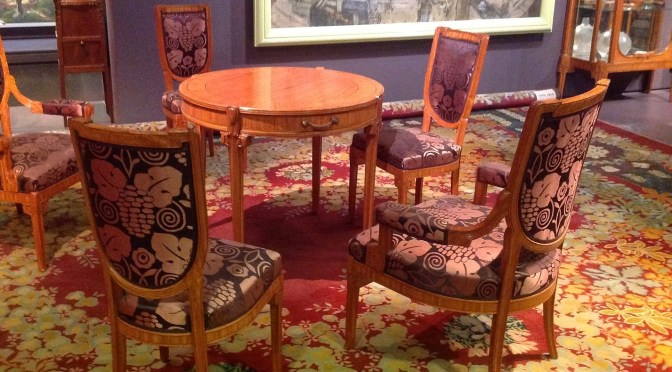


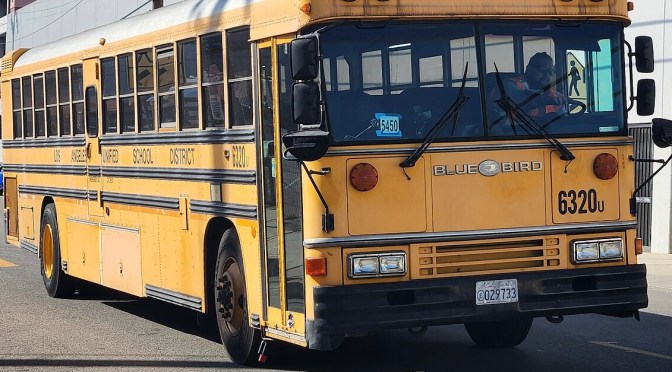





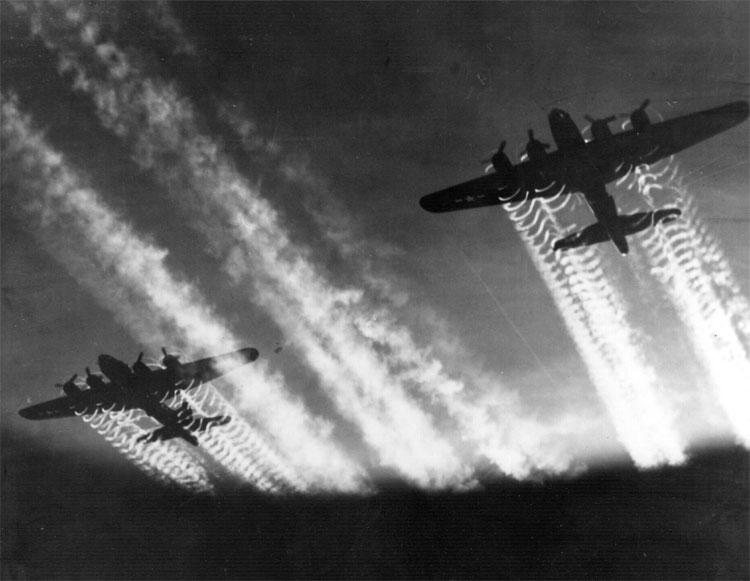

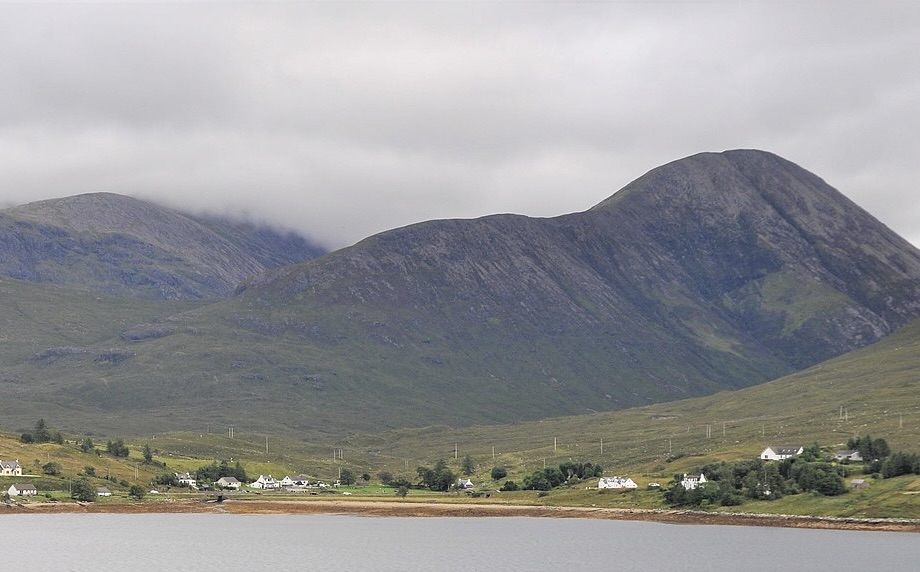

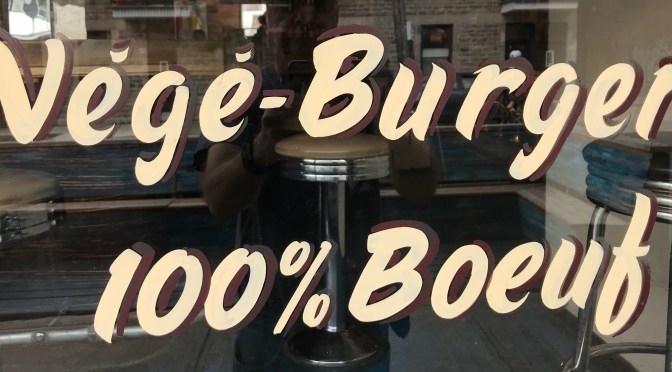







 JONAH magazine