
Category Archives: John Grey

MOOSE ALLEY

MOOSE ALLEY

John Grey

The road is a slaughterhouse

on this fine spring morning,

an array of squashed squirrels,

blindsided raccoons, smooshed possums,

even a deer half-buried in a ditch.

Man has been through in

his four-wheeled killing machines

and culled the local wildlife.

In the hunting stakes,

one steering wheel

is worth ten high-powered rifles.

Even a crow is splattered.

Flight couldn’t save it.

Not the way cars fly around here.

Farther along, I see a rescue vehicle,

and two tow trucks,

one hauling away a dead moose,

the other, a cratered car.

In the game of life,

this is a tie.

But there are no extra innings.

mage: Dwight Burdette Wikimedia Commons
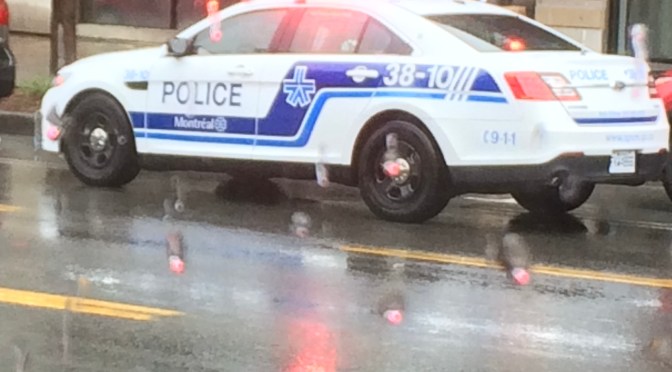
THE LAW

THE LAW

John Grey

He’s a cop, she says.

Her husband,

the man she lives with,

who shares her bed,

who’s the father of the child

she’s expecting in the spring.

He’s involved in everything

from fraud to robbery,

rape to murder.

He’s been trained in 

counter-terrorism and surveillance

and he can sniff out drugs 

almost as efficiently 

as the German shepherd 

that’s been assigned to work with him.

He brings his work home, she says.

Who else but her is hugged and kissed

because they just might be

the only honest, good-hearted person

left in the city.

He sees criminals everywhere

but in her eyes.

And they can’t go anywhere

without him bringing his revolver along.

When they huddle close,

it feels like a tumor in his chest.

But someone has to deal with

the vicious, the vile, 

the pathetic and the petty politics

and still find a way 

to come home to her each night. 

Only she knows who that someone is.

Image Harry Rajchgot (2016)

JUST A JEALOUS GUY

Dutch grocery shop, 1961, 1961.

JUST A JEALOUS GUY

John Grey

The woman is lost.

I imagined against the grain.

Like eyeing her suspiciously.

Figured every motel tryst 

was her and her lover.

When I wasn’t following her,

I tracked her online footprints.

By stalking her guilt,

I waylaid her innocence.

Now I hide in my home.

I open a bottle.

I fall apart like a sandcastle

when the tide rolls in.

What can I say?

She tossed her hair in public.

She smiled at strangers.

And she looked too good in a one-piece.

Even when grocery shopping,

she called attention to herself.

In the end, she said 

she’d had enough

of my jealousy.

Does that mean

she craved someone else’s?

image by  by Jan Arkesteijn (1961) on Wikimedia Commons

THE PIGEONS

THE PIGEONS

John Grey

There are no songbirds

for what’s there to sing about.

Only pigeons remain,

in the rafters

or under the eaves

of every building in town.

There are few trees

and the intermittent crack of rifles

is enough to drive every curious

finch or sparrow or starling

back into the distant woods.

And an explosion can come

any time, any place.

Even the churches

provide no sanctuary.

Nor is the sky itself

safe from stray bullets.

Most measure wars

in the number killed,

the graves sprouting like crocuses

on battlegrounds more wintery

than winter itself

But some tally up the cost

by listening to what’s not there.

Ears attuned to the lark,

they hear only the

squabble-like coo of the pigeons

Amidst the war,

the dove of peace

is merely the dove

that knows no better.

image by Harry Rajchgot

TRICKS

TRICKS

John Grey

Pick a card.
Any card.
Let me guess.
It’s the sunlit oak trunk
of Canadian forests.
No wait,
I see red-shelled bedbugs
and the suit…
the flag of storms.
Now put it back
among the tender people
and the loudmouths,
the revolutionaries
and the computers.
Let me shuffle.
Pick another card.
It’s the black misted canyon
of New York hotels.
Am I right?
Stop shaking your head like that.
I know it’s thousands of people in pain
of the metal finger cymbals.
I’m sorry.
You were expecting
the ten of clubs or something.
But I’m not a magician.
You don’t even need
to pick a card.
I can tell you it’s
the penumbra of reckless cancers
or the weakened eye
of Capitalism’s forefathers.
Okay, no more tricks.
I’ll just hand you
the last thing I wrote about you.
No, don’t shuffle it.
Don’t ask me to pick a card.
If you know it’s the
white-capped waters
of love long passed,
then what’s left for me to say?

photo by Harry Rajchgot

THE TRACTOR AND THE FARMER’S WIFE

John Grey


It’s one thing to be private.

It’s quite another to be so obsolete

that your tires are flat

your flywheel’s shot

your gas tank’s empty, rusty.

and you’re abandoned

hi the far end of the paddock,

mid-winter,

smothered in a foot of snow.

It’s one thing to think that the ideal

is to be done with work.

cooling off,

when that work is what’s sustained you.

and you’re not cooling off,

you’re freezing up.

And sure, it’s one thing

to materialize out of melting,

with spring upon you,

the unplowed field ahead of you,

when there’s a newer model in the showroom.

and the bank is making loans

to every farmer in the county.

And it’s one thing to be a tractor.

But such a misery to be you.

The Travails of Hunger

The Travails of Hunger

John Grey


Hunger is well-traveled,

knows its way around the globe,

the cities, even the countryside.

And it’s sometimes selective, 

sometimes random – it’s

there for a famine 

but also for a family man

who’s just been fired from the job.

I don’t know whether or not

hunger ever feels guilty.

It leaves conscience to those

who know where the fat resides,

keep it apart from the lean.

Hunger just takes like 

something that’s hungry itself.

So biting and gnawing,

swallowing, devouring, 

it sates its deprivation.

But hunger is never satisfied.

It’s acquired a taste.

No question where it stole that from.

GHETTO CHILDREN

GHETTO CHILDREN

 John Grey


We had to stay in

perfect position

not only throughout

the class

but even as the bell rang.


We carried

pencils and paper

for note-taking.

We took no notes.


For we were

the paper.

Our instructor

was the pencil.


He wrote all

over us –

“Good children.”


Come the war,

the words were rubbed out,

replaced by

serial numbers.


CACTUS

CACTUS

John Grey

I wouldn’t recommend the roadside.
And not on such a desert straightaway
where every passing car
kicks up a cloud of dust.

In a ditch of all places
and so small,
your roots get by
on water memory,
your fruit’s
a sun-scorched pebble.

But plants – not even cactus –
ask me the best place to prosper.
Seeds nestle down where they are blown
and try to make the best of it.

Besides, why else would an Australian be
on this highway in New Mexico?
A seed – an adaptation –
you have to believe
you can bear fruit anywhere.


photo by Harry Rajchgot, 2010

LOVE AND THE FINER THINGS

Rodin's lovers - Orangerie

LOVE AND THE FINER THINGS

John Grey

Love.
not a German bellarmine jug
but a real wheelchair
with his left hand
flopped over the side.

It could never afford delftware,
though there were tunes
the fields, the fence, the firs,
were as dainty and detailed
as punchbowl decoration

It was willing to sacrifice
a Ming fish jar,
Spode earthenware hot-water plate
for slippers
and a kind of dance
when you lift him into bed.

Love
had in mind the Royal Doulton
and the green glazed tripod vessel
but settled on the weathered palm,
your fingers wrapped inside it,
like the roots of an ancient flower.

Love,
just an ordinary paperweight;
not St Louis crown.
A bare bulb,
no silver gilt figured candlestick.

Besides,
despite their worth,
the artisans are long dead.
And you are poor but breathing still.
Love takes that it into account.