
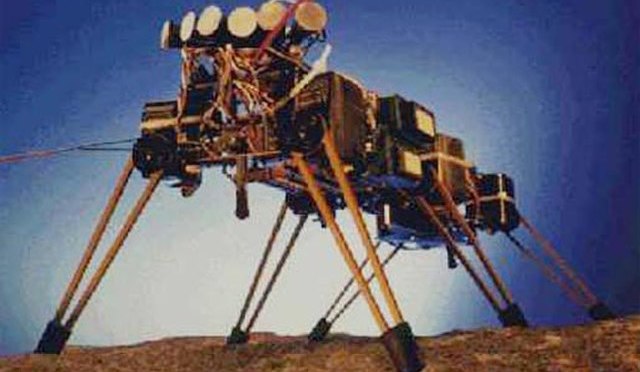
2043 – AI Armageddon?
Dave Dempster
What happens when, as Alan Turing predicted, the machines take control? Patrick was very afraid. He could never forget the pain of losing a finger of his left hand to his father’s carpentry lathe when he was aged seven. Now aged sixty-two in 2043, he could find no reassurance around him.
A retired history professor, Patrick’s fear of machinery had isolated him from most of society in Edinburgh. He did not wear an earpiece, or its predecessor the headband. He couldn’t trust electric cars, when they became unavoidable. He had kept his Catholic faith, although his local church had long since been sold and converted to housing. He now gathered as the youngest parishioner in an ever-diminishing elderly group of worshippers, confined to a small stone building borrowed from a wealthy benefactor.
The highlight of Patrick’s limited social life was his weekly walk to his beloved chess club. His longstanding opponent was Tom. They had known each other for decades. Their views were polar opposites on so many things but a mutual love for the Royal game kept them from coming to blows. All the same, Patrick thought better of pushing some arguments too far.
On this particular Friday night, their game had proved more interesting than usual. Patrick had a clear advantage but had to restrain himself. One hard lesson he had learned over the years was that over-confidence can ruin a promising position in an instant. So many of his attacks had been spoiled by a reckless sacrifice. He had used more time than he should have already and felt pressure from the clock. He must hold his nerve and check the variations yet again. Was he missing something obvious? No, he was as sure as he could be, made his move and pressed his clock. Tom could find no realistic defence and resigned only a few moves later.
The two made their way to the club bar, bringing pieces and board with them. They sat down with their drinks to begin the post-mortem. “Cheers” “Aye, cheers” Tom ran the game scoresheet through his earpiece, reciting move by move. They learned that the opening had been relatively even, but Tom had moved a strong defensive knight away from his kingside, giving Patrick attacking chances. When it came to Patrick’s critical move, though, they were both surprised. The earpiece oracle came up with a defensive resource that neither had considered. They looked at each other in disbelief. Patrick should have lost!
“Only a bloody computer could come up with a move like that” Tom exclaimed, excusing himself for missing it. Patrick took up the theme. “Computers have really ruined the classical game. Deep Blue beating Kasparov in 1997 was bad enough, but Alpha Zero mastering the game in four hours by teaching itself in, I think it was 2017, led to general abandonment of the classical game. Chess descended into variants with much shorter time controls when humans knew that they just couldn’t compete with machines. And cheating, of course. I gave up playing online when opponents began making brilliant moves, helped by silicon friends, without being caught out. What’s the point!?”
Tom agreed but Patrick had just got into his stride. “That’s what really bothers me, Tom. The cheating. When the latest whizzbang invention or discovery appears, everyone thinks it’s the greatest thing since sliced bread, then problems appear but we’re told that it’s okay, regulation will make it all safe. So, electricity started fires, but safety rules rescued us, electric cars caused crashes at first, but again safety rules saved us, and parachutes cost lives before relative safety was achieved, centuries after Leonardo first had the thought. However, social media, one of the products of the internet, was already beyond control when unfortunate side effects, such as fraud and bullying, became obvious and simply could not be stopped. AI is beyond control.”
“Pat, you really are a dinosaur. A Luddite! Rover saved my life!” Patrick knew that ‘Rover’ was the robot at Tom’s family home. “It was just amazing”, Tom went on. “How on Earth could Rover have known that I would develop bowel cancer a year on when I had passed all the medical tests with flying colours? Just shows how primitive GPs are. Carol, my better half, adores Rover. She’s planning to present him with a fancy overcoat to keep him warm. He doesn’t need it but it’s a nice gesture, after Rover found the perfect holiday for us next month. Everything we could ask for, at a great price. The kids idolise Rover. He knows everything, absolutely everything. Rover is more than indispensable. We just couldn’t live without him.”
“That’s my worry, Tom. What happens when the machines have had enough of us?” Tom protested. “You’re wrong. Look at what AI has done for us – why would they turn on us? They don’t have feelings and they can hardly pick up machine guns, sail across rivers and climb mountains, can they?”
“They don’t have to, Tom. We don’t know them. We cannot know them. But they know us, everything about us. Our likes, dislikes, fears, ambitions, everything.” replied Patrick. “I don’t get it”, Tom said in a more agitated tone. “AI saved the planet from climate change, for goodness’ sake! We don’t have to work if we don’t want to. Kids don’t need formal school education. They start home machine learning at two years of age and have access to rapid learning tools. I remember the hell of school in our day. Health care has improved beyond our dreams. The ancient NHS could never cope, and it’s gone, thankfully. Then there are the consumer benefits. Your choice to your door 24/7 at the lowest available cost. What’s not to like? Seriously?”
Patrick realised that he was losing the argument. He knew he could never win the argument but he kept soldiering on. “Remember way back in 2023, when there was a genuine fear in some folk that AI was an existential threat to human civilisation? At that time AI was very basic, with early language models. Chat GTP was hailed as tremendous, but even the experts had no idea how it worked, although they loved their creation, of course, and wanted to defend it at all costs. The concern was the speed of development of AI. The standard answer was that regulation and standards would keep us safe.” Tom nodded in a mildly perplexed way, and Patrick was encouraged.
“The fundamental defence mechanism – that AI was banned from pretending to be human – was first put forward in the European Union AI Act. 2024 I think it was. As usual, it was just ignored and circumvented, and within a few years no-one could tell, and hardly anyone cared, if they were in fact talking to a machine or a human being. Alan Turing’s story, thought fanciful in his time, about women one day taking their computers for walks in the park and telling each other ‘My little computer said such a funny thing this morning’ became reality.”
“I can see all that, Pat, but what difference does it make?” Tom asked, beginning to lose patience. “AI has intelligence far beyond human intelligence. If the machines decide that we are no longer of use, they can easily destroy us”, Patrick replied. “Och” Tom was indignant now, as if about to deliver the knockout punch, “Machines don’t have feelings, so how can they even want to hurt us?” “Tom, we don’t understand our own consciousness, so how can we know about an alien life form?” “God, is that the time? I’ve got tae run. See you next week, Pat.” With that, Tom rushed out of the building.
Walking home, Patrick reflected on the recent debate. He felt more isolated than ever. As an electric car sped past him almost silently, he recalled that his fear of central locking had led him to refuse lifts in the old petrol days. His modest bungalow home came into view. When his wife died unexpectedly two years earlier, Patrick had been forced to move house. Grief would probably have overwhelmed him, had he stayed on in their old brick-built house. Besides, maintenance had already become difficult. The garden was overgrown and he hardly needed the space on his own. He had to choose a modern building to stay within the city boundary and his budget.
His only regret in moving was that he lost control, as he saw it, of the house locks. He did not trust the centralised electronic system which locked and unlocked the front and back doors and all the windows. The salesperson had told him that nothing could possibly go wrong and, when that did not convince, explained the ‘unnecessary’ fall-back position of using the pre-printed emergency phone number. So much for sales. There was no alternative.
The sound of the metallic locking of the front door behind him seemed louder than normal. Likely to be mere imagination. Patrick had his usual nightly glass of water from the kitchen and prepared for sleep. Suddenly the lights went out. Patrick had to stay calm. There had been no storm. The National Nuclear Fusion System would surely kick in, in only a few seconds. A feeling of dread. He tried to tell himself that he wasn’t in denial, as he groped his way to a torch on a living room shelf. From there he went to the nearest window. No streetlights. No lights at all.
Patrick’s heart sank. He was beginning to panic. Was his worst fear truly coming to pass? The deadness of the phone compounded his alarm. He made his way slowly into the kitchen for the final tests. He checked, hope against hope, but the fridge door would not open. Despairing, he turned the water tap lever. For an instant he could relax again, but it was only a residual trickle.
It was over. Resignation before checkmate. Patrick started to pray.
photo courtesy NASA
 JONAH magazine