Tag Archives: poetry

Poems I might have written

Poems I might have written

Louise Carson

1

You were everything to aim for.

Only to touch you –

Later, ennui.

Snowflakes fall between glass and sun’s glow.

2

Full-throated agony kept landlady, neighbours awake,

wore down my teeth.

Detached, silent house. Muffled majority.

One quarter of my heart sobs on.

3

Depression took pills and alcohol,

foreshadowed cousin’s later death.

Vomit dries on floor.

Scrubbing brush wakes me up.

4

Oh, shame. A few beatings,

a couple of slaps.

Love-need.

Choked off.

5

Pelvic bones ache, loosen, at the thought of her.

Leaving, she entered me.

Even this deepest love,

changes.

6

Sometimes the old win the wars,

take possession.

But the young have hours.

Their bodies heat the room.

7

Dread, the hunched supervisor, waits to crush hope.

It will take me over again.

Be calm.

All love must lie down and doze.

8

Then what are tears? Sweet homage, ghost gifts,

liquid feelings.

Eye-wash to loosen grit.

Heart’s anti-freeze.

Image: Harry Rajchgot (2023)

“If I wasn’t bored,”

If I wasn’t bored,”

Doug Raphael

I wouldn’t have walked into that corrugated shack 

by the trailer park and ordered a coffee. 

I wouldn’t have known they keep fresh Grouper on ice,

that Pastel de Nata is like silk wrapped in rice

I wouldn’t have heard the dog chained out back,

barking like a train heading off the track

I wouldn’t have watched three guys watch a Portuguese football match,

hissing like back-alley cats,

as they downed one Super Bock after another with fries 

My skin wouldn’t have stuck to the metal stool and 

the damp wood walls to my lungs

I wouldn’t have seen the sparkle in Juan’s,

the fisherman’s eyes, pounding the table 

as we all sung along

I wouldn’t’ have bought a round for strangers I just met

I wouldn’t have tasted life 

I wouldn’t have stayed that night.

Image: Daniel Schweb, Terry’s Coffee Shop, NY (2005)

Wikimedia Commons

The Whole of the Story

The Whole of the Story

Catherine McGuire

That’s what he said, and meant,

as he narrated the split

in terms of desire, betrayal, rote and boredom.

But did he mention his parents’ cold nights,

the cigarette tips glowing in silence?

Did he describe the hippie chick, 15,

who blew through his precious pot stash

then wouldn’t put out?

And did he even know about his wife’s vision

as she stood at the peak at sunset,

feeling herself melting into rock and sky?

Did he connect up the month-long flu,

the office putdowns, the comic books

still hidden in the garage?

Even the mornings of coffee, sparrows, breeze,

barely noticed but soaking into his core,

forming part of the crystal lattice

of a life, not ending there,

but connecting to the 

whole

story.

Image: Richard Mayer, Wikimedia Commons

Hedge School

Hedge School

Catherine McGuire

from 1702 until 1860, English penal laws prevented Irish Catholics from establishing schools or hearing Mass. They went underground, with hidden “hedge schools” and “hedge Mass.”

The biting Mayo wind cuts through wool,

scrapes our bare ankles as we hunch

in this old quarry, half-listen

to Master Joyce as he tells of Cuchulain.

He switched to that from sums, to hold

our attention, but I’m watching the hawk

that circles above, thinking how we are all rabbits –

if the soldiers catch us at lessons,

could we end up in Churchtown Gaol? Da says

I must study, leave the guns to the elders

and Sean, who turned 16 last week.

He says learning is rebellion too – if the King

doesn’t want us to read and write, to hear God’s Word,

then by God we’ll learn! Easy for him.

Da never had to sit on sharp stone,

listen to old Joycey who’s forgetting his thoughts.

He stops, looks behind himself, scared coney,

then mumbles and draws lessons in the dust.

Bridie and Maureen are good students,

Frances more scared still than Master Joyce.

Joe and I trade winks, shift our sore rumps.

I think of the bread and cheese,

Aunt Rose’s weak beer stashed for my lunch.

The morning spills light over the quarry tip.

Shadows slide along the walls like spies,

like informers who lurk in our pubs, our market,

willing to trade bloody English coin

for a neighbor’s life.

Image: Artist unknown, at The Fine Art Society, New Bond Street, London

MOOSE ALLEY

MOOSE ALLEY

John Grey

The road is a slaughterhouse

on this fine spring morning,

an array of squashed squirrels,

blindsided raccoons, smooshed possums,

even a deer half-buried in a ditch.

Man has been through in

his four-wheeled killing machines

and culled the local wildlife.

In the hunting stakes,

one steering wheel

is worth ten high-powered rifles.

Even a crow is splattered.

Flight couldn’t save it.

Not the way cars fly around here.

Farther along, I see a rescue vehicle,

and two tow trucks,

one hauling away a dead moose,

the other, a cratered car.

In the game of life,

this is a tie.

But there are no extra innings.

mage: Dwight Burdette Wikimedia Commons

THE LAW

THE LAW

John Grey

He’s a cop, she says.

Her husband,

the man she lives with,

who shares her bed,

who’s the father of the child

she’s expecting in the spring.

He’s involved in everything

from fraud to robbery,

rape to murder.

He’s been trained in 

counter-terrorism and surveillance

and he can sniff out drugs 

almost as efficiently 

as the German shepherd 

that’s been assigned to work with him.

He brings his work home, she says.

Who else but her is hugged and kissed

because they just might be

the only honest, good-hearted person

left in the city.

He sees criminals everywhere

but in her eyes.

And they can’t go anywhere

without him bringing his revolver along.

When they huddle close,

it feels like a tumor in his chest.

But someone has to deal with

the vicious, the vile, 

the pathetic and the petty politics

and still find a way 

to come home to her each night. 

Only she knows who that someone is.

Image Harry Rajchgot (2016)

Dramatic Monologue: On Late Blooming

Dramatic Monologue: On Late Blooming

Chuck Sweetman

It’s a coming into one’s own, isn’t it? Blooming. . . 

You hear it said casually: when it came to math—

bless his heart—he was a real late bloomer. 

We’ll all get there, later if not sooner. But there’s 

another, more storied kind of late blooming:

a gradually-sudden metamorphosis! An elegant 

solution to the long-worked problem of how to be 

uniquely someone. This version’s not inevitable.

It’s not about short cuts or rookie-of-the-year 

awards either. I love how morning rituals and acts 

of devotion give shape to a passionate person. 

The vestments! The talismans! The quiet pageantry 

of sustaining a commitment in postmodern times. 

And look, I’m not the first to honor that spirit 

by reaching to myth, but who are late bloomers 

if not questers? Embracers of great tasks, riders

of storms, improvisors with misfortune. Believers

(at least suspenders of disbelief) in the spoils 

of victory, granted by a mostly-ordered cosmos 

in its own good time. . . In its own good time.

But what can you say? It doesn’t always work out. 

“Death by balloons.” That’s how one of my subjects 

described her nervous breakdown. After years 

busking in Boulder, Colorado, blowing balloons,

twisting entire packs of red dogs and green dragons

while scrapping to get by. “It felt like suffocating,” 

she said. “It was death by balloons.” Dream’s end.

Curse the gods—if only the household icons

of priority and necessity. Spite the begrudging gods 

altogether, rejecting the games they command 

for their own pleasure. Call out bias against people 

not created in their image. The disillusioned 

have many honest, even righteous, reasons to refuse. 

But! But for the undaunted, obsessed, misguided, mule-

headed, misunderstood, masochistic, romantic few—

what call to action remains possible on the day

when the sun will shine down. And there you are,

mid-quester stance in a courage-thirsty arena.

Sounds a lot like the famed American success story, 

doesn’t it? Albeit on acid or something. Trippier, 

in every sense. Late bloomers have journeyed. 

Spent time on remote islands. Finding love, building 

ships, eating lotus, seeing visions . . . visions of life 

and death. They’ve listened (particularly Americans 

have listened) to the language of fulfillment, beheld

its codewords as sparks flaring up from stoked 

campfires, flashing across polished helmet 

and sharpened sword, dazzling out into the night sky.

Do Angels Really Shop at Costco?

Do Angels Really Shop at Costco? 

Carol Casey

I met her in the OnRoute washroom, 

just off Highway 401, 

that summer when the world 

was full of shrouds. 

We stood, side by side,

at the ceramic column 

of diminishing sinks, 

where the slate-grey corridor of doors 

repeated in the mirrors.

She looked at my slacks-

a turquoise paisley pattern-

smiled at me and said 

“I see you’re wearing 

your happy pants- and I’m 

wearing my happy shoes.

I got them at Costco.” 

I looked down, pink/purple floral,

then into her smile, 

and the depths of her eyes. 

“Yes, happy,” I said, inarticulate.

“Happy,” she said; “Happy,” I said.

We tossed the word back and forth, 

a golden ball—part bird, part sylph, 

part dance till the ice behind 

my eyes melted; till the woman 

using the hand-dryer started 

to smile and bob. “Thank-you,” 

I said, as we wafted 

out of the washroom. 

I turned toward the exit. 

She disappeared into the lineup

at the Starbucks booth. 

Image by EinPole (2022) from Wikimedia

Telling the decades

Telling the decades

Louise Carson


I visited the beautiful house last night,

last dream before I woke.

It was better kept than before but still

I was unsure – which entrance?

‘It reconfigures every time,’

I said to the friend beside me.

Inside we were a half-dozen women.

The oldest made tea in a red tea pot.

One, dressed as a man, soon left, muttering,

her one-woman show called ‘Groom.’

I sat chatting, my back to the lake, woke up happy.

The house wasn’t mine anymore.

Photo by Harry Rajchgot (2006)

Floridian Dream

Floridian Dream

E. Kraft

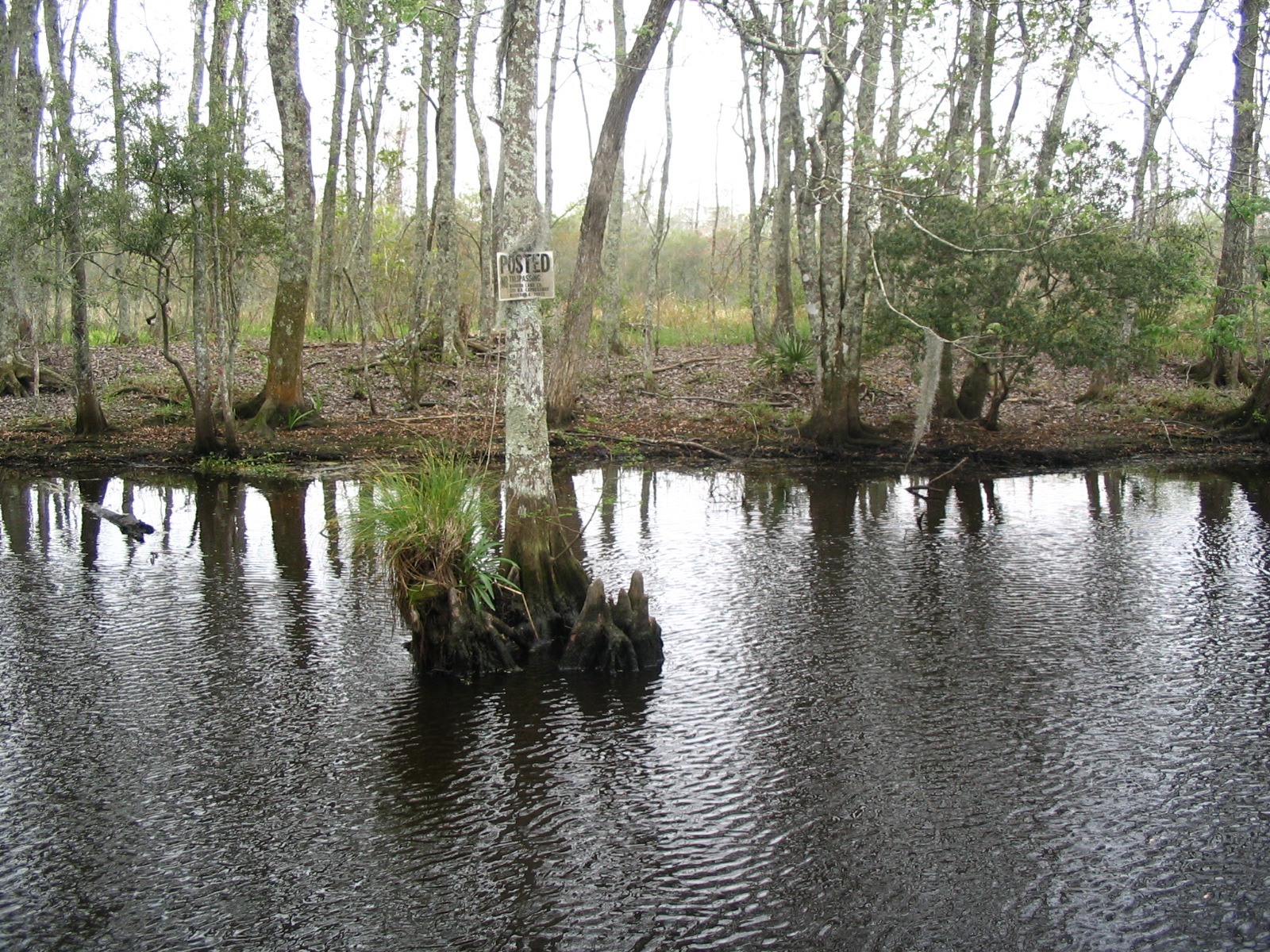
cutting through the reflective canvas

the boat hums along the swamp’s edge,

each ripple a transient brushstroke
beneath the moss-draped trees,
where branches tap with grandmotherly fingers

the light filters in patches,
a muted backdrop of greens and browns,
where shadows pool like spilled ink,

perfumed by damp earth with the faintest hint of floral

water lilies drift lazily,

their delicate blooms in smudges of color
floating like fragments of a dream

while dragonflies dart in silver trails,

the cypress knees rise from the depths,
though gnarled and ancient
these silent sentinels guard the primordial realm
as their shapes soften in the encroaching mist

the boat slips through reeds and rushes,
each swaying stalk, a whispering brush
against the hull’s weathered side,
a rhythmic cadence in this verdant sanctuary

birds echo an intermittent soundtrack,
flitting from treetop to water’s edge,
a chorus that punctuates the stillness,
brief notes of bright clarity in the ancient, unhurried palette

each moment a detail in an unspoken narrative,
painted in hues of patience and mystery,
as I drift through this living tableau,
the swamp’s quiet artistry

Image: Harry Rajchgot (2005)

In the belly of an old church

Õ

In the belly of an old church

Nadine Ellsworth-Moran


No one threw me overboard—

but like Jonah I have to screw up my courage,

climb the rail myself, face what lies beneath,

beyond my knowing, where the ocean

door is heavy, emanating incense, musky

smoke and spice from an ancient current

where the dag gadol with its stone mouth

waits to gulp me down.

Inside the air smells blue, 

the scent of stained glass
communing with anemic light

filtering through baleen plates

and rises from candles 

that bow before their saints.

Even here remain the hints

of sweet almond paste, festal days, 

song beneath words, communion bread—

these hookbaits of salvation cast

into my offenses and laments,

lures caught in the arched timber spine.

The surface, so far and sliverthin breathed

through coldsteeped lungs, I pull old wool

the widows wear tight around my shoulders, 

inhale a heady lanolin, peat moss lost
between slick stone ribs, centuries

of damp, and lick the brine

from my lips before

I try to pray.

Image by Harry Rajchgot (2024)

I went to the moon once

I went to the moon once

Ron Riekki

I was bored.  A kid.  There was a spaceship

in our neighborhood, abandoned.  I got in.

I don’t want to brag.  It was just the moon.

It wasn’t Mars or Neptune or Poseidon or

the sun.  I’m glad I didn’t go to the sun.

That would suck.  It was the moon and I

started up the spaceship and just drove.

I had no idea what I was doing.  It takes

three days to get to the moon.  I didn’t

just look that up.  It’s from experience.

I felt nervous falling asleep driving that

thing, but it’s too hard to stay up three

days in a row, so I just trusted the space-

ship and fate and coordinates and all that.

When I got to the moon, it wasn’t really

all that big of a deal.  I kept looking at

the Earth.  It felt like I was on Earth and

looking at the moon, but in reverse.  It

made me miss home.  Later, I’d join

the military.  No, not the Space Force.

The Air Force.  I was more interested

in air than space.  There’s the Water

Force too.  Except it’s called the Navy.

I wasn’t in that one.  I wanted air.  I

knew I’d never run out of oxygen if

I was in the Air Force, but I remember

this moment during the war where I

was on the runway, the B-52s all gone

destroying things and I looked back in

the direction of home and I missed it,

the horizon, somewhere on the horizon

was home and the harvest moon was

there too, reminding me that I love

adventure and I was alone and it was

night and I thought what it must be

when God looks down on us, if it

feels like when I look at the moon

or look in the direction of home and

miss my past & future at the same time.

Image by Harry Rajchgot (2022)

JUST A JEALOUS GUY

Dutch grocery shop, 1961, 1961.

JUST A JEALOUS GUY

John Grey

The woman is lost.

I imagined against the grain.

Like eyeing her suspiciously.

Figured every motel tryst 

was her and her lover.

When I wasn’t following her,

I tracked her online footprints.

By stalking her guilt,

I waylaid her innocence.

Now I hide in my home.

I open a bottle.

I fall apart like a sandcastle

when the tide rolls in.

What can I say?

She tossed her hair in public.

She smiled at strangers.

And she looked too good in a one-piece.

Even when grocery shopping,

she called attention to herself.

In the end, she said 

she’d had enough

of my jealousy.

Does that mean

she craved someone else’s?

image by  by Jan Arkesteijn (1961) on Wikimedia Commons

It’s Too Late, Baby, Now It’s Too Late

photo Wikimedia Commons

Soundtrack to Living in My Car

photo Wikimedia Commons

Tourists

photo Wikimedia Commons

April 21, 2024, Marseille.

April 21, 2024, Marseille.

Ivan de Monbrison

In the meantime, this morning the wind has finally died down, and no longer makes the large plane trees that line the main street of the town, called La Canebière, shiver. A little further up, by a large church called Les Réformés, although it is Catholic and not Protestant, some hackberry trees have been planted, with darker foliage and gnarlier trunks. Yesterday morning, like every Saturday, it was flea market day along this street, there were old dusty books, obsolete trinkets, old-fashioned paintings; and me, I wanted to find an old wooden pipe for myself, but those proposed being a little expensive,  I gave up. And yes! There’s no denying that I’m truly a man of our times…I smoke the pipe, I play chess by myself for no clear reason, I badly strum my guitar, and recently, I have started to read “The Tales of the Vampire”, translated from Sanskrit by Louis Renou, more than sixty years ago now. Here, there is no computer, no television, only scores of paintings vainly hanging on the walls, in rows, and outside, through the window, the imperturbable view of the old roofs of Marseille. I live on rue Mazagran, right next to the famous Thiers high school and the Gymnase theater. If ones goes down La Canebière, it’s easy to quickly get to the harbor and the sea. Sometimes, when the weather is bad, it also rains in the old attic where I live, so then I put a plastic bucket on the floor to catch the drops, and when I’m not present, there’s inevitably a puddle that grows there but which, fortunately, dries out quite quickly, due to the arid air of this southern land. The old attic, turned into an apartment, still a little rickety, is inhabited mainly by my past, by passing through women whom I’ve slept with there, or by visitors who might have visited me, from time to time. One day, I can imagine, I too will finally leave this place, having broken my pipe, as we say for passing away in French, in my turn, for good. Then, the old attic will remain vacant, with only canvases as sole guests, those which I have been clumsily painting on relentlessly, while waiting for death for so many years, with but shadows of my poor unconscious usually casted over them. They will stay all alone in here, probably waiting for  a last  late visit, forever postponed.

hot Wikimedia Commons

The circle

The circle

Ivan de Monbrison

The face is placed upside down on a corner of the table and you spill ink on a sheet of paper you would like to say something but you can no longer speak any language you are sitting mute without a name there is also near to the sheet an ashtray full of cigarette butts and a deck of cards turned upside down you turn one card right side up it’s the queen of hearts then another it’s the queen of spades this time there is also a heart  still beating and torn from your chest and left in the pocket of the shirt that you are wearing now and this heart is totally covering you up with blood yesterday you went for a bit of a walk in the old downtown area that you know so well it has a lot changed over the years the faces seated on the terraces are no longer quite the same as before but the young people still laugh as they used to drinking alcohol wasting their time their faces are all different and yet they all resemble each other in all sorts of ways all these individuals all the women all the men are only one in fact unique and anonymous today there is in front of you in addition to the deck of cards a cup of coffee placed on the table right next to the ashtray and the card of the ace of spades turns over by itself and that of the two of clubs also today you have some heartburns in your belly due to smoking too much and you have painted a canvas all in black you don’t speak with anbody anymore and you no longer have a name of your own you have turned bald and you keep telling yourself that you should change all of your teeth three times a day at least and change also once a week your head and once a month your face yesterday in the street you saw on a sidewalk death walking between the tables of the cafe terraces where young people were seated and by this beautiful late afternoon you saw her staring at them smiling and counting them all with her fingertips one by one as they keep laughing and exchanging among themselves meaningless and trivial words  on the boulevard the cars went speeding up noisily and the young people as they laugh keep showing their white teeth to each others and their words are nothing more than unintelligible sounds as if they had once again turned into the animals that they have never really stopped being as if they were removing this false skin made of clothes and their shoes too and all this while still mechanically bringing their lips to the brim of the glasses filled with alcohol most of the time some smoking cigarettes too with the smoke coming out of their mouths and death passes between the tables and carefully observing them, one after the other, but they do not see it

photo Harry Rajchgot

Leftovers

Leftovers

Richard Dinges Jr.

An open can of olives,

shelled shrimp in ziplock

bags, smoked salmon 

that smells of yesterday,

my refrigerator casts

doubts on today,

with a cool waft of air

when I open the door,

a shock of bright light

on memories

that idle on shelves

after holidays pass 

and gently decompose

into tomorrow.

Death of a Pirate

Death of a Pirate

William Miller 

For two hot weeks he had pinned tourists

to the walls of charming old houses,

threatened locals with his sword outside

their favorite bars, the Lucky Dog stand.

One nutty eye leered beneath 

the pulled-down brim of his cockade hat.

He had no name, was just “the pirate”

or that “crazy pirate bastard”.  

Harmless enough, even though he wore

in a black and gold scabbard

a real honed, cutting sword.  On the hottest day

ever recorded in New Orleans,

he hectored the wrong homeless man

who stabbed him to death with three

quick thrusts of a prison shank.

Garbage men muttered, Japanese couples

snapped pics.  A pirate in a town where pirates

prospered and kept alive with smuggled rum

slaves from banned countries, he kept some kind

of faith.  Like all street performers, he gave

the crowd what they came to see,

traveled so far to post to their friends

back home.  His blood was extra,

more than what they paid for.

Katrina Brick

Katrina Brick

William Miller

                                 I knew this woman, old New Orleans

                                 in her light graceful manners, 

                                 slightly dark humor. Her family house on Laurel Street

                                 had stood for over two-hundred years.

                                 Sarah gently told stories of disasters—

                                 a slave woman who burned her mistress to death,

                                 set her dress on fire with a coal pulled from 

                                 the kitchen fire with a pair of iron tongs.

                                 And one about her planter third great-grandfather

                                 who hanged himself in the attic with a cord

                                 from his Chinese dressing gown. 

                                “No ghosts,” she said, laughing.”  “No ghosts.”

                                But I wanted more, tourist-hungry and new

                                in town.  They all had them:  year-long flights

                                to California, dead bodies floating in the canals,

                                whole families stranded on rooftops.

                                She walked me through the wrought-iron gate 

                                into the shade of a cypress tree, pointed to an odd brick,

                                new among the moss-covered old.

                                “Eight dollars,” she said.  “That’s what Katrina

                                cost my family.  “A single brick blown down the street.”

                                There was guilt in the lines of her face, a survivor’s mask

                                of stoic charm.  And she was waiting for the next

                                African wind, a furry wheel in the gulf.

                                Once more, she’d risk a storm even if it meant

                                blown-out dormer windows, a caved-in mansard roof,

                                the death of an old family’s last daughter.  “A brick,”

                                she said sadly.  “The price of a single brick.”

Songs for a Mad Woman

Songs for a Mad Woman

William Miller

The police car pulled up and then I was 

in hand cuffs, in disbelief, driven with two vagrants.

But I protested, cursed, screamed—“Don’t you know 

who I am?”  For those words, not all the ones

I published for thirty years, the books and magazines

that burned in the apartment fire, I was taken

to a place Kafka never dreamed worse.  A psych ward,

a treatment center where you were kept

without a phone call, a release date. 

A girl was raped in there, not by an inmate but two

attendants who took their pick from the gurney

they wheeled in daily, hourly.  An Aryan with 

a swastika tattooed across his back told me 

to stay quiet, play the game, nod and smile.

In the dayroom, the damned colored in coloring books.

For an hour, we sat in the shade of a wall topped

with concertina wire.  A woman with long silver hair

conjured birds with tiny wing-like hands—an old “traiteur”,

someone told me.  There was another woman,

“Gwen,” lost in her own shadows, eyes like

burned-out fuses. I needed a purpose and spoke

to her, made faces, sang songs she might know.

Her eyes lit up at “Yesterday”.  And then she said:

“I see many soldiers”.  The light in her eyes

went out and never came back.  I hoped she was

in a better place, soldiers all around, where someone 

tried to sing to her, at least knew her name.

Retirement

Retirement

Richard Dinges Jr.

Just when I left the stupor 

and stilted air of an office 

chair buried in a room

with no shadows, lit

by sterile fluorescence

and dim monitor flicker,

just at that moment

the world shrank, 

people retreated into 

small home-bound rooms,

hid behind masks, 

a world with no smiles, 

only shrill shrieks of loss 

and no protection from ghosts

that float in air to infect 

our breath, and I still stare out

through dirty window panes

at freedom yet to be had.

A Portion of Success                                                                 

A Portion of Success                                                                 

John Zedolik

I chose the wrong trail

while ascending Angel Island

so missed the summit in my

parsed-out time though I did

glimpse the top where 

eponyms take flight or alight

whom a pilgrim might see

if in the correct loft of mind

even upon a false path, a fire

lane, only circling the crown

like a tonsure in reverse,

the eucalyptus massing

dark and dream-thick on each

side to confound the climber

on a sweating quest to the apex

commanding the attendant bay,

where near-heaven meets earth

at a sharp final edge, a port

for destinations down and up

whose node will bestow

a blessing even upon the hoofer,

head befuddled and point unachieved.

Third anniversary

Third anniversary

Louise Carson

And even after six hard frosty nights,

dry standing corn still sings with insect life.

The squirrel jerks its tail, clucks my approach,

relayed by blue jay cry and thudding grouse.

Reflecting colour up, the fallen leaves

(it’s not autumn unless I mention these),

the fallen leaves complete my metaphor:

feet grind them into finest mould.

Where is she now that time, time’s her betrayed?

The address in my hand’s too small to read.

By morning’s side then, somewhere near a farm.

In the crypt, other women keep her warm.

Did I, do I ever, visit her grave?

My heart her grave, I walk there every day.

Boadyland

Boadyland

Jonathan B. Ferrini

The squeaky metal fan churns white noise burying me alive in a deep REM sleep suddenly shattered by a car alarm. 

I slide out of a sheet wet from perspiration and into a wrinkled wash and wear suit, out the door holding a Styrofoam cup of instant coffee tasting like battery acid.

There’s no need to join the Foreign Legion, travel the world, hang out in Paris coffee houses or drop LSD when your mind serves up a dream loaded with the ingredients of a murky, subconscious stew, rich with flavor resulting in the next story.

Consider the RSVP carefully when opening the invitation from your subconscious mind to follow it down the rabbit hole because you may be surprised what you find. 

Caution.

 Watch the highway!

Muggy morning summer air, a prelude to a monotonous job I crawl towards in heavy traffic.

Seeking distraction from the radio dial but find only missiles of rage fired at me from morning talk radio generals.

Damn, another soldier advancing towards his own war cuts me off, forcing me down an offramp named Boadyland dropping me into a neighborhood resembling purgatory.

I stop on a chewed-up street of people and dreams.

Dilapidated homes occupied by people without hope. 

Unhappy, maybe alone, and desperate for their dope.

A delicate hand waives me into a cozy house fronting a street smelling of mace, meth, and death under the concrete overpass nobody but the disenfranchised know.

I meet a beautiful single mom planning a party for her baby girl.

“What can I contribute?”

“Whatever you choose, sweetie.”

“I’ll write her a birthday poem.”

I write and the tears flow witnessing mom’s resolve to make a gift out of nothing except people filling the street, their clothes resembling festive wrapping paper, showing up to celebrate a child’s life.

Everyone chilling and catching a breath before they hit the next curve ball thrown at them.

The ethnic potpourri creating culinary delights provides an abundance of light warming the celebration like a huge candle atop a cake made for a princess.

Cops cruising by, pointing their spotlights, scoping out the delight, but only meeting a paper plate of savory treasures. They’re appreciative and confess,

“Our badges have become too heavy to wear!”

“What about winter?”

“Ah, it’s hell, man.”

“Don’t listen to that dude, baby.

It’s the same peeps, eats, just turning the metal barrel barbecues into sidewalk space heaters, and icey cold drinks become soul warming liquor laced liquid treats. 

Same vibe wearing heavy clothing.”

I was dancing, eating, and loving inside a far out, freaky fraction of urban blight.

The bass tone to the jam was the incessant din of cars racing along the superhighway above us like subatomic particles blasted through a particle accelerator designed to crash into each other revealing the God Particle.

Sweet baby mama draws me near and whispers,

“That elusive particle is ethereal and found inside every human heart.”

I shout upwards towards the overpass,

“Crawl out of the Petri dish, stand firmly on both legs, and head over to the party at Boadyland!

I heard Galileo, Hawking, and Feynman might show.”

image by Harry Rajchgot

Becalmed

Becalmed

Suzanne Osborne

After Goethe

unblinking sun

no bird’s wing claps

no sea-swell lips the hull

sails slump

no shore in sight

no tree, no rock, no shoal

no friendly vessel

sailors gaze red-eyed

on unending glass

a shark fin would be welcome

image by Harry Rajchgot

THE PIGEONS

THE PIGEONS

John Grey

There are no songbirds

for what’s there to sing about.

Only pigeons remain,

in the rafters

or under the eaves

of every building in town.

There are few trees

and the intermittent crack of rifles

is enough to drive every curious

finch or sparrow or starling

back into the distant woods.

And an explosion can come

any time, any place.

Even the churches

provide no sanctuary.

Nor is the sky itself

safe from stray bullets.

Most measure wars

in the number killed,

the graves sprouting like crocuses

on battlegrounds more wintery

than winter itself

But some tally up the cost

by listening to what’s not there.

Ears attuned to the lark,

they hear only the

squabble-like coo of the pigeons

Amidst the war,

the dove of peace

is merely the dove

that knows no better.

image by Harry Rajchgot

SHAME

SHAME

Laurel Peterson

Charlene slouches into yet another 

poetry reading, because the guy’s a friend

and that’s what you do, even as she knows

she’s doing it to look good.

After, the moderator always lets

the group read their own poems,

but Charlene doesn’t want to stay

for their small, sorry expulsions of words

like the popping of zits, even if, once in a while,

someone captures a line 

as beautiful as a caged leopard. 

But tonight she sits in the wrong place,

and the needy woman whom she avoids like the flu

wants Charlene to read her poem, holds it up like a flag,

and Charlene’s exit explodes into a circus with her 

as the performing elephant. Even the next morning 

she feels the weight of it beneath her heart,

lonely and hard like fossilized bone. 

(Laurel Peterson)

image by Wendy Thomas

Poems from the Loo

Poems from the Loo

Catherine A. Coundjeris

I thought it was important.

Zoom, zoom far away and long ago

when I was flying high above the clouds

on a journey to England from 

my home in Maryland.

Head full of old English poetry

and visions of plum pudding

and clotted cream dancing in my head.

I thought it was important

my first flight ever and I packed 

all the poetry I had ever written

in a white plastic bag that I carried

without a care in the world with my grey purse

on board the airplane.

Mother said, Careful, you will lose it all,

but I didn’t believe her.

I thought it was important

on a six-hour flight.

Dinner in a basket and  

I tucked the basket and green apple 

into the white plastic bag 

to keep for later

and then landed at Heathrow

Zoom, zoom onto Victoria station.

I thought it was important.

Bags and all

picked up by George and Maureen

And whisked off to their London flat.

A nap and a holy dream

of stone castles and grey skies.

Then a trip to the fish market

to buy our salmon dinner

and to get some fresh air.

After a bowl of olives

I thought it was important.

My appetite turned to the apple

as I realized the white bag was gone.

All my poetry was lost!

George took me to Victoria Station

and there in the loo the

Jamaican caregiver told me

I thought it was important.

She had tucked it into her

cleaning closet for safe keeping.

Basket and apple and poems.

George more knowing than I

gave her a large tip

and I was forever grateful

to George and that beautiful woman

and her lovely words.

I thought it was important.

What was lost was found again!

Those lyrics echoed in song

 forever in my mind:

Poems from the Loo.

photo by Harry Rajchgot