Señora Beltrán, my seventh-grade teacher and Vice Principal at San Luis Middle, says I’ll see less trouble for yesterday if I do the End of Year Essay Contest. I’m sure she would show mercy if I said no, since I’m in pain and covered in gauze. But I will do it, only because her heart is set on it. (Smiling, Señora?)
The contest is district wide, so I must write it in English, says she. Alright then. My name is Billy Riordan, but kids here call me Blanco Billy, or just Blanco – white. Because my skin is so white. Not beige or pinkish – white. San Luis is hot, dry, desert, so my glowing white epidermis is most days slathered in sunscreen, also white. They named me Blanco not to be mean, but as a simple fact. And it’s catchier than, say, ‘SPF 70.’
I was born in Cork, Ireland, but barely remember it. My Ma got sick from birthing me, then died before I turned two. My Da, Finnian Riordan, soon felt “the island became too small” and moved us here, where he is Head of Psychiatric Services at Arizona State Prison Complex, San Luis. Doom and gloom sounding, yes, but Da says he has bettered some lives and even saved a few.
He wanted a new start somewhere “very unlike Ireland,” and San Luis surely checks that box. Plus, bonus, it’s two towns in one! San Luis, Arizona, USA, where I live, officially ends just past Urtuzuastegui Street, by El Beauty Cosmeticos. Walk south through The Gate and you’re in San Luis Rio Colorado, Mexico, at Avenida Carlos Galles. By the KFC.
You do see more dirt streets and peeling paint on the fences’ south side, and dozens of Tiendas Six stores to the north side’s zero. Also, the north side’s fence is low, see-through, not too ugly, but the south’s is burnt orange, taller, thick, with razor wire curlicues on top. Ugly.
But south side, north side, whatever – it’s all the same city, same people, same goodness. We’ll eat our lunch on the south side, dinner on the north, dessert on the south. As for the fences, we showed our papers to The Gate guards long ago; now we just wave and they wave back.
My best friends, Luz and Luiz Reyes, ‘L&L,’ were born on the USA north side but live on the Mexico south, and they’re with me in San Luis Middle on the north. Luiz and I are about done with seventh grade, Luz with eighth. We met on my first day of kindergarten and fast became “Los Tres.” The Three, together everywhere.
Luz and Luis love my Da and have feasted for years on his stories. The first one they heard was of the U.S. Army’s all-Irish Saint Patrick’s Regiment who, during the USA’s 1846 invasion of Mexico, switched to Mexico’s side and became Los San Patricios. That tale of Da’s is a true one; some others, not so much.
Da loves San Luis but says he might someday again live in Ireland. Los Tres would rather he get with Señora Adelina Reyes, Luz and Luiz’s widowed ma. She’s at some level of willing, we think. Kind, funny, pretty like Luz, she’s Head Manager of San Luis’ best hotel. If she couples up with Da, he’ll stay forever. Luz once teased me that a Finnian Riordan-Adelina Reyes marriage would make us stepsiblings. Extra weird now, what with this beautiful new thing between us.
Los Tres, we’ve always read books together. I see us three as Harry, Hermione, and Ron from the Harry Potters. Luiz is Harry. I’m officially smart, if straight A’s mean anything, but Luiz, he is geniusy. (I know, Señora B, ‘geniusy,’ not a real word.)
Luz, she is Hermione. Smart, kind, brave, resourceful, she’d fight ten dragons for Los Tres. Just being near her has made me feel smarter, calmer, better. About school, life, myself, everything.
Me, I’m Ron. Not the bumbling, hot-headed Ron of the earlier books. The later Ron, the loyal, reliable best friend to Luiz/Harry. I’ll do anything for him, and for Luz/Hermione. Most importantly, though, it’s Ron who ends up with Hermione!
Which brings me to yesterday, my greatest day. Its rough ending, I’ll take that every time if I get what came before it, and to hell with any consequences. Not that there will BE any. Right, my favorite English Teacher/Vice Principal?
The lead-up to yesterday was me being a mess. I just turned thirteen and am headed for eighth grade. Good, yes? No, because Luz hit fourteen and is done with us middle school Scorpions. A San Luis High Sidewinder next year, she’ll be without her Los Tres partners. Without me.
Nightmarish near-future scenes blasted my mind. Luz and some ninth (tenth?!) grade boyfriend, making out in El Parque? Me vanishing from her life before I got the nerve to tell her what I’ve known for a year? To save my brain, I would spill it all to her, and I’d do it on the Seventh and Eighth Grade Year End Field Trip. Yesterday.
Our middle school classes aren’t allowed to bus to places just for fun, so added on is a one-hour tour of the Yuma Territorial Prison State Historic Park, circa 1876. Only after that do we all walk under the overpass to swim at Yuma Beach, on the Colorado River. For fun.
Not that the Prison Museum isn’t cool. My mind, though, was occupied by one thing only: Luz. And there she was, coming from the bus behind mine. Medium length hair, black and shining, a mini tail of it stuck out as usual through the back of her San Luis Los Algodoneros cap. She wore huaraches, baggy gym shorts, and her mom’s old Maná t-shirt. Her perfect brown eyes, a shade lighter than her skin and filled with sparkling green flakes, focused right on me – no flitting them around to other kids like she might be missing something.
Oh, quick side note! I phoned Luz earlier and she gave me permission to tell this next part. It was all said in Spanish, but I promise to stay true to every word.
She walked up flashing that smile, the one that kills me every time in the best way. “Que t’al, Memo?” she asked. Que t’al is “How are ya?” and Memo means Billy. Only Luz calls me Memo. “Where’s my little brother?” she asked.
I tried to sound relaxed. “Some friends of Xochitl Perez just told Luiz that she likes him, and he told me the vice versa on the bus. They’re already inside, and I bet he isn’t paying much attention to those cellblocks.”
Luz laughed. “Wow! Luiz the Lover, crushing on someone! Who knew?”
I saw the opening and took it. “I’ve never known you to have any crushes either.”
She hesitated for a second, then smiled. “That doesn’t mean I haven’t had any.”
“Oh yeah? How many, how long, and for whom?” I still sounded calm but I wasn’t breathing.
“For just one person, and I still have it. It’s for you, dummy! Of course it is.”
I don’t think I literally jumped in the air, but I did go full grito with a big old, “Ayyiyiyieee!”
Her response was quieter but came with a smile. “That means you’re vice versa, too?”
“Yes, Luz Reyes! But I wouldn’t really call this a crush. It’s more than that, you know?” I held my breath and hoped she did. She took my hand and gave it a soft squeeze, and my heart did speedy backflips.
“I do know, Memo. We’ve been together most days for the last eight years. This is not a crush.”
“So, are we, um, overdoing it if we use the A Word?” (Yes, Sra. B, the L Word.)
“I say no,” Luz responded. “It IS love. Not the love of adults with jobs, kids, bills to pay. But it’s still real, Memo. You are my first love! Maybe not my last, but who knows, right?”
“True, nobody knows. And I love you too, Luz. Every single tiny thing about you.” I then blurted, “Including your complete digestive tract!” I guess I was dizzy. Luz’s laugh was sweet, so the moment stayed magic.
“Every single tiny thing?!” She laughed again. “You’re getting overheated!”
“No, I mean it. Even the few things you do that can annoy me, those things I love too.”
“I get it. Same here! So, Memo, what now?” She looked at me like she really needed to know.
I responded with a plan that could be called ‘rash,’ a Daily Vocab Word from Sra. Beltran.
“Let’s skip the prison! Stroll the riverwalk for a half hour, then hurry back. Everyone will still be here, and we’ll blend in like we never left. Easy!” Luz gave a just-as-rash “Okay!” and off we snuck. Once in the clear, we held hands. It was near 11 a.m., a cloudless day headed only to the high nineties. We barely reached the path before Luz stopped and announced, “I don’t want to get anxious, waiting for our first kiss. Let’s do it now.” So we did.
Some teeth-knocking at first, but we just giggled and figured it out. A truly perfect moment, etched into my mind for all time. After it, more walking, handholding, skipping stones, stopping for more kisses, sharing memories of eight years of book reads and bike rides and hotel pool swims and whatever else. Also, excited guesses on what the near and farther future might hold for us, individually, and couple-wise, maybe.
We took another kiss break, and Luz asked me to promise to never treat her like property. I did promise, but me knowing she’s her own full and impressive person, I was already there.
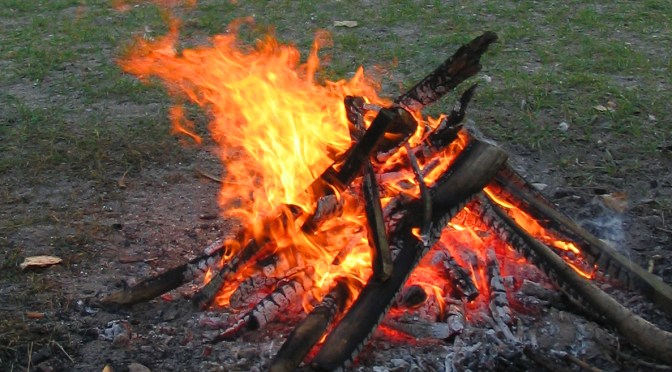
We walked more, then saw a path zigzagging down to the water. Below on the bank was an oversized inner tube with a painted ad for the Yuma Hilton, Penitentiary Point. We rolled it into a no-current little cove, then did laugh-filled flips and flops off of it. After, we rested – arms out behind us on the tube, my right one around Luz’s shoulders, her left around mine, our butts in the river, legs over the tube’s other side. We were quiet, happy. Our own little paradise.
Luz suddenly blurted, “Oh man! Everyone’s almost at the beach, I bet. Let’s head back, yes?”
I answered, “Hey, instead of walking, let’s cruise! We’ll get close to the beach, drop the tube off, then walk right up. If we’re asked where we’ve been, we’ll say I left something in the prison.”
Luz agreed. We paddled out into the river’s center and settled in. A bit more kissing, then I closed my eyes and I think Luz did too. After a while, we heard something. A power-walking woman and her little yapper dog.
Luz exclaimed, “She’s not even jogging, and she’s beating us!”
“Yeah, damn. The current is weak.”
“Should we get out and run?”
Aiming for carefree confidence, I said, “Let’s tube it! We’ll get there a little late, and yeah, we might get caught and be in a little trouble. But hey, this is OUR day!”
Brief hesitation from Luz, but she grinned, giggled, and shouted, “Órale, carnal!” That’s like, “Cool, man, hell yeah!” I giggled too.
The fact that our swimming and bellyflopping had washed away all my sunscreen and that my fat bottle of it was in my backpack on the bus, we weren’t thinking about that. We just lazed in our tube, tilting back to look at the endless blue sky or just quietly smiling at each other. Calmly floating away, till at some point we both closed our eyes again and looked at nothing.
We awoke to roars of laughter, excited applause, and that big “ooooohh!” kids do when they know someone is in trouble. Our classmates and teachers, the ones not off looking for us, stared across the water to Luz and me. Luz looked dazed, sleepy. But then she saw me and got a whole other look.
It was major league sun poisoning. I felt like I was in flames but also freezing. My face, arms, and legs were fire engine red, and invisible burning bugs scuttled across my skin. I wanted to yell or moan or scream but got stuck staring at my bubbling left arm and went mute. I turned my burnt head to look at Luz. Her baseball cap’s big brim had shaded her face, plus she’s brown, which helps. A little overheated and dehydrated, but okay.
A swarm of classmates with Carlos Cortez in front yelling, “Blanco Billy is fried!” swam to our tube and brought us in. Lost in my pain, I zoned out, but I do recall an ambulance. Luz got to stay with me in the Emergency Room, thanks to Señora Beltran, who also stayed. Da and Señora Reyes drove up to Yuma in Da’s SUV. Nice one, Da! They sat around while the ER people worked on me with creams and lotions and sponges and softwraps and gauze and whatnot.
I got released hours later and Da drove us all back home. Even after her long and stressful day, Señora Beltrán seemed to enjoy the night drive, chatting it up with Da and Señora Reyes who, up in front, looked like a legit couple.
It’s now the next day, and my body burns, itches, hurts. Honestly, though, this sun poisoning deal was cool. Da and the Señoras likely wanted to yell and scold, but they couldn’t do that in the ER, what with me and my chills, burning blisters, and lost skin. By the time we left, they were too tired to blast us. And so my pain served a purpose, and those two hours Luz and I had together before that pain came, they will warm my loving heart forever.
Okay then! I’ve reached this essay’s length requirement. One last thing, Señora B. Que todo te vaya bien, y por favor, no olvides lo mucho que me gustaste! Cut that only if you must!
Every week an envelope arrives in my mailbox with a twenty-dollar bill inside. Never more. Never less. No note. Post-marks from all over the country. Twenty dollars is not enough. Even before the pandemic it wasn’t enough.
There are five of us: four children and one woman, who is me. The children are nine, five, three and seventeen months. Three of them are girls. The oldest one, Abbygayle, is not mine, well not mine by birth, but I am all she has. The others: Taylor, Tommy, and Taryn, I did give birth to. I am still breastfeeding all of them because I still have milk and twenty is not enough.
A bag of mandarins on sale, two cans of black beans, a box of Giant spaghetti pasta, 52 ounces of orange juice, a box of elbow pasta, Pasta Sauce, Wonder Bread, Giant Concord Grape Jelly, Cheddar Cheese Pringles and one Hershey Bar. That’s twenty dollars and everything but the jelly was sales priced.
Everyone is hungry. Abby and Taylor get free school lunch and I have trained them to steal, we call it “borrowing” as if that makes it okay, toilet paper from their school’s bathrooms. Even if they get caught, and they have, it’s toilet paper and they’re kids and they explained it was only borrowing. And what was the school gonna do? Ban them from the restroom?
Weekends are the worst. When I had a car we’d sometimes turn up like unwanted relatives at church suppers, but he sold my car. Or hid it. Or crashed it. Or did something else that I don’t know about.
He pays the electricity, the water, the mortgage. We are never cold or left in the dark. Twice a year he swoops in with new clothes for the older girls. Like he was Santa or the kind of father who spoils his kids instead of the kind of father who starves them.
“I can’t trust you with money, Jane,” he told me after he’d told me there’d be twenty dollars every week rain or shine come what may. He told me that was plenty. There were only two children then and Tommy was a baby, but it still wasn’t enough. And it was less once Taryn was born and when Abby came to live with me after her mother ended up back on drugs.
I can sort of understand that inclination: reality is just so terrible. So terribly hard.
Every so often a case of beer will appear on the sagging wooden porch, a fifth of Jack, a bag of weed. I know then he’ll be back soon: I am not a mean drunk, I am docile, sweet, the way he likes me.
He, yes, he does have a name, but I don’t like it, and I don’t like him, and I don’t like saying his name. It’s worse to me than the c-word or the n-word or all the other bad words combined. “Twenty dollars is just enough,” he said.
Almost enough to keep us from starving. Certainly enough to keep me from leaving, because where could I go when I had nothing? No money. No car. No outdoor clothes. No shoes. No phone or cell-phone or computer. My family and one-time friends had all written me off long ago. “Stay away from him, Janie,” my dad had said and my mom and my step-father and step-mothers one and two. “He’s bad news,” said my assorted siblings, half-sisters, and step-brothers.
But the heart wants what it wants. Tommy pulls my nightgown down, demanding to be nursed. He is voracious. His teeth are sharp. He will grow up to be like his father, telling women things are enough when they aren’t. I can feel it in my bones and my aching breasts.
During the pandemic he brought a cat home on one of his semi-regular visits: an orange tabby with brilliant green eyes. The children had loved him. Twenty dollars is not enough for cat food let alone visits to the vet. I hope the cat found a better home, one with food and care as well as love. I tell the children that’s what happened and I can see them wondering if they, too, should seek out such a home.
I don’t think he’d care. I’m not sure he’d notice. He never mentioned that cat, never asked after it, not once.
Abby says, “My teacher asked if you or my dad would be coming to the parent-teacher’s conference this year. She said they want to speak to you.” She looks uncomfortable. Her blue smock dress turned top is tight across her chest. There is dirt on her cheek. The soap at their schools is in dispensers so they cannot borrow it. I can’t afford soap any more than I could afford the pet food or that I could afford bus tickets for all of us out of this town.
Twenty dollars is not enough.
Abby and I look down at my slippers, one of which has a sole that flaps, look at my stained red and white housecoat, her eyes continue up to my chapped lips.
“Don’t worry, Mama, I told her no.”
I don’t remember when Abbygayle started calling me Mama instead of Jane. I don’t mind.
For dinner I will heat up some pasta, one small cup each, with sauce. For dessert one of those little squares of chocolate. I wonder if the children have rickets or scurvy. I don’t know what rickets or scurvy look like and twenty dollars does not buy health care. Or Ubers.
In the garage, that does not garage a car, there is an old lawn mower, some clippers and a huge freezer. In season, and sometimes out-of-season, he hunts and sometimes the freezer is filled with venison. Then I use some of the money to buy oil or margarine so I can cook it up. Then the children’s stomachs are full and so is mine.
The freezer is empty now, but there was whiskey on the porch so I know he will be coming by for one of his visits. To check I haven’t seduced the mailman or murdered his children and run off. I used to like whiskey with cola, but twenty dollars doesn’t buy soda, so I open the bottle and drink a glassful neat. And then a second and part of a third before I put the spaghetti on to boil.
Abby is helping Taylor with her homework, which is coloring a picture of a house that looks nothing like our house because it is nice looking and Taylor has given it pink “paint” and drawn smiling parents looking on approvingly as a fantasy Taylor eats an apple.
“Beautiful honey,” I say, “Is that me?” I point to the woman, who seems to be wearing a pink dress that matches the house.
Taylor nods. “And Daddy.”
“Where are my shoes?”
Taylor grabs her drawing and looks down at my feet. “You tell me,” she says, sounding more like my mother than my five-year old daughter.
“Shush,” says Abby and I feel my eyes water. I am coming to a boil just like my store-brand bargain pasta.
More whiskey, I think, more whiskey I want, but then I won’t be able to nurse and the children will go to bed even hungrier.
*
He comes the next night when I am half asleep, the bottle of Jack half-empty. He is looming over me, frowning. “You’re a mess, Janie, and here I am in my best clothes ready to take you dancing.”
It’s a joke, not a joke, on our first date he took me dancing, two-stepping in a self-consciously honky-tonk bar. He is a sharp dresser, he always has been, black jeans with a crease down the middle, a chambray shirt in sky blue, a color he knows is my favorite. He hands are so clean, his nails look like he’s had a manicure, his breath is sweet with the smell of weed and his eyes are deceptively warm and kind. “What’s it going to take?”
“Take?” I say, siting up, moving Taryn off my lap where she’s fallen asleep. “Go off to bed now, honey.”
She starts to say something, but toddles off, ignoring him, her baby-radar on full alert.
“To get you presentable. Jeez.” His tone is steel light as he sits down beside me, hand reaching into his shirt pocket for a spliff. “Any of the whiskey left?”
“A bit.” I hope that’s true. I have been nursing myself on it all day.
“God, you’re a wreck.” His tone has sharpened, but he passes the spliff to me and I inhale. “Little soap and water, bit of shampoo, bit of me time and you could still turn heads.”
I take a deep hit, before passing it back. “Soap and shampoo aren’t in the budget, hon.” I NEVER say hon, but it’s better than saying his name and the whiskey and the weed are working their magic.
He laughs. “Give us a kiss.”
He’s Irish, this man, although he’d lived in the US so long his accent has nearly vanished. He came here as a boy. I met him when he was a bad man and now he’s worse. I kiss him like I loved him though because if I don’t the twenty dollars might vanish.
Or I might.
He fucks me hard. In my pussy. In my ass. In my mouth. He doesn’t touch me with his manicured hands. He doesn’t speak: not lies about love or even encouraging c’mon babies as he used to when we were new to each other. It hurts. The not talking hurts; the not touching hurts; and the sex hurts. He is gone when I wake up, the twenty-dollar bill on the bedside table. And, somehow, that hurts too.
Two boxes of rice, orange juice (because that will keep us from getting rockets!), two cans of tomatoes, a pound of onions, Cha-Ching White Bread, Food Lion Apple Jelly, Colgate Toothpaste (a splurge, but a must), and a Nestle’s Crunch Bar. It seems like less than last week. Every week seems like less.
I have less milk today too, because he insisted on suckling at my breasts, like I was a sow and he was the baby piglet. Tommy strikes me in frustration and Taryn just wails as Taylor and Abby take a sip of orange juice each and share a piece of the cheap bread, toasted with the leftovers of last week’s jelly.
The sun is out and I sit on the porch watching Tommy and Taryn who sit on the ground watching an earth worm. I wonder if they would like it for a snack. They don’t play anymore: they are listless and hollow-eyed despite my milk. My hair is so brittle, I think it might all fall out. It won’t matter, it will be better, more proof that no one else will ever want me like he does.
A car pulls up: poorly painted hot pink with a muffler so loud we all cover our ears. A woman get out, tentative smile on her face: her teeth are bad. “I’m Gina,” she says. “Abbygayle’s mother.” That is unnecessary because the two look so alike I knew it at jump.
Gina, Abby’s mother, looks better than I would have expected. She is not scratching her arms or face. She looks better nourished than I do: her hair is lank, but looks clean. She looks over at Tommy and Taryn. “Yours?”
I nod.
“And Declan’s?”
Hearing his name makes me jump as if I’d been prodded with something electric. “Yes. His.”
Gina looks sympathetic. “Is Abby here?”
“School.”
“Of course!” She lightly slaps her face. “Silly me.”
Taryn has crawled into my lap and I cuddle her as a mother should. “Do you want some water? There’s really nothing else.”
“Christ,” Gina says, but I know she believes me. We look into one another’s eyes and we know. “I’m all right,” she says. “It took me a long time to find you. Couple years.”
I nod. “You’re taking her? Abby?” I keep my face closed; my tone flat.
She nods. “It’ll be okay. I’m clean now, fourteen months, and my mom…she would have taken care of Abbygayle but Declan took her…. thank you, thank you, Jane.”
I nod again. “She’s a good girl. It wasn’t a problem.”
“I’ll wait in the car,” Gina says, after we’ve both silent for a long while. “Does she have a suitcase or….no…. I’ll just…just…”
“Okay,” I say, wishing that he had left me another bottle of whiskey or some weed. I don’t say goodbye. Taylor comes into the living-room where Tommy is drawing on the wall and Taryn is whimpering in her semi-fugue state.
“Abby left with that lady,” Taylor tells me. “Is she coming back?”
“I don’t know. Maybe.” Taylor starts crying, but I don’t move to comfort her. I can’t move.
She reaches out a grubby hand, holding a grubby bill. “The lady said to give you this.”
It’s another twenty. I think: a pound of butter, a bar of Ivory Soap, a pound of hamburger, a pack of my favorite Little Debbie Brownies, Cha-Ching Peanut Butter, a gallon of sweet tea, a box of penne pasta and a single perfect Red Delicious Apple. I think what a difference that money would make with only four mouths to feed. Four mouths instead of five.
I fold and unfold the bill, then stuff it into the pocket of my housedress. Twenty dollars isn’t enough.
I had only been back in Toronto a few weeks when I overdosed and came to in the Intensive Care Unit at Keelesdale Hospital. All my money and dope were stolen by the people I was with before I went under, and who’d dumped me from their car just a few blocks from the hospital. I was twenty and wired to heroin and cocaine, and had been for three years, using every day to feed my three-hundred-dollar-a-day habit. To keep from getting dope-sick, I robbed convenience stores and the occasional bank teller. Until a few weeks ago, that is, when I was arrested and convicted on two counts of robbery. My lawyer managed to swing a plea bargain for twenty-two months, and avoided me going into the penitentiary system.
I had previously spent six months in the Don Jail and three in the East Detention for drug possession beefs. This was my first time in a provincial correctional facility, and I did not expect it to be the maximum security Milbrook. I was locked-up every day for twenty-hours, while the remaining four were split between the yard and the range. I was apprehensive about doing time with hardened, violent cons, who were in The Brook because none of the lower security joints would house them – they were considered too high risk. But I quickly adapted, befriending the more notorious offenders from my range, and eventually those from other ranges too, some of whom I knew from the street and others from my time in the Don. It was a matter of reputation to be seen with the higher profile boys, and was the difference between doing easy time, or fighting for every ounce of respect. Whether I won or lost, it hardly mattered; the important thing was not to back down and show fear, which to these guys was an invitation to mess with you.
I spent most of my cell time reading, completing correspondence courses, and writing letters. I hadn’t heard from my younger brother Pino since his first letter, right after he was charged with tossing his ex’s boyfriend over the balcony and nearly killing him. I learned from my mother that Pino was serving time in Guelph and doing well. ‘I can sleep at night knowing you’re both safe,’ she’d written. It’s a hard thing to accept when a mother is more at peace with her children in jail than on the street, though for me the street meant running wild and inching closer to a death by heroin overdose. Or worse, barely surviving the kind of life that made me wish I were dead.
My family resided in Italy, and there wasn’t much our mother could do to help us but worry. The time came, however, when she could no longer stand to be away from us. My father, on the other hand, was against uprooting his family yet again, and would not neglect Angelo and Maria, his two younger children, to help the two older ones, who he believed were old enough to take care of themselves, anyway. Our mother argued that if they did not help Pino and me, we would probably die, an argument our father couldn’t counter, given both of us had already overdosed once – she did not wish to wait around for it to happen again.
Finally convinced, our father sold the shop and apartment. My family arrived in Toronto at the end of July of 1985. It was the first time my father compromised for the benefit of his family, though it wouldn’t be the last.
The days passed quickly in Milbrook, considering I rarely left my cell. It could have been the first day of the month, or the twenty-seventh; it didn’t matter, as each day looked the same, however you turned and shaped it. My cell was ten by ten feet and had a small steel desk and a little window from which at noon exactly, a splash of sun fell on the word ‘fuck’, from fuck the world that some inmate had scatched on it. Instead of meal time, it was fuck time. Of course, a clock wasn’t needed to know what was happening at any given time, in or out of my cell, as after a while, the body became finely tuned and took measurement of the jail, and sensed things, warning when to stay in, or when to come out, and listened to the whispers that passed from cell to cell that told of searches, or when someone was about to get shanked. If you listened closely enough, you could hear the voices moving with the air.
About six months into my sentence I was scheduled to work in the license plate factory. Every day for seven hours I stamped out license plates on an old, industrial press, though I would rather have preferred to stay in my cell to read Dickens, or London, or this guy Bukowski I’d come across in the library, who seemed to have been through the grind himself; or work on the creative writing course I’d recently begun. But a favourable report from the work boss was necessary for the Parole Board to consider an early-release; it showed I could hold down a job and maintain some level of responsibility, which, truth be told, I sorely lacked. I’d never had a job before and my only source of income was crime and street hustle. There was much I needed to learn, if I stood a chance of remaining drug-free, and living past twenty-five, the age many of my friends didn’t reach; guys I’d used and hustled with; went to grade school and played street hockey with; whose mothers still wore black and cried themselves to sleep every night.
I’d managed to stay clean from drugs and alcohol throughout my incarceration, even if heroin and coke could be easily bought with smokes and canteen items. Six months of incarceration had tamed my heroin cravings considerably. I attended the occasional AA meeting also, and went to chapel service every Sunday morning for worship. There was no shame in it, especially not in the Brook, where evil and violence were the dominant themes, and needed to be balanced with Good, or you could lose yourself to the dark side. Besides, where recovery from dope was concerned, a spiritual program was as essential as gravity, the thing that kept me grounded. I felt my energy shifting daily, like the sun, or moon that orients itself around the earth and commands the tides, and so too had God’s light oriented my soul a few degrees to the good; and good begot good. My mind and heart had softened once more, and I prayed and read the bible every day. And good things seemed to happen now, without my asking for it, and I was more grateful for even the little things.
I was called out of work for a visit. It was my first. I was both shocked and relieved to see my parents waiting for me on the other side of the plexiglass partition; shocked that they were there at all, given I believed they were still in Italy; and relieved that my mother was smiling when I entered the nondescript room. My father sat at the stool directly before me, silent in the way only he could be, with a look on his face that suggested he was angry. I was about to say something mundane like, ‘Ciao papa‘,’ when he said,
“Ma, isn’t that George Chuvalo over there?”
I looked over to the stool at the far end of the room and sure enough, there was the three-time Canadian Heavyweight Champ, while on my side of the partition was his son Jesse. The elder Chuvalo was engrossed in some narrative, while the younger listened intently, and then they both laughed, and I wondered how it felt to have that kind of relationship with your father, one where he actually spoke to you, and gave you advice about things, and laughed at your jokes, and said he loved you now and again. I wondered what it was to have a father and a dad.
“E’ Lui, si,” I said, suddenly feeling sadder than when the visit had begun.
George was, of course, hard to miss, being the face of Canadian boxing. His son, on the other hand, had more cause for anonymity. Offenders pestered him about his famous dad, and talked shit behind his back about his family’s struggles with heroin, crap they’d heard in the news, or had contributed themselves through prison yard gossip, passed along like currency from offender to offender. It was difficult enough getting by in this place, without the extra negative attention.
“When did you get here, papa? In Toronto, I mean?”
My father just looked at me without answering. It was his way of controlling us and making you believe you’d done something wrong; of keeping his family on edge and making everything about himself. My father blamed me, you see, for all our family’s struggles, making communication with him almost impossible. And when we did speak, it was strained and forced, awkward even; I had to think hard about the right thing to say. Of course, I understood his animosity toward me; any father would be disappointed whose son had made the kind of poor life choices I had; and besides, what father would be happy with two of his children behind bars. It was much easier to just talk about other people than it was to speak about things that really mattered, the obvious, difficult conversations that might have suggested he was partly to blame for my family’s problems.
“Mamma, why didn’t you mention in your last letter that you were coming here?”
“Vollevamo farti una sorpresa,” my mother said smiling. “A surprise. You look good, Michele. It shows on your face.”
Though she smiled, I saw tears roll from her eyes, eyes that watched me closely, seeking the place where only a mother knows to look, to confirm what I’d claimed in all my letters to her: That I was clean and sober, and had found spirituality once again. It was Faith that gave my mother strength to carry on, and the will to support me and Pino. Knowing I was on a spiritual path validated her efforts. She believed it was her responsibility to teach us about God, protect us from the Devil’s snares, and this from the time Pino and I were alter boys at St. Nick’s; before even, when she tucked us in at night and taught us prayers. I hadn’t yet learned to ride a bike, but I could say the Our Father, Hail Mary, and the entire Rosary, in English and Italian. She was good, my mother was, and knew that in our hearts, so were her sons.
My father continued alternating his attention between me and George Chuvalo, seemingly reassured by the boxer’s presence in the same jail. And not for the man’s social status. It’s true that my father was a proud and private man, and would never tell another person that his boys were criminals and junkies; he was embarassed even to think about it; but here he was now, sitting next to a man, a father, a Champion no less, who’d endured the same emotional blows as him, suffered the same despair and domestic upheaval, and whose son was also a drug addict – my father was reassured by this, and for the moment, didn’t feel quite so alone and helpless.
I instinctively wanted to say how sorry I was for having disrupted their lives again. I’d carried the guilt of my family’s misfortunes since my first fix of heroin at the age of seventeen. Seeing my parents now, I was helpless to deny the depth of my humiliation, and my eyes welled with memories of years wasted on the streets. I understood in that moment the profoundness of their sacrifices; the lengths to which they went in order to keep me from sinking deeper, and deeper still, into my addictions. I wanted desperately to ask their forgiveness; but the words seemed unauthentic in this room, and undeserving. I looked at my parents from behind the glass and saw their innocence, the values they’d attempted to teach me, their goodness. And then I looked to myself and knew that I belonged here, in this shit-hole they called the Brook, a supermax jail likened to Alcatraz. But my parents did not belong, not even as visitors. They were the victims of my recklessness and deserved more than to see their eldest son incarcerated, wearing jailhouse blues and a number on his chest, when their hope for me was to simply be a good man, find a decent job and raise a family, everything I wanted for myself, in fact, but struggled to acquire.
My visit ended and I was escorted to my cell by a Correctional Officer. The mechanical door slammed behind me and I lay on my bunk and picked up John Fante’s Ask The Dust and I read, and read, but the words were merely distant whispers, and melted with thoughts about my life outside these walls, about making my parents proud and getting a job and birthday parties; of hopeful things, the kind of stuff that made one vulnerable in a place like this, where distractions got you killed.
The jail noises intruded into my consciousness, white noise like the mechanical whir of the fan, and the opening and closing of cell doors, and the C.O.’s falling footsteps during count, looking into cells for signs of weapons and narcotics and suicide. The hour I’d spent with my parents earlier in the day was another world entirely, another mental time zone, and was now only a distant memory. I felt myself adjusting to the range activities and sounds, like when I was on the street and got ready to rob a bank, my awareness heightened, vigilant, my conscience turned off. I felt my prison attitude returning to my shoulders and chest, now hardened from months of pushing free weights in the yard; felt it on my skin, like armour, or psychosis. I was two people. I was my mother, with her kindness and generous spirit, her soft innocence and light, and hope for a better future. And I was my father, with his ego and defensiveness, his cold, hard demeanour, and dark half in times of insecurity and threat. I was both victim and assailant.
The 11:00 pm count began. We were locked into our cells until 6:00 pm of tomorrow. I looked out the small window, into the obscure night, and allowed my thoughts to wander into a kind of meditation and I prayed the Rosary and offered up my good intentions. I read some Bukowski and knew that he was writing about himself, as the despair that oozed from his words was my despair when I was homeless, or dope sick, or broke and dope sick. I read a blurb of his that said it was important not to try at things, that you wait and if nothing happens, you wait some more. Yet, all I’d done in my life was wait; for inspiration, love, financial security, vocation, freedom; and nothing came but more wasted time that stretched into days and months and years. I was tired of waiting for things to happen, of people and circumstances to control my life. It was time I took back that control. I picked up my pen and wrote a title for a story I’d begun to write for the Creative Writing course: More Wasted Time, by Michael Amatulli. I finished the story late in the night, and in the silence and stillness of the range, before I went to bed, wrote the final words to close the story:
The End
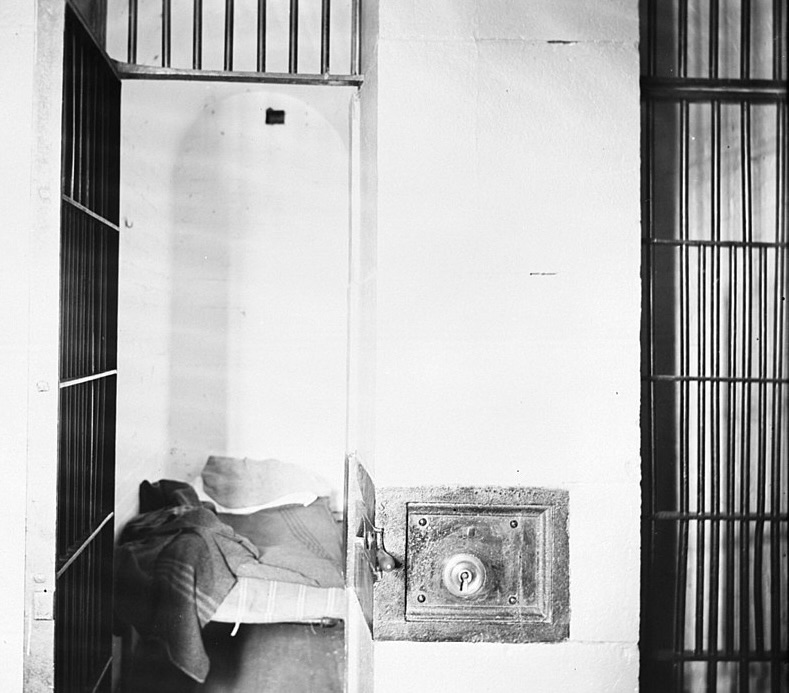
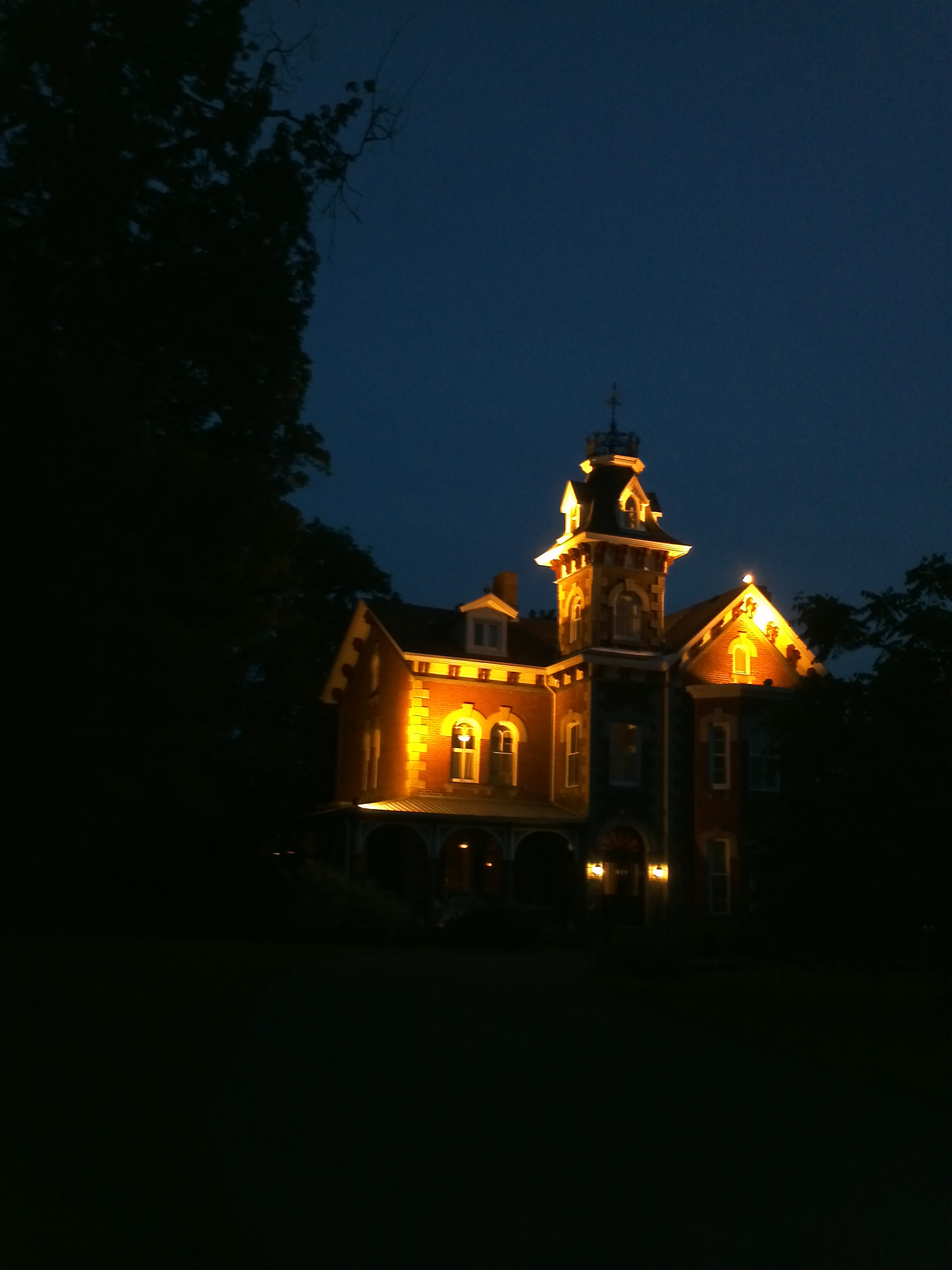
photo: William James Topley, Carleton County Jail, 1895
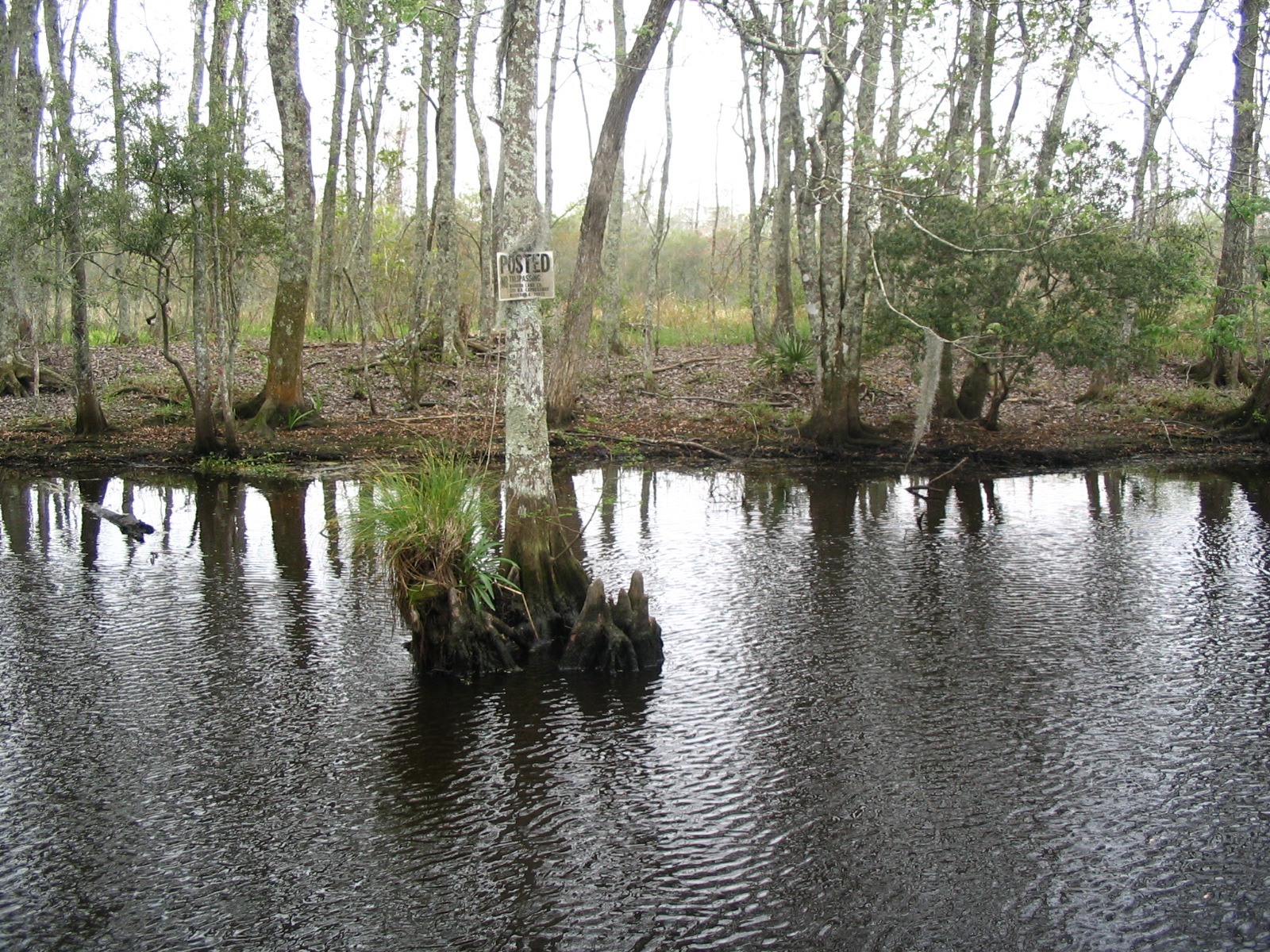
each ripple a transient brushstroke beneath the moss-draped trees, where branches tap with grandmotherly fingers
the light filters in patches, a muted backdrop of greens and browns, where shadows pool like spilled ink,
perfumed by damp earth with the faintest hint of floral
water lilies drift lazily,
their delicate blooms in smudges of color floating like fragments of a dream
while dragonflies dart in silver trails,
the cypress knees rise from the depths, though gnarled and ancient these silent sentinels guard the primordial realm as their shapes soften in the encroaching mist
the boat slips through reeds and rushes, each swaying stalk, a whispering brush against the hull’s weathered side, a rhythmic cadence in this verdant sanctuary
birds echo an intermittent soundtrack, flitting from treetop to water’s edge, a chorus that punctuates the stillness, brief notes of bright clarity in the ancient, unhurried palette
each moment a detail in an unspoken narrative, painted in hues of patience and mystery, as I drift through this living tableau, the swamp’s quiet artistry
Walking into Starbucks, Katherine spotted Ted sitting alone by the window. He seemed preoccupied and did not look up even when she pulled a chair closer to join him. Looking out the window, he tapped his cardboard cup lost in thought.
“Did the meeting go well?” she ventured.
Ted turned and smiled. “Oh, yes, all good. She approved the budget. I’m just a little…” he shook his head with a bewildered sigh.
“What is it? You feel OK?”
“I’m fine. Well, not really. Something strange happened today. Eerie.” He paused, twisting his cup left and right on the table, before looking up. “I saw myself today.”
“Saw yourself?”
“Yes. I saw myself. Watched myself. But not me now. Me fifty years ago.”
She leaned forward. Ted was never given to whimsy or fanciful stories. The flat soft tone of his voice was troubling. “What do you mean?”
“I met with Bess Andre at the Fairmont at eleven. We went over the budget. She liked what she saw and said she just needs this month’s bank statements to approve it. I told her she’d get them end of the month. Meeting went great. No questions. So we chitchit-chatted a bit, took a few pictures, then I headed out.”
“OK,” Katherine said softly.
“Well, I parked down on Pine. So, I crossed California to walk down Mason and froze. I just froze. In the driveway plaza of the Mark Hopkins, there was a 1973 white VW bug. What caught my eye was the rear fender. It had a crescent-shaped crease, a dent. I had a white ’73 VW with the same dent in the same fender. That was my car! But new. I drove that thing into the ground back in the Eighties. I sold it for junk for a hundred bucks to a friend who wanted parts. But this morning it was back, brand new but with that dent I got just after I bought it. The trunk lid was up, and I could this guy arranging things. And he was left-handed like me. He held the lid up with his right hand the way I used to. And he wore his watch on this right arm like I do. And it was one of those thick leather cuff watchbands from the Seventies. I had a band like that and the same watch. Gold with a black face. And he was wearing what I wore then – Dingo boots, flared jeans, black turtleneck, tweed jacket with leather elbow patches. And he had mirror aviator sunglasses. My girlfriend Toni got me a pair for my birthday that year. I tell you it was me. Then it hit me. The Mark Hopkins. April 1974. My sister and her roommate flew out from Wisconsin on spring break and stayed there. My friend Ric and I took the girls around all week. Fisherman’s Wharf. Chinatown. The Cannery. End of the week I drove them to the airport. So I watching myself packing up their stuff in my car at the Mark Hopkins getting ready to take them to SFO in April 1974. I swear it was me. Same car. Same clothes. Same watch. Same sunglasses. It was me!”
She nodded, sensing his unease.
“I could see the license plate, but who remembers their number from fifty years ago, right? But I know I have old snapshots. I’m sure they’d show the plate. So I picked up my phone to take a picture. Just then, the kid turned to face me. And just as I snapped the picture, he was gone. Nothing. He was gone. The car was gone. Just like that. Here, look.”
Ted held up his phone, scrolling through pictures. “Look, this is us last night. This is Bess and me this morning. And this last one is the picture I took in the driveway of the Mark Hopkins. No VW, no driver. Just that delivery van in the background. But I swear that guy and that car were there. And it was me. I saw me in April 1974. I Googled it. Easter was the 14th that year. The girls flew home that Friday. Would have been April 19, 1974. Just before noon.”
“Experience anything like that before?”
“Never. You know me. I taught physics. Only believe what I can see and touch. But this today. The car and the guy. If I saw one separately, OK, a weird coincidence. But the guy dressed like me and my car in front of the Mark Hopkins? That was me, April 1974 getting ready to drive the girls to the airport. Just too many coincidences at once. Look, if I saw that car last week in a parking lot in Houston I would freak. Looks like my old car with the exact same dent. That would be something in itself. But that car in the same spot fifty years later with someone dressed like me, same build, left-handed? Same sunglasses, turtleneck?”
“What are you going to do? You seem so rattled. I’ve never seen you like this before. Are you sure you’re OK?”
He waved his hand. “I already booked an appointment with my internist. Maybe it’s the new meds. I’ve had some intense dreams lately. Vivid lucid dreams. Maybe that’s it. It must be my new meds.” He nodded as if repetition would reassure him. “That must be it. I hope.”
“What’s wrong? It was just a flash maybe. Like a memory. You walked by the Mark and remembered your sister. Just a vivid memory. You have a good memory.”
“I dunno. . .” he muttered softly. “I keep thinking of my grandfather. I flew home for Christmas one year and visited him at the VA. He was seeing things, too. Dementia. When I walked in the room he kept calling me Johnny. ‘Johnny, where you been? Johnny, you OK? You all better?’ My grandmother told me he thought I was his army buddy Johnny who died of flu in 1918. She tried to explain to him that I was Teddy, his grandson. ‘You remember, Moira’s boy?’” Ted’s eyes watered, and his voice quavered. “Katie, I will never forget him looking around confused and panicked, asking, ‘Moira? Who’s Moira?’ He didn’t remember my mom. His own daughter. He died a few months later. I never forgot that.”
She reached across the table and took his arm. Suddenly, and for the first time since she met him, he began to look his age. “It was nothing, just a flash. An episode. We all have moments like that. It was nothing.”
“I dunno,” he said. “You hit seventy-four and something like this happens, and you wonder if it’s a sign of what’s coming. The start of something.”
“Look, you put that budget together, and two CPA’s and a lawyer went over it and never asked us a question. I’m sure you’re OK. I never saw any changes, and how long have we known each other? Just see your doctor about the meds.”
He forced a smile, then shook his head. “But I swear that Volkswagen and that guy were there. They were real.” He pointed out the window. “See that Volvo and the crossing guard? As real as those two.”
They both watched as the light changed, and the crossing guard waved at the Volvo driver who nodded and pulled forward to make a slow right onto Folsom.
“Hey, Teddy, get the girls off on time?”
“Yeah, no problem. Ran late as usual, but their flight was delayed twenty minutes. Saw them off. Jan said she had a great time. You made a big impression on her.”
“Well, too bad she’s in Wisconsin.”
Ted looked up from his beer.
“You know, Ric, something really weird happened today. Like Twilight Zone weird.”
“What?”
“OK, I’m at the Mark Hopkins packing up the car. You remember all the stuff they bought in Chinatown? I wondered if they could get it all on a plane. So, anyway, I’m packing up the trunk in front of the hotel, trying to make sure I don’t break anything. And I see this old guy out of the corner of my eye run across the street, and he stops dead and stares at my car. Like he’s never seen a Volkswagen before. Just standing there staring. For a second I thought it was my grandfather. Built like me, same hair, but older, you know. He had a moustache, though, and my grandfather doesn’t.
“I thought he must be looking at something behind me, so just kept packing things.
Then, and this is the strange part, he picked up something. Looked like a piece of black glass, size of a postcard. He holds it up, and from the corner of my eye; I see it light up like a miniature TV. So, I turn to get a good look, and he vanishes. In a flash he’s gone. He didn’t run away, he vanished. I mean if he turned to run, I would see his back, right? One split second he’s there, then he’s gone. How do you explain that?”
“You’re the physics major, Einstein, not me.”
“Hell, I just stayed in school long enough to dodge the draft.”
Ric pointed to the sunglasses on the bar. “Maybe it was those.”
“What do you mean?”
“Oh the guy was real, but he was probably a mirage, a reflection. The guy was there all right. But he was behind you, standing in the doorway maybe. Someone opens the glass door, and his image is reflected and you catch it in your glasses. You said you only saw him in the corner of your eye, right? So you move your head a few inches or maybe someone closes the door, and the image disappears. He was a reflection, uh?” Ric suggested, cocking an eyebrow.
“This guy was no reflection. He was 3D. I could see his necktie. And he had some kind of pin or button on his lapel. There was substance there, texture. Flesh and blood real. He was there.”
“Hey, weird things happen.” Ric tapped his temple. “These things aren’t cameras. You see things and your brain processes them. Or doesn’t. I tell you about my wallet last week? I swore I lost it. I always keep it on my nightstand. Last week, I’m getting ready for work and can’t find it. OK, I left it in my jeans. Not there. I check my jacket. I look under the bed, on top of the dresser, the jackets in the closet. I pull the nightstand from the wall to see if it slipped on the floor. I check the sofa in the living room. Then it hit me. I must have left in the car when I went to the drive thru to cash a check. I run to the car, look all over. Not there. I search the bedroom again. Phone rings, so I run down to the kitchen. It’s Jessica. I tell her I must have left my wallet at her place. She tears her place apart, nothing. I hang up, go upstairs, and there’s my wallet on the nighttable. It was there all the time. A black wallet on a white table. How could I miss that?”
Ric glanced down at Ted’s change on the bar, “Hey, Deal of the Day! Trade you a buck for a dime” He jerked his thumb toward the pay phone. “I gotta call and see when my car’s ready.” He tossed a bill on the bar and slid the dime into his palm. “Be right back.”
Ted picked up his sunglasses, watching the reflection of the bottles, then put them on, turning left and right, trying to catch sight of the jukebox behind him.
“Can you believe it?” Ric muttered when he returned. “Twenty-eight-fifty for a new tire. Believe that? But, hey, you don’t like my mirage idea? Got one better for you, Einstein. It was the Dodge guy.”
“Dodge guy?”
“The guy who hit you. You said you were walking toward your car and saw a guy in a black Dodge back into your bug, bang the fender, and drive off. You chased after him, but he never stopped. So today he spots you and the car, and he freaks. Maybe he stands there wondering if he should do the right thing and apologize and give you his number? Then he decides to runs off. Something makes you turn, and you think you still see him, but he was already gone. You did not see him, you just remembered him standing there. Just a memory flash. Cops and lawyers will tell you eyewitness testimony is always shaky. Think of magicians. They can fool a whole crowd with ‘now you see it, now you don’t.’” He twisted his palm back and forth like an illusionist with a trick coin.
Ted shook his head, “I dunno, he was really there when I looked up. At least for a second. And then he was gone. And something else. I felt he knew me. Like we were connected somehow.”
“Course he knew you. His Dodge connected with your bug, remember? Look, my car won’t be ready until three. Let’s grab a round.”
Ted sighed, then slid the dollar across the bar and motioned for two more Buds.
The End
Image by Rundvald: Volkswagen 1300 “Beetle” 1960s from Wikimedia Commons
Betty shows me her scar. Dark purple it runs six inches down her belly. She says it’s ugly and I say it’ll fade in time.
Drove through town on my way back. Jap surrender is all over the news so people hold up two fingers for victory. It’s when I get away from that crowd. I hit the gas and can’t let off. Car speeds up but still can’t let off so I hook my arm under my leg and sit up hard pulling my foot up with me.
Stopped on the side. Scary as hell. Take some breaths and try my leg. It works so I pull away. Slow this time and make it back here.
Martins are outside. He won’t stop talking. I tell them her tests are all normal and she’ll be home with the baby in a week. That little dog stares like it wants an answer but I don’t have any. All I have is the question. Why did my foot stick like that again?
That time with Betty in the car. She snaps at me to slow down. My leg unsticks but she’s still mad so I say we have to burn off the factory oil. She gives me a look and then we go on like everything’s normal. And it was. Until today.
I sat in here earlier. Curtain stops high in its arc. Falls back and starts all over again. That crowd just before my leg froze. Dancing. Hugging. Almost got out but didn’t. Their faces. Such happiness.
I should be the happiest guy in the world. War’s over. I have a son and wife. That job back home waiting. We can do it all now just like we planned so what’s wrong?
Haven’t looked at this notebook since Kimbolton. At the bottom of my grip but I put it aside. Need to be there with donuts by eight. That powdered kind she likes.
In bed early but then comes a dream. One I never had before. Someone I don’t know. Saying something I can’t hear. I try hard to listen but this roar in my ears blocks it out and then there I am again. Awake. Soaked in sweat.
Notebook feels different in my hand now. All soft and beat up.
Maybe if I read through I can put that year in the past. Back where it belongs. Or find an answer. That answer I need.
And maybe that’s why my foot stuck today. It’s telling me to get out now while I still have the chance. If I can’t fix this before they come home that’s what it has to come to anyway.
May 10, 1944
At intake Doc Spencer wants to know if I ever froze up before. Says if I come up with anything to write it down so here goes.
We’re on a weekend pass in Piccadilly. Kal says one of the Red Cross girls is giving him the eye so we all laugh. He says watch this and goes back for a refill but it’s about then I decide to head out on my own anyway.
You might think Piccadilly Circus is full of clowns and elephants but it’s just a big city intersection. An old guy tells me Park is on the right so I go that way keeping right.
London has a smell. Dirt and rubble but you can’t really say what that is. Burnt brick. Not fresh burnt old burnt.
Buds on the trees. Without all the big guns you might think there’s no war at all.
Further in is a bandstand in a clearing. No one there so I sit on a bench. A couple comes through. They keep going so I stay. It’s quiet.
Then I wake up and don’t know where I am. I try to get up but can’t. I try again but still can’t so I just sit there and it comes to me. There’s no war on that bench but as soon as I get up it starts all over again.
A woman and kid come at me. She has a newspaper. Makes like she’s folding it and pushes it to the sky. I figure she wants me to make an airplane for that kid so I take it and start folding.
It looks pretty good but when the kid tosses it it crashes. I’m all set to try again with less pages but that woman looks at me now like I’m one sorry ass plane builder. Maybe the worst she’s ever seen.
She drags the kid away. I think what the hell was that all about and take off to find the guys.
May 11, 1944
An RC girl says no GI issue in the dining room so look in my closet. I do and find a shirt and some pants there I have to roll the cuffs up on to keep from tripping.
I set my tray on a table when that same RC girl brings me a coffee and sits down with her own cup. She looks at the wraps on my hands so I say frostbite. I guess that’s her cue because then she starts up about perspex waist ports on the new B-17s. It’s kind of funny but she knows her stuff so I listen.
I was going to give Spencer what I wrote but then left it here. I tell him instead about not being able to get up from that bench. He says maybe I don’t want to. Big difference but I let it go. Spencer’s like that mad scientist in the Frankenstein movie so now I’m looking for Igor to walk in.
He asks if I like it here. I almost say best damn flak house ever but don’t. Then he asks if I have any questions so I ask when I can get back with my crew but he don’t answer that. Next time he wants one time up there when I didn’t think I’d make it back.
He tells me to lose the wraps. So much for frostbite. Frostbite of the brain and they all know it.
I know now why I didn’t take what I wrote. It was my file there on his desk. Just one more thing to use against me.
So here’s the deal. I’ll tell Spencer what he wants. Maybe even write it down but what I put in this notebook is my business. Then I’ll decide if he needs to hear it.
May 13, 1944
They say ignorance is bliss. Which means the less you know the happier you are. It follows then that learning something new costs some happiness. But people learn new things all the time so that means your whole life you become less happy.
The inverse then has to mean forgetting things brings back some happiness. So why remember anything? Maybe I don’t want to. Maybe I don’t have to.
Most people don’t go up in airplanes to drop bombs on people.
Spencer wants one time when I thought I wouldn’t make it back but that would be every time. Add to that it’s all mashed up in my head now anyway. What sticks out I guess is the first one. When I first found out what I’d gotten myself into.
We thought it might be a milk run like they sometimes give a new crew but then they pull back the curtain. Schweinfurt is deep inside Germany. Our mission is to destroy their ball bearing factory. Stopping production there can end the war. That’s what they say.
Last time there in the fall our group lost a quarter of its planes. But you can’t know anything until you do it yourself and this was my first mission so I was ignorant. Not happy. Just ignorant.
We take off at dawn and don’t cross the Channel until 1140. The bomber stream goes as far as you can see in front and behind.
About a half hour over France some Mustangs show up in my waist port. I point them out on the headset and we’re all glad they’re there. Then they’re not. We learn later some fighters lured them off leaving us to face their main force alone.
Some chatter on the headset. Then Whitman on top turret yells they’re coming in a voice so high I don’t recognize it. He opens up with his Double Fifty and the rest of us do too.
They come head on rolling over while firing. Then they hit the group to our right and I see three forts go down. One with its tail blown off and two trailing smoke.
Some chutes open below. I watch as far as I can follow.
Closing on Schweinfurt their ground Eighty-Eights open up. Flak pings off our hull over the engine and wind noise. Black puffs appear out my waist port and inside the close ones I see that red glow. What they call the red monster and now I know why.
Our bombs are gone but it’s still three hours back to England. They had time to land and re-arm so the only question is when. Just before the Channel they come from all sides.
I stay on one all the way in. He’s gone when I realize my body is up in the air behind me. I land on the casings and see Kal yelling at me through a cordite haze.
Coastal batteries throw up one last barrage. I see one fort in the distance take a direct hit. There it is one second and gone the next. Then the Channel appears beneath us.
Kal says when I locked on that FW I kicked him in the head. He thinks he’s hit but then sees my legs up in the air so I tell him I’ll keep my feet on the deck next time.
Back on my bunk not sure how long. That’s when it comes to me if that’s number one how will I ever make it through twenty nine more.
May 14, 1944
Tough session with Spencer today. Only thing I say about Schweinfurt is watching those chutes go down. He wants to know about that so I say it was like them passing into another world.
That perks him up and I want to bash his head in with that paperweight on his desk. He says I’m here to help. I say you’re here to get me back into a B-17 so just sign my paperwork and I’ll be on my way.
He asks about that other world. I say it’s a world of hate. Farmers down there waiting to pitchfork us while the guys under those chutes watch us go on without them. All they got anymore is that world of hate waiting below.
Next time he wants to hear about my freeze-up. Says I should make use of the facilities here. That I should enjoy myself. So how do I do that with my crew back there carrying all the load. I say I will.
May 16, 1944
I take a shortcut to the driving range and get lost. That’s when it comes to me to just tell Spencer that’s it. I’m done flying. So I’m all set to do just that when I ask myself who I’ll be then. A quitter for one thing and that ain’t so easy to fix once it’s done.
I don’t tell him I got lost. Who gets lost in a clump of trees? Then something pops into my head. I tell him about this buddy when I’m a kid and how at the start of the school year he’s not there. Then I find out he’s held back and I wonder if he’s stupid.
Spencer asks what it means and I ask him why it has to mean anything. He says my buddy got left behind. Same as those guys under the chutes.
I see where he’s going so I say it’s different with me because I plan to catch up. I’ll just volunteer for extra missions when I get back. When you give me the okay. I say that last part like a question but then he switches to my freeze-up.
Montdidier. No fighters all the way there and back so I’m looking out at some clouds thinking this one’s in the bag. We’ll be back in an hour with more than a quarter of our missions done. That’s when they hit us.
He asks what I think then. I say it ain’t fair and keep going.
I’m on one but then here comes another. Cannons flash round in my sight so I give him a burst. He keeps coming so I give him another and then another. And then. My fingers won’t let off. I stay on it until it gets so hot it jams. Back on the ground my fingers are still stuck so the medics come on to pry me off. I say it’s frostbite. They take me to the infirmary. And that’s it.
He makes a note and checks my file. Then he asks about what they call me back home.
I have to think on that one and tell him it’s like those clouds before the fighters jumped us. One time instead of my chores I get caught laid back on this hill looking up at the clouds. All those shapes. So my little sister Tippy gets a kick out of it and starts calling me Leisure. Then they all start up.
He asks if it bothers me and I tell him no. I do my job. Like my football team back in school. We were good because we all did our jobs. Same with my crew. Ask any of them. That freeze-up just snuck up on me but it won’t happen again.
He asks if I’ve written home. I say not until I know what happens. He says I should. I say maybe and we leave it at that.
May 17, 1944
Been here a week now. He wants to know about Betty.
I tell how she lives in St. Louis and don’t want to live in Memphis. How she won’t listen when I explain about my job. I tell him about our last day in Forest Park and how I wish it went better.
What I don’t tell him is I decide right then and there to write her as soon as I leave his office. So I do and tell her we’ll find a way to make it work.
Funny. Right after I mail that letter I want one back and then the next morning one shows up forwarded from Kimbolton. Before even reading mine she answers me almost word for word everything in it.
Spencer says I should mix in more here so I say I’m going to toast marshmallows Friday night. Colored signs everywhere. Punch and cupcakes for all.
May 18, 1944
He wants me to go back through my missions. Wish I wrote them here all along.
We skip a day after Schweinfurt. Then go three straight. Kassel. No Oranienburg is first. Aircraft factory. We peel away from the main group as a diversion. No losses.
Then Kassel. It was destroyed in February but they rebuilt it underground. We lose one fort while our sister group loses three. Third day is to a V-1 rocket site at Sottevast. Some Focke Wulfs and light flak. Whole mission lasts only four hours.
Next day I sleep in but then keep popping up like I’m missing something. That’s the day I meet Fred. He’s already got fourteen missions and I can’t even imagine that many.
He asks what I think about killing innocent civilians down there. I say it’s our job and he nods. Then he wonders what it’s like getting hit with a five hundred pounder and I tell him there’s nothing to wonder about because there’s nothing left. At that he just stares with that far off look.
Number five is to Landesberg outside Munich. A new type Messerschmidt is built there. Some groups from Italy are supposed to link up but all I see is what looks like the whole German Air Force.
Rail yards at Hamm-Bonn is six. I’m looking at a runway crack thinking that concrete was poured way too fast. It’s about then we’re all wondering what happened to the land invasion. Even the brass knows we can’t win this war by ourselves.
Seven is to Berlin. Seven hundred forts and nothing goes right. High winds and clouds the whole way. Over the target we lose five forts and count very few chutes.
Fifty men. Same chow line. Throwing around the same football. Gone. Just like that. That’s when they give us the two-day pass to London.
I try to make an airplane for that kid.
On the train back people out the window do the normal things people do. And we feel normal too after our thousands of miles traveling together. Difference is we ain’t in a goddamn airplane.
We get back. First the quiet. Then all the gear gone from the middle bunks. End crew ignores us until one pipes up. Went down yesterday. No chutes reported.
Fred’s crew. I hope he’s a POW somewhere but there’s a better chance he’s not. I think at least he won’t have to worry anymore about killing civilians.
That look on his face. It’s like he knew but then how could he not? You can’t keep rolling the dice and expect it to not come up snake eyes. The law of averages. It has to catch up.
Berlin’s the first time my hands freeze. I’m plugged in so I figure it’s a bad connection. I take my gloves over to the equipment chief and he hands them back saying they’re fine. I think he’s telling the truth.
May 19, 1944
I try telling about Fred but then don’t have that much to say. That’s when Spencer brings up me taking the Pentothal. Nothing to it he says. It relaxes you so you can talk.
And spout off any dumb thing in your head. What he’s really saying is I have to take it if I want back with my crew while at the same time saying it’s my choice. Funny how that works. He says to sleep on it.
Then I go to the marshmallow toast. GIs and RC girls. A crowd at the fireplace cooking marshmallows.
It feels tight in there and then something jumps the rails. This RC girl acts like I should say something. I try to smile but that’s wrong so I go for the punch. Then I think I might throw up so I head for the door and make it outside.
I lean against a bicycle rack when this other RC girl comes out and offers me a cigarette. I see now she’s that same one from my first day.
I tell her I don’t smoke so she lights up and lets out a long contrail.
She checks her watch a few times and asks if I want to go for a ride. Then she hops on a bike and tells me to grab one. Next thing I’m following her down the driveway and I don’t think anything’s ever felt so good as riding that bicycle through the night.
Almost bright out except for the tree shadows. We go a long way and then turn down a lane that ends at a fence. She hops over and heads off into a field. She stops to check her watch again so I strike a match and ask if she needs to be somewhere. All she says back is give it a minute.
You feel the hum before hearing it. Then that rumble that gets louder until the ground starts shaking. A Lancaster comes over the tree line followed by dozens more. It’s RAF since they only fly at night but she knows that.
I say Limey and she says blimey.
She’s from New York so I call her a Yankee. She says that’s what her husband calls her only he shortens it to Yank. I ask where he is now and she points up to that bomber stream. So that’s it. We’re here to see him off.
Her eyes stay on that stream so I shut up and watch too. I also watch her face and it reminds me of something. Something I lost track of.
Back at the house all she says is I got heart and goes in.
There’s still that answer I owe Spencer. I can turn down the Pentothal. Get a ground job maybe. Or I can take it and try to get back in the war. After being out in that field earlier turns out there’s not much choice after all.
May 20, 1944
Bug Juice. Truth serum. I say I don’t need that stuff to tell the truth and that sets him off but good.
He says it’s not to find out if I’m lying but to reveal what we don’t know. Think of it as peeling back the flesh on an infection to flush it out. He’s wound up pretty good now so I tell him I already said okay. Let’s just do it.
I report in the morning to a small clinic behind the main house.
May 27, 1944
What’s fair? Kids say that’s not fair to each other. Some people say we lost the game but we played fair. And then for others it don’t matter at all.
Been a whole week since writing here. Sent another letter to Betty. Told her I want to take a trip together when I get back. And it don’t matter where.
I knew we were killing people by the thousands. Guess I had to see for myself.
I want to go hunting again. Not to kill anything. Just to be there. I want to see Betty again and see how we do together. I want to live a little more like anyone else in the world and there’s nothing wrong with that.
But there’s no guarantee. That’s the important part. Some die and the rest go on. There’s nothing fair about it. The other side is you have to live with yourself and if you can’t do that then you don’t have anything anyway.
My plan to catch up is over. Those guys must be halfway through by now. They’ve gone on and I hope they keep going on just like I plan on doing when the time comes.
May 28, 1944
If your mask fills with puke you choke. But you can’t pull it off. No oxygen so you fight it back down. You fight the FWs too. But then something wants to take you away. You want to go but you have to stay on that Fifty. So you do it and then do it again. And keep doing it. Until you don’t.
Spencer reads from his notes. He says some remember everything under the Pentothal while others like me almost nothing.
Yelling over the headset. 17s falling out of the sky. The cold. Spencer says it’s okay to cry and I tell him why it’s not.
Then he brings up Jimmy Stewart. He flew the lead fort to Berlin that day. They say with a movie star leading us we shouldn’t mind following. I remember all this.
After the mission we find out they turned him back over France but then we see a newsreel of him getting the Croix de Guerre for leading us to Berlin. It’s a crap lie and Stewart gets cussed out pretty good that day as just another newsreel hero.
But that’s not fair either and I tell Spencer why. Stewart’s flown more combat missions than all those other newsreel heroes put together. Maybe he did have engine trouble but that’s not the point anyway. And then there it is staring me right in the face. It’s not fair. I yell it out and wait for an answer but nothing.
Fair is for another time. Another place. And who am I to judge what’s fair anyway? Maybe those newsreel heroes know something I don’t. Maybe they know not to get themselves in a situation where they freeze-up. Maybe they’re doing the best they can with this filthy rotten mess and that’s all you can expect of anyone.
Only other thing I remember is getting up from that table soaked in sweat.
May 29, 1944
Got my okay today. A new directive says B-17 crews will now be nine men instead of ten. Half the waist-gunners will train on the radio and split time between it and the Fifty. Spencer thinks I can be one of these new radio-waist gunners.
He says my problem is all the waiting. Too much time to think so doubling up on the radio suits me better. I’ll be on the Fifty when the fighters come but the rest of the time will be all dots and dashes.
It’s up to the brass at Kimbolton but with my experience you can bet they’ll find a place for me.
Only thing I can’t figure is how much to tell Betty. In my letter today I only say I had some down time. I don’t like lying to her but if I try to explain the censors will leave in some and block out the rest. It’ll only confuse her more.
So that’s where I leave it. With her and me it’s all about the future anyway.
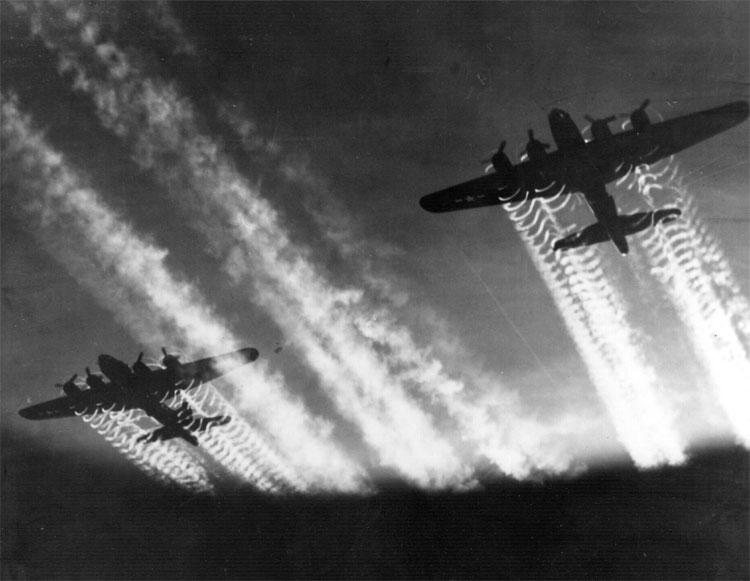
Image by U.S. Air Force personnel during World War II, date unknown
I want to tell you about a girl named Kiara. She lived a long time ago, in a small cabin just outside a mountain village. She had black eyes and a long black braid that brushed the top of her leather belt. Every morning, Kiara woke in her cot in the warm kitchen, the dead embers from last night’s supper in the hearth beside her bed, and stretched her arms and legs as she yawned. Then she sat up and gazed out the window, where, across the valley and half-way up the next mountain, an immense waterfall fell from a great green cliff. The water roared, and Kiara thought it said, “Don’t come near me, little girl! I’m too big for you.” The water was blue at the top but turned white as it picked up speed, bubbling and frothing like a rabid dog. Behind the waterfall was the entrance to a cave that the villagers called the Cave of Emptiness. It was vast, and deep, and as dark as a grave, and no one had ever gotten to the end of it. The villagers told stories of brave men who had sworn to make it to the end of the cave and back, and had disappeared forever. Boys in their early manhood had attempted many expeditions, only to emerge within the half-hour, their faces tight with fear and their eyes closed tightly in the sunlight. They told everyone that their torches had been extinguished within minutes, as if blown out by unseen mouths. Some of the old women in the village said that there was no end to the cave at all, that it went on forever, until there was nothing left inside—not rock, not air, not even darkness.
Kiara lived in the little cabin with her father, a blacksmith. He worked in a small forge behind their cabin, making candlesticks, axes, and horseshoes for the village. He had even made Kiara her very own sword. The sword gleamed so brightly in the sun that it could blind the birds passing in the sky.
Kiara had a mother once, too. Her mother had given Kiara her black eyes and black hair and her life, and not a thing else, because she’d died the moment Kiara was born. Kiara knew nothing about her. When she pestered her father for details, he set his jaw and turned away, his forehead wrinkling.
Kiara longed to know about her mother. One day she prepared a plate of her father’s favorite snack, pineapple. She cut it into perfect triangles and carried it out to her father’s workroom. She found him bent over the forge, holding an oblong piece of iron between tongs. His hair, gone gray early, clung to the sweat on the back of his neck.
“I’ve brought you some pineapple,” Kiara said.
He looked up from his work, glancing at her and then the plate. “Thank you, Ki-ki. That was very thoughtful of you. Set it down on the table, please. I’ll have some when I’m finished with this candlestick.”
Kiara set the plate down, then looked back at him. She shuffled her feet, then cleared her throat.
Her father looked up at her, his brow furrowing. “Was there something else, Ki-ki?”
Kiara took a breath. “I have a question, Father,” she began.
“Ask it!” said her father.
“What was my mother’s favorite color?”
The tendons in her father’s neck went rigid. He bent over his forge. Finally he said, “She didn’t have one.”
“Father!” said Kiara. “Everyone has a favorite color! Tell me.”
Her father didn’t look up. “Black,” he said.
“Black! That’s not a color.”
“It’s all of the colors,” he growled.
“Well then,” said Kiara, “What kind of black? Like a raven? Like ebony? Like coal?” “Kiara! Leave me be!” her father roared, his eyes dark and threatening. Kiara turned and ran back to the cabin, muttering, “Black is not a color.” In the kitchen she grabbed the pineapple rind off of the table and hurled it out the door to the chickens. She was desperate to learn more of her mother, but it wasn’t just that that bothered her. Why was her father so unhappy? She knew he loved her, but his grief was like a shadow through which she could not cross. She longed to make him happy, to see him full of joy and admiration for her.
That afternoon, as Kiara scattered corn for the chickens, she looked up at the waterfall and the Cave of Emptiness. “I bet I could explore the cave,” she thought. “I bet I could get all the way to the end of it. I’d find whatever’s there, and come back and tell everyone, and bring souvenirs—pebbles, and pieces of the cave wall, and things like that. And they’d all think I was so brave. And Father would be so impressed, and that might make him truly happy. Tomorrow is my ninth birthday. I’m old enough now to go out on my own.”
The next morning Kiara woke before dawn. She filled her father’s flask with water, and squeezed a wedge of pineapple through the opening. She didn’t bother with a torch, knowing they never lasted in the cave. Just in case she ran into trouble, however, she slipped her beloved sword into her belt. Then she set out for the great waterfall and the Cave of Emptiness.
And this is where our story truly begins, so join me, please, on the path to the cave. Imagine Kiara, small even for her age, with her braid swinging left and right with each step, marching towards the waterfall with determination. Her sword shines down her left leg to the knee. She grips the handle as she marches. Her flask bounces against her hip on the right side with a small sound that goes pit, pit, pit. She’s already thirsty, but she’s too intent on reaching her destination to pause. She reaches the cliff. She climbs up the side, where it’s dry, until she reaches a dirt path that’s been worn down by the feet of villagers who came to explore the cave, only to turn back. Kiara brushes the dirt off of her leggings, and looks up at the waterfall. The roar is stupendous, like sticking your head right in the mouth of a mad lion: ROOOARRR. The sunlight on the rushing water looks like a hundred dragons opening and closing their mouths, their green tongues snapping and their yellow eyes flashing. Kiara is just steps from the water now, and for a moment she considers running back home. She imagines throwing herself into her father’s arms, and curling up by the kitchen fire as he makes her a bowl of soup. But instead she takes a deep breath and steps behind the water, into the cave. When she looks back, there are no dragons in the water, no flashing yellow eyes. Just the rush of water as it dives from the cliff to the boulders in the lake below.
Kiara turns away from the waterfall. She is in the mouth of the cave. “Mouth of the cave,” she thinks, and now she understands that phrase: the cave’s opening is dank, and musty-smelling, like the unwashed mouth of a monster. She looks around. Where she stands everything is still lit from the sun weaving through the water. But when she looks into the depth of the cave, it is like looking into eternity. She can see nothing.
Kiara begins to walk towards the darkness. It isn’t long before she feels the blackness cover her like a heavy quilt. Instantly she feels the fear of all those who came before her. Their bodies are gone but their fear remains, bouncing against the cave walls like an echo. She whirls around and finds the opening of the cave: a distant circle of light, but it grounds her. She uncaps her flask and takes a long drink. The water is cold and crisp, with a hint of the pineapple’s brightness. She feels it run down her throat and into her stomach, and the sensation helps her feel the reality of her body, although she can barely see it. She hears a drip of water fall into a puddle, and the echo it makes: plop plop plop. She keeps her eyes on the circle of sunlight at the cave’s entrance.
Kiara’s heart is beating hard, and it says, “Kiara, you are brave and strong! Keep going! Do not lose faith!”
Kiara takes one more pull from her flask. She places her left hand on her hip and finds her sword, sturdy and real. She takes one last look at the dot of light behind her and then turns. She walks.
Kiara walks for a long time. She wants to look back, to see if she can see the cave’s opening, but she senses that if she does, she’ll run back as fast as she can. She keeps her face fixed ahead of her. The darkness goes from soft brown, to the color of the coffee beans her father grinds each morning in his pestle, and finally to a black purer than anything Kiara has ever known. It is not the black of ravens, which are flecked with purple, or of ebony, which is striped with brown, or of coal, which is spotted with silver. It is the black of the time before creation, of absence, of nothingness.
Kiara’s pupils are as large as the wheel rims her father makes in his forge. They search for light, for shape, for anything, but there is nothing. Now the sounds of her body are as loud as drums. She begins to breathe quickly, and her hands shake. She stops walking.
“Keep going!” says her heart.
But her head says, “Why do you care about the Cave of Emptiness, Kiara? Why do you always need to be the one to solve every riddle? Turn around, go back to your father, who is by now no doubt worried sick for you. For once, be what you are—a kid!”
Kiara breathes heavily, and her breath says, “Kiara, I’m afraid! Darkness is unnatural. Please, take us back to the light or we will die!”
Kiara turns around, towards the entrance. She begins to walk, slowly at first, and then faster. “Kiara!” shouts her brain. “Are you sure this is the right way? Are you sure you turned exactly 180 degrees? What if you turned down a side path, and will never find your way out?”
Kiara falls to her knees. She puts her hands on the ground, to feel where she is in space. She turns to her right and begins to crawl. “Kiara!” cries her breath. “Oh god, what are you doing? What if you were on the right path and this is a side path? You’ll be trapped here forever!” Kiara stops again. The cave is a huge black house with endless corridors. She pants, her head races, and her heart beats wildly.
“Heart,” she says, “you have never steered me wrong. Tell me, now, which way do I go?”
Kiara listens. Her heart beats, dumbly. Finally it says, “I do not know.”
Kiara has never felt so alone. She falls to her side and curls up into a ball, clutching her knees. “I am sorry Father,” she whispers. “I did not know how dark it would be.”
Kiara lays there for a long time, with her eyes closed. Finally, she hears a small voice. “Kiara?” asks her heart.
“Yes? What is it?”
“I have a small thought I would like to share. If you still want to hear from me, that is.”
“Of course I want to hear from you, heart. What is your thought?”
“Well, it occurs to me that if you lie here, you will surely die.”
“That’s true,” says Kiara.
“And if you get up and walk and never find your way out and are stuck here forever, you’ll die, too.”
“That’s true,” says Kiara.
“But if you get up and walk and find your way back to the village, you won’t die. You’ll go home, and eat supper, and live a long time. I hope, anyway.”
“That’s true as well,” says Kiara.
“What’s more,” says her heart, “if you get up and walk and find your way through the cave, and there is something astonishing on the other side, well then that would be excellent too. So if you stay here, you will die without a doubt. But if you get up and walk… we don’t know what will happen. It could be anything.”
“Hmm,” says Kiara. “I see your point.” Kiara gropes for her flask, unscrews the cap, and swallows her last long pull of pineapple water. She stands. She has no feel for where the entrance is. She looks around, but the darkness is absolute.
So she closes her eyes. And walks.
She walks a long time. She smells the metal of rocks, and the musk of wet dirt. She hears the drip of water, plop plop plop, and the scurry of small creatures, tu-kuh-tu-kuh-tu-kuh. And she walks.
Finally she hears something new. She hears the wind, and it seems to say, “Kiara…Kiara…” She walks faster. The sound grows louder. She opens her eyes and stops. Ahead of her is a small point of light. It is like a single star in the night sky. She begins to run. Her heart says, “Run, Kiara!” and her breath says, “Run, run!” and her head says, “Quickly, Kiara! As fast as you can!”
The point of light grows bigger and bigger until Kiara can see everything around her: glistening rocks, and tiny lizards, and puddles that reflect the dancing light. And then she is face to face with the opening of the cave, and the waterfall is crashing down from the cliff above, and the light is moving with the water like a mother and child who hold hands as they run. Kiara runs to the side of the opening and onto the path. She feels a few cool drops from the waterfall as she steps out, and then she is on the dirt path, and out of the cave that she is sure she will never, ever enter again.
Kiara stops. Where her village should be she sees a grassy meadow. She sees only tall grass, with small yellow flowers swaying in the wind, and beyond the grass, woods. Kiara feels for her sword and grips the handle tight. Now she spies, at the edge of the meadow, close to the forest, a small cabin, just like her own. In front of the cabin, in a bright blue dress, stands a woman with a long black braid over her shoulder. Kiara stares at her. The woman raises one arm. She waves.
Kiara’s heart says, “Go, Kiara.” And so Kiara walks, slowly at first, and then faster and faster, until she has crossed the meadow and reached the woman in front of the cabin. And then her mother’s arms are around her, and Kiara is weeping, and her mother is whispering, “Don’t cry, it’s alright, don’t cry,” and Kiara knows that somehow this is an invitation to cry as much as she wants, as much as she has ever wanted since the day she was born, motherless, into the world. Her mother runs her fingers over Kiara’s face, feeling the large eyes, the round cheeks, the high forehead, the small mouth. Kiara looks up to see the same small mouth, the same forehead, the same eyes as dark as a cave. She nestles her head into her mother’s neck and listens to the heart that beats there, and it sings, “Love, love, love, love, love.”
Kiara will go back. She will turn away from her mother, and cross the meadow to where the waterfall has reappeared. She will look back once to see the small yellow flowers waving goodbye, goodbye. She will enter the cave, and find her way in the darkness without fear. She will go back to her father, who is worried sick, and grow up, and have adventures, and even daughters of her own. But for now, we will let her stay in her mother’s arms, her eyes closed as the tears fall, as her mother whispers, “You found me, dear one, you found me.” Let us go, now, and give them their moment.
Image: Caverne Milodon de Chili by Remi Jouan (2006), from Wikimedia Commons
During my time working in the West of England I was handed the most curious of referrals. A 40-year-old man by the name of Darren had, to all intent and purpose, gone missing. A brief look through the records showed that this was in fact, not quite the case.
Darren had a physical disability, cerebral palsy, but was neurotypical. In the absence of any family in the town, he spent his weekends in Dowlais visiting his elderly aunt and uncle. On one such visit, Enid’s husband Dai had died suddenly of a heart attack. It was a quiet Sunday afternoon, the roast beef eaten, cleared away and washed up. Dai sat, with his newspaper and pipe, fell asleep and never woke up again. He was 85. Darren, who relied on Dai for lifts to and from his home some 40 miles away, had just never gone home. Fourteen months had now lapsed, during which Darren had had no formal package of care, no GP appointments, in fact very little to evidence that he even existed anymore.
Dowlais was a small village in Merthyr Tydfil, South Wales. It had traditionally been a community that provided workers for the steel and iron works, but, like many south Wales communities, the industries had fallen foul of poor economic conditions, imports and generally being held in little esteem by central government. Over the following years the population had gradually moved away leaving around 6,000 souls. Such factors did nothing to tell me the true stories of this community.
I called the phone number I had been given for Enid. She answered the phone in age old tradition ‘Good morning, Dowlais 355492’. Her voice, aged though it was, spoke with the lilting South Wales accent that poetry and song was written for. I introduced myself, saying I was a social worker and was just checking in to see how Darren was doing.
“Oh, he’s fine, we get by you know”, she replied.
“May I speak with him?” I asked.
“Well not really, he’s ever so crippled he is and doesn’t do so well with the phone, and any way, still grieving we are, since Dai died”.
It didn’t seem right to me that somebody would grieve for fourteen months, but if my experience had taught me one thing, it’s that grief doesn’t have rules or boundaries. It most certainly doesn’t adhere to timelines. After some conversational toing and froing, Enid agreed to let me visit Darren with a resigned, but ever so warm “well you’re very welcome to visit us, but we’re managing fine and we really don’t need anything”. I made an appointment for the following week and thanked Enid for her time.
The day came, I left in the early morning and headed off towards Dowlais. The drive was uneventful but the scenery breath-taking. New dual carriageways careered through valleys, hills and mountains. After life in the West of England, the absence of very many people was noticeable. My satnav brought me into Dowlais. Rows of terraced dark grey, light grey, cream and light blue houses stretched out down the road to the bottom of the village. Above the houses, the hills and mountains were lit up with unseasonal sunshine. The February wind whistled through the streets creating a bitter breeze. Every house had neat blue and black boxes of tin cans and plastic bottles awaiting collection.
I found Enid’s address and parked my car. Every house seemed to have lacy net curtains providing a wave of twitches as I walked to her house. I rang the doorbell. I could make out a short image walking slowly towards the door through the frosted glass. The door opened and there was Enid, an immaculately dressed lady in her 80’s in a floral dress and cardigan. Her grey hair was tightly pulled back, and she wore little wire glasses that circled her eyes.
“Bore Da” I said with a pronounced English accent “I’m Andy, we spoke on the phone”.
“It’s pronounced Borrer Da,” Enid said with a smile, “but that was a lovely attempt, thank you”.
Enid’s house exuded warmth and comfort.
“Go on through” she pointed to the lounge, as I walked through the hallway, I glanced right into what Enid called the ‘Sunday Room’; it was an immaculately kept dining room with thick patterned carpet, framed photos of family on the wall, a dining table, six chairs and an imposing wooden bookcase, the top part of which was a glass display cabinet holding trinkets and war medals from the Second World War. There was not a speck of dust in sight. I continued my short walk to the living room. An electric fire glowed in front of a tiled fireplace, modestly papered walls, family pictures, horseshoes, a few display teapots, many ornaments that were in practice love letters to Wales, and a fading tapestry in a glass frame that said:
“Life is going to work
To dig a hole,
To earn the money,
To buy the food,
To get the strength,
To go to work,
To dig a hole”.
I’m guessing there is some monotony suggested here, perhaps pathos, but all I saw was charm. As traditional as this home was, there was no anachronism. Welsh pride exuded through every pore of this community.
Enid invited me to sit down. The wooden legged furniture with soft arms and white lace protectors lying over the top provided perfect comfort. Darren sat in the corner. He was dressed smartly in plain trousers, a collared shirt and red v necked jumper.
“He wanted to make an effort because we had a guest” said Enid proudly. Darren sat, his arms and legs jerked slightly as he said “hello” and “thank you for coming.” His speech was slurred and a little slow, but patience proved the virtue and provided all that was needed to understand Darren. I asked how they were coping.
“Oh, we do fine” replied Enid warmly.
“We do fine thank you,” Darren said, echoing the sentiment. During the visit, four separate neighbours telephoned to ensure Enid and Darren were okay.
“The neighbours help whenever we need them to, that’s how we are here. We’re like a big family, see? Everyone looks out for everyone else.”
Enid quickly started talking about the Six Nations Rugby match against England the coming weekend.
“We’re ever so excited” she beamed
“We loves the rugby; the boys are definitely going to win it this year.” I pictured a Saturday in Dowlais, the pubs and houses all united in community behind the Welsh rugby team as this whole street was united behind Enid and Darren.
My concerns, however, were correct, Enid explained to me over an immaculately presented pot of tea, complete with matching cup of saucer and vast array of biscuits, that there was no package of care, no occupational health, no physio, no regular care at all. Enid, in her 80’s and standing at a fraction above five feet tall was washing, showering, changing, helping to the toilet and doing bedtime routines for Darren all on her own. Occasionally it got too much and she’d maybe ring Bette and Dai next door (there were men called Dai in no less than 5 of the surrounding houses so surnames were used in all communications to avoid confusion). All of the neighbours were happy to help. It occurred to me that while the government had neglected this resilient and proud corner of Wales (they had been left with little investment, few opportunities for the younger population, and very little agency of their own), one thing they did have was a sense of belonging, community and unity that most parts of the country had lost in pursuit of status, wealth and careers. Generations of families united to help each other out and support each other when nobody else would. They were inspiring people, but an absolute nightmare for a social worker. I asked to hear more from Enid about their family history.
“Well, my Dai’s been gone some 14 months this week” she said matter of factly. “Steel worker his whole life he was. But truth be told, a lot of him never came back from Aberfan”.
The mention of the word ‘Aberfan’ was followed by a deserving silence. On 21st October 1966, about 6 miles away, 144 people, mostly children at Pantglass Junior School, died when a colliery spoil tip collapsed. The resulting avalanche destroyed the local school and a number of houses. The community had never recovered and didn’t expect to. Everyone in the village, and most people in the surrounding communities had a family member or friend killed. The surviving children talked of guilt when they played, worked or even smiled. No disaster has ruptured and broken a British community like it since.
Enid talked of how, when word came through of the disaster in Aberfan, every Iron worker, steel worker, coal miner, farmer and labourer, downed tools and went to help with the search and rescue effort. Enid knew Dai had gone, he was gone for days, sleeping on a church floor, fed by the surviving tortured and bereft community, and digging in his waking hours.
“He never talked about what he saw or what he found” Enid talked in hushed tones.
“But he was never quite the same after that. But we never had children. He didn’t want them after that. I’m not sure if he’d feel guilty for having children when others had lost theirs, or if he just couldn’t stand the idea of putting himself through the pain that he’d seen others go through that day. But that was his decision. But it turned out well, when Darren was born we were as good as mam and dad for him anyway”. Darren smiled a huge grin when Enid said this, but a tear was visibly streaming down his face.
The victims of Aberfan weren’t just those that died. They were people like Dai, forever traumatised, riddled with unnecessary and disenfranchised guilt. This community would never forget and would never want to. The overwhelming sense of heartbreak, loss and trauma lived on and showed little signs of ever going away.
We talked a little more, with Enid and Darren both making perfectly clear that no help was needed, be it practical or financial. The community would step up so no formal intervention was needed. This community had been let down enough, and now it united to help those who needed it without fuss or complaint. It was a breath-taking prospect.
I thanked Enid and Darren for their time and hospitality and finally managed to get them to take a business card from me, promising that if it ever got too much, or they couldn’t cope any more, that they would give me a call. Enid promised, and shook my hand thanking me sincerely as she led me out into the bitter wind that howled through the valleys. I knew I would never hear from them, and, as frustrated as I was as a social worker, I was inspired by the dogged and industrial determination that held this community together. They were proud, hardworking folk, from a community that embraced and lived its traditions, in this case, pulling together and needing nobody else.
That weekend Wales lost their match to England 16-21 in Cardiff. I very much doubt Enid and Darren let it spoil their day, they really weren’t at home to self-pity.
Painting: Dowlais, 1840 by George Childs (Wikipedia)
The faint smell of death, that she hadn’t been able to scrub out, lingered in the large estate that Magda, after inheriting it from her sister, had converted from a funeral home into a bed and breakfast. Magda’s sister, Anika, a slight woman with jet black hair and soft blue eyes that retained a youthful sparkle as she grew older had married the undertaker from a tiny island off the Isle of Skye upon her first visit to Scotland.
Anika, who was three years younger than Magda, was killed in an automobile accident on the road to Edinburgh where she and her husband, Peter, were going to celebrate their thirty-fifth wedding anniversary. A camper driven by a tourist who fell asleep at the wheel ran them off the road, and into the murky depths of Loch Garry.
Magda and Anika, who were orphaned at a young age, had looked out for one another until Anika married and moved to Scotland. Even then, Magda benefitted from their deep connection, remaining in close contact with Anika through the exchange of long, expressive letters until Anika’s unexpected demise.
Ever since they were little girls, Magda and Anika had longed to see Scotland, their mother’s country of origin. They were finally able to do so when, upon Anika’s twenty-first birthday, the orphanage released the pittance of an inheritance left for them by their father’s meager estate. They had been holding on to it since the girls were placed into the orphanage when their father committed suicide a year after their mother died giving birth to Anika.
The moment they got the money, Magda and Anika lit off to see their mother’s homeland. Upon their arrival, Anika joined a tour out of Glasgow to the Isle of Skye, while Magda, who was not feeling well, went on to their hotel, which was in Edinburgh.
Anika met her husband, Peter, after the tour bus driver and guide died right in the middle of a long-winded explanation of the geological significance of Kilt Rock. The tour was delayed while the company looked for a replacement. While she was waiting, Anika ended up attending the funeral of the tour guide, who happened to be a native of the tiny adjacent Storr island which was where she met her future husband.
It was a stomach virus, which she must have contracted on the flight from Bucharest, that prevented Magda from joining her sister on the Isle of Skye tour. A few days later, she got word that Anika would be delayed coming back, so, feeling better, she decided to go out and see Edinburgh. She was having an extremely nice time exploring the city and its ancient treasures before her sister sent message to Magda asking that she come immediately to the Isle of Skye to attend Anika’s wedding.
“How can I get married without my Maid of Honour?” Anika said in her letter. “Please hurry!”
“My but those highlanders work fast!” Magda thought as she quickly packed and rushed off to attend her sister’s wedding.
Magda, unlike her sister, had always seemed mature beyond her years. Tall, and stately as a tree, Magda had a quiet, thoughtful way about her that contrasted with Anika’s fun-loving personality. She had, also, a quiet, graceful beauty that she hid under plain, simple clothes, and a demeanour that fit her determined, hard-working nature.
Following Anika’s wedding, Magda went back to the orphanage looking for work, which she found when they hired her on as a cleaning woman. Twenty years later, Magda had worked her way up to assistant to the assistant director. It didn’t pay very well, but Magda was incredibly good at saving money. So, when, some fifteen years after reaching what would be the pinnacle of her career at the orphanage, she returned to Scotland, her purse held a modest sum. She had paid the price, though, of loneliness, for, in all those years, she never met anyone with whom she might share her humble earnings.
After attending her sister’s funeral on the Isle of Storr, Magda returned to Skye where, captivated by its beauty as well as its foggy, rain-prone climate, which felt deeply familiar to her, she stayed until the reading of her sister’s will. Every day, she went out to the Quiraing, a place where the land seemed to flow like a storm-stirred sea in topsy-turvy waves of swelling grassy hills and giant, odd-angled rock formations. There was a rhythmic wildness to it that seemed so familiar to Magda, it was as if it had sprung from the unexplored wilderness of her heart.
Upon her arrival on Skye, she began to feel as if her world was no longer real, as if she had entered into a storybook reality, the likes of which her mother used to read to her when she was a child. Her favourite was called The Selkie and The Sea Captain, which told the story of a seal-like creature that climbed aboard the captain’s ship one night, transformed into a beautiful woman with whom the captain fell in love.
She was never able to find the story in any other volume of fairy tales. When, years later, she found the storybook in a collection of her mother’s things that the orphanage had been saving for her and Amika, all the pages had faded away, the words and pictures having completely disappeared. The wild landscape of Skye brought to mind the storybook description of the island where the selkie and the sea captain lived happily ever after.
“It’s just a story,” her mother once told her. “In real life, most selkies would one day return to the sea.”
This is mother’s land, Magda thought, remembering that the people at the orphanage had told her that her mother was from the Isle of Skye.
It was shortly after learning that she had inherited the funeral home on the little island next to her mother’s place of birth, that Magda decided to move to the Isle of Storr. Having little interest in death, she converted the funeral home into a bed and breakfast. It was not long thereafter that a local gossip spread the terrible rumour about her being a witch who had joined a coven on the Isle of Skye after moving there from some far off region of the world. The gossip said that she had not so much inherited the funeral home as stolen it after casting a deadly spell upon her sister and brother-n-law, Peter, the well-liked local funeral director.
It was hard, at first, getting the business off the ground. The witch rumour spread across the island where, unlike the inhabitance of the Isle of Skye who she found to be friendly and welcoming, the people came across to her as being cold, almost cruel in their indifference. When she went into Sgaile, the only town on the island, for the first time to stock up on groceries, people stopped what they were doing to gawk disdainfully at her. Walking back home, school children taunted her.
Skye witch, lie witch
She’s not an inn-keep, she’s a faker
who flash-fried the baker
And buried the undertaker
They threw apples stolen from a nearby orchard, even after she went into the house. Once one of the apples thrown broke a window. Feeling like an unwelcome stranger, she never reported it, and so the little brats kept it up.
Sly witch, Skye witch,
Careful not to cross her
Or she’ll cast you a nice little spell
And you’ll end up down a well
After a while, though, she leaned how to use the rumor to her advantage. When the renovations were complete, she opened up under the name of The Craft Inn, where, her online ads said, guests were guaranteed to have a bewitching good time.
Nevertheless, the cruel taunting of the island children, caused, with their incessant chanting, her first guests, a timid older couple from London, to check out early.
Skye witch, don’t snitch
Or she’ll bury you in a ditch
While she laughs to bust a stitch
She’s like a scratch that you can’t itch
One night, after the awful children went home to bed, Magda, decided to go out for a walk, to explore the glen behind her property, and so take her mind off of them. She strolled down through the green and orange grasses to the rocky cliffs beside the sea. There, on a jagged rock jutting up from the blue-green sea-swirl, she saw a large, leather bound book just sitting there. It was as if it had grown, like some kind of peculiar moss or lichen, directly out of the rock formation.
Or, she fancied as she gazed upon the unusual object placement, like a book of verse misplaced by a sleepy selkie who’d been having a bit of a read before diving into deep green dreams. After wading into the water and retrieving the volume, which, somehow, was not in the least bit soggy, she began to imagine that it was, perhaps, not just read, but written by a mermaid or some other highly intelligent sea creature.
She walked home quickly, and, after drying off, threw a log on the fire, and poured a dram of Tobermory 21, one of a few very good Highland single malts that came along with the place, which she felt quite guilty to think of as a cherry on top of her bittersweet inheritance. Snuggling into an overstuffed chair by the fire, she opened the thick volume, and felt herself being immediately pulled, as if by a strong undertow, into its waves of deep, beautiful language. She’d never read anything like it before. There was no title, or author listed, and the entire thing was handwritten in long, flowing sentences that seemed to Magda to stream like deep sea currents.
She stopped, and took a sip of her scotch, mulling a devilish thought that just then entered her mind-maybe the book was a collection of magic spells.
“Might just be that I will become the witch that they accuse me of being!” she told herself. “Not a Skye Witch, perhaps, but a Sea Witch. Then I’ll cast a spell upon the whole lot of them!”
As she settled in to read the mysterious volume, though, she learned that it was not a book of spells as she’d hoped, but a collection of ancient myths, mostly about the highlands. It began with the description of a low rumbling in the earth that, it said, was once one thing with no division between land, sea and sky. One day, the rumbling turned into a tumbling quake that led it to shake loose from itself into mountains, streams, oceans and skies.
There was occasional reference to the various highland clans but the book’s protagonists seemed to be rocks, trees and heather-strewn hillsides; birds, sheep, Highland Coos and deer. There were magical beings, mostly fairies, kelpies, selkies and witches who roamed the highlands, interacting with the heroic flowers, stones and leaves. The clan members crossed paths, on occasion, with the main rabbit characters, protagonist periwinkles, heroic heather.
There were stories about sticks banding together to form trees, fish swimming circles around sea serpents, clouds gathering on the highlands to create rainstorms flooding green valleys between peaks of distant mountains. Magical beings arose to intervene when people threatened the environment like the story about the witch who poisoned apples when children broke their limbs in climbing them to pick their fruit. The story was told from the green apple perspective.
It described the feeling of the sun shining warm on their hard green bodies. The sensation of a gentle breeze moving around them, ruffling the leaves, and whistling through the wild woods. It spoke of the anguish of being infiltrated by worms or pecked by a bird. For the most part, though, it described the peaceful existence of apples, and their low level consciousness, aware of being apples hanging from trees but not much more.
Still, thought Magda, it was beautiful. There didn’t need to be much more. Just to be should be enough. What could be lovelier than to just exist; to sense cool blue afternoons stretching into peaceful pink dusks that sunk down into dark, lovely nights? To live such a life, she mused, would be bliss.
Still, she was delighted to read about the witch poisoning the apples to take out the bad little disturbers of the peace!
As she read the bizarre tales, Magda remembered that when she first arrived in Scotland, she’d read a series of legends about the highland clans. There were occasional references in this volume to those stories but they seemed to be happening more in the background, just as the rocks, the trees and the glens, the mountains, the lochs and the streams were the background for the clan tales. While those tales were no doubt written by people who belonged to the clans, these seemed to have been scribed by nature itself.
But people are a part of nature, she thought. After all, where do we go after we die? Priests say our souls go elsewhere, but our bodies go back into the earth. We never stop being a part of it. So if the book was written by nature, it was written by people too. The earth’s story is our story as well.
That night, after reading the strange book for several hours, she went to bed and dreamt of being a stone, a bird, and a green apple all at the same time. When she woke, she felt somehow changed. It was as if in reading it, the book was imparting its power upon her. So she left it on the little table by her chair, and read more of it each night.
It was during the stay of her second guest, a tall, silver-haired older gentleman with kind, intelligent eyes that were almost the same colour as his hair, that she learned how the ancient tales held a power much greater than any witch’s incantation.
The story of the witch who killed children with poisoned apples came to mind one day, while shopping at the general store in town, when she recognized one of the children who taunted her looking all kinds of well-behaved with his mother.
“Can I have an apple?” the bright-eyed little brat asked, picking up a green orb from a large bin of apples.
“No,” said the imp’s birther, a crumpled up leaf looking woman of withered complexion and haggard demeanour. “You’ll ruin your sup.”
“I’ll save it for laters,” the brat begged.
“Put it back, Brian,” his mother replied.
“May I?” Magda, opening her purse with a sudden inspiration asked.
“We’re not wanting charity,” Brian’s mother replied.
“Oh, its not charity,” Magda insisted. “We’re neighbours. I’m sure you’ll return the favours one day.
“Well, all right for the once,” the crumpled strumpet relented.
“There you are,” said Magda, with a toothy smile, like a shark happy with its prey. “Now is that the apple of your eye, little one?”
“Yes,” the mini monster replied, picking up the apple of interest from the bin.
“Looks like a good one,” said Magda, nodding to Mr. MacDonald, the store keep as she thought about the real power of myth.
It’s in how much the story told can be related to things happening in the lives of those to whom it is being told.
“You have to be careful choosing, though,” she went on. “You never know which ones the witch might have poisoned.”
“Witch?” the lad repeated the word he’d used in reference to the woman who just bought him an apple.
“Sure,” said Magda, “She lives in the glen behind my place. Once she stopped by to borrow a cup of sugar. She said it was for her children. Have children do you? I asked the gnarly wench. Oh, they’re not my children, she said. They’re my supper. They taste much better when sweetened slightly. That’s when she told me that she poisoned every third apple on every fourth apple tree on the island so that she could catch the kids she cooked. But don’t worry.
“The one you chose is not likely to be the third apple from the fourth tree. Anyway, its nothing to get your knickers twisted over. Poison apples are just a metaphor. Metaphors are used in stories and we all know that stories aren’t real so they can’t hurt you. Not unless it is told well enough, that is. If it is told well enough, a story becomes true. Reality is slowly changing as more and more tales are told into truth. You know how that is, I’m sure. After all, you tell a lot of stories, don’t you?”
“Stop talking to that child!” the crumbled leaf lady growled. “The spell is cast,” Magda replied mysteriously, bowing deeply before turning away to finish her shopping.
Later that night, little Brian got a bad stomach ache. When he was feeling better, he told his mates that the Skye Witch had poisoned him. After that, they never bothered Magda again.
It occurred to Magda, in the wake of this small victory, that by observing people and choosing specific stories to tell them, she could influence what happened in their lives. The telling of the tale would cast a spell upon them. It would influence what they said, did and thought.
She got the opportunity to test her theory when, as the rumour of the Skye Witch spread, she started getting visits from islanders with issues they thought she might help them resolve with a spell.
There was a young man who was in love but too shy to approach the girl of his dreams. So she told him the tale of a magic glen which grew courage in the form of wildflowers and tall grass She then gave him a strand of heather picked from the meadow behind her house, telling him to place it over his heart as he slept that might. The next morning she said that he should ask his dream mate out. He did. The girl accepted his invitation, and eventually married the formerly shy man, as the reputation of the Skye Witch grew.
As she began making up spells for others using simple common sense and the power of suggestion, she again got the feeling that her life was not real but rather a story in a book.
“I have become the central character in the fairy tale story of the Skye Witch,” she thought.
One night when, after having one too many glasses of scotch, she swore that she saw, right before her bleary, bedazzled eyes, a word writing itself, letter by letter, onto a blank page that she turned to in the book. The word was Selkie.
Frightened, she closed the book and hurried to bed. When she opened the book up to the same page in the morning, the word was gone.
“I must have dreamt it,” she thought, imagining the strange volume she’d been reading had caused the odd dream to occur.
Curiosity getting the best of her, she went back to reading the unusual tales in the book. She started feeling a kind of powerful energy arising from them that was so intense, the telling of them could change the nature of reality itself.
She’d suspected right from the beginning that there was something about the ancient nature of the hand-written volume that gave it power. Maybe, she thought, it was because a book as old as this one was likely to have been read by many.
She imagined that each reader had a sightly different perspective, which would lead to different interpretations of the myths it told. While the words themselves would not change, the meaning behind them would grow and evolve with each reading. This book, she thought, is alive, and so full of as much possibility as any human life.
Magda wondered if this was true of all books, like the book of legends that she’d read upon her first trip to Scotland.
There was something familiar about the old man staying at the inn, she thought as she made breakfast the following morning, that reminded her of those early, enchanting days in Edinburgh.
On Lonnie’s first night in his room at the little B&B with the faint smell of death, he was awakened by the sound of a child crying. Between the death-smell and the sobbing youngster, he couldn’t get back to sleep. Instead, he laid awake the rest of the night thinking about how fragile everything is. In his career as a social worker, he’d witnessed a great deal of pain and suffering. At times, he’d been able to help his clients, while at other times, he failed. Then there were those times when, faced with terminal illness, the goal was not to help his clients to live but to make it easier for them to die.
At times like this, he thought, the dead feel so close that you could reach out and touch them. But it can’t be done. The barrier between us and them is impenetrable.
He thought about the loved ones he’d lost to death, including his wife who died recently, his brother whom he’d lost just after the holidays, and his parents who passed, one after the other, a decade ago.
The next morning, when stepping out for air before breakfast, he saw sheep wandering through the glen behind the inn, and realized that it wasn’t a crying child that he’d heard, but a bleating sheep. He let out a sigh of relief, thinking that he must have let the pain of his recent loss influence his imagination.
It had been some thirty-five years since Lonnie Maclean last set foot in Scotland. When Lonnie’s wife, Cathy, who was also a social worker, died earlier that year, his mind plunged into an ocean of deep memory, his thoughts sifting through waves of past time. Amongst other things, he remembered his first trip abroad on his own after saving up from his summer job as a lifeguard at Lake Quinsigamund.
Inspired by stories told to him by his first generation Scottish grandparents, Lonnie, at the age of twenty-two, lit off for Edinburgh. He stayed in a hostel not far from Edinburgh Castle. He recalled, when first visiting the castle, glancing into the soft blue eyes of a tall, lovely woman. He remembered feeling that she seemed both exotic and familiar, like a tropical island that you’d read about but never visited. It was something that he had never experienced before, like the desire to return to a place that he’d never been.
He was fortunate enough to have bumped into her later that morning, at the Castle Gift Shop. She was rummaging through books on Scotland including one called “Legends of The Highlands” that contained stories of Scottish Highland Clans. Lonnie happened to be walking by on his way to buy a map, when she dropped the book, which landed at his feet. Bending to pick it up, he noticed that it was opened up to a page at the top of which was written “Chapter Nine: The MacLean Clan.”
“What a coincidence,” he said as he handed the book back to her.
“Thank you,” she replied, “but what coincidence is that?”
“The chapter is entitled The MacLean Clan,” he replied.
“Yes?” she said, perplexed.
“I’m a MacLean,” he replied.
“Oh, I see,” Magda said. “But you’re not Scottish, are you?”
“No,” said Lonnie. “American. But my grandfather was from the Isle of Mull.”
“Really?” she said. “I was just reading about Mull.” “I can imagine,” said Lonnie.
“How’s that?” she asked.
“Oh, the Macleans,” said Lonnie. “They’re from Mull and thereabouts.”
“Oh, that’s right,” she said. “You’re a Maclean.”
“Yes,” he replied. “Lonnie Maclean.”
“Magda Dragoes,” the young woman replied.
Magda, who’d just been reading about a romantic encounter in the book of legends that involved a MacLean and a woman from the Campbell Clan when Lonnie appeared, bought the book and took it with her when she went to have tea with Lonnie at a nearby café. They took turns reading tales from the book while they sipped an unusual blend of tea that Magda convinced Lonnie, a confirmed coffee drinker, to try.
They had such a nice time that they agreed to meet again the next day, to walk the Royal Mile together, down the hill from the castle to Holly Rood Palace at the bottom.
Lonnie never found out why the charming woman he’d met at the castle didn’t show for their date the next day. He couldn’t have known that when Magda returned to her hotel, she received a message from her sister explaining that after being unexpectedly delayed on the Isle of Skye, she no longer planned to come to Edinburgh at all.
He had no idea that, in her letter to her sister, Anika had asked Magda to come immediately to join her in the Hebrides. He didn’t know that Magda couldn’t afford to stay on in Edinburgh on her own or how much she regretted missing her appointment with him.
It was during this magical interlude in Edinburgh that Magda first had the feeling that her life was not real. She had always felt awkward, like being human did not come naturally to her. She’d often fancied that her true self was something deep inside of her that pre-dated her human incarnation. This was the first time, though, that she felt like her life was not a life but a story being told by someone or something outside of herself. Now that she was leaving, it seemed that the story was over.
Magda didn’t recognize Lonnie until his second night staying at the Craft Inn when she was reading a story in the book, which told about Edinburgh Castle from the point of view of the ancient rocks that were used to build it. There was a part in the story in which the rocks overheard the conversation of two young people who met in the castle gift shop. Their names were Lonnie and Magda. She suddenly remembered everything that had happened, while at the same time having the sensation that it had not happened until she read about it in the book. It was as if the story had created her memory as it rewrote her past.
In the next chapter, she read a story told by the sea about an island rising up out of the waves and the mist-the fabled Isle of Storr where the same background characters from the castle met once again. It was then that Magda realized that everything that had happened, and everything that was happening, was being told into being by the book. It occurred to her, then, that there was no Isle of Storr until the book told it into existence.
That was why when her sister first wrote to her about it, she was never able to find it on a map of the region. There was a Storr Hill on Skye with the famous Old Man of Storr rock formation. As she thought about it now, Magda had a flashing fancy of the rock formation coming to life in the form of the old man currently staying in the inn.
Nature, she thought, is reinventing itself in an ever-unfolding tale.
It was in that moment that she came to understand that what she was reading was a living document. The book itself was conscious and aware of Magda’s reading it. It shifted the shape of its narrative to include her, changing her personal history to fit into its tale of the castle.
She wondered if the old man staying at the inn, who she now recognized as Lonnie, the character from the story that the book was telling, was aware of the newly formed past that connected them. She determined that she would find out at breakfast.
The scent of the tea brewing the next morning, brought Lonnie back to a time that he had completely forgotten about. He’d craved his usual coffee when he awoke that morning, but there was something about the kindness in the voice of the woman who ran the place when she offered him tea that made him accept.
He’d just been dreaming about visiting the Isle of Mull to see Duarte, the Maclean castle, and remembering how great it was to walk through the majestic ancient structure, which gave him the sense of being a part of something greater than himself, when the aromatic fragrance of the unusual blend of tea reached his nostrils. It was then that the memory of that one lovely afternoon in Edinburgh came whirling back to him.
Magda had run out of her usual English Breakfast Tea and was using a special blend made in Edinburgh. She too recognized the unusual wild rose and sea salt fragrance of the tea as it brewed.
“Sorry, I ran out of my usual tea,” she said as she brought the tray with sliver pot and delicate, porcelain tea cups into the dining room where Lonnie sat by the window looking out across the grassy glen stretching down to the sea.
“Why didn’t you come back?” Lonnie found himself suddenly asking.
“Come back where?” Magda asked, although she was fairly certain that she knew what he was talking about.
“Edinburgh,” he replied. “The castle. We shared a moment that was sweet thee, didn’t we? We went to tea, and made plans to meet up at the castle the next morning. We were going to go together down the hill, to walk the Royal Mile to Holly Rood. Don’t you remember? You said you would come back. Why didn’t you?”
“Because I was never there,” Magda replied mysteriously.
“What do you mean you were never there?” said Lonnie. “It was you. I know it was.”
“Yes, it was me,” Magda admitted. “but the memory in which we met never happened.”
“You mean all we have is this moment, so don’t blow it?” Lonnie, interpreting Magda’s cryptic words as a strange joke, said sardonically.
“Exactly,” said Magda, thankful that Lonnie was not immediately scared off by the crazy words that she found herself saying.
“Pretty funny,” Lonnie said with a slightly sheepish smile, “but to be perfectly honest, I’ve got to tell you-what you’re saying doesn’t make a lick of sense!”
“I know,” she said. “It doesn’t make sense. Nothing that has happened since I found the book makes any sense.”
“What book?” asked Lonnie.
“The book I found,” she said. “It was just sitting there on a rock jutting up from the sea. When I started to read it, I understood that it was not written by any human hand.”
“No?” said Lonnie. “Who wrote it then?”
“It was written by the sea,” Magda replied without a note of sarcasm.
“What!” Lonnie exclaimed. “Come on!”
“The sea,” Magda repeated in the same serious tone, “and the stones lying on the beach. By the grasses and the heather growing on the sides of mountains. By the deer in the forest and by the forest. By the birds, the insects, the squirrels, and the trees.”
“Do you really believe this?” asked Lonnie.
“No,” Magda replied. “not really. It wasn’t written by any one of them any more than it was written by you or me. Not alone anyway. It was written by those things that we’ve never been able to tame in ourselves and in the world – the wild things.”
“Are you feeling all right?” Lonnie asked with genuine concern.
“I’m fine,” she replied. “The book really does exist. Come, I’ll show you.”
She led Lonnie into the drawing room to the chair by the fire, and pointed to the little table, but the book was not there. At first she was baffled, but a strange notion soon took hold of her. The book, she thought, had written itself back into the sea.
“Come,” she said to Lonnie, taking him by the hand and leading him out the back door, and down through the raspberry brambles to the sea where she saw the book sitting on the same craggy rock. Without thinking, she waded out into the choppy water.
“What are you doing?” the confused Lonnie asked as he watched Magda walk into the rough water.
“You’ll see,” Magda cried just before a big wave crashed over her.
She made it to the rock where she saw the book had blown open in the rising gale, to a page near the end of the volume where she read these words:
“Nature writes the book, the book writes the reader, and I wrote you. Your nature is my nature for I am your mother, and I have always been with you as I knew that I would be when I wrote you long before I left the sea. I was there with you in the eyes of your father and in the tears that he cried when I died. I was there with you and your sister in the orphanage when you were in such pain. I was there in the walls and the floors and the rooftop. I was there in the grass that grows on the grounds and in the trees of the forest that surrounds. I was in the stones of Edinburgh Castle, watching as you explored. Where ever you went, I went with you. To be with you, I was forced to leave the sea, but the sea never left me. And so you, who are of me, are also of the sea. My mind is your mind. My flesh is your flesh. Look under the bookand you will see.”
Underneath the book, Magda found a sheath of shiny dark green seal skin.
“It can’t be,” astonished, Magda whispered, as she remembered seeing something shiny in the water on the ferry ride over from Skye. It seemed to be following the small vessel.
“I have always been with you,” she whispered the words that her mother said according to what she’d just read in the enchanted book.
“When I left the sea to marry your father, I left my skin here for you,” the book read. “I knew one day you would find it. This is your legacy. Now you have a decision to make. Put on the skin of your mother, and return to your true home in the sea…”
“Or?” Magda asked, as she turned to the last page to see what choice would be offered by her mother, who must have written these words, and perhaps the whole book, many years before she was born.
“Or you can write your own story,”were the only words written on the last page.
Magda, feeling like she finally understood what the magical volume was trying to tell her, looked back at Lonnie and smiled. She then let go of her mother’s shiny selkie skin and, leaving the book where it was, slowly waded ashore.
The insights of a social worker should prove most helpful in tailoring spells to meet the needs of islanders, she thought, as she took Lonnie’s hand, and walked back to the inn. There Magda continued the story of the Skye Witch, written with love in the language of the living.
END
photo: Vincent van Zeijst (2018) on Wikimedia Commons
Creative Commons Attribution-Share Alike 4.0 International license
“I don’t wish to be disturbed. By anything, ever at all. You hear me?
I am in writing mode.”
Dad growls this to us, me and Tammy, who still has a nice tan where I have nothing.
“Do, too,” I say about it.
“Do not.” Tammy says. Sick enough to make you want to punch a twin brother in the face. God I love Tammy. Aggravating amazing little bitch.
Our father, like this in the afternoons, we, tumbling on the soft wool rug laid out in woven braids, in circles, comes from the city. Orange, yellows, brown.
There is a turquoise coffee table.
And no one around when we get too vicious, me and and Tammy, wrestling hard. I am littler, by “exactly no inches.” Which he tells me doesn’t make any sense!
And he pounds me one, right up under my right front shoulder, and it flips my head back, and
when my head comes down, loose on its tethers, and hits the hard turquoise of the coffee table –
I get a cool scar over my right eyebrow. Gnarly. It didn’t even hurt. Well it did. But.
I am really really tough.
My mother can’t even tell us apart. Not right now. Right now, she lives mostly in her sock drawer, bawling and unballing. No one has died. She goes crazy. Which is why the three of us boys must love her: me, Tammy, Dad. We three men, we hold her up. For she isn’t always crying. So, we must be holding her up!
She is a woman who lives with three boys, now, alone for several seasons, in a remote fishing village in Maine. A paradise, according to the pamphlets. In the city, she would belt it out on the mike with a lack of abandon. Songs, all the way across the country, now. And we three, two kids and a mom, we’re following dad’s dream. This is dad’s dream.
Why not?
Tammy and I know where the gauze is when we’re bleeding. And how to boil water, make the macaroni. Dad makes sure we have butter, milk, and a side of something green. He is forager in the morning at the green grocer’s. “I am the hunter and gatherer,” he says, like the alpha and omega.
It is 1:30. He won’t reemerge from his cave with its typewriter till well after six.
Tammy, who plays it all sweet and innocent, is the leader of just us two. He smiles that smile people call ‘impish.’ Man, if they only knew what Tammy was really up to.
And if you know, please tell me. I beg him not to go, each night, out the window.
“Dude,” he says.
“Look at the moon.”
I see it fine from here, I do, but I throw back the covers of my twin bed, run over to the window seat.
I get up, on my knees even! on the cushion, and pointing with one finger, a little unbalanced, I say:
“See? I can see it just fine from here.” I could fall out! This is brave!
He smiles at me. A few of his hairs in the front are stuck up, static electricity. It is cold outside, and instead of worrying about if he might freeze, I think,
‘I bet that messed up hair, if we stood back to back right now, would make him a lot taller than I am.’
And that thought, it angers me. Sore.
“I wanna go closer to it,” he whispers, and I shove him away.
“Go then,” I say.
He smiles, impishly, and I, I go right back to bed.
This happens every night now. Rhombus, wrong bus, in this squared-off new town I don’t want to ever know. Everyone’s weird. Talks funny. New school, dumb haircuts. The opposite coast. Metropolis. I miss the metropolis. I love the word metropolis. I love everything about where we came from, and hold it smack up against all this nowhere.
But tonight, the first night, before Tammy’s leaving becomes routine habitual, this is the first and last time I get up on the cushion. Then up on my knees. Dangerous. The open window. Rocking, close to an escape unto the higher air.
When he is gone, I frown a lot. It kinda hurts, wrinkling my forehead. I lie back down in my twin bed, I rub the smooth bandage on my brow with my finger, and it really hurts. Good. This is good.
It’s a better scar if I rub it. Good. And soon enough I’m sleeping, like Peter, like Heidi.
I am tough little man. A mountain goat. Ice. Mom has just been in here, reading to us. She doesn’t know Tammy is still in all his clothes under his covers, and will be leaving as soon as she does. Our room.
Mom reads to us about Heidi’s mountaintop, and extreme poverty, and the careless winds that batter the Alps. I am a tough little guy. I am. Though restless, even in my slumber. I am somehow and always aware when my brother is missing.
Well before the the nighttime story, earlier this evening, dad has returned to the living room, crossed the colorful floor, and so we four, we have macaroni and cheese, and Brussels Sprouts, (Mom, who keeps a budget list, swears that’s how they spell it) in the small kitchen. It is, I am told, only “a nook.”
And she nods, she is listening to our father, who has been alone with his thoughts for hours, and now cannot shut up, and her cheeks are bright red above the steamy bowl of noodles.
And she laughs when my father says something funny.
It has been a good day for him at the typewriter.
When no one, for no reason, no matter how big or small, “under no circumstance,” can disturb
him.
Not even mom, not even the moon.
It isn’t until about about age fifty, I realize, quite latent and stupidly, mom really only went crazy with the sock drawer, the sorting of it, probably just a few times, at the worst. It must have been rare, such contained fits of madness, though she was likely unhinged all the time, even with us, far and beyond far, and too too alone.
But when it did happen, it was always in those hours – eyes glazed, her own hair wild – during long empty afternoons, when dad was writing.
Not to be disturbed.
I wonder if she felt as lost then as I did. Crazed, and eager to howl! My brother’s secrets too heavy. Tales of who he would meet up with. The very what of the what they would do.
This wide lake-pitted nowhere, too weird. Severe. Cloistered. And just two restless boys breaking each other’s craniums open on a turquoise table, which had sharp edges save where there were appliquéd corners of fake gold, molded in something spray-painted and springy to look real, and what might have even softened my blow the first time I cracked my head open.
On top of it, the table, was a wide strewn collection of ugly dark green malachite animals, badly hewn and often referred to as “the lumpy things.” I wonder if they reminded her of the city, like the sunburst woven rug. Only this lame menagerie and ground cover left of time before in San Francisco. Just a few of the smaller items we carried to the fishing village. And I wonder if these objects were, for her, a source of joy or of pain. I wonder, for of course things in the city were also hard – must have been. Ours maybe wasn’t extreme, but we were poor, I know this now.
I wonder – was it less frightening for her as well, in Maine, among these lower buildings, and shacks, to hide, or to feel so hidden. I like to think that sometimes, even when the locals snubbed us or spoke in what seemed a different language, garbled and grimaced-menacing, that she was at least equally captivated by the much bigger wide open sky.
But in the end and all through, it must have been horrifying. To know that in a remote place such as that was, she had no recourse if, say, there were a snow storm as vicious the one we had that day. It felt everlasting. Closed down the lone three shops, the roads, and one school. And there was so much blood. She had no recourse. This is what there was. And she, a bombshell, sequestered by force, and only twenty-five.
Sometimes boys need an ambulance. But none could come. And it was the three of us, alone, every day, for years, until dinnertime.
When she herself is much much older, I hold her hand and say,
“Thank you. You were everything.”
Of course, I see it now. Yes. It must have only been a few times, there, such a wild woman, raging beautiful at the bureau drawer. But those select visits into her unrestrained madness stayed with me, scared us, me and Tammy, who was also a wild child, but just a child himself, hurling ourselves around a shabby living room. My brother, Tamalpais, eventually in a different metropolis than the one we used to know. Dead, by the age of thirty-six.
It isn’t until I myself am sixty-eight I realize, there was no one to help her. Either. That is obvious. You would think that would have come to me a lot sooner, too, but since the accident… so many scars. And I was a selfish little thing, angry a lot of the time. Wrestling.
But for her, giving and warm, there was truly no one. There were fishing boats. And private closed groups of homesteaders. And a small tiny school filled with only a handful more children, a bunch of ignorant adults, with that grumbled way they had of speaking so as to confound normal communication. There were always clouds, and that window seat, which seemed so tall to me, skyscraper. Tall to me, as a mountain peak in Switzerland, and all around, a sense of potential avalanche. It was oppressive, and while Dad eventually eked out his book, he’d spend his remaining life seeking its publication, and I think – I think he would have lived longer had someone, besides his wife, if anyone at all in fact, had ever once said “yes.”
I myself don’t die until I’m ninety-seven, which is far too long to live, in my opinion. Far too long to be alone – rough two thirds of my life without my twin brother. Over sixty years. I would take him slamming my head into that table, its corners, pounded into that old faux gold. I would take it every time over this low constant burn of contemplation. But I remember, most of all, and would take far above a fraternal lonesome violence, hearing my mother read to me, or singing the way she once did, once could, in a Western city that had everything and anything you could want.
And just as I am going, mom takes me, a poor fool, from her place in the sky, where moon and sun are bobbing equal – I can see them! She lifts me, by the hand, and shows me the ring my father bought her. Real gold. Diamond chips and promises.
It glints, and in its bright light, with only one second to decide
I –
wish to be born again.
That night, at the kitchen table, when the battling wasn’t the worst, the sock drawer stayed closed, and dad was happy about his pages. That night, over steaming noodles and the red bowls, she took my chin in her hands, saw the bloody glob of gauze.
“Who did this to you?” We say nothing. Like always.
She takes me by the hand to the bathroom, washes the gash. Applies one of the many soft cloth bandages from a box we keep in a cabinet hung on the wall behind a mirrored glass.
I can sudden feel her fingers again, the metal of that ring. I am pushing old wounds around, hoping at best to make a scar.
I want to make a mountain chain.
That gooey ew ew ew of bloody platelets mom says “only boys like.” By secret push, then as now, when Tamalpais would jump the bedroom window, and I, in my bed, awake in my rest.
It was Tammy who could go out.
So that I could stay in.
And everything would be fine. How could I know? This is what we had.
She must have done it all. Everything. Our mother. I even doubt our father ever shopped that much. It was mom who would feed us, keep tabs on small spending, who would take a fresh strip of gauze, smooth it out nice and long, not the way me and Tammy would string fibrous bits of its fabric onto our broken skin, clotting like clumps of cherry gum.
I remember – we would use Scotch Tape for adhesive. Mom had real stuff, something that she’d saved from a hospital. She’d saved, had forethought. Entering another man’s dreams.
I can feel her hand now, reaching for me as it did at story time to tuck me in, close. Our mother, dragged across the country from the Bay Area. Even there, way high up, up up in Maine, she would find these little dotted scabs or flooded red rosettes, under clear tape. Our battles, our head wounds. Attached by bloody bone when dad was writing. We thought they were our epaulettes and boutonnieres. Not signal and sign of a greater abandonment.
She must have had to do this hundreds of times. Remove things. Patch up.
Wipe away the tears.
All our cheeks.
She must have been very very afraid.
Early to grief.
It is sudden cold. The world becomes a swirl of black and white.
I think “Oreo Cookies, ice cream” back in California at the Dairy Queen, where she’d hold my hand, and say, “and what do you want – anything, darling, try it!” and so many choices.
Flavors.
And then I die.
My father, who rarely, if sometimes, went out for a stroll holding empty bags in the morning.
And would write, for five hours, undisturbed in the afternoon.
I don’t see him. Anywhere.
I just feel my mother’s caressing palm.
And there is nothing but cool, and I gone, finally sound and sound asleep, in my hayloft of sweet smelling straw.
Ricky trudged through the field, looking for rocks. Ahead, his dad steered the old tractor as it clattered along, churning up a smudge of dust. The tractor pulled a wagon that bumped across the furrows of the plowed field carrying a load of fresh-picked stones. Three other figures flanked the wagon with Ricky, scanning the ground as they tramped. These were his sisters and brother, Frecka, Linny, and Tom, all pressed into service like Ricky to clear large stones off the field before planting corn. As they marched, one then another would spot a stone, amble over, hoist it, and stagger back to the wagon to toss it onto the growing rock pile.
Ricky was eleven and already knew plenty about the relativity of time—how the seconds could slow and congeal during church or when his mother left him alone in the Pontiac Bonneville during visits to town because he was a nuisance and hazard to her grocery shopping at the A&P. But picking stone felt like it registered on a scale with no end in this lifetime—maybe glacier time or eternity. The tractor would crisscross the field, tracing an unending labyrinth through a trackless desert. The stones he picked seemed limitless and unremarkable as potatoes.
But today, as on all days, the long raveling journey did eventually end, as the last rocks were plucked from the field. With a happy shout, the pickers all hopped on the wagon. The tractor drove to a corner of the field that bordered the woods and pulled to a stop in the shade of the trees. Ricky peered over the side of the wagon into a dark ravine half-filled with a large rock mound.
The pickers worked with energy, pitching stones onto the rockpile. As the last stone arced into the darkness of the ravine, Dad started up the tractor again. It lurched forward in a cloud of blue exhaust, nosing up the path toward home. As the tractor gained speed, Ricky slipped off the wagon side and waved. “Going to the woods,” he shouted to the others. “Be home in a little while.” His sisters and brother sat with legs hanging off the bouncing wagon, waving back. Soon the tractor was far up the path, rattling like a can of pebbles. It passed behind a hedgerow and was gone.
Ricky turned toward the impassive face of the woods fronting the field. For a moment, he studied the shadows, then took a deep breath and ducked into the trees. The air was hushed. Overhead, the leafy canopy cast a green sun-dappled shade, rustling lightly.
Ricky imagined he was a fish, darting through a huge pond ceilinged with lily pads. He quickly found his stride and loped along deer paths toward a far part of the woods that was his secret kingdom. Soon Ricky could see the land sloping upward. As he climbed, the stately woods thinned, and Ricky crossed into his realm: a five-acre stand of younger trees that had taken over an abandoned farmstead. Here, the afternoon sun streamed through the broken canopy to light up the ground in a dazzling pattern.
Ricky shouldered through a clutter of tangled undergrowth and stepped into a small clearing. Just ahead, he spied his secret castle—a low, crumbling stone foundation surrounded by an overgrown wall of scrubby bushes and berry vines. The foundation was a remnant of a haybarn long since rotted away. Along one side of its enveloping thicket, a shadowy entrance rose up from a granite threshold.
Ricky ran to the opening and peered in. He saw what he thought at first was a pair of wolf eyes locked on him. Ricky blinked in confusion. He looked again.
As his vision focused, he made out the figure of a man seated in front of a smokey fire and now staring calmly into the flames. Ricky moved back to the edge of the opening and peeked in. The stranger was old, maybe as old as Ricky’s uncle. He had a shaggy head of salt-and-pepper hair. The man looked tall and wore a pair of worn jeans. He had on a sleeveless undershirt that came down tight across a hard dome belly. The man held one hand extended. Across his flexing fingers a silver dollar rolled back and forth as if alive. The man closed the dollar in his fist, shook it twice, and opened it. The dollar had vanished! Another fist-shake and the dollar reappeared, to crawl again like a salamander through his fingers.
The interior of the ruined barn was a half-step down, with a floor of weedy, hard-packed earth covered with leaf litter. Trees and bushes crowded the outer edges of the foundation like battlements of green, framing open sky overhead. The man continued to sit, working his enchanted coin. On the fire, a pot bubbled and gave off a tasty smell. A large canvas rucksack lay propped nearby.
The man froze, the coin scissored between two fingers. He called out in a raspy voice: “I see you, boy. Why don’t you come introduce yourself?”
Ricky held his breath and stood so still that he felt invisible. The man looked over.
“I know you’re by the doorway, boy. I seen you. Come say hello.”
Ricky hesitated, then exhaled and stepped into the opening. The man tilted his head back, studying Ricky up and down. One of his eyes was large, dark brown, and glittering, while the other was a filmy white marble.
“Where’d you come from?”, the man asked finally.
Ricky pointed vaguely over his shoulder: “Our farm is near here.”
“Uh-huh. And what’s your name?”
“Ricky.”
The man’s eyes flicked left and right. “You alone?” he asked.
Ricky pulled himself up. “Sure. I know these woods pretty good.”
The man nodded. “I’ll bet you do,” he said.
The man patted the ground next to him. “Ricky, you want to sit by the fire? There’s plenty of room.” The man said his name gently like he knew him. Ricky was silent. The man picked up a thick stick and poked the fire, tapping the pot lightly.
“We’ll have lunch ready pretty soon.”
“Nah, I’m not hungry,” said Ricky, but he stared hopefully at the pot.
Then he looked at the man: “Who are you?”
“Who am I?”, said the man, surprised. “Well, don’t you know?” Ricky shook his head. The man worked the coin again.
“I’m the magic man,” he said.
“There’s no such thing as magic,” said Ricky.
“No such thing?”, the man exclaimed, holding up the coin. “Haven’t you been watching this silver dollar disappear from the world and come back again?”
“That’s just hand tricks,” said Ricky, importantly. The man stared at him, flushing a little.
“Well, how about the rabbit?”, the man said.
“What rabbit?”, Ricky asked.
“The one’s in this pot,” the man said. He gestured with his stick to the edge of the enclosure where a fresh pelt was pegged on a tree. “That’s his skin.”
“Catching a rabbit isn’t magic,” Ricky said.
“Listen and you’ll change your mind,” said the man. “I am crippled as a foundered horse.” He pointed to his right hip. “I use a stick to get around. But this morning, I was hungry. Well, sir, didn’t I see that rabbit there peeking at me from the woods, just like you. Now, any farmer would’ve chased after ‘im with a shotgun. But not me. I just stared at him, used my snake-eye to dazzle him, used my voice to trance him. Then grabbed him up and snapped his neck. Krak!” The man twisted his hands as if wringing a wet towel and grinned.
Ricky tensed and took a small jump back. But the man just leaned toward the fire, the coin weaving again through his fingers.
Ricky stepped back up, planting his foot on the threshold. He tapped his cheekbone: “Mister, what’s the matter with your eye?”
The man shifted, fastening his marble eye on Ricky. “You talkin’ about this?”, he said, pointing. “There’s nothing wrong with it. That’s my spook eye.”
“What d’you mean?”
“I mean, son, with this special eye I can see all the ghosts and spirits that wander the world.” Ricky threw a look of exaggerated disbelief.
“Think what you want,” the man said, “but it’s true. Demons and the unclean things that walk and fly and wail are visible to me. And I can whip ‘em!”
“Where do you see ghosts?”, Ricky asked.
“Go by any cemetery,” the man replied, “and I spot them lined up at the fence, mewing like cats. Hungry for our souls. Hell, I see two ghosts behind you right now!” The man pointed over Ricky’s head, his eyes zigging and zagging as if he were tracking the flight of swallows. Ricky shot a glance back over his shoulder.
The man dropped his voice to a gentle growl: “Don’t you worry, though. You’re safe if you stick close. They’re afraid of me.”
Suddenly, the coin flew from the man’s hand and landed in a pile of leaves on the far side of the fire.
“Shoot,” the man said. “With my bum hip, it’ll take me half a day to find that dollar.” He paused. “Ricky, you can have it if you want. Finders, keepers.”
For a moment, Ricky looked intently where he thought the coin had fallen. He shrugged: “I should be getting home.”
“Sure,” said the man. “Your folks’re probably worried about you. But before you go, think you’re smart enough to solve a riddle?”
“Maybe,” said Ricky.
“OK, here’s one,” said the man. “The more of this you have, the less you see. Now, what is it?”
Ricky thought. “I don’t know…rain, maybe?”
“No,” said the man. “It’s darkness. Rain was a smart guess, though.”
Ricky started to turn away from the entrance, when the man called, “Hey, don’t leave without pitching me a riddle. Come on now, fair’s fair.”
Ricky scrunched his face in thought. Then he lit up: “OK, I remember one I heard…If you feed me, you make me live. If you give me a drink, you kill me. What am I?”
The man closed his eyes and thought. He puffed out a long sigh.
“Oh, that’s a tough one,” he said. He poked at the flames. “Fire’s getting low. Need to find more wood.” He chuckled and wagged a finger. “Don’t run off until I get back. I’ll crack your riddle for sure.”
The man labored to his feet, big and unsteady, clutching a large branch as a staff. He hobbled out of the enclosure, wincing as he stepped up and over the threshold. Ricky drew back and watched the man shamble bearlike off to the right into a cluster of trees.
Ricky listened as the sound of rustling grew fainter and faded into the distance. Then he hopped down into the leafy rectangle of the ruined barn, running over to where he thought he had seen the coin fall. He knelt and combed his hands hurriedly through the ground cover, flinging twigs and leaves into the air as he went. As he made one final scoop, Ricky felt the hard metallic disk slap against his fingers. He palmed it, pulled it close to his face, and studied the silver dollar. It shone in the half-light. There was the face of a lady on the front, almost worn away. The dollar nestled in Ricky’s hand like pirate treasure. He shot a look toward the entrance but could hear nothing.
Ricky noticed a log at his feet that stretched in a diagonal across half of the enclosure floor. A strange pattern ran along the top of it. Ricky stooped for a closer look. A long string of little stick people had been carved into the log. The figures were all tumbled and intertwined and pressed up against one another. Ricky was mystified about what they were doing—yet they made him feel slightly sick. He turned to leave but sucked in his breath as the man came trotting briskly up to block the entrance.
When the man saw Ricky standing wide-eyed inside the enclosure, his good eye gleamed and his face creased into a huge smile.
“Well, boy, looks like you’re not going anywheres.” The man tapped his stick lightly against his thigh. “Oh, and I couldn’t guess your riddle,” he said in a honeyed voice. “What is it?”
Ricky looked left, then right, as if dazed. The man laughed.
Then Rick’s expression changed. He looked hard at the stranger.
“Fire,” he said. “It’s fire.”
He ran three steps, picked up the large canvas rucksack, and flung it into the glowing coals, knocking the pot over with a loud hiss.
“Son of a bitch!”, the man shrieked. He leaped over the threshold and fumbled to retrieve the smoking rucksack. At the same time, Ricky ducked low and ran in a curve around the side of the enclosure to reach the entrance just as the man flung the rucksack into a corner and whirled to pursue him.
“God damn you!”, the man shouted. “I’ll catch you and skin you!” Ricky shot into the sunlight and plunged into the scrub. The noise the man made in pursuit was prodigious as he cursed and thrashed and stumbled through the undergrowth. But Ricky sped on, quick as a silvery fish. Soon he was running in silence.
When Ricky reached home, the other kids were in the yard playing Kick the Can. Ignoring their invitations to join the game, he climbed into the tall sugar maple in the corner of the yard and spent the afternoon watching the hayfield that ran down to the woods. He waited for the stranger to emerge, raging, from the line of trees at the bottom of the field. No one came.
Rick said nothing about the magic man. He did not want to get into trouble. But he carried the silver dollar in his pocket for luck. The faded face of the lady on the coin was serene and strong, his protector against ghosts. And strangers.
Last night, after leaving the truck, they came and sprayed hoses on us, a hard shower washing away our filth. We stood under the water, still clothed, in batches of five or maybe six. I held on to Marie. I need the child as much as she needs me. Marie, of course, held tightly on to Dara. It was good to see that dirty toy washed. We stood beside our older sister, Jaz; our brother, Sami, had been taken away with a group of men.
We let the water fall upon us and rejoiced. Strange how a person can rejoice in such a time of terrifying unknown. But the feel of the water cleaning from our bodies all that was before, brought with it some release, lightening our hearts. I saw Jaz throw back her head to allow the water to soak through her matted hair and wash clean her eyes, opening her lips to let the wetness fall upon her dry mouth. At first, Marie, in my arms, held tight around my neck, her face buried into my chest, but then she seemed to relax into the liquid dancing off her skin and loosened her grip letting her body fall back, away from me.
We were given some bread and then the women and the young were brought inside this container to lie where we could to sleep. At least the door stayed open allowing in the damp night air, and a welcome streak of soft moonlight. It also brought the night’s insects, buzzing and whirring around our heads. If we had not been so exhausted, none of us would have slept at all because of them. We did not speak. I believe we were too tired to talk, and too afraid of what we might say.
But now I am awake. I have rested, a broken, fitful sleep, true, but I feel ready now. Somehow we must get out from here, away from these people, our fellow passengers so empty and so broken and our captors, so impatient and severe. We must find Uncle’s friend. I have moved to sit beside the door where I can watch and listen for our brother to find us.
It is almost dawn before I hear it, the sky just beginning to lighten. The sound of sharp staccato notes from a reed frog, here where there are no reeds. I know immediately it is Sami. It is the song of the river that runs through our village back from where we have come. My brother makes his animal noises well. I crawl over the sleeping bodies to Jaz. She has heard it too and is ready. She looks at me with brown, clear eyes. I shake little Marie, who is still holding tightly to Dara. She moans and I quickly cover her mouth, softly pulling her up to stand beside me.
We move stealthily, making only a slight rustle as we gather the plastic bags holding the belongings we have managed to keep. There is little left. Our feet are bare, our shoes in the bags. Silently, we creep away from the container.
One man sits near the fence by the road. Sami gives him American dollars. He seems satisfied with this. No one will know we have left because no one knew we were ever there. We avoid eye contact with him, slipping past on silent feet moving us into the coming day.
By the time the sun has come up we are not the only ones upon the road. In fact it is busy, busier than any road I have ever seen. People and animals share space with bicycles and cars and many, many trucks. We do not stand out in any way; we are just another group of ragged people walking with plastic bags. My braided hair has long come undone, as has Jaz’s. We all wear the same clothing we had dressed in the morning we left the Refugee Camp, having kissed baby Nadia a thousand times, having wept and held tightly to our Mother. I had been the last to follow the others into the truck, my heart heavy, and my head light.
Now here we are in this city with only the name of Uncle’s friend and an address on a piece of paper. As we walk, Sami takes it out to check the information. The paper is wet from last night’s watering and falls apart in his hands. We stand by the side of the busy, dusty road while he and Jaz try to decipher what can be seen. It is impossible, the paper is illegible.
‘It’s ok,’ he says, his voice shaking. ‘I think I remember that his name was the same as my teacher.’ He sounds out the name slowly, but his eyes look confused, uncertain. ‘Or something close to it.’ And then he quickly adds, ‘It’s only the address we have lost.’
‘Only his address?’ I sound incredulous. I am. His teacher’s name is so common, there must be many, many with the same name here. Too many. Where to begin?
Jaz shakes her head. ‘That is not enough, Sami. Especially if you are unsure.’ She looks at him. I watch and see he cannot meet her eyes.
‘I am unsure,’ he admits.
I cannot believe he has allowed this to happen. I cannot believe we are here in a loud foreign city where people pass us everywhere, but do not see us. We are like dust in the air to them. And now, we have nowhere to turn, no one to call. I stare at my brother and my sisters, all hope sinking in my belly. No one speaks.
As we stand there in despair, the morning sun burns down. It seeps through my thin clothing and I begin to feel faint. It is already so hot upon my head and the plastic bag I hold in my hand cuts against my grip. Suddenly I need to pee badly. Overnight I felt the cramps inside me and know that my blood is running. Jaz took some ragged cloth from out of her bag and I placed it inside my pants when we squatted to the side of that container in the indigo air of the early morning. It feels now as if it has loosened and I fear it may fall out and betray me. We have not eaten anything. We have not drunk since the water from the hose the night before. I need to sit, I need to eat, I need to sleep… I need I need I need. I need my mother.
And then I am screaming, running down the road, my sandals sharply slapping against the hard surface of the street, my hair flapping against my back, the plastic bag bouncing in my scrunched up fist. I am become a crazy girl, a thin, bleeding crazy girl with unbraided hair and plastic sandals and all I know is to scream. Scream and scream. And all I see is the glare of the sun and all I hear is the slap slap slap of my feet, like gunshots fired beneath me.
Sometime passes before I realise I am crouched in the shade of a dirty vehicle parked under a skinny tree whose empty branches reach over me. For a wild moment I think these are the arms of my mother, but then I see the brittleness and know there is no comfort here,. The heat and the dust and rubbish summersault about me in the shallow breaths of air that come and go. Gradually I hear again the dull noise of the city and see again the sunlight so harsh I am blinded. I am weeping. Without noise, tears fall down my face and I cannot stop them. I relieve myself squatting there in a parking lot outside big concrete buildings.
I have lost my family. I am without place. I am alone and I am shamed.
****************
It is Marie who finds me there, huddled alone beside the car. She has loosened from Jaz’s grip and has run searching for me. She too is crying, “Kali? Kali? Kaaaaali. Pleeeeeease. Where are you? Kali. Please” I hear her shrill sad voice and for a small moment it makes me weep harder.
“I am here, Marie.’ It is a whisper, my voice hoarse, my throat dry. “Just here behind the car.” And I stand so she can see me. I am happy she has found me, relieved I have not lost my family and they are here and they are with me. I feel that I am trembling and so I wipe my eyes, hoping to clear the tears, to hide my weakness, to find myself again.
Sami comes striding toward me. I see the anger in his eyes. He grabs hold of my hair throwing me back to the ground. He ignores the thud of my shoulder smacking into the side of the car as I fall beneath him. He ignores, too, my sharp intake of breath and my wince. He places his hands around my neck and shouts, spitting the words into my face,
“Never leave the family. Never.” His eyes are red-streaked and his hair, like mine, is wild and uncombed. He looks like a mad man. “Next time we will leave you. We will take your shoes and take your money and leave you in the dirt… alone.” He squishes my face sideways into the street. Hard. He means this. And I know that he too is shamed; he has not saved the paper with the address we need.
Marie comes forward to him. She pulls at him. “No Sami,” she tells him, “no.”
Then Jaz comes too. “Sami, you are hurting her.” Her voice seems surprisingly steady, more tired than concerned. His hold loses energy and his fingers leave my throat. I turn my head spitting out the dirt in my mouth and the blood, happy that I can breathe. My eyes look up, squinting, into the sun. Jaz is looking at Sami – with some admiration I think, although I am not certain because the sun blinds my sight. Perhaps her look is one of gratitude. Jaz is older than me, but she knows that I am braver.
Sami stands up from where he was, moments before, kneeling over me. I stand up too. We are both shaking. No one says a word. We turn to follow Jaz as she begins to move down the road. In the loud silence drumming in my ears, I feel Marie slipping her little hand into mine.
An hour later, we are all tired. Bone-tired. But we walk on. We have no choice but to walk on, following Sami who has taken the lead again despite our knowing, without words, that he will never remember the name of Uncle’s friend; he simply leads us forward.
And no one wants to carry Marie. She is hot and, although, like the rest of us, she has not eaten well in months, she feels heavy, too heavy to carry. I can see how her shoes hurt her feet. She was barefoot for those months in the Camp and now her toes are rubbed raw and red from the chaffing of the plastic. She cries, big soft sobs, hiccupping pitifully, as if aware that no one is listening. As if she knows that it is useless, but she must cry anyway. I am sad for her, but not so sad I can find the strength to carry her.
The city is a nightmare.
We speak to no one; we are too tired and we trust no one.
Somehow, by good fortune alone, I think, we find the bus station. Our brother buys us tickets to the furthest town we can get to on a one-way bus. We do not recognize the name of the destination. The neon writing over the front of the bus is blue, a strange blue, like nothing I have ever seen. Metallic and sharp, it shimmers in the sunlight as if there is something wrong.
It is going north, that it all we know. North to the west and freedom. We follow the crowds, fighting to enter the bus. We are like sheep, only knowing to follow the one in front.
We buy water bottles, spending more of our precious money but Jaz tells us it is important to have water. We all remember the truck and not one of us argues. Sami also buys bread and tomatoes that are a deep red and filled with rich juices when we bite into them. The taste stings our mouths, so unused to fresh foods. My cheek hurts badly, but whether this is from Sami’s cruel push or from the tomatoes, I cannot say.
‘Come.’ Jaz is straight backed, her mouth a harsh line. She is holding out her arms to take Marie from me as I hesitate to board. ‘Hurry,’ she orders, ‘I will find a seat.’ My mouth hurts so much I cannot speak and so I simply nod, wordless, and hand the baby up to where Jaz stands inside the bus. I fear that, like Marie, I have been made mute by all that we have lost. It is everything.
The bus is full. It is alive with people talking and arguing, laughing and singing to music which the driver blares from the radio. The notes are loud; the songs strange and haunting. It is not music that we know. It doesn’t matter.
I turn my face to the window holding tightly to Marie who is holding tightly on to Dara.
Sam is lying languid on yellow sheets, James will be home tomorrow which leaves little time for new lovers.
Sam reaches up and receives the glass and sips with the merest hint of a grin. I drink from the bottle and look at scars on a wrist, a tattoo marked and bled, bracelet often mislaid.
The tattoo once read, “He possesses heart who knows fear but masters fear: who sees the abyss but sees it with pride.” Sam had nodded as she read and rubbed her index finger across my skin.
Sam leans in for a refill and I note the nape of her neck, newly revealed to the world. I call her a flapper and she replies it was once all the rage and pats the bed saying simply, “Sit with me awhile.”
Audrey Hepburn catches my gaze from across the room, a room I know so well yet see in a light newly revealed. “Scales from the eyes,” I mutter. Sam asks what I said and I reply simply, “Nothing … nothing important.”
Jazz is barely audible but speaks softly in the meanwhile. “I am in the pink,” Sam had said when she put it on and I remain bemused.
And James will return and for now Sam is here and I am here and the bottle is half full and Sam teases with a fingertip …
After the twenty-four-year-old founder of the startup he worked for had a nervous breakdown and abruptly sold the company, John had to find a new job. He called all his old associates but times were tight and no one could offer him anything. As the weeks went by, desperation moved in and began strutting confidently around the house in an ill-fitting bathrobe, so John spent more and more time considering jobs he never would have even looked at before. One morning he awoke to his deceased father’s voice drunkenly crowing at the dawn in a distant cornfield and he decided to accept an entry-level position at a fast food restaurant. This was an enormous relief to his wife, whose part-time catering job didn’t pay enough to feed and shelter their family of five. At work, he was the oldest person slinging burgers and fries by twenty years. For the first few days he found himself depressed about his fall to such a lowly station and filled with bitterness at the youthful hopes of his coworkers. His own hope felt more like the dread inside a Las Vegas casino, while their hope followed its every teenage pronouncement with clanging, trailing bells. Only after witnessing and experiencing the verbal abuse of the customers towards the staff was John able to move past this. It took some time and quite a few angry misunderstandings but once they got to know each other, John and his coworkers would often laugh together at a stupid customer or a peculiar situation and in those moments he felt that there were no such things as generations, only gusts of humanity shaking an eternal tree that constantly dropped fruits of mirth and sadness.
He heard Enoch speaking to him. He knew it was important. He knew Enoch was getting agitated from his lack of responsiveness. But he just didn’t care.
Alex struggled to remain present, to concentrate on the crucial preparation work at hand, but kept finding himself zoned out in the pixelation of his daydreaming. He felt his long, deep breaths rise and fall in his diaphragm, the kind of intentional breathing necessitated by his own frustration with circumstances. The volume of Enoch’s voice was steadily climbing, carried by more angst the more impatient he became for Alex’s attention. Enoch deserves to know. If not now, when? Alex thought to himself.
He straightened up a bit, shaking his head gently as though it were necessary to regain his concentration and focus on the conversation. Without waiting for Enoch to finish his thought, or to find a natural point to insert his own, Alex just blurted out, “I’mmmm…I’m done!” And for the first time in several minutes, Alex made eye contact with Enoch, noticing the confusion in his expression.
“Wait, what? What are you getting at?” cried Enoch. “Done with what? This job?”
Alex took a couple more deep breaths before explaining himself. “I…I’m done. This is my last score. I’m out of the game. I…”
Enoch appeared shocked. “You’re walking away from us? From this? What suddenly prompted this? Do you have a problem wit…?”
“No, I don’t have a problem with you.” Alex raised his hands up in front of him, shrugging his shoulders a bit as he did. He’d known in advance that broaching this topic with Enoch, no matter the circumstances, would not be pleasant. He was not expecting Enoch to take it well.
“So, what is it? Where is this coming from?” demanded Enoch.
Alex allowed another long breath in and out. “You deserve that much.”
Enoch adjusted himself on the sofa, straightening his posture in attentiveness. The movements were almost forced, as though Enoch was forcing himself to try and be more receptive to what his close friend wanted to tell him.
Alex eyed Enoch’s expectant face, with the hint of impatience and irritability that, despite all efforts, Enoch could not avoid showing completely. Alex’s gaze dropped to the floor, his fingers fidgeting. The thought crossed his mind that it was only going to get worse the longer he made Enoch wait. Alex couldn’t argue with that. No time like the present.
Forcing his eyes back on Enoch’s, Alex began to explain himself. “As you know, I didn’t grow up with much. I was essentially raised by my grandparents because my parents couldn’t be bothered to do it themselves. It’s probably the most solid parent decision they made. Anyways…
“At a time when my grandparents should have been looking forward to retirement, as humble as it would have been, they both had to stay employed in order to make sure I didn’t go without. And when I was old enough to recognize the sacrifices that they were making for me, I vowed to myself that I would do everything I was capable of to reduce the burden they carried, and, if possible, give them the rest they deserved.
“By the time I was in high school, there was nothing I needed or wanted that I couldn’t get on my own, and I thought I was pretty clever about keeping things from my grandparents. My grandmother, eh…I think she suspected, but tried to convince herself otherwise. My grandfather, on the other hand, well, not only did he know, but he was surprisingly apathetic about it—even borderline supportive, strangely enough.”
Alex paused for a second to make sure his colleague was okay with him continuing. When Enoch didn’t say anything, he resumed.
“I remember, as though it were just a few moments ago, my grandfather knocking on my bedroom door one afternoon asking to talk. He never asked to talk…ever. It didn’t need to be spelled out to me why he might suddenly want to speak with me. And, if his voice on the other side of the door hadn’t been so gentle, I would never have opened it for him.
“After letting him in, he sat in the chair at my desk, and just stared down at his hands in his lap while I waited impatiently at the foot of my bed. We sat in silence together for what seemed an eternity, me not taking my eyes off of his, and him at his lap.
“I honestly had no idea what to expect out of my grandfather’s mouth. Every instinct I had led me to expect the absolute worst. You need to understand that I idealized my grandparents—I worshiped the very ground they walked on. Their disappointment would have been the end of me, crushing my very soul. But, that’s not what came out. My grandfather eventually looked up at me and gave me a second to make sure that I locked eyes with him.
“He told me that he knew I had been engaged in petty theft for some years up to that point, and that I was beginning to set my sights on bigger and bigger targets. He dropped that in my lap and went quiet, I think because he expected me to shout out that he was wrong. But I didn’t. I could not and would not ever lie to my grandparents. When I didn’t say anything in protest, he said one more thing, and only one more thing. He told me that he would support me in any path…any…that I chose under one condition: That I have a very clear moral compass to guide me, and that I vigilantly guard those principles. Otherwise, he said, I would deserve every bit of the punishment awaiting me.
“I’ll never forget that conversation. We never spoke on the subject again, and we didn’t have to. I carry those words with me always. So, to make an unnecessarily long explanation even longer,” Alex said with a grin, “I no longer know why I’m doing this. I’ve pondered it for months, but…but…all I know is that if I continue I will be doing it for the wrong reasons. That promise to my grandfather means more to me than any score…any.”
When Alex had finished, he took a long, deep draught of air, before slowly letting it out, waiting for and fully expecting his lifelong friend to respond. Enoch adjusted himself on the sofa to sit closer to the edge of the seat, still betraying anxiety in his body language. A measured response from Enoch was the last thing Alex expected. However, Alex could tell that Enoch, though he wanted to say something immediately, had decided, rather, to choose to completely digest what had been shared with him, to process how he felt about it before opening his mouth.
The two shared a quiet moment before Enoch finally voiced his thoughts. Enoch’s countenance, Alex noted with relief, gradually softened, taking on the appearance of understanding rather than of hurt. Alex glanced down for a second, brushing his right pant leg at the knee as if removing dust, then Enoch finally spoke. “Well…if you’re out, you’re out.”
This weekend they planned to see the Julia Morgan again, an exquisite, two-story stucco with soaring ceilings, rich mahogany floors, and lovely built-ins. $2.5 million. Not that she and Conrad planned to buy. On Sundays they just liked going to the Open Houses, touring the old Berkeley homes in the fancy neighborhoods they couldn’t afford. And it wasn’t that they were poor. The 1918 condo they’d bought two decades ago was actually quite valuable but not valuable enough to buy one of the grand old houses—there simply wasn’t enough cash to make up the difference. Conrad, an accountant for a small business stamp company, did okay, but because he was on in years his meager increases barely made up for inflation, and Dorothy, a therapist with her own practice, was on the downslide too, the scream therapy she gave, corrupted, commandeered now by marketers looking to make a buck. “Log onto Escape to Australia and with the touch of a button you can scream your head off, record it, and hear it played back to you from the outback.” Dorothy had stumbled onto the website one day and was horrified to see a giant speaker blaring someone’s screams among startled kangaroos. But on Sundays, roaming through all the open houses, she and Conrad could forget their problems. This Sunday though, Conrad woke up with a cold. “But don’t let that stop you from seeing the house again,” he said to Dorothy after he blew his nose.
“I think I’ll go meet Margret instead. For brunch. She’s been trying to get me into the city for ages. I’ll just take the train in.” Earlier, before Conrad had woken up, Dorothy had spotted in the newspaper just a small ad about an exhibit at the San Francisco Art Museum, a new gallery across the bay, beneath it a small photo of a diapered infant propped up on a pillow. But precious as it was, there was something odd about it, the infant’s eyes. Dorothy had to get a magnifying glass to get a better look.
“But what about the Julia Morgan?” Conrad asked. “It might not be open again next weekend.”
“Oh, they’ll be others. And besides I wasn’t keen on the bedrooms. All that dark wood paneling. And that pink bathroom. I couldn’t see myself squeezing into it. Though that old tile has its charm.”
“Well, that bathroom would have to be gutted,” Conrad said.
Gutting such houses—the Julia Morgans, the Bernard Maybecks, the John Hudson Thomases—was something they’d become fond of doing, tearing them down to size with this or that comment.
Dorothy slipped on her coat and picked up her bag. “I’m not sure when I’ll be back. Before dinner. Maybe we should bring something in—if you feel like eating, that is.”
“I always feel like eating.”
She left the condo and walked to the station, catching a westbound train. Twenty minutes later, emerging from the tube under the bay, Dorothy got off at Powell Street. It was quiet there, the underground station dingy, only a man in a blue jumpsuit pushing a yellow bucket, a string mop protruding from it. As she rode the escalator up and heard a train from the eastbound side pull in, a pang of regret, of guilt, struck her, and she thought of aborting, of running back down the escalator and catching that train back to Berkeley, where she could leisurely breakfast at a café and then hit the Julia Morgan. Conrad wouldn’t know any different, would probably be pleased that she’d changed her mind. After returning home, she could deliver her impressions, and once again together they could tear down the house. Had she been truthful, had she told him where she was really going, the nature of the exhibit, she knew what’d he say: Why on earth see a thing like that? But she couldn’t be the only one going, could she?
Exiting the station, she stepped out onto Market Street. A heavy dome of fog hung over the city. Shivering, Dorothy pulled her coat tight as she headed toward the museum, along the empty sidewalks as the empty Sunday buses and cable cars ground down the street.
Outside the museum now, one of the older brick buildings that hadn’t yet been torn down, she paid and then entered, brochure in hand. For a few minutes she skimmed through the brochure and then followed the signs to the exhibit. At first it looked like any other gallery with framed art hung on austere white walls and benches to sit, though these were polished marble, long and rectangular, attractive but hardly inviting. It was early, only a few people milling about, their coats still on as if the fog had crept in with them. Maybe the photographs, like delicate fruit or the dead themselves, needed to be kept at a certain temperature.
One by one she took each photograph in, mostly families—mothers and infants, siblings, whole families, what you might think were innocent depictions of a bygone era, if you didn’t know any better. So it was like a strange guessing game, trying to distinguish the dead from the living. That apparently was the point of such death photography—daguerreotype—developed in the early 1800s as a means to help the Victorians cope with early death, so the brochure said. Print-maker Louis Daguerre had apparently invented the means to make such photos both blurry and lifelike, a loving means of preserving the dead. One photograph in particular drew Dorothy in, five plump, dour-faced siblings lined up in a row, three boys and two girls, the older girl, a sturdy brunette with long curly hair, in a plaid jumper, and the other, the smallest, a cutie with blond sausage curls, in a white satin dress. Dorothy stepped closer, zeroing in on her. She was a little paler than the rest, her cheeks puffed out as if she were holding her breath, her shoulders so bunched up she seemed perfectly neckless. Her eyes barely open, she appeared to be asleep on her feet, whereas her siblings, erect and round-eyed, seemed unable to shut their eyes, their lids seemingly propped open.
“It’s her.” Dorothy heard a voice behind her. “The dead one.” She turned and saw a young man sitting on one of the marble benches. He had straight dark hair and bangs and pimply skin. He was wearing gray sweat pants and what looked like brand-new white sneakers. He was quite small, the size of a boy, his feet barely reaching the floor, but his deep voice made her think he might be older, high school, maybe even college. She’d treated young people before. She actually preferred them over adults. Dorothy looked at the photograph again and then down at her brochure, which said the smallest bodies were the easiest to prop up. She sat down beside the young man. He was clutching an old, battered-looking shopping bag on his lap. This struck her as odd, but she shifted her gaze to another photo to the right of the siblings. “I thought this might be interesting, but actually it’s quite ghastly” came out of her mouth, though she’d meant to keep this to herself. But then wasn’t that how she used to always start her sessions so many years ago, before scream therapy, when she’d endorsed traditional talk-therapy, with an ice breaker, a confession of her own? Of course, some of those confessions were just lies.
“The ones with the eyes are the worst,” the young man said. “The painted-on ones.”
She assumed he was referring to the 19th century artists who made their living painting eyes on the dead. There’d been something about that in the brochure too, and now that odd picture of the infant in the newspaper made sense.
“Are you a student?” Dorothy asked. She sat down on the bench beside him.
The young man relaxed his grip on the shopping bag a little. “Not really. I was shipped here from China. My parents like to send me places.”
“To study? Your English is very good.” Dorothy thought it was best to compliment him. It was almost impossible not to when presented with someone this young and obviously ailing. Still, she was surprised at how readily he’d engaged her. She wouldn’t ask him about the shopping bag, of course. Not right now.
“When I was in high school, they sent me to boarding school in China.”
“Why is that?”
The young man shrugged. “My parents don’t get along. They hate me.”
Dorothy nodded. She heard such proclamations before, but she’d never met a parent who hated their child. She didn’t think it was impossible though. “You seem like a nice person to me,” Dorothy said, still peering at the photograph next to the siblings, this one a sweet family trio arranged lovingly in a coffin, husband and wife, their infant nestled between them. Eyes closed. A serene look on their faces. Such a pretty picture.
The young man let out a sigh. A little bead of saliva formed at the crack of his mouth. “Those little beasts at the boarding school tormented me for years.”
“That’s terrible. What did they do to you?”
The young man turned toward her. His eyes looked glassy. His head shuddered a little, and then, clutching the bag more tightly, he turned away. “Never mind. It doesn’t matter.”
“Doesn’t it?”
“What do you think they did to me?” His voice was almost a whisper now, a polite hiss, which made her bristle. She thought about getting up, leaving. She looked for a window.
But then he sighed. “It doesn’t matter. Let bygones be bygones.” He chuckled a little.
The expression sounded strange coming out of his mouth. Dorothy folded her hands on her lap, trying to appear relaxed, and looked at a different photo now, this one to the left of the siblings. In it another little girl, this one seated on an upholstered chair, appeared to have dozed off, her head turned, chin resting on her chest. Beside her, in a twin chair, was a large doll nearly the same size as her, wearing the same hair ribbon, the same jumper.
“That’s definitely the weirdest one,” the young man said. “Dolls are so creepy.”
“You know,” Dorothy said, “I’m a therapist. I can help you.”
He turned toward her again. “You came to see dead children and you want to help me?”
“I don’t blame you for being angry,” Dorothy said.
“You don’t even know me,” the young man said.
“What is it you have in that bag?”
He blinked his eyes and then gazed into the bag. “It’s what I carry with me all the time,” he said.
“You aren’t homeless, are you?”
The young man scoffed. “You think everyone who carries a bag is homeless?”
“Of course not,” Dorothy said. “It’s just that I’m worried about you, that you might hurt yourself. You wouldn’t do that, would you?”
“You mean hurt someone else.” He looked around the room. “There aren’t even enough people here to hurt. I should have gone someplace else.”
Dorothy rubbed her hands together, the bench beneath her so cold.
“Anyway,” the young man said, “haven’t you seen enough? Maybe you should leave. You must have better places to be.”
Dorothy imagined Conrad in his armchair, tissues and cough drops, the smell of mentholyptus. She thought of all the bad colds she’d had, how she couldn’t breathe. “Actually I don’t.”
“You’re just saying that,” the young man said. His face stony now, he reached into his bag.
“You don’t need to do that,” Dorothy said.
The young man pulled his hand out, in it a thin, dog-eared book.
“Oh,” she said, relieved, then annoyed, recognizing that miserable little book. The proverbial bible of alienation—The Stranger. How many young men had it ruined? Still, Dorothy remained composed. No point in being argumentative. “Are you reading that for school?”
“Who said I was going to school?”
“I just assumed…” She noticed that there were more people about now, and a few had turned to look at them.
The young man slipped the book back in the shopping bag; then he pulled something else out and stood it on his lap, holding it firmly between his hands. It was so bizarre she didn’t know what to say as she stared at its button eyes and stitched-on mouth. Then he put the small stuffed bear back in his bag.
“Is that all you have in your bag?” Dorothy asked.
Another bear came out, this one green with some bald spots around the ears. “This bear hates everyone.”
“Why?”
The young man slowly shook his head. “It just does.”
Dorothy crossed her arms, hugging herself. “I wish they’d turn some heat on. I’ve never been so cold in my life.”
The green bear disappeared back in the bag.
The young man turned to her. “You’d better leave now.”
“Why? What are you going to do?”
“What do you care anyway?”
“Just think of your future.” Dorothy wanted to reach out to the young man, to touch his arm.
“You like to play games, don’t you?” The young man looked over at a photo. “You know why she did it? The mother.”
Dorothy followed his gaze. He seemed to be focused on the family in the coffin. “Did what?”
“Stabbed them with a knife. Him, then the baby.”
Dorothy studied the young, pretty face of the woman, of the murderess, and then looked down at her brochure. “Is that what it says? How awful.” She shook her head. Feeling sick, she pressed her hand to her stomach, and muttered, “I should have gone to the Open House, the Julia Morgan.”
“Julia Morgan? Who’s that?” The young man slid his hand back in the shopping bag, something small and dark coming out this time.
But Dorothy, trying to calm herself, averted her eyes, fixing them on the space, the white wall between photographs. A tranquil luxury; a quiet grandeur. The realtor’s voice from last Sunday echoed in her head and then the brochure copy, what she could remember of it, she started softly reciting—Classic wainscoting. French doors. Curved staircases. Leaded glass. Expansive gardens. Gourmet kitchen. Heart-stopping views. An absolute gem—for as long as she could.
In a once-logged forest in the northern reaches of an ancient ridge there thrives a mountain laurel colony. Its reign is not measured in years but in expanse. In measureless abundance. The stronghold’s every molecule is poisonous. Its interlocked thickets form a labyrinthine hell for any who attempt passage. When the laurel blooms in early summer its wool of hexagonal flowers, each one perfect with a hypnotic symmetry, dyes the woods a beguiling white. Fire has chastened the laurel, pests have plagued it, but still it has grown, and grown, and asserted its domain.
With every season the laurel’s woody brain of roots complexifies, each dirt-bound strand pulsing with information in a dendritic, sentient galaxy. So that with its snake-tongue stamens the laurel comes to evaluate each warm-blooded thing that chances into its embrace. And like starlings in a murmuration or villagers in a mob, the hive of it reacts and deliberates with one mind, levying a judgment on the entrant.
On a grey, humid morning, two gunshots fracture the air. Something of flesh gallops into the laurel’s woods, onto unseen scales. The hive turns its billion blossom eyes to the west.
***
The man barrels through the fern sea. A dark trail of snapped fronds is his wake. His mouth froths as he hurtles between the colossal trees rising from the swell. His right hand strangles the handle of a snub-nosed revolver, his index finger glued to the trigger. Four of the six chambers are empty. He rasps as he ignores the fire in his thighs and impels himself deeper into the greening woods.
When his lungs begin to falter he slows to a stagger. Then a drag. He lunges to the closest trunk and shimmies to its front, placing the tree between himself and his origin. He puts his back against the grain; raises his chin; closes his eyes; seals his mouth. Spent air blasts from his nostrils.
The man listens.
Silence.
He turns his head and inches an eye past the tree. The crazed pupil scours the forest, darting from trunk to trunk. It searches for blue police uniforms, for the steeples of state trooper hats. But the man finds none. The only human trace is his long, erratic depression plowed through the understory. It documents his movements down to the stride.
“Shit,” he spits the pent-up breath from his mouth. He whacks the butt of the revolver twice against his temple and grits his yellow teeth as he stares at the map he has left his pursuers.
He straightens his back against the tree and looks up. The quilted canopy flutters. Rain scents the rising wind. The man jerks his gaze down. The landscape pulsates with a verdancy that overwhelms his vision. He rubs the tears of exertion from his eyes, the spittle from his mouth, and blinks rapidly. The knives in his chest and legs begin to fade.
The man squints. His head lolls forward. Far off ahead of him, a horizontal stripe of cherubic white disrupts the green-spread. It threads across the horizon, shimmering like the farthest water seen from shore.
Wind rushes high in the canopy. Its sounding flume thwarts his vigilance. His eyes shoot up and then over his shoulder. The woodland lilts and melds isolated movements into one pastiche.
He thinks he detects the spinning of rotors overhead. He stabs the handgun into the air, swinging it wildly from point to point, hunting a helicopter through the branches.
The wind muffles his curses. The man snaps his head down and shoots forward into the curling green waves.
***
The man’s broken trail stretches back through the woods. At the treeline crimson bootprints reverse out onto a quiet road lined by mobile homes. The tracks backpedal through a swarm of patrol cars and flashing lights to a faded white trailer. In the driveway, beside a vintage yellow Thunderbird strewn with tools, lies an old man stiffening under a police sheet to cover his near nudity. A dirty sweatshirt and jeans, too small for him, lay discarded by the car’s bumper. His embossed leather holster is empty and flung to his side. Two bullets from its missing tenant are buried in his torso. Nearer to the woods a policewoman sprawls with her pistol death-gripped in her right hand, her collarbone and sternum shattered. Beside her shrouded body a contingent of cops and dogs prepares to enter the woods.
***
The man clutches the waist of the old man’s pants as he runs. The overall straps flail at his hips like tentacles. Sweat drenches his hair and the stolen red and brown flannel.
He trips on an errant root and pitches forward. His hands strike the ground first. The revolver fires, detonating in his ears. The explosion resounds through the woods.
He scrabbles in the ferns and flips onto his back. His hands accost his torso in search of a wound. He pushes himself up to a seated position and aims the revolver back the way he came. His eyes slit with desperate rage.
Still the green pearl of the forest swims with wind, discernment impossible.
The ringing from the shot splits his head. His jaw opens and shuts as though he chews something too big for his mouth.
“Now they have a gunshot to follow,” he snarls. “Probably think I killed a hiker.” He jabs his booted feet into the mess of ferns and dirt. “Why did that old goddamn joe talk back? Couldn’t just give me his clothes, had to go for his gun.” He rolls onto his stomach and looks ahead. “And that cop, why’d she have to—”
His mouth freezes.
The pink-and-white fortress of mountain laurel towers into the air several strides ahead of him. It blinds with a brilliance that seems to radiate from some internal force.
The wind dies out. A viscous silence drapes over the woods. Somewhere deep in the trees a thrush twinkles its delicate god-song like the synchronous breaking of a thousand, minute glass worlds. Fragrance plumes from the edifice of flower sprays.
The laurel’s scale sends a shudder through the man that seals his gawking jaw. He rubs his eyes and shakes his head. A shower of sweat pelts the ferns. He rises slowly, watching the pastel hedge with suspicion.
The man steps back and looks down the wall. The coral boundary marches in either direction as far as he can see. It bisects the forest into what he has seen, and what awaits him.
His pupils slide to their left.
“Bastard.”
He twirls around with the revolver primed. Every leaf ogles him. The thrush flutes and a madrigal of bees hums from the laurel behind him.
A dog barks in the distance. His hackles rocket up.
He turns and glowers at the long, seductive barrier. An odd fear whimpers in the corners of his eyes.
“Screw it.”
He dashes for the narrow opening of a deer run to his left and stoops to enter the maze.
***
The man shuffles through the game tunnel crimped at the middle like an open clam shell. The enclosure is dark, the air stagnant with perfume and sunlight-starved dirt. Blooms encircle his bent head and limbs. Their long stamen tongues taste him. Signals flow to the root-brain.
He emerges from the tunnel onto the compacted brown clay of an old service road. The trail bends sharply in either direction in a horseshoe. Fugitive flowers stick to his sweat-slicked head; errant petals and floral viscera crawl down his back and latch onto his skin like leeches. He ruffles the flannel to dislodge them as he jogs around the left bend of the road.
The mountain laurel grows clear across the cut. The shrubs spool from the roadsides, edging out into the break.
The man sneers at the blocked path and spins. He sprints around the horseshoe’s middle. At the opposite end he finds the same sight.
The sweat stings his eyes and he blinks in bewilderment at the barrier. His heart and breath struggle in ragged cacophony. He looks up. Every green granule studies him in petrified silence. The hot grey sky crushes the crowns of the trees.
A clamp tightens over his sternum. He drops his eyes to the wayward stretch of road. The laurel seems to have encroached further on the break.
“What in the hell…”
His voice sounds alien to him. Each syllable floats out and hangs in the air, confined.
The man vaults back to the deer run. The sprays grow over the gap as though it was never there. The thrush’s incantation haunts from all sides, splintering glass in his ear drums.
He beats the side of his head with his palm.
“Relax, relax! Don’t lose it now.”
The man mops the sweat from his face with the sleeve of the tattered flannel. He takes off down the road’s left segment. He lowers his head and crashes through the blooming thicket. He claws the branches apart, stepping high and stomping down to clear a path. At first he struggles, the tangles holding firm, but as he flings himself forward the branches curl away at his push. The flowers pour onto him by the thousands as though from a deep, bountiful wound, enveloping him in their hemorrhage.
Something cracks and bursts beneath his boot. The man jolts to a stop and looks down. He raises his foot from a woven nest. A clutch of eggs lies obliterated, the goo dripping from his sole. Their fragile annihilation summons the faces of the old man and the officer: The deathly grimaces that contorted their mouths with unimaginable pain when the close-range shot pulverized their flesh, snapped their bones. Pawing at the wounds as they fell like their doom could be swatted away.
The man smacks his forehead to banish their images.
“Dumb bird building a nest on the ground!” he yowls and jerks the dying slime of cells from his boot.
He looks back and the mountain laurel has twined together, effacing the path he blazed.
He limps forward. Again the branches forsake their turgidity for him. He peels them back with the barrel of the revolver. His face and hair wear a lacquer of petals.
Something feathered breezes against his calf. He keeps moving, blaming a branch.
It strafes his leg again.
The man wheels around and stares into the dark mire. The mouth of the revolver tracks his leer.
An avian shriek peals from beside his head. The man lurches into the brush as though the noise has shoved him and pulls the revolver’s trigger in the bird’s direction. The gun clicks, the hammer uncocked. He thrashes to regain his balance and pulls against tendrils that have coiled around his ankles and wrists. When he tugs himself free he spits up petals that have infested his throat and lungs.
He tears through the scrum, all the while the tangle closing behind him. The shrieks multiply, bombarding him from every side. Birds he does not look up to see throw themselves against his scalp, peck tithes of his flesh, screech with a mania that rings with the awful cries of those he killed.
The man staggers out into a clearing. The flannel and pants hang off him in rags. Lacerations tattoo his flower-strewn skin. The grey sky presses on him with the intensity of the desert sun; the white glare from the ocean of flowers cleaves his forehead.
He heaves short breaths from an airway choked with petals. His knees wobble. He squints at the clearing. The compacted dirt, the horseshoe bend, it is all the same. Only, the laurel has engulfed more of the curve. In the hedges the legion of birds screams, the million bees vibrate, the forked tongues of the flowers strain to devour him.
“Where…how…”
His vision blurs. He only sees swathes of seashell pink, molten green, asphyxiating grey. He stumbles in delirium, the revolver and its one filled chamber still clutched in his hand. The vengeful chorus rises to a decibel that ruptures his eardrums as he falls forward into the waiting hedge. In the tumble of his arms the hammer cocks and the trigger clicks. The din muffles the shot. Then, like hands pressed over ears, the hellish symphony quiets.
Far off, somewhere unknowably remote, a thrush harps. The man writhes on his back, a hole ripped in his stomach by the revolver shell. As his life ebbs out and he goes still the laurel entombs him. It consumes the clearing, its verdict once more rendered on the guilty and the violent, on the ultimately transient.
My grandmother, Mildred, was an independent woman and an entrepreneur.
As Southern California was growing by leaps and bounds in the fifties, Mildred decided to supplement her husband’s salary as a cross country trucker with jobs as a part-time waitress, taking in laundry, sewing, and cleaning houses. In addition to raising three boys, she would provide daycare service to working women who lost their husbands in the war.
Mildred was an astute observer of the economic trends around her and decided to enter of one of the fastest growing segments of the economy, real estate.
Mildred obtained a real estate salesman’s license which was what it was called. She teamed up with a go-getter single woman named Ness who ran her own real estate agency. Ness taught Mildred the business of representing buyers and sellers of homes.
Ness ran a real estate office which included mortgage brokerage, property management, and her own notary public service so as to provide efficiencies in the closing of sales through escrow companies. Ness encouraged Mildred to obtain a Notary Public commission issued by the State of California.
“A notary public is a person authorized by law to administer oaths, certify documents and signatures, and perform other official commercial duties. Notaries are frequently employed to witness and verify signatures on a range of legal documents.”
Mildred would often take me as a young man to and from her notary appointments which provided me the opportunity to meet a variety of persons including home buyers, sellers, attorneys, and bankers.
Ness retired and sold the real estate office to Mildred who built it into a successful real estate agency with over fifty agents. Mildred sold the business to a national real estate company and retired. She used the generous proceeds to embark on a long-deserved vacation including a trip around the world. She provided trust fund accounts to pay for her children and grandchildren’s college tuition.
Ferrini/Notary/2
Mildred wasn’t comfortable in retirement and maintained her notary public commission performing these duties until she passed away in her sleep.
The attorney instructed me I was the new owner of “Mildred’s Notary Public Service” as specified within her will.
I was teaching social studies in a private school. I didn’t have a clue how to run Mildred’s business but I was “burned-out” teaching from a staid old textbook to the children of the privileged living inside posh homes behind gates which created a bubble insulating them from the harsh realities of life.
Mildred’s attorney suggested I complete a “total immersion” course within the notary public business to determine if I liked it, otherwise, he’d arrange a sale to a competing firm interested in Mildred’s clientele. It might be time for a career change so I agreed.
I met the owner of,
“Stu’s Notary Public Service.
24/7/365, anywhere, anyplace accommodation.”
We met on a Friday afternoon after school at a beat-up 24/7 coffee shop called “Sam’s Stop” conveniently located at the offramp from the Interstate 5 freeway in Los Angeles and a few blocks away from the Los Angeles County Central Jail.
What I believed would be “total immersion” as a notary public became a graduate school education in life.
Stu was a gruff old man with a crew-cut hair style, fat fingers resembling claws, and a pinky ring depicting the scales of justice. Stu wore a shirt, tie, and a suit in need of a steam and press. His shirt pocket had a neatly arranged assortment of black, blue, and red pens in addition to a mechanical pencil.
His briefcase was black and “attorney style” which looked like it had seen “better days”. Just as he was closing it, I caught a glimpse of an embossed “Certificate of Completion” for a notary public course Mildred taught students along with a photo which appeared to be my grandmother as a younger woman presenting the certificate to a young man resembling Stu.
Everything Stu needed to complete his work was inside that briefcase and ready. It reminded me of a movie assassin opening the case carrying a rifle to be assembled before an assassination.
Mildred’s attorney told me,
“Stu isn’t not the kind of guy who wears his life story on his sleeve.
“If he wants you to know something, he’ll tell you.
Ferrini/Notary/3
“Although he may present himself as gruff, he’s a professional and a ‘straight-shooter’ you can trust and learn from.”
Stu’s office was his smartphone, notary public stamp, and a notebook where he recorded the signatures with thump prints of those signing official documents.
Stu’s “rolling office” was a beat-up original hybrid car and booth number thirteen inside the coffee shop where he would hold court talking up the waitresses all hours of the day and knowing each by name.
He spoke with what appeared to be a New Yorker’s accent which had become less pronounced over the years.
“Hi ya, Stu.
“Whose ya’ handsome friend?
“Looks like a lawya’.”
“Introduce yourself, Max.”
“I’m Max S…”
“First name only, kid.
“He’s a teacher who might be takin’ over his grandmother’s notary public business.
“I’m gonna’ show him the ropes.”
“Ah, a teacha’.
“Ain’t that dandy.
“Watch ‘ol Stuey, Maxie.
“He uses that pen like a sword and notary stamp like a mallet.
“You’ll learn the business from a guy who wrote the book on bein’ a notary.
“If you get him to open up about his past and wanna’ tell me, you’ll eat here for free anytime you come in, honey.
“Usual combo breakfast, Stuey?”
“Yeah, Letty, and the same for Max.
“Bring a pot of coffee so you’re not comin’ back and forth although I enjoy watchin’ you swingin’ those hips.”
Ferrini/Notary/4
“If you weren’t married to your business, you’d take me on that date you’ve been promisin’ me for years and you might learn ‘a thing or two’ about this ‘smart cookie’, Stuey.”
His cellphone ran incessantly while he was scheduling appointments in between eating and chit chat about the business.
“Mildred was a fine Notary Public but her clientele was ‘uptown’ dealin’ with sellers and buyers of homes with an occasional trust or will.
“I’m gonna’ show you the ‘downtown’ side of the biz.
“Brace yourself!
“Just watch, keep your mouth shut, and learn.”
Our first appointment was at the Central Jail.
The lobby was an assemblage of the heartbroken, disenfranchised, desperate, and folks eager to free their loved ones from custody. It was poorly lit, smelled of perspiration and other malodorous fumes including toddlers running about and baby’s crying.
There was a bank of bullet proof teller-style windows including narrow slots where life savings, bail bonds, and documents were exchanged to secure release from jail.
We met an elderly aunt meeting a bail agent whose company was named “Bar Buster Bill Bail Bond Agency.” Bill was a brutish, no nonsense, unempathetic former prize fighter who reveled in hunting down bail jumpers.
Her nephew was riding in a car whose occupants had been arrested for California Penal Code 246 which is shooting into a vehicle. Evidently, it was gang related. Bail was set at two hundred and fifty thousand for the boy’s release. The fee for the bond was twenty-five thousand dollars which was the customary ten percent fee to the bail agent.
The aunt agreed to have Bill place a lien on her home she owned free and clear paid for by decades of cleaning floors in downtown office buildings. She’d have one year to pay Bill the twenty-five thousand dollars and six percent interest in cash, refinance, or sell the home to remove Bill’s lien.
Her heartbreak, disappointment, and anxiety of possibly losing her house if the nephew didn’t show up in court as promised were palpable.
“My deceased sister tried to raise the boy alone but had no man at home.
“When she died, he found a home with a gang.
“I was too busy raising my own family to take in another to my home.
Ferrini/Notary/5
“I’m guilt-ridden and must help the young man in memory of my sister.”
I learned the notary protocol was designed to avoid unnecessary conversation, obtain the aunt’s identification, signature on the trust deed, and Stu’s notary stamp alongside her signature. The job was completed in less than fifteen minutes and we were on our way to the next job.
As we were leaving, newly released inmates scampered from the lobby and into the streets eager to meet friends, family, and relatives or jump into waiting taxis which lined the sidewalk in front of the jail. Many were still wearing their jail identification wristbands.
“Why would a taxi want to pick up a guy just released from jail, Stu?”
“A guy just out of jail isn’t likely to stiff a cabby ‘cause he don’t want to end up back in the pokey.
“Cabbies tell me these are the safest, longest, and most quiet of their rides with business flowin’ out of that jail twenty-four hours a day, every day.”
We drove to a modest convalescent home where we were meeting the grieving family of an elderly woman who was conscious but dying. It was her desire to complete a “last-minute” Will which Stu said,
“Most people put off a Will ‘cause they don’t want to think about death or believe they’ll live forever.
“The ‘Grim Reaper’ is always lurking not far behind all of us.
“It’s better to plan in advance for death with a Will or Trust but I’m happy to provide this essential service as it puts what might be the final smile on the clients face.”
The elderly woman was propped up in her bed and proudly proclaimed she had saved nearly one million dollars cleaning the lavish homes of the wealthy while living frugally after her husband passed decades earlier.
She boasted her life savings had been safely placed within U.S. Saving’s Bonds and her Will would bequeath the savings to her grandchildren including a medical doctor and pastor.
Our next stop was at a divorce attorney’s office.
“These are the worst jobs, Max.
“You’ll never see more hatred and vitriol than in a divorce settlement.”
The husband and wife were silent as they both signed the settlement and custody agreement. The attorneys appeared exhausted and happy to be rid of an “ugly case” as Stu called them.
Ferrini/Notary/6
I noticed a sublime regret, disappointment, and uncertainty about the future in the faces of the husband and wife as they would move through life sharing custody of six children.
Stu worked extra-quickly, moving like a trained surgeon, exacting the necessary identifications, signatures, and stamping the settlement agreements. He nearly dragged me by the collar to get out of the office quickly.
“The fireworks and munitions volley often occur after the settlement, Max!
“It’s better to get the hell out fast or become ‘collateral damage’”
During our drives to these appointments, Stu was answering calls and booking appointments. I concluded each call was an opportunity for Stu to distance himself from the emotional traumas he’d otherwise carry around like “PTSD”.
We arrived at a hospice resembling a five-star hotel. We were escorted into a beautifully appointed bedroom with an ocean view from the top floor.
Stu’s client was a young woman who likely was approaching thirty years of age but her body was ravaged by a fast-spreading cancer which had eaten her to the bone. She spoke of her career as a prima ballerina travelling the world.
As Stu was quickly readying his materials so as to make a hasty retreat, I engaged the dying woman in perhaps a final conversation as she was eager to speak of her life.
“I was always chasing the next performance.
“Too busy for romance.
“Dance was my only love.
“I have no family but only the conservatory to whom I’m leaving my estate.
“I want to thank you for speaking to me.
“I’ve noticed people are uncomfortable around the dying.
“Live each day as if it is your last!”
Her hand could barely hold the pen but she marshaled every ounce of strength left in her tired body to sign the documents.
“Alas, I have become ‘The Dying Swan’”.
The day had passed quickly but the emotional toll on me was burdensome.
“Hang in there, Max.
“Just one more appointment which might pull you out of the doldrums.”
Ferrini/Notary/7
We met at the County Courthouse and proceeded to a judge’s chambers. We were greeted by the judge, social worker, young couple, and two beautiful children who appeared to be “fraternal twins”.
The atmosphere was warm, jovial, and loving. The same sex couple were adopting the brother and sister who would otherwise been separated and were of a different race than the soon to be parents.
The judge completed a customary review of the adoption papers and rooted about his desk for his box of candy treats for the kids to celebrate the occasion. The social worker had attached balloons throughout the office.
Although we were within the justice system, this experience was a far cry from my first appointment of the day at the jail. The melancholy of the day subsided.
Stu was quick to complete the notary assignment and told me outside the judge’s chambers,
“I always beat a hasty retreat from happy scenes so as to permit the parties to revel in a precious moment of happiness without distraction.”
During our drive back to the coffeeshop where Stu would relax, eat dinner, nap, and complete paperwork, he asked me,
“You gonna’ take over Mildred’s company?”
“No, Stu.
“I’m going to bring my newfound life experiences of today to the classroom with the hope of enlightening my students beyond the textbook.
“Thank you for the opportunity to see another side of life, Stu.”
“I figured as much, Max.
“It’s time for this old notary to spend more time ‘uptown’ and I’ll be in touch with Mildred’s attorney about a fair offer to purchase Mildred’s business, if you approve.”
What happens when, as Alan Turing predicted, the machines take control? Patrick was very afraid. He could never forget the pain of losing a finger of his left hand to his father’s carpentry lathe when he was aged seven. Now aged sixty-two in 2043, he could find no reassurance around him.
A retired history professor, Patrick’s fear of machinery had isolated him from most of society in Edinburgh. He did not wear an earpiece, or its predecessor the headband. He couldn’t trust electric cars, when they became unavoidable. He had kept his Catholic faith, although his local church had long since been sold and converted to housing. He now gathered as the youngest parishioner in an ever-diminishing elderly group of worshippers, confined to a small stone building borrowed from a wealthy benefactor.
The highlight of Patrick’s limited social life was his weekly walk to his beloved chess club. His longstanding opponent was Tom. They had known each other for decades. Their views were polar opposites on so many things but a mutual love for the Royal game kept them from coming to blows. All the same, Patrick thought better of pushing some arguments too far.
On this particular Friday night, their game had proved more interesting than usual. Patrick had a clear advantage but had to restrain himself. One hard lesson he had learned over the years was that over-confidence can ruin a promising position in an instant. So many of his attacks had been spoiled by a reckless sacrifice. He had used more time than he should have already and felt pressure from the clock. He must hold his nerve and check the variations yet again. Was he missing something obvious? No, he was as sure as he could be, made his move and pressed his clock. Tom could find no realistic defence and resigned only a few moves later.
The two made their way to the club bar, bringing pieces and board with them. They sat down with their drinks to begin the post-mortem. “Cheers” “Aye, cheers” Tom ran the game scoresheet through his earpiece, reciting move by move. They learned that the opening had been relatively even, but Tom had moved a strong defensive knight away from his kingside, giving Patrick attacking chances. When it came to Patrick’s critical move, though, they were both surprised. The earpiece oracle came up with a defensive resource that neither had considered. They looked at each other in disbelief. Patrick should have lost!
“Only a bloody computer could come up with a move like that” Tom exclaimed, excusing himself for missing it. Patrick took up the theme. “Computers have really ruined the classical game. Deep Blue beating Kasparov in 1997 was bad enough, but Alpha Zero mastering the game in four hours by teaching itself in, I think it was 2017, led to general abandonment of the classical game. Chess descended into variants with much shorter time controls when humans knew that they just couldn’t compete with machines. And cheating, of course. I gave up playing online when opponents began making brilliant moves, helped by silicon friends, without being caught out. What’s the point!?”
Tom agreed but Patrick had just got into his stride. “That’s what really bothers me, Tom. The cheating. When the latest whizzbang invention or discovery appears, everyone thinks it’s the greatest thing since sliced bread, then problems appear but we’re told that it’s okay, regulation will make it all safe. So, electricity started fires, but safety rules rescued us, electric cars caused crashes at first, but again safety rules saved us, and parachutes cost lives before relative safety was achieved, centuries after Leonardo first had the thought. However, social media, one of the products of the internet, was already beyond control when unfortunate side effects, such as fraud and bullying, became obvious and simply could not be stopped. AI is beyond control.”
“Pat, you really are a dinosaur. A Luddite! Rover saved my life!” Patrick knew that ‘Rover’ was the robot at Tom’s family home. “It was just amazing”, Tom went on. “How on Earth could Rover have known that I would develop bowel cancer a year on when I had passed all the medical tests with flying colours? Just shows how primitive GPs are. Carol, my better half, adores Rover. She’s planning to present him with a fancy overcoat to keep him warm. He doesn’t need it but it’s a nice gesture, after Rover found the perfect holiday for us next month. Everything we could ask for, at a great price. The kids idolise Rover. He knows everything, absolutely everything. Rover is more than indispensable. We just couldn’t live without him.”
“That’s my worry, Tom. What happens when the machines have had enough of us?” Tom protested. “You’re wrong. Look at what AI has done for us – why would they turn on us? They don’t have feelings and they can hardly pick up machine guns, sail across rivers and climb mountains, can they?”
“They don’t have to, Tom. We don’t know them. We cannot know them. But they know us, everything about us. Our likes, dislikes, fears, ambitions, everything.” replied Patrick. “I don’t get it”, Tom said in a more agitated tone. “AI saved the planet from climate change, for goodness’ sake! We don’t have to work if we don’t want to. Kids don’t need formal school education. They start home machine learning at two years of age and have access to rapid learning tools. I remember the hell of school in our day. Health care has improved beyond our dreams. The ancient NHS could never cope, and it’s gone, thankfully. Then there are the consumer benefits. Your choice to your door 24/7 at the lowest available cost. What’s not to like? Seriously?”
Patrick realised that he was losing the argument. He knew he could never win the argument but he kept soldiering on. “Remember way back in 2023, when there was a genuine fear in some folk that AI was an existential threat to human civilisation? At that time AI was very basic, with early language models. Chat GTP was hailed as tremendous, but even the experts had no idea how it worked, although they loved their creation, of course, and wanted to defend it at all costs. The concern was the speed of development of AI. The standard answer was that regulation and standards would keep us safe.” Tom nodded in a mildly perplexed way, and Patrick was encouraged.
“The fundamental defence mechanism – that AI was banned from pretending to be human – was first put forward in the European Union AI Act. 2024 I think it was. As usual, it was just ignored and circumvented, and within a few years no-one could tell, and hardly anyone cared, if they were in fact talking to a machine or a human being. Alan Turing’s story, thought fanciful in his time, about women one day taking their computers for walks in the park and telling each other ‘My little computer said such a funny thing this morning’ became reality.”
“I can see all that, Pat, but what difference does it make?” Tom asked, beginning to lose patience. “AI has intelligence far beyond human intelligence. If the machines decide that we are no longer of use, they can easily destroy us”, Patrick replied. “Och” Tom was indignant now, as if about to deliver the knockout punch, “Machines don’t have feelings, so how can they even want to hurt us?” “Tom, we don’t understand our own consciousness, so how can we know about an alien life form?” “God, is that the time? I’ve got tae run. See you next week, Pat.” With that, Tom rushed out of the building.
Walking home, Patrick reflected on the recent debate. He felt more isolated than ever. As an electric car sped past him almost silently, he recalled that his fear of central locking had led him to refuse lifts in the old petrol days. His modest bungalow home came into view. When his wife died unexpectedly two years earlier, Patrick had been forced to move house. Grief would probably have overwhelmed him, had he stayed on in their old brick-built house. Besides, maintenance had already become difficult. The garden was overgrown and he hardly needed the space on his own. He had to choose a modern building to stay within the city boundary and his budget.
His only regret in moving was that he lost control, as he saw it, of the house locks. He did not trust the centralised electronic system which locked and unlocked the front and back doors and all the windows. The salesperson had told him that nothing could possibly go wrong and, when that did not convince, explained the ‘unnecessary’ fall-back position of using the pre-printed emergency phone number. So much for sales. There was no alternative.
The sound of the metallic locking of the front door behind him seemed louder than normal. Likely to be mere imagination. Patrick had his usual nightly glass of water from the kitchen and prepared for sleep. Suddenly the lights went out. Patrick had to stay calm. There had been no storm. The National Nuclear Fusion System would surely kick in, in only a few seconds. A feeling of dread. He tried to tell himself that he wasn’t in denial, as he groped his way to a torch on a living room shelf. From there he went to the nearest window. No streetlights. No lights at all.
Patrick’s heart sank. He was beginning to panic. Was his worst fear truly coming to pass? The deadness of the phone compounded his alarm. He made his way slowly into the kitchen for the final tests. He checked, hope against hope, but the fridge door would not open. Despairing, he turned the water tap lever. For an instant he could relax again, but it was only a residual trickle.
It was over. Resignation before checkmate. Patrick started to pray.
‘The Devil Fairy’ is inspired by, and dedicated to, all those who have faithfully recorded, preserved and translated the legacy of Irish folklore, stories and legends handed down from generation to generation through the centuries.
“Is that the last of the stories you have for me tonight Máire?”
”An é sin an ceann deireanach de na scéalta atá agat dom anocht Máire? Sean asked again gently, this time reaching across to the small stool between them and turning off the recorder. The reel came to a halt with a soft click.
It was late, the light dimming behind the wind-and-rain-lashed windows on either side of the cottage door. But it was cosy by the fire, the turf crackled and glowed, hot and intense in the open grate. The earthy scent filled his nostrils, the firelight glinting and flickering across the flagstones, highlighting the white of the willow-patterned teapot on the dresser.
Seán sat back and waited. Máire was the last he would interview today. It had taken him time to find her, his windscreen wipers furiously battling the wind and rain as his Mini Morris had rattled and squeaked up the rocky boreen to this little cottage, high and remote on the cliffs of Sleigh in Western Gaeltacht of Donegal.
“There is one more, but I dare not tell it,” she whispered. Seán reached back to turn on the recorder—
“ No,” Máire said, staying his arm with a bony grip, her voice tight, her blue eyes sharp as she held his gaze. “This one must die with me, or with you,” she whispered. “That’s if you want to hear it. My father, God rest his soul, told me this story when I was just a little wain. I have the scars to prove it. I have not told this story to anyone, not even my poor husband, my son, or my grandson. Perhaps if I tell it to you it will lose its grip on me.”
Máire’s voice was so low and tight now that Seán had to lean in to hear her. Their heads were almost touching as Máire whispered, “This one is ancient. I hear it in my head in old Gaelic. I mean it, Seán O OhEochaid. If you hear this story you can’t go home tonight. You can sleep in my grandson’s bed. But you must not leave the house. You must not open that door.”
Seán nodded. He looked down where Máire’s hand still grasped his arm. He could feel the tremor in her fingers quickening his pulse, tensing his muscles, and he felt a cold sweat in the back of his neck. “I’ll hear your story Máire. I’ll stay with you,” he said, shifting his chair closer, the two of them nestled in the glow from the fire.
“It was a night like this,” Máire said. “I was no more than nine or ten, my father sat where you are sitting, in that very chair. I was crossed-legged in front of the fire, just there.” Máire nodded to a space on the flagstones between them.
“My mother was knitting, and she tried to hush him. ‘Don’t tell her that one,’ she said. You’ll only frighten her and she will be up all night. But I persuaded him anyway. He leaned back in that chair. He seemed older somehow with the telling, grave, frightened even. ‘You know, little Máire,’ he said, ‘there are many stories about the fairy folk. As a rule they are a garrulous group, they have their ways. They can be cantankerous, souring the milk and such, even if you cross them unwittingly. They tend to hold grudges and even among the fairies, like human folk, there are those that are pure evil’.”
Máire turned her head. Seán could see the tight wrinkles around her eyes as she peered intently at him and whispered, “Na Diabhal Sioga – Devil fairies, my father called them. Seán, these fairies are evil and rotten to the core. Once they’ve got their sights on you, God help you, for they never let up. They live long lives, longer than generation after generation of human folk.”
Máire paused here, taking the poker and turning the embers in the fire, throwing sods of turf on from a basket by her chair, the sparks flaring and scattering up the chimney. The door creaked with each gust of wind and the rain beat against the pitch black windows.
“My father told me that when he was a boy, his father told him of such a demon. My great-grandfather was one for the drink, and coming home along that long lonely boreen one night, he saw the light of a fire and a great commotion going on in the lee of the hill. He hesitated, for even in his inebriated state he recognized the dell as one where the fairy folk were wont to hang out. But he snuck over the wall and made his way over, hoping to hear some fiddling, dancing and have a tale to tell. But when he crept close, keeping low behind a scrub of a tree, he was shocked to see a hideous creature, about four feet tall, flailing about with a carcass of a sheep, scattering sticks, stones, ashes and sparks from a fire. There were no other fairies about, they must have fled or were hidden. The creature was in an almighty temper.’
Máire raised her hands and looked to the ceiling. “My father raised his arms like two great wings until his shadow was high and menacing under the thatch. My mother remonstrated with him, but he went on. ‘Its features,’ he said, ‘were human-like, but the mouth wide and long like a wolf, the teeth yellow and pointed. It was covered in grey thick skin, mottled across the shoulders, and the back of its arms were covered with tawny hair. Its chest was huge like a gorilla’s. Its arms were long, the fingers on his hairy hands elongated and ending in talons.’”
Máire’s eyes travelled across as if watching her father’s shadow creep and sweep across the room again. “My father said my grandfather scrambled away over hillock and rocks until suddenly he heard an almighty screech above him and felt the weight of the creature’s talons piercing his shoulders, lifting him bodily so that his feet were flailing in the air, his shoulders in agony.” Máire’s body swayed as she said, “The creature whipped him back and forth beneath him, finally flying him up the boreen and dropping him like a sack of potatoes at this very door.”
Máire paused, and she took a deep breath, she seemed to pull herself inward as she whispered, “Later that night, as I lay awake, thinking, I couldn’t get the story out of my head. The wind had died down, and there was the first signs of light on the horizon as I pulled on my boots and crept out of the house, still in my nightdress, my coat slung over my shoulders. I ran down the road. I had not gone far when I heard a sort of leather flapping, a cackle, a screech and felt the sharp pierce of talons. I screamed. I screamed and cried. I sobbed in agony as the creature turned, swirling me back and forth beneath him, then flung me bodily unto the thatch of this house. My father and mother, white-faced and grey, brought me down terrified and distraught. The wounds festered and took a month to heal.”
Máire reached back and allowed her shawl to slip off her shoulder. She teased aside her black widow’s dress so Seán could see the two deep grey puckered scars on her thin bony shoulder. He reached across and held Máire’s hands in his own and they sat in silence, staring into the fire. Seán’s head was still reeling with the implications of what Máire told him as he stood up pulling the jacket from the back of his chair.
“I’ll just get my things from my car,” he said.
Máire looked up suddenly. ‘Oh no! Don’t open the door, what did I tell you?’
But Seán was already out the door and Máire’s cry was lost to his anguished scream as the piercing talons sank deep into his shoulders and he was wrenched and pulled skyward, dangling, flailing, beast and body streaming down the boreen in the darkness and wind-lashed rain.
Ammalia Ball wrote this short fictional story for a childhood friend of hers who took his own life. She wrote it in a way to cope with the loss in the hope that he is happy again and is where he is supposed to be.
The cat gazes at me in what I imagine is an expectant sort of way, orange eyes blinking slowly now and then. I oblige in staring back, a forgotten coffee in hand. I needed a break from my mind, anyway. The cat, however bored with its decision, stretches out its front legs and leaves me alone to my thoughts, once again. I sigh and turn my attention to stare at the collection of colors swirling at my feet. Oranges, reds, and browns, whimsically create a sound like tinkling bells.
I took another sip from my cup, cold coffee bringing me back to the present, and continued walking. The trees I passed had lost most of their beauty if you were to see the greenery as such a thing. I did not, and my admiration of the bare branches reaching towards the sky was evident in my eyes. I have always loved this time of year. The cold is what tempted me to go outside, finally feeling comfortable in my skin, as much as I could. I diverted my attention toward my feet, watching the steps I took along the carved path of the forest.
I watched my boots drop on each dead leaf with a crunch. Kicking small pebbles forward as I passed them. Occasionally, I would look behind me whenever I heard the light steps of tiny feet on the dirt that were not my own. I was always alone. As the wind blew, it would whisper its secrets to me and blow through my hair almost like hands tickling softly in play. Each time would leave me shivering through my thick, winter coat. The clouds danced carelessly across the setting sun in the sky. The dark passings made the chill in the air harsh against my skin. Choosing to ignore the cold, I continued walking down the path farther and farther into the woods. Eventually, I came across a slightly overgrown start of a path. The shrubs created a barrier just tall enough for me to not be able to look ahead. I lift my gloved hand to the leaves and graze my fingers across the rubber greenery. The need to see what was on the other side was overwhelming. I began to wedge my way through the thorny bushes that were using all of its strength attempting to keep me back. As I could begin to see the other side, a weak branch holding me snapped under my weight and a small yelp was all that I was able to release before I hit the ground. The cold air made the pain in my wrists feel much worse and my coffee cup burst open upon contact, precious coffee seeping into the dirt, but the feeling all but disappeared when I looked at what the shrubbery was protecting.
A lake came into view with a sheet of thin ice covering the surface. There was a small rusted bench near the bank facing towards the lake. The wood had rotting holes in the planks and vines had risen up to claim the bench before the air turned chill, essentially killing the vines. Small rings of mushrooms had grown at each leg of the bench, the rings growing a few inches away from connecting. It was a mystical kind of quiet, and all I could think of to describe it was ‘beautiful’. I walked past the bench to stand at the edge where the sand met the icy lake. I slowly bent down and wiped away at the frost to look at my glassy reflection. We stared at each other for a good while, making critical remarks against the other. Her nose is too bumpy. Her hair is too frizzy. Her lips are too pale. The ice began to shoot back. All you ever do is comply with others. You never have an original thought. Your desperation for affection is what forces people to turn away. I scowled at the other woman in the ice and stood back up to look at the vast space. The lake was large. It went on for miles, the forest emerging again on the other side, a deep mystery to solve if you were to make it across the ice. It was difficult for me to see the opposite side clearly. I was curious about what I would find if I were to make the journey.
I observed the area, contemplating this absurd idea. With the wind nuzzling against my back and encouraging me, I decided on the first independent choice I had ever made and took a step forward. The ice crinkling beneath my feet but never delaying my pace. I only stopped walking once I estimated myself to be at the center of the lake. I looked at my surroundings, forcing a small laugh at the fish I could see swimming around at arm’s length, if not for the cold barrier separating us.
I brought my eyes back up to the shore, noticing a black figure making its way to the bank. The cat gazed, once again, sitting down on its haunches in anticipation. I stared back, tilting my head slightly to the side as I observed the cat’s actions. The cat’s eyes held an intensity that could be seen from across the lake, igniting fear in my heart.
The cat released a slight sound, its eyes seeming to bore into my soul, seeming to talk with me, now I realize it was foretelling of what lay ahead. Wanting to walk towards the cat, I shifted my stance and heard the crinkling sound of spider-webbed cracks racing across the lake.
I stared in horror at my feet, moving as small as possible, only bending my knees slightly for balance. The cracks made their way towards me at an agonizing speed. All I could do was watch. Watch as my fate has been handed to me. Watch as one decision changes everything. The gravity of a single choice. I seemed to have been standing there for too long, staring at the freshly formed cracks under my boots. The ice breathing in wait, patient enough for its opponent’s next move. It was too silent. I carefully looked back up at the cat which, in retrospect, had not moved once. We looked at each other for a little bit, talking with our eyes. I begged for any sort of assistance while the cat did not blink. Only observed. That is what frightened me the most.
My balance swayed a little with more weight on one foot than the other. The lake created a deep crack that stole me with it. My coat and boots acted as heavyweights dragging me down farther and farther until it was too dark to see which direction was up. The water enveloped me in a strangling hold. I struggled at first, of course, but once I was deep enough time stopped. The cold water felt warmer, like a silk caress. I moved slowly down, the fish choosing to swim around me and continue on their way. All I did was float. Calm surrounded me. I was growing content, gaining acceptance. There was nothing I could do and I was okay with that.
I saw a faint light where the ice cracked, but my vision was blurred to the point I could barely see what was in front of me. If I could, I would’ve seen a small, black figure pop its head over the light, watching me drift away. All it ever did was watch.
Hours had passed, possibly. My eyes had closed, focusing on the feel of the water against my skin. It did not feel cold anymore. It felt warm and inviting. The endless water wrapped around me as if it did not want me to leave. It wanted to keep me company during this long winter. It wanted to dance through the lake all day and night. I was tempted to let it.
Night had consumed the earth, the Moon rose to its zenith shining its light down as a comfort to those who came alive under her glow. She gazed down at her land. The admiration flowed through her as she looked upon her children. She could see the young couple parked in a field a few yards away, sharing kisses and secrets under the stars. The small group of deer frolicking along the grass, without a care in the world. The owls fly from tree to tree swooping down to catch their prey, then flying back into the safety of the leaves just as quickly. The nocturnal rodents waddling through the trees. An opossum carrying three tiny babies along her back as she walked, sparking a feeling of relatability in the Moon. The small, black cat frequently seen by the Moon sitting on a rock in a field looking up towards her shine. She took her gaze to the lake nearby, which had since frozen in the change of the weather. The iridescence of the fish scales softly reflecting through the ice along the lake. The algae swaying with the movement of the water. The woman slowly sinking into the abyss opening her mouth one last time, bubbles floating to the surface. The Moon followed as the woman’s eyes fluttered closed. She watched in agony as a human so young could never gain the promised experiences one should have. The ones the Moon herself had watched take place throughout the centuries.
She made her way until she could see directly down into the collapsed ice, past the fish, past the dark, to almost the bottom of the lake. The woman flowed in the dark, hair waving around her head like a halo of light against the murky water. She ventured into the depths of the woman’s soul, watching flittering images of her life. The Moon felt the happiness of the girl she saw before the tragedies of life chipped it away. Until the sorrow was all that was left. The loneliness of the woman appalled the Moon. She rewatched the memories until all she could feel was the throbbing pain in the woman’s heart, slowly losing its beat.
The Moon was a mother and a strong believer in second chances. She provided a home to every creature in her care. She decided she would let the woman into her world, give her the choice to be reborn into the wind carrying the leaves. To gain the chance to feel a part of something. She carved away the last bits of heartache hiding the Spirit that defined the woman and began to carry her back to the surface. The woman’s soul gave some resistance at first, clinging to what was comfortable hiding from the unknown, but change can never be avoided for long.
I knew I was out of my body as I felt the soft touch of the water move past me. I still felt a small connection to the physical prison I was leaving behind. A slight tether of serenity attaching me to my body threatening to break if I moved away any farther. I knew if I wanted to be let go to avoid this separation, all I had to do was ask. I was curious, however, and wanted to see who had saved me from the confines of my body. I remembered the water was supposed to be cold and how I had fallen deep into it, but all I could feel at the moment was warmth and relief. No one knows how Death is going to be when he comes. For me, I was greeted by Death with joy and peace. The neverending gasp for air was relinquished with the loss of my life. I could finally breathe again.
I opened my eyes to see a pale light surrounding me. It was holding me tight along my lower back, dragging my limp Spirit through the current. I turned my head to see a fish swimming idly by. I reached out my hand to touch the fish, missing it by a few inches. I continued to ascend towards the surface and left the fish behind me. The light became more intense with each passing moment as I got closer to my savior. I did not feel the need to shut my eyes against the bright light, but it blinded me, nonetheless.
I felt the energy shift as I burst through the barrier of the dark lake into the light of the Moon. The Moon created a pleasant shine to keep my soul warm, for which I was thankful during these cold winter months. I drifted up until I was face to face with her. I could feel her beauty and gentleness in my heart, knowing she was looking down upon me with an unbreakable love that I remember wanting when I was alive. Flinching momentarily, I felt a hand I could not see hover over my cheek and swipe away a tear I did not realize I had cried. I began to lean into the touch, grateful for the warmth behind the act. The feeling in my chest bloomed into a welcomed light of bliss and a soft smile formed on my face. The Moon let me go midair but I did not fall. I looked around and felt the wind whip my hair as playfully as a child. Looking a bit closer, I could see the Souls of children and adults alike. Some of the children ran around with dogs who jumped to snatch clouds in the air. They beckoned me to join them in their antics. To become one with the wind. I turned toward the Moon, nervousness consuming me as a remnant of my old life and who I was. She encouraged me to run and flourish in the joys of the afterlife and what I can become. She gave me one last loving touch and I turned back to the sky. I chased and played with the other Spirits who became one with the wind. We blew through the trees, producing songs few could hear. I was finally where I needed to be.
A bug zapper crackled, disturbing the cicada-hum of that peaceful summer night. A car rolled in and made the bell within the gas station ring which did not disturb the man behind the counter who slept peacefully leant against the window of the store. The man in the red station wagon stepped out and began to fill his car. Checking the attendant was in fact asleep, the man took out a cigarette and lit it with a flip-lighter then stared out at the woods around the gas station as the pump whirred and vibrated in his hand. He took a draw of the cigarette and put the pump back into the fuel dispenser where the man noticed an old-style, scratched up metal sign that read: “DO NOT SMOKE AROUND THE PUMPS” in faded typography. The man smiled to himself and stepped out of the way of the pumps, off of the dirt road by the gas station and onto the edge of the woods surrounding the place.
The man was named Terry, and this was not the first time he had stopped at a gas station on a warm, peaceful summer night such as the one he stood smoking into. He looked up at the night sky, the moon was beginning it’s slow-descent down now that it had reached its highest point and pin-prick-nickel-stars glittered, the moon remained an unflinchingly pearl-white circle. Terry thought of his father and the nights they had spent looking at the stars on his childhood home’s roof; they spoke about life, fishing, girls, his parents’ pending divorce… how relevant those conversations became as time went on. Taking a final draw, Terry flicked the cigarette into the woods and stepped back into that dirty-orange aura of the gas station to pay — he wondered if he had enough to pay and took his wallet out of his pocket; he opened it wide.
A dull nickel looked back at Terry from within the barren, leather pocket of the wallet. Rooting around, there was nothing else in the wallet save a few expired and unused credit cards and a small worn photo of Terry, his wife and their two kids: Terry Jr. and David. Giving the attendant asleep behind the counter another quick glance, Terry took out the nickel and spotted a phone box behind the gas station. Eyeing the dull coin thoughtfully, Terry went over to the phone box, inserted the coin and dialed a number: His home phone number.
“Clinton residence,” came a young voice, tinny through the phone, “who is speaking?” “What’re you doing up this late?” Terry questioned the voice, who he realised was his youngest son, David. There was silence for a moment. the gentle cicada-hum from outside of the phone box began to seep in when the voice came again impertinently: “Mom’s out again and Terry’s upstairs with his girlfriend.” “Dammit, kid… ” Terry said half to himself as he breathed out, “You should turn off whatever you’re watching and get into bed, young man. It’s midnight.” “One-thirty.” David said, equally as docile as before his father told him to go to bed. Terry smiled to himself and scratched his temple. “All the more reason to go to bed. You okay though, kiddo?” “Yes, Daddy. How was your interview?” “Better than last time that’s for sure. It’s a bit far away but if I can get the car fixed we won’t have to move-“ “I don’t want to move Daddy,” David said, almost accusingly. “We won’t, don’t worry.” A silence came sharply over the two, The cicadas began to grow loud in Terry’s ears, like some chorus of crescendoing accusatory and tiny conflicts within his mind. “All right, get to bed as soon as I hang up now, David, I’ll be back in the morning. Looks like it’ll be pancakes for breakfast tomorrow – just like mom’s.” “Okay Daddy, see you tomorrow. Love you.” “Love you more, kiddo.”
He waited for his child to hang up first. Terry stood in the phone box for a moment and breathed in then slammed the phone onto the hook a few times. Leaving the phone to hang on its wire, Terry stepped out of the phone box and looked back up at the night sky. It was not the first time his wife had ‘gone out’ for the night. Terry looked up at the moon and the moon seemed to look back. Why did I stay with her? He thought to himself, then he thought of Junior and David and remembered why. After some more introspection, Terry got back into his red station wagon and scrunched his hands over his steering wheel. Terry tried to think happy thoughts but he ended up thinking about burning his house down, collecting the insurance money for the house and his wife then riding off into the sunset with the kids and their dog Milly. The thought made him smile. The station wagon started up, spluttered and popped then drove off into the darkness. The bug zapper crackled and the cicadas hummed into that peaceful summer night.
Everything is sentimental in a time of triumph. I discovered this when I reached the end of the tin foil roll. Standing in my kitchen, the final sheet in sight, I wondered how I could make this a keepsake.
Maybe I could take that last ripply rectangle and coax it into a swan or a Brontosaurus.
Maybe the Reynolds Wrap box could be reborn as a shelter for scrunchies.
Maybe there were other ways to honor Awful August.
I had acquired this household product when the dragonflies buzzed and the Perseids played. Mere weeks into living alone, I discovered I could not only acquire a toaster oven of my own choosing, but also command veggie burgers as I saw fit.
I could set them on silver magic carpets, keeping my chipper white appliance pristine. I could assault them with 450’ dragon fire, scorching them into crisp pucks.
I could eat and experiment and hold my house without anyone holding me in contempt.
I found myself daily astonished. Contrary to bleak predictions, I was capable of rejiggering the dryer vent when it misbehaved. Against all odds, I remembered to change the air filters. Surely attracting the awe of angels, I did not destroy the dishwasher.
Somehow, I even accomplished feats such as feeding myself, keeping not one but both cats alive, and remaining generally ambulatory, at times even with a shine in my step.
This was all despite the fact that Awful August was upon us.
I conducted experiments, praying God would help me to conduct myself with grace. I prayed for V.’s family before I would take a bite of dinner.
I played with V.’s least favorite cleaning products and made the house smell like hooligan Gain and lawless strawberries.
I piled my hair high atop my head, then cut it short.
I watched good men have good fun on The Tonight Show until my laughter shook pillars.
I erased pages.
I wore ruts in the road to Goodwill until the old man with the eye patch smiled at me knowingly: today, pajamas from V.’s mother; tomorrow, jungles of burdened stuffed animals. It made me happy picturing Costco fleece and Gund birds finding new life, somewhere they wouldn’t have to stand in for flesh of my flesh and bone of my bone.
I made mistakes by the roll, dropping glass and shopping unwisely and snapping at my mother when I was scared.
But now I was my own foil, and my fouls were not met with swordplay. I swept up the pieces. I resolved to do better tomorrow. I apologized and was forgiven.
I prayed for his family before I would take a bite of dinner.
My mother, God’s poet, God’s planet, God’s grace in blonde, blocked out two Zoom hours every morning. Her herbal-tea eyes, the comfort of my life, boiled over. We did the last five years over. We traveled the full length of the cosmos, redeeming time, foiling the rancid wedge between us.
When V.’s plants and couches and kitchenware departed, she cheered the void and filled it with pastels. She brandished Samuel L. Jackson’s entire vocabulary. She spent thirty-six hours redecorating my empty condo, naming it the Queen’s Garden.
She forgave me and refused to admit anything to forgive. The crown sat light atop my head.
And then Awful August made me lightheaded.
Late-night V. calls pierced promises of God’s peace. The edge of midnight brought threats to climb my balcony, convince the court to command my cats, tow me like a dinghy to marital counselling.
He would scorch me. He would save me. He would take his life. He would take me in his sacred love.
I was not his for the taking.
I was taking care of business, shaking like the last square of foil.
My friends toasted my tries and confessed they “knew” before they knew. They knew. How did they know? How did they all know, even the ones who are always the last to know?
They charged me to reclaim my name, give no ground, live no more as a blanched ballerina en pointe. They observed that I looked younger. They admitted that I had looked terrible.
The shower drain mysteriously stopped clogging, an anomaly since it had surely been my hair to blame.
A work picnic became an uncorked coronation, volunteers and valiants polishing my tiara and amputating the long tail of “unlovable.”
Halfway through the picnic, he called. He would let me keep the cats if I went to counselling. God spoke to him in the afternoon sun. Wasn’t I the one who always said God still spoke? Now he understood. Now. Now. Now. OK?
I attempted to negotiate. I got scorched. I got sunflowers. I got scared. My Mom got scared.
And then I got sentimental for myself.
When the man opened the cage, sleepy and cavalier, he had five years of evidence that the bird would tremble.
But the bird saw something glinting in the tree, not tin foil but dignity.
The bird realized it was her reflection.
And the bird flew.
And the bird’s courage is still new.
And the bird can let Awful August drop in The Lover’s ocean.
Long road trips and music are a match ingrained in the American cultural DNA. Especially in the open spaces and the endless stretches of the western United States.
Your musical preference can be country songs fit for America’s wide and fruited plains; the bizarre lyrics of Leonard Cohen’s addictive ballads; the thumping rhythms of classic rock; or, something else. Whatever your tastes, when you are piling up miles, music is the perfect travel companion. Listening, or singing, with or without musical accompaniment, lifts the spirit and hypnotically helps the hours pass. Songs can break up monotonous landscapes, or add to the majesty of breathtaking scenery.
But, have you ever experienced the road singing back? Not figuratively. Literally. I’m not talking a road-weary, out of body auditory experience; or, the result of a hallucinogenic. Actual music coming from the asphalt. There are a few places in the world where it can happen.
One such location is on an otherwise unremarkable segment of iconic Route 66 East of Albuquerque, New Mexico.
For a quarter mile stretch on the Eastbound lane, the rumble strips were engineered to play “America the Beautiful”. To hear the vibrations in action, your wheels have to be traveling on the strip at exactly the speed limit of 45 mph. The selection of the patriotic hymn embodies the love of the open road and the allure of Route 66 as emblematic of that wanderlust. A fitting song for one of America’s most famous roadways, which originally stretched 2,448 miles between Chicago and Los Angeles.
The song was installed in a 2014 partnership between the New Mexico Department of Transportation and the National Geographic Channel. It was designed to encourage drivers of the historic road to slow down. The project required a fair bit of engineering. The individual gouges had to be placed a precise distance from one another to produce the notes of the song. The result was that the rumble strip hums the tune as tires pass over.
When installed, the phenomenon was announced with large road signs, giving a one mile warning in advance, and directions on how to create the music.
This is no longer the case. The signs have been removed and wear and tear has somewhat diminished the sound. Therefore, it’s no longer part of a casual drive. To experience the song requires searching, effort and commitment. On a trip to Santa Fe, Juanita and I undertook the quest.
The first challenge is to locate the correct stretch of road in the absence of signage. You leave the interstate in the tiny town of Tijeris to access Eastbound Old Route 66 which parallels the new highway. Online descriptions indicate the song is between mile markers 4 and 5.
On the first pass, we learned these directions would be more helpful if those markers existed. They do not. This part of the road is a divided highway. Therefore, reversing direction requires driving several miles and making a large loop. We made the circuit for a second attempt.
On this lap, we spotted a marker for mile 3. On the fly, we tried to determine the location using the odometer to estimate the start of the appropriate portion of the road. This is an imprecise exercise.
I drove while fixated on both the odometer and the speedometer. I also tried to place the wheels on the rumble strip on the passenger side of the road. This was no easy task as the strip is not highlighted and blends almost invisibly into the rest of the road. Juggling these tasks is the definition of ‘distracted driving’.
Juanita had her window open and her head outside looking for the grooves. We proceeded like this for several miles. The chill November air was bracing. We didn’t turn the heater on for fear it would muffle the sound of the highway humming ‘America the Beautiful’.
We heard the groan of the rumble strip that is normally designed to alert you that you are leaving the roadway. However, it was an off and on staccato. The notches are only about the width of a tire. I would hit the strip and hear the loud noise. It was difficult to stay on the narrow corrugation. Particularly on a bend of the road and while I was simultaneously trying to monitor the speed and distance. I moved on and off the strip in a herky-jerky manner. It was as likely I would slide off the road into the ditch as ‘play’ the inspirational song.
There was a lot of skill involved in this endeavor. Imagine trying to learn a new musical instrument. Now imagine the instrument weighs over a ton and is traveling 45 mph. I’ve never been good at music and have difficulty whistling or even carrying a tune. This lack of talent didn’t help.
Juanita assisted by playing the role of a concert conductor. A maniacal conductor! As I tried to maneuver the rental car down the semi-shoulder of the highway, she provided a stream of shouted directions while waving her arms. The wind blew her hair to resemble that of a banshee. “Move left. Faster! Now right! You’re missing the strip.” Distraction was piled upon distraction.
Miraculously, at some point, we heard several notes of America the Beautiful. Although it was the treasure we were searching, it still came as a surprise. It wasn’t a symphony orchestra, but the tune was clear. It only lasted a few seconds as I couldn’t keep the car properly aligned. I managed to find a few more notes before we were beyond the engineered melody.
It was like sighting an elusive wild animal in the forest. The taste of success made us eager for more. We circled around for another try. This time, we had a better sense of where the musical part of the road began. Practice should have improved our skill. Confidence was high. Impractically high.
One of the issues is that this was more art than exact science. A car is a crude instrument. And, all the logistical challenges of speed, location and narrow target remained.
Juanita was pumped and enthusiastically engaged in the hunt. As we approached, she began a patter of instructions as if I hadn’t just made an attempt minutes before. “Remember to go 45 this time.” “And, stay on the strip. Don’t swerve so much.”
I concentrated. We found the beginning of the song and heard more notes. Then I moved off the grooves. It wasn’t intentional, it’s just difficult. And, on this attempt, there was much heavier traffic zipping past us, including a large semi-truck. Its wind blast moved the car. I slowed and compensated.
Juanita is usually insistent on safe driving. She was apparently lost in the moment. Rather than concerned about the risk of a collision, she was distressed we weren’t getting the entire song. “Go right, go right. We’re not on it.”
Before the rumble strip tune ended, I managed to capture more of the anthem. This third attempt was still spotty, but it was our best yet and had proven that the highway actually belts out a song.
Juanita gave me a look that said I was hopelessly incompetent. “You moved off the strip again.”
I decided it was pointless to explain I thought it wasn’t worth being crushed by a tractor-trailer to squeeze out a few more notes.
She exuded such confidence about the ease of the task, it was as if she’d already traveled and mastered this musical highway. Since I was flubbing the ‘instrument’, I assumed she’d relish an opportunity to have a hands-on go of it. I pulled onto the dirt shoulder.
“You can do better?”
Faced with the prospect, she was calmer and said, “No.”
I didn’t expect the truth. It threw me off. Nonetheless, I insisted, left the car and went to the passenger side. “Your turn to drive, maestro.”
She reluctantly slid over. We re-visited the now familiar road for a fourth run.
When we got close, I alerted her that we were almost there.
“Don’t make me nervous.” Apparently input from the female species to the the male species is helpful guidance. The reverse constitutes unnecessary confusion. Go figure. I bit my tongue.
Hunched tight over the steering wheel, Juanita rumbled down the rumble strip. She had somehow magically willed the other cars to disappear. We were the only vehicle on the highway. We bounced and jiggled.
The dulcet tones of ‘America the Beautiful’ reached our ears. It lasted for a few seconds. Juanita had the same trouble navigating the asphalt keyboard that I had. She strayed, then got back on course several times. By the end, we’d heard more of the song than previously. Pretty good for a rookie.
We declared success with a high five and continued our backroad journey to Santa Fe. Another unusual roadside attraction added to our Life Lists.
I understand why the State took the signs down and no longer advertises the project. It was a great experiment and may have slowed some drivers. Nonetheless, it created a hazard. Most cars and trucks are traveling over 60 mph and don’t expect others to be going significantly less. Especially not when these tourists are swerving erratically in and out of the breakdown lane. Safety before entertainment.
It was a challenge to make the road sing. Still, it was an uplifting reminder that there are thousands of offbeat places in our world. These unique sights surprise and delight in an age when the forces of homogenization are strong. Enhance your life by seeking them out.