Tag Archives: Creative Non-fiction

Mourning Memories

Mourning Memories

Phoebe Simpson

“It’s too high!” I scream down to my brother Jack, who’s sat in the fresh fluffy snow below me. He had just jumped off the massive metal storage unit planted in our front lawn and was trying his hardest to coax me to do the same. “It’s lower than it looks. I promise!” he hollers back. I was skeptical, I creep closer to the edge “On the count of three you jump! Ok?” he shouts and without waiting for an answer begins to count.

“One…” I close my eyes 

“Two…” I bend my legs

“Three!” I soar, it feels like I’m falling for an eternity, until. THUMP! I landed in the fresh powder. When I open my eyes, my brother is smiling eagerly. “See, that was fun wasn’t it!” I smile back “You were right it wasn’t as high as I thought. Let’s do it again!

I hold my dad’s chunky iPhone aiming the camera at my bedroom door. A scratchy drumroll plays from outside the room right before Jack bursts in holding my pink plastic guitar, the source of the drumroll. An upbeat tune begins to stream from its speakers as my brother dances along. I can’t control the chorus of giggles that fall from my mouth. He’s too funny.

I sit with Jack in the back seat of our mom’s grey Audi on our way to visit grandma in New York. I share headphones with him as he scrolls through the bright blue iPod he just got for his birthday. He switches the songs between Eminem, Kanye West, and a variety of other artists I don’t recognize. He recites all sorts of knowledge about the music, he’s so smart. Eventually, Crazy Train by Ozzy Osbourne plays, and I fall in love with it. Jack lets me play the song for the last three hours of the drive.

Jack just finished his freshman year of high school, and my parents decided our local public school hadn’t given him the support he needed. He got accepted into a boarding school called Eagle Hill on the condition that he attend a few weeks of summer school to make up for his lacking grades. After three weeks my mom gets a call, it’s Jack. She doesn’t look happy; I’m asked to leave the room. That weekend my brother came home and never returned to Eagle Hill. Everything changed after that call.

Everyone’s screaming. I don’t even know what they’re fighting about. The same thing happened that morning, and yesterday, and the day before that. Eventually my mom throws Jack out of the house. A couple hours later he returns his knuckles are shredded, when I went into our barn the next day there’s a big hole in the dry wall speckled with splattered blood. He was scary.

My parents and I return from dinner, my brother didn’t want to come. The kitchens a mess. There are little white air soft pellets covering the floor. When I look out the window our back patio is piled with smashed furniture, I think it looks like its set up for a bonfire. I walk in the living room, trash and pillow stuffing is scattered across the floor. My brother comes out of his room yelling. 

It’s thanksgiving. I wake up to screaming in the kitchen, its my dad and brother, something about this fight is different. I listen trying to figure out what the argument’s about this time. I think my brother stole some money. Something shatters and the door slams, couple minutes later I walk into the kitchen, my mom’s picking up broken mirror shards and my dads on the phone with the police. Jack is hiding in the woods when the police get here, they stay for an hour or so but can’t really do anything. Once they leave, he returns and begins yelling “The next time you call the cops on me I’ll kill myself and take all of you with me!”

My mom, dad, and I sit on the couch. We just found some old tapes of when I was little, my dad used to film everything. We watch old Christmas mornings, birthday parties, and visits with my cousins. We watch a video of the first time I met my brother. In the hospital Jack sits on a chair that’s way to big for him, he’s four. My dad places me on his lap.

“Give her a kiss, Jack.” My mom calls 

He’s so nervous that he’s gonna hurt me that he kisses the air. Everyone laughs. I turn away from the TV and look at my mom. She’s crying. We all are mourning the loss of someone who’s not dead. 

Love is cruel.

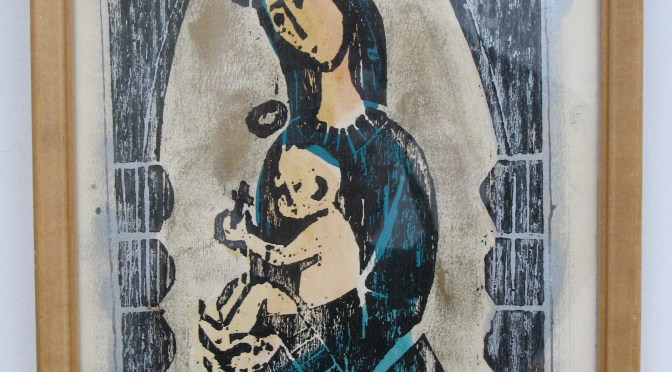
Image: Harry Rajchgot (2013)

More Wasted Time

More Wasted Time

by

Michael Amatulli

I had only been back in Toronto a few weeks when I overdosed and came to in the Intensive Care Unit at Keelesdale Hospital. All my money and dope were stolen by the people I was with before I went under, and who’d dumped me from their car just a few blocks from the hospital. I was twenty and wired to heroin and cocaine, and had been for three years, using every day to feed my three-hundred-dollar-a-day habit. To keep from getting dope-sick, I robbed convenience stores and the occasional bank teller. Until a few weeks ago, that is, when I was arrested and convicted on two counts of robbery. My lawyer managed to swing a plea bargain for twenty-two months, and avoided me going into the penitentiary system.

I had previously spent six months in the Don Jail and three in the East Detention for drug possession beefs. This was my first time in a provincial correctional facility, and I did not expect it to be the maximum security Milbrook. I was locked-up every day for twenty-hours, while the remaining four were split between the yard and the range. I was  apprehensive about doing time with hardened, violent cons, who were in The Brook because none of the lower security joints would house them – they were considered too high risk.  But I quickly adapted, befriending the more notorious offenders from my range, and eventually those from other ranges too, some of whom I knew from the street and others from my time in the Don. It was a matter of reputation to be seen with the higher profile boys, and was the difference between doing easy time, or fighting for every ounce of respect. Whether I won or lost, it hardly mattered; the important thing was not to back down and show fear, which to these guys was an invitation to mess with you.

I spent most of my cell time reading, completing correspondence courses, and writing letters. I hadn’t heard from my younger brother Pino since his first letter, right after he was charged with tossing his ex’s boyfriend over the balcony and nearly killing him. I learned from my mother that Pino was serving time in Guelph and doing well. ‘I can sleep at night knowing you’re both safe,’ she’d written. It’s a hard thing to accept when a mother is more at peace with her children in jail than on the street, though for me the street meant running wild and inching closer to a death by heroin overdose. Or worse, barely surviving the kind of life that made me wish I were dead.

 My family resided in Italy, and there wasn’t much our mother could do to help us but worry. The time came, however, when she could no longer stand to be away from us. My father, on the other hand, was against uprooting his family yet again, and would not neglect Angelo and Maria, his two younger children, to help the two older ones, who he believed were old enough to take care of themselves, anyway. Our mother argued that if they did not help Pino and me, we would probably die, an argument our father couldn’t counter, given both of us had already overdosed once – she did not wish to wait around for it to happen again.

 Finally convinced, our father sold the shop and apartment. My family arrived in Toronto at the end of July of 1985. It was the first time my father compromised for the benefit of his family, though it wouldn’t be the last.

The days passed quickly in Milbrook, considering I rarely left my cell. It could have been the first day of the month, or the twenty-seventh; it didn’t matter, as each day looked the same, however you turned and shaped it. My cell was ten by ten feet and had a small steel desk and a little window from which at noon exactly, a splash of sun fell on the word ‘fuck’, from fuck the world that some inmate had scatched on it. Instead of meal time, it was fuck time. Of course, a clock wasn’t needed to know what was happening at any given time, in or out of my cell, as after a while, the body became finely tuned and took measurement of the jail, and sensed things, warning when to stay in, or when to come out, and listened to the whispers that passed from cell to cell that told of searches, or when someone was about to get shanked. If you listened closely enough, you could hear the voices moving with the air. 

About six months into my sentence I was scheduled to work in the license plate factory. Every day for seven hours I stamped out license plates on an old, industrial press, though I would rather have preferred to stay in my cell to read Dickens, or London, or this guy Bukowski I’d come across in the library, who seemed to have been through the grind himself; or work on the creative writing course I’d recently begun. But a favourable report from the work boss was necessary for the Parole Board to consider an early-release; it showed I could hold down a job and maintain some level of responsibility, which, truth be told, I sorely lacked. I’d never had a job before and my only source of income was crime and street hustle. There was much I needed to learn, if I stood a chance of remaining drug-free, and living past twenty-five, the age many of my friends didn’t reach; guys I’d used and hustled with; went to grade school and played street hockey with; whose mothers still wore black and cried themselves to sleep every night.

I’d managed to stay clean from drugs and alcohol throughout my incarceration, even if heroin and coke could be easily bought with smokes and canteen items. Six months of incarceration had tamed my heroin cravings considerably. I attended the occasional AA meeting also, and went to chapel service every Sunday morning for worship. There was no shame in it, especially not in the Brook, where evil and violence were the dominant themes, and needed to be balanced with Good, or you could lose yourself to the dark side. Besides, where recovery from dope was concerned, a spiritual program was as essential as gravity, the thing that kept me grounded. I felt my energy shifting daily, like the sun, or moon that orients itself around the earth and commands the tides, and so too had God’s light oriented my soul a few degrees to the good; and good begot good. My mind and heart had softened once more, and I prayed and read the bible every day. And good things seemed to happen now, without my asking for it, and I was more grateful for even the little things.

I was called out of work for a visit. It was my first. I was both shocked and relieved to see my parents waiting for me on the other side of the plexiglass partition; shocked that they were there at all, given I believed they were still in Italy; and relieved that my mother was smiling when I entered the nondescript room. My father sat at the stool directly before me, silent in the way only he could be, with a look on his face that suggested he was angry. I was about to say something mundane like, ‘Ciao papa‘,’ when he said, 

“Ma, isn’t that George Chuvalo over there?” 

I looked over to the stool at the far end of the room and sure enough, there was the three-time Canadian Heavyweight Champ, while on my side of the partition was his son Jesse. The elder Chuvalo was engrossed in some narrative, while the younger listened intently, and then they both laughed, and I wondered how it felt to have that kind of relationship with your father, one where he actually spoke to you, and gave you advice about things, and laughed at your jokes, and said he loved you now and again. I wondered what it was to have a father and a dad.

E’ Lui, si,” I said, suddenly feeling sadder than when the visit had begun. 

George was, of course, hard to miss, being the face of Canadian boxing. His son, on the other hand, had more cause for anonymity. Offenders pestered him about his famous dad, and talked shit behind his back about his family’s struggles with heroin, crap they’d heard in the news, or had contributed themselves through prison yard gossip, passed along like currency from offender to offender. It was difficult enough getting by in this place, without the extra negative attention.

 “When did you get here, papa? In Toronto, I mean?”

My father just looked at me without answering. It was his way of controlling us and making you believe you’d done something wrong; of keeping his family on edge and making everything about himself. My father blamed me, you see, for all our family’s struggles, making communication with him almost impossible. And when we did speak, it was strained and forced, awkward even; I had to think hard about the right thing to say. Of course, I understood his animosity toward me; any father would be disappointed whose son had made the kind of poor life choices I had; and besides, what father would be happy with two of his children behind bars. It was much easier to just talk about other people than it was to speak about things that really mattered, the obvious, difficult conversations that might have suggested he was partly to blame for my family’s problems. 

“Mamma, why didn’t you mention in your last letter that you were coming here?” 

Vollevamo farti una sorpresa,” my mother said smiling. “A surprise. You look good, Michele. It shows on your face.” 

Though she smiled, I saw tears roll from her eyes, eyes that watched me closely, seeking the place where only a mother knows to look, to confirm what I’d claimed in all my letters to her: That I was clean and sober, and had found spirituality once again. It was Faith that gave my mother strength to carry on, and the will to support me and Pino. Knowing I was on a spiritual path validated her efforts. She believed it was her responsibility to teach us about God, protect us from the Devil’s snares, and this from the time Pino and I were alter boys at St. Nick’s; before even, when she tucked us in at night and taught us prayers. I hadn’t yet learned to ride a bike, but I could say the Our Father, Hail Mary, and the entire Rosary, in English and Italian. She was good, my mother was, and knew that in our hearts, so were her sons.

My father continued alternating his attention between me and George Chuvalo, seemingly reassured by the boxer’s presence in the same jail. And not for the man’s social status. It’s true that my father was a proud and private man, and would never tell another person that his boys were criminals and junkies; he was embarassed even to think about it; but here he was now, sitting next to a man, a father, a Champion no less, who’d endured the same emotional blows as him, suffered the same despair and domestic upheaval, and whose son was also a drug addict – my father was reassured by this, and for the moment, didn’t feel quite so alone and helpless.

I instinctively wanted to say how sorry I was for having disrupted their lives again. I’d carried the guilt of my family’s misfortunes since my first fix of heroin at the age of seventeen. Seeing my parents now, I was helpless to deny the depth of my humiliation, and my eyes welled with memories of years wasted on the streets. I understood in that moment the profoundness of their sacrifices; the lengths to which they went in order to keep me from sinking deeper, and deeper still, into my addictions. I wanted desperately to ask their forgiveness; but the words seemed unauthentic in this room, and undeserving. I looked at my parents from behind the glass and saw their innocence, the values they’d attempted to teach me, their goodness. And then I looked to myself and knew that I belonged here, in this shit-hole they called the Brook, a supermax jail likened to Alcatraz.  But my parents did not belong, not even as visitors. They were the victims of my recklessness and deserved more than to see their eldest son incarcerated, wearing jailhouse blues and a number on his chest, when their hope for me was to simply be a good man, find a decent job and raise a family, everything I wanted for myself, in fact, but struggled to acquire.

My visit ended and I was escorted to my cell by a Correctional Officer. The mechanical door slammed behind me and I lay on my bunk and picked up John Fante’s Ask The Dust and I read, and read, but the words were merely distant whispers, and melted with thoughts about my life outside these walls, about making my parents proud and getting a job and birthday parties; of hopeful things, the kind of stuff that made one vulnerable in a place like this, where distractions got you killed.

The jail noises intruded into my consciousness, white noise like the mechanical whir of the fan, and the opening and closing of cell doors, and the C.O.’s falling footsteps during count, looking into cells for signs of weapons and narcotics and suicide. The hour I’d spent with my parents earlier in the day was another world entirely, another mental time zone, and was now only a distant memory. I felt myself adjusting to the range activities and sounds, like when I was on the street and got ready to rob a bank, my awareness heightened, vigilant, my conscience turned off. I felt my prison attitude returning to my shoulders and chest, now hardened from months of pushing free weights in the yard; felt it on my skin, like armour, or psychosis. I was two people. I was my mother, with her kindness and generous spirit, her soft innocence and light, and hope for a better future. And I was my father, with his ego and defensiveness, his cold, hard demeanour, and dark half in times of insecurity and threat. I was both victim and assailant.

The 11:00 pm count began. We were locked into our cells until 6:00 pm of tomorrow. I looked out the small window, into the obscure night, and allowed my thoughts to wander into a kind of meditation and I prayed the Rosary and offered up my good intentions. I read some Bukowski and knew that he was writing about himself, as the despair that oozed from his words was my despair when I was homeless, or dope sick, or broke and dope sick. I read a blurb of his that said it was important not to try at things, that you wait and if nothing happens, you wait some more. Yet, all I’d done in my life was wait; for inspiration, love, financial security, vocation, freedom; and nothing came but more wasted time that stretched into days and months and years. I was tired of waiting for things to happen, of people and circumstances to control my life. It was time I took back that control. I picked up my pen and wrote a title for a story I’d begun to write for the Creative Writing course: More Wasted Time, by Michael Amatulli. I finished the story late in the night, and in the silence and stillness of the range, before I went to bed, wrote the final words to close the story:

The End

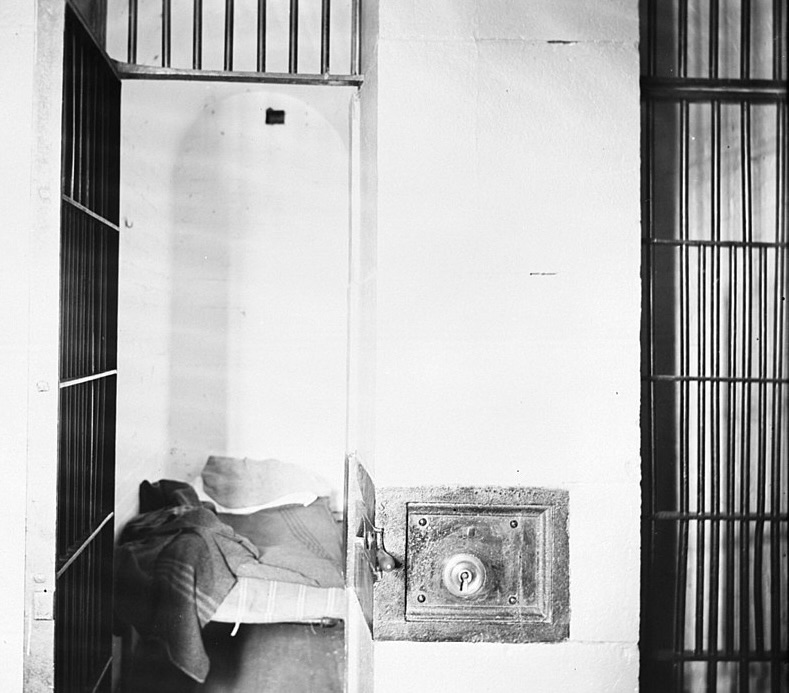
photo: William James Topley, Carleton County Jail, 1895

public domain, Wikimedia Commons

A Love Letter to Dowlais

A Love Letter to Dowlais

Andy R. McLoughlin

During my time working in the West of England I was handed the most curious of referrals. A 40-year-old man by the name of Darren had, to all intent and purpose, gone missing. A brief look through the records showed that this was in fact, not quite the case. 

Darren had a physical disability, cerebral palsy, but was neurotypical. In the absence of any family in the town, he spent his weekends in Dowlais visiting his elderly aunt and uncle. On one such visit, Enid’s husband Dai had died suddenly of a heart attack. It was a quiet Sunday afternoon, the roast beef eaten, cleared away and washed up. Dai sat, with his newspaper and pipe, fell asleep and never woke up again. He was 85. Darren, who relied on Dai for lifts to and from his home some 40 miles away, had just never gone home. Fourteen months had now lapsed, during which Darren had had no formal package of care, no GP appointments, in fact very little to evidence that he even existed anymore. 

Dowlais was a small village in Merthyr Tydfil, South Wales. It had traditionally been a community that provided workers for the steel and iron works, but, like many south Wales communities, the industries had fallen foul of poor economic conditions, imports and generally being held in little esteem by central government. Over the following years the population had gradually moved away leaving around 6,000 souls. Such factors did nothing to tell me the true stories of this community. 

I called the phone number I had been given for Enid. She answered the phone in age old tradition ‘Good morning, Dowlais 355492’. Her voice, aged though it was, spoke with the lilting South Wales accent that poetry and song was written for. I introduced myself, saying I was a social worker and was just checking in to see how Darren was doing. 

“Oh, he’s fine, we get by you know”, she replied.

“May I speak with him?” I asked.

“Well not really, he’s ever so crippled he is and doesn’t do so well with the phone, and any way, still grieving we are, since Dai died”. 

It didn’t seem right to me that somebody would grieve for fourteen months, but if my experience had taught me one thing, it’s that grief doesn’t have rules or boundaries. It most certainly doesn’t adhere to timelines. After some conversational toing and froing, Enid agreed to let me visit Darren with a resigned, but ever so warm “well you’re very welcome to visit us, but we’re managing fine and we really don’t need anything”. I made an appointment for the following week and thanked Enid for her time. 

The day came, I left in the early morning and headed off towards Dowlais. The drive was uneventful but the scenery breath-taking. New dual carriageways careered through valleys, hills and mountains. After life in the West of England, the absence of very many people was noticeable. My satnav brought me into Dowlais. Rows of terraced dark grey, light grey, cream and light blue houses stretched out down the road to the bottom of the village. Above the houses, the hills and mountains were lit up with unseasonal sunshine. The February wind whistled through the streets creating a bitter breeze. Every house had neat blue and black boxes of tin cans and plastic bottles awaiting collection. 

I found Enid’s address and parked my car. Every house seemed to have lacy net curtains providing a wave of twitches as I walked to her house. I rang the doorbell. I could make out a short image walking slowly towards the door through the frosted glass. The door opened and there was Enid, an immaculately dressed lady in her 80’s in a floral dress and cardigan. Her grey hair was tightly pulled back, and she wore little wire glasses that circled her eyes. 

“Bore Da” I said with a pronounced English accent “I’m Andy, we spoke on the phone”. 

“It’s pronounced Borrer Da,” Enid said with a smile, “but that was a lovely attempt, thank you”.  

Enid’s house exuded warmth and comfort. 

“Go on through” she pointed to the lounge, as I walked through the hallway, I glanced right into what Enid called the ‘Sunday Room’; it was an immaculately kept dining room with thick patterned carpet, framed photos of family on the wall, a dining table, six chairs and an imposing wooden bookcase, the top part of which was a glass display cabinet holding trinkets and war medals from the Second World War. There was not a speck of dust in sight. I continued my short walk to the living room. An electric fire glowed in front of a tiled fireplace, modestly papered walls, family pictures, horseshoes, a few display teapots, many ornaments that were in practice love letters to Wales, and a fading tapestry in a glass frame that said:

“Life is going to work

To dig a hole, 

To earn the money,

To buy the food,

To get the strength,

To go to work, 

To dig a hole”. 

I’m guessing there is some monotony suggested here, perhaps pathos, but all I saw was charm. As traditional as this home was, there was no anachronism. Welsh pride exuded through every pore of this community. 

Enid invited me to sit down. The wooden legged furniture with soft arms and white lace protectors lying over the top provided perfect comfort. Darren sat in the corner. He was dressed smartly in plain trousers, a collared shirt and red v necked jumper. 

“He wanted to make an effort because we had a guest” said Enid proudly. Darren sat, his arms and legs jerked slightly as he said “hello” and “thank you for coming.” His speech was slurred and a little slow, but patience proved the virtue and provided all that was needed to understand Darren. I asked how they were coping. 

“Oh, we do fine” replied Enid warmly.

“We do fine thank you,” Darren said, echoing the sentiment. During the visit, four separate neighbours telephoned to ensure Enid and Darren were okay. 

“The neighbours help whenever we need them to, that’s how we are here. We’re like a big family, see? Everyone looks out for everyone else.”

Enid quickly started talking about the Six Nations Rugby match against England the coming weekend. 

“We’re ever so excited” she beamed

“We loves the rugby; the boys are definitely going to win it this year.” I pictured a Saturday in Dowlais, the pubs and houses all united in community behind the Welsh rugby team as this whole street was united behind Enid and Darren.

My concerns, however, were correct, Enid explained to me over an immaculately presented pot of tea, complete with matching cup of saucer and vast array of biscuits, that there was no package of care, no occupational health, no physio, no regular care at all. Enid, in her 80’s and standing at a fraction above five feet tall was washing, showering, changing, helping to the toilet and doing bedtime routines for Darren all on her own. Occasionally it got too much and she’d maybe ring Bette and Dai next door (there were men called Dai in no less than 5 of the surrounding houses so surnames were used in all communications to avoid confusion). All of the neighbours were happy to help. It occurred to me that while the government had neglected this resilient and proud corner of Wales (they had been left with little investment, few opportunities for the younger population, and very little agency of their own), one thing they did have was a sense of belonging, community and unity that most parts of the country had lost in pursuit of status, wealth and careers. Generations of families united to help each other out and support each other when nobody else would. They were inspiring people, but an absolute nightmare for a social worker. I asked to hear more from Enid about their family history.

“Well, my Dai’s been gone some 14 months this week” she said matter of factly. “Steel worker his whole life he was. But truth be told, a lot of him never came back from Aberfan”. 

The mention of the word ‘Aberfan’ was followed by a deserving silence. On 21st October 1966, about 6 miles away, 144 people, mostly children at Pantglass Junior School, died when a colliery spoil tip collapsed. The resulting avalanche destroyed the local school and a number of houses. The community had never recovered and didn’t expect to. Everyone in the village, and most people in the surrounding communities had a family member or friend killed. The surviving children talked of guilt when they played, worked or even smiled. No disaster has ruptured and broken a British community like it since. 

Enid talked of how, when word came through of the disaster in Aberfan, every Iron worker, steel worker, coal miner, farmer and labourer, downed tools and went to help with the search and rescue effort. Enid knew Dai had gone, he was gone for days, sleeping on a church floor, fed by the surviving tortured and bereft community, and digging in his waking hours. 

“He never talked about what he saw or what he found” Enid talked in hushed tones.

 “But he was never quite the same after that. But we never had children. He didn’t want them after that. I’m not sure if he’d feel guilty for having children when others had lost theirs, or if he just couldn’t stand the idea of putting himself through the pain that he’d seen others go through that day. But that was his decision. But it turned out well, when Darren was born we were as good as mam and dad for him anyway”. Darren smiled a huge grin when Enid said this, but a tear was visibly streaming down his face.

The victims of Aberfan weren’t just those that died. They were people like Dai, forever traumatised, riddled with unnecessary and disenfranchised guilt. This community would never forget and would never want to. The overwhelming sense of heartbreak, loss and trauma lived on and showed little signs of ever going away. 

We talked a little more, with Enid and Darren both making perfectly clear that no help was needed, be it practical or financial. The community would step up so no formal intervention was needed. This community had been let down enough, and now it united to help those who needed it without fuss or complaint. It was a breath-taking prospect. 

I thanked Enid and Darren for their time and hospitality and finally managed to get them to take a business card from me, promising that if it ever got too much, or they couldn’t cope any more, that they would give me a call. Enid promised, and shook my hand thanking me sincerely as she led me out into the bitter wind that howled through the valleys. I knew I would never hear from them, and, as frustrated as I was as a social worker, I was inspired by the dogged and industrial determination that held this community together. They were proud, hardworking folk, from a community that embraced and lived its traditions, in this case, pulling together and needing nobody else. 

That weekend Wales lost their match to England 16-21 in Cardiff. I very much doubt Enid and Darren let it spoil their day, they really weren’t at home to self-pity. 

Painting: Dowlais, 1840 by George Childs (Wikipedia)

Road Music

Road Music

Bill Diamond

Long road trips and music are a match ingrained in the American cultural DNA.  Especially in the open spaces and the endless stretches of the western United States.

Your musical preference can be country songs fit for America’s wide and fruited plains; the bizarre lyrics of Leonard Cohen’s addictive ballads; the thumping rhythms of classic rock; or, something else.  Whatever your tastes, when you are piling up miles, music is the perfect travel companion.  Listening, or singing, with or without musical accompaniment, lifts the spirit and hypnotically helps the hours pass.  Songs can break up monotonous landscapes, or add to the majesty of breathtaking scenery.   

But, have you ever experienced the road singing back?  Not figuratively.  Literally.  I’m not talking a road-weary, out of body auditory experience; or, the result of a hallucinogenic.  Actual music coming from the asphalt.  There are a few places in the world where it can happen.

One such location is on an otherwise unremarkable segment of iconic Route 66 East of Albuquerque, New Mexico.  

For a quarter mile stretch on the Eastbound lane, the rumble strips were engineered to play “America the Beautiful”.  To hear the vibrations in action, your wheels have to be traveling on the strip at exactly the speed limit of 45 mph.  The selection of the patriotic hymn embodies the love of the open road and the allure of Route 66 as emblematic of that wanderlust.  A fitting song for one of America’s most famous roadways, which originally stretched 2,448 miles between Chicago and Los Angeles.

The song was installed in a 2014 partnership between the New Mexico Department of Transportation and the National Geographic Channel.  It was designed to encourage drivers of the historic road to slow down.  The project required a fair bit of engineering.  The individual gouges had to be placed a precise distance from one another to produce the notes of the song.  The result was that the rumble strip hums the tune as tires pass over. 

When installed, the phenomenon was announced with large road signs, giving a one mile warning in advance, and directions on how to create the music.  

This is no longer the case.  The signs have been removed and wear and tear has somewhat diminished the sound.  Therefore, it’s no longer part of a casual drive.  To experience the song requires searching, effort and commitment.  On a trip to Santa Fe, Juanita and I undertook the quest.  

The first challenge is to locate the correct stretch of road in the absence of signage.  You leave the interstate in the tiny town of Tijeris to access Eastbound Old Route 66 which parallels the new highway.  Online descriptions indicate the song is between mile markers 4 and 5.  

On the first pass, we learned these directions would be more helpful if those markers existed.  They do not.  This part of the road is a divided highway.  Therefore, reversing direction requires driving several miles and making a large loop.  We made the circuit for a second attempt.

On this lap, we spotted a marker for mile 3.  On the fly, we tried to determine the location using the odometer to estimate the start of the appropriate portion of the road.  This is an imprecise exercise.

I drove while fixated on both the odometer and the speedometer.  I also tried to place the wheels on the rumble strip on the passenger side of the road.  This was no easy task as the strip is not highlighted and blends almost invisibly into the rest of the road.  Juggling these tasks is the definition of ‘distracted driving’.  

Juanita had her window open and her head outside looking for the grooves.  We proceeded like this for several miles.  The chill November air was bracing.  We didn’t turn the heater on for fear it would muffle the sound of the highway humming ‘America the Beautiful’.  

We heard the groan of the rumble strip that is normally designed to alert you that you are leaving the roadway.  However, it was an off and on staccato.  The notches are only about the width of a tire.  I would hit the strip and hear the loud noise.  It was difficult to stay on the narrow corrugation.  Particularly on a bend of the road and while I was simultaneously trying to monitor the speed and distance.  I moved on and off the strip in a herky-jerky manner.  It was as likely I would slide off the road into the ditch as ‘play’ the inspirational song.

There was a lot of skill involved in this endeavor.  Imagine trying to learn a new musical instrument.  Now imagine the instrument weighs over a ton and is traveling 45 mph.  I’ve never been good at music and have difficulty whistling or even carrying a tune.  This lack of talent didn’t help.

Juanita assisted by playing the role of a concert conductor.  A maniacal conductor!  As I tried to maneuver the rental car down the semi-shoulder of the highway, she provided a stream of shouted directions while waving her arms.  The wind blew her hair to resemble that of a banshee.  “Move left.  Faster!  Now right!  You’re missing the strip.”  Distraction was piled upon distraction.

Miraculously, at some point, we heard several notes of America the Beautiful.  Although it was the treasure we were searching, it still came as a surprise.  It wasn’t a symphony orchestra, but the tune was clear.  It only lasted a few seconds as I couldn’t keep the car properly aligned.  I managed to find a few more notes before we were beyond the engineered melody.  

It was like sighting an elusive wild animal in the forest.  The taste of success made us eager for more.  We circled around for another try.  This time, we had a better sense of where the musical part of the road began.  Practice should have improved our skill.  Confidence was high.  Impractically high.

One of the issues is that this was more art than exact science.  A car is a crude instrument.  And, all the logistical challenges of speed, location and narrow target remained.

Juanita was pumped and enthusiastically engaged in the hunt.  As we approached, she began a patter of instructions as if I hadn’t just made an attempt minutes before.  “Remember to go 45 this time.”  “And, stay on the strip.  Don’t swerve so much.”  

I concentrated.  We found the beginning of the song and heard more notes.  Then I moved off the grooves.  It wasn’t intentional, it’s just difficult.  And, on this attempt, there was much heavier traffic zipping past us, including a large semi-truck.  Its wind blast moved the car.  I slowed and compensated.  

Juanita is usually insistent on safe driving.  She was apparently lost in the moment.  Rather than concerned about the risk of a collision, she was distressed we weren’t getting the entire song.  “Go right, go right.  We’re not on it.”

Before the rumble strip tune ended, I managed to capture more of the anthem.  This third attempt was still spotty, but it was our best yet and had proven that the highway actually belts out a song.  

Juanita gave me a look that said I was hopelessly incompetent.  “You moved off the strip again.”

I decided it was pointless to explain I thought it wasn’t worth being crushed by a tractor-trailer to squeeze out a few more notes.

She exuded such confidence about the ease of the task, it was as if she’d already traveled and mastered this musical highway.  Since I was flubbing the ‘instrument’, I assumed she’d relish an opportunity to have a hands-on go of it.  I pulled onto the dirt shoulder.

“You can do better?”

Faced with the prospect, she was calmer and said, “No.”

I didn’t expect the truth.  It threw me off.  Nonetheless, I insisted, left the car and went to the passenger side.  “Your turn to drive, maestro.”

She reluctantly slid over.  We re-visited the now familiar road for a fourth run.

When we got close, I alerted her that we were almost there.

“Don’t make me nervous.”  Apparently input from the female species to the the male species is helpful guidance.  The reverse constitutes unnecessary confusion.  Go figure.  I bit my tongue.

Hunched tight over the steering wheel, Juanita rumbled down the rumble strip.  She had somehow magically willed the other cars to disappear.  We were the only vehicle on the highway.  We bounced and jiggled.

The dulcet tones of ‘America the Beautiful’ reached our ears.  It lasted for a few seconds.  Juanita had the same trouble navigating the asphalt keyboard that I had.  She  strayed, then got back on course several times.  By the end, we’d heard more of the song than previously.  Pretty good for a rookie.

We declared success with a high five and continued our backroad journey to Santa Fe.  Another unusual roadside attraction added to our Life Lists.

I understand why the State took the signs down and no longer advertises the project.  It was a great experiment and may have slowed some drivers.  Nonetheless, it created a hazard.  Most cars and trucks are traveling over 60 mph and don’t expect others to be going significantly less.  Especially not when these tourists are swerving erratically in and out of the breakdown lane.  Safety before entertainment. 

It was a challenge to make the road sing.  Still, it was an uplifting reminder that there are thousands of offbeat places in our world.  These unique sights surprise and delight in an age when the forces of homogenization are strong.  Enhance your life by seeking them out.

Foiled

Foiled
by Angela Townsend

Everything is sentimental in a time of triumph. I discovered this when I reached the end of the tin foil roll. Standing in my kitchen, the final sheet in sight, I wondered how I could make this a keepsake.

Maybe I could take that last ripply rectangle and coax it into a swan or a Brontosaurus.

Maybe the Reynolds Wrap box could be reborn as a shelter for scrunchies.

Maybe there were other ways to honor Awful August.

I had acquired this household product when the dragonflies buzzed and the Perseids played. Mere weeks into living alone, I discovered I could not only acquire a toaster oven of my own choosing, but also command veggie burgers as I saw fit.

I could set them on silver magic carpets, keeping my chipper white appliance pristine. I could assault them with 450’ dragon fire, scorching them into crisp pucks.

I could eat and experiment and hold my house without anyone holding me in contempt.

I found myself daily astonished. Contrary to bleak predictions, I was capable of rejiggering the dryer vent when it misbehaved. Against all odds, I remembered to change the air filters. Surely attracting the awe of angels, I did not destroy the dishwasher.

Somehow, I even accomplished feats such as feeding myself, keeping not one but both cats alive, and remaining generally ambulatory, at times even with a shine in my step.

This was all despite the fact that Awful August was upon us.

I conducted experiments, praying God would help me to conduct myself with grace. I prayed for V.’s family before I would take a bite of dinner.

I played with V.’s least favorite cleaning products and made the house smell like hooligan Gain and lawless strawberries.

I piled my hair high atop my head, then cut it short.

I watched good men have good fun on The Tonight Show until my laughter shook pillars.

I erased pages.

I wore ruts in the road to Goodwill until the old man with the eye patch smiled at me knowingly: today, pajamas from V.’s mother; tomorrow, jungles of burdened stuffed animals. It made me happy picturing Costco fleece and Gund birds finding new life, somewhere they wouldn’t have to stand in for flesh of my flesh and bone of my bone.

I made mistakes by the roll, dropping glass and shopping unwisely and snapping at my mother when I was scared.

But now I was my own foil, and my fouls were not met with swordplay. I swept up the pieces. I resolved to do better tomorrow. I apologized and was forgiven.

I prayed for his family before I would take a bite of dinner.

My mother, God’s poet, God’s planet, God’s grace in blonde, blocked out two Zoom hours every morning. Her herbal-tea eyes, the comfort of my life, boiled over. We did the last five years over. We traveled the full length of the cosmos, redeeming time, foiling the rancid wedge between us.

When V.’s plants and couches and kitchenware departed, she cheered the void and filled it with pastels. She brandished Samuel L. Jackson’s entire vocabulary. She spent thirty-six hours redecorating my empty condo, naming it the Queen’s Garden.

She forgave me and refused to admit anything to forgive. The crown sat light atop my head.

And then Awful August made me lightheaded.

Late-night V. calls pierced promises of God’s peace. The edge of midnight brought threats to climb my balcony, convince the court to command my cats, tow me like a dinghy to marital counselling.

He would scorch me. He would save me. He would take his life. He would take me in his sacred love.

I was not his for the taking.

I was taking care of business, shaking like the last square of foil.

My friends toasted my tries and confessed they “knew” before they knew. They knew. How did they know? How did they all know, even the ones who are always the last to know?

They charged me to reclaim my name, give no ground, live no more as a blanched ballerina en pointe. They observed that I looked younger. They admitted that I had looked terrible.

The shower drain mysteriously stopped clogging, an anomaly since it had surely been my hair to blame.

A work picnic became an uncorked coronation, volunteers and valiants polishing my tiara and amputating the long tail of “unlovable.”

Halfway through the picnic, he called. He would let me keep the cats if I went to counselling. God spoke to him in the afternoon sun. Wasn’t I the one who always said God still spoke? Now he understood. Now. Now. Now. OK?

I attempted to negotiate. I got scorched. I got sunflowers. I got scared. My Mom got scared.

And then I got sentimental for myself.

When the man opened the cage, sleepy and cavalier, he had five years of evidence that the bird would tremble.

But the bird saw something glinting in the tree, not tin foil but dignity.

The bird realized it was her reflection.

And the bird flew.

And the bird’s courage is still new.

And the bird can let Awful August drop in The Lover’s ocean.

photo Harry Rajchgot

Once Upon a Time in the West

Once Upon a Time in the West

Jesse Sensibar

I’m leaned up against the old cigarette machine that hulks in the shadows to the right of the main entrance and exit door to the bar of the Monte Vista Lounge almost underground in the bottom of the old hotel. I’m up against the big machine because it’s about the only place left to stand in the crowded smoky bar. 

The machine and me are the only two things not moving in the place. The music is hard and fast and the crowd moves pogo style with it. 

I’ve got a lot of love for this cigarette machine. My grandfather was one of the first Marlboro Men. 

An angry midget named Joe Munch driving a blue delivery van modified with hand controls comes every week with his beat-up step stool and cardboard cartons of cigarettes to fight and feed the beast, climbing around slamming and cussing it ‘till it gives up its box heavy with silver coins, then re-loading it with full stacks of fresh packs of tobacco. It jams every once and a while but it mostly works pretty flawlessly. It’s so old it is mechanical instead of being electronic.

You pick your brand of smoke from the pictures on the face of the machine and put your quarters in the slot. Below each picture is a small round chrome knob decorated and edged with tiny scallops.

You grab the knob and pull, the knob comes out towards you a full ten or twelve inches on a steel slide with a sound like working a long action on a 12-gauge pump shotgun, making the same resounding chunk when your pack of cigarettes falls out of the machine and into the tray below as a shotgun does when it chambers another shell. 

Journey Home

Journey Home

John Ganshaw

Finally, I’m on my way home, somewhere between Seoul and Detroit, sitting comfortably in a Delta One Pod, gazing out the window. You can see for miles and all that is below me are pure puffs of white, the sun cascading off of them and gazing back at me, highlighting the tanned fingers that type on this keyboard.  It is so hard to imagine that I am here above the clouds when I have been in the depths of hell for so long. This is different from sleeping on the floor in a Cambodian prison.  I thought that being on the way home would bring a sense of freedom to my realm, yet I am wiping away the tears of pain, hurt, and everything else that came with these past 16 months.  It wasn’t long ago that I thought my head would be resting on these clouds, using them as my pillow, but now all appears different. 

I sat there gazing out the window, dreaming of all that was, all that was still ahead of me, thinking what now?  Deep, lost in my thoughts when out of nowhere I heard a voice, “Would you like some more wine.” I was startled shitless and jumped a mile high bringing a whole new meaning to the mile-high club.  The attendant was just as startled by my reaction, but we both got a laugh out of it.  This will be my life now, being startled by the slightest noise, voice, or sighting.  I slunk back into my seat, watching my fingers move across the keyboard, effortlessly recording the thoughts running through my brain.  I did take a minute or two to notice that the attendant gave me a very healthy pour, and for that, I am more than grateful.  On the journey back, not even sure what that means anymore, I am leaving my Cambodian home to find time to recover and right this old sea-worn ship.  I had no sooner found myself and it is now in need of major repair and remodeling.  At least I have a bag of bones that can be mended, unlike one or two people I know.  

My friends are asking me how I feel now that I have started the journey back and I can best explain it like this.  The physical journey will be an easy one; I got on this plane and will be back with family and friends in a matter of 20-plus hours.  The mental and emotional journey will take a lot of time; time to adjust to the trauma, treatment, and time to come to terms with how the person you loved so much could betray you.  So, this journey will not be a Sunday walk in the park but more like a mountaineering expedition. We have only so much control over life, if you want to live life to the fullest you must accept that there may be a shit storm now and again.  I just happened to find the shit storm to end all shit storms.

Even now, as I begin my journey back, such positive experiences begin to happen, mostly the most mundane having such an impact on me.  It began last evening, which in itself seems like an eternity ago.  I was waiting for my taxi to pick me up from the hotel when I ran into the British Ambassador, a lovely lady. During my time in Cambodia, we became acquaintances. I dare say friends when a very dear friend of ours passed away.  She was a guest in my hotel, the hotel where we had the wake.  It was just the beginning of the Era of Covid and meeting her, at the wake, all brought a sense of life to such a dire situation, it was death, after all, that is probably the direst of situations ever to be encountered.  Though we had only met that one time she has been there through my entire ordeal.  Anyway, she knew that I was leaving and heading home, and she stated that she would like to keep in touch, genuinely.  It wasn’t empty words coming from her lips but heartfelt sentiment.   Christ this is a good pour of very good wine, I’m waiting for the fasten seatbelt sign to illuminate.   The second impact happened when I was going through immigration and I knew it wouldn’t be easy.  It took a few minutes and some phone calls, probably to make sure that my exit Visa was in order and that I truly was free from prison and able to leave the country.  Each one of the agents at immigration treated me with the utmost respect and I knew they read the charges, Blackmail and Sex Trafficking.   By their looks and demeanor, I could tell that they knew the charges were false and I was a victim of the common yet not-so-common scam.  Those who partake in illegal activities are pretty cunning to have others who are innocent take the fall. It was when I was walking away that the one agent looked me in the eyes, saying “Good Luck to you.” Generally, I would just chalk this up to his being nice but the smile on his face and the look in his eyes were real, you could see the emotion in his eyes, the sense of caring, and the sense of knowing.  These times have been so difficult for me, to be accused of a crime so hideous and disgusting is still so unbearable.  To know through the actions above or messages I receive from friends, messages of encouragement, friends, family, and acquaintances, reassuring me that everyone knows the truth and who was behind this.  This goes a long, long way.  Perhaps the most touching happened this morning when I was chatting with my friend, legal advisor, and confidant, Jonathon.  He said that the effect my situation has had on others is indescribable.  He was telling me how it brought people together, to rally for me during this unbearable time of Covid.  People not being able to interact or have contact with others, yet they were all coming together and, in the process, forming friendships that otherwise wouldn’t have been formed.  Jonathon shared with me the feeling that I had.  I had these same feelings when I was in prison.  I met and am now friends with some great people that I wouldn’t have met if this incident hadn’t happened to me. 

I am still looking out upon the sea of white, little mountains of cotton and though I am flying to a new place, I know I wouldn’t want to change anything that has happened to me.  What I have learned these past many months I would never have learned if this hadn’t been done to me.  How lucky am I?   You have the worst possible accusation made about you, you spend time in a third-world prison, and you live through the most unimaginable living conditions, yet I have no remorse, no hate, maybe a little contempt and I despise a certain ex-pat, but after all I am human.  Even now, I truly believe I am a better person than I was before.  This experience has provided me with the opportunity to create a new dream, a new fight for justice, and a new life to live. The dreams and nightmares won’t go away overnight, the struggle will still be there but in time, maybe I can begin to live again. 

Cracked Windshield

Cracked Windshield

Jonathan B. Ferrini

My windshield resembles a picture screen depicting the future racing towards me.

The crack running down the center suggests two destinies distorted by the on-coming headlights blinding me as to which road I should choose.

 The taillights resemble red sequin bulbs adorning a splintered Christmas tree within a dysfunctional home, and warn against taking the wrong turn. 

The pale-yellow line I follow won’t prevent calamity.

The rubber wiper blades struggle to sway from side to side like exhausted people shredded by the broken glass living long-suffering lives. 

The rearview mirror is small but clear depicting memories fading with each passing mile, ultimately lost forever.

Viewing my future through the windshield is like watching a movie in a drive-in theatre from a lawn chair left by my foster parents using the car like a motel room rented by the hour.

I strike a pot-hole lengthening the crack on the beaten-down windshield too tired to maintain its struggle as protector and disintegrates into shards like a broken life.

I push forward without protection from the wind, dust, and insects outside.

I’ve chosen the wrong exit and come upon the dingy convenience market in a forgotten small town relegated to obscurity by the freeway.

Seated beside me is my passenger known as “Revolver”.

I enter and hear the familiar lyrics, 

“Here comes Santa Claus, here comes Santa Claus, right down Santa Claus Lane.” 

The immigrant proprietors are a father, mother, and youngster celebrating Christmas in America dutifully staying open as a gift of convenience to neighbors in their adopted new home.

“Merry Christmas, Sir”

Ferrini/Windshield/2

I retreat to the frig of colored drinks reminding me of our empty refrigerator and twisted string of burnt-out tree lights back home.

I detest the image of myself in the security mirror above the doorway portraying a desperate man driven to robbery to provide food and gifts to his needy family.

The mirror reveals the approach of a disheveled, frightening, and determined skeleton of a man.  His body odor is palpable as he passes. His oversize jacket conceals a shotgun.

As fortunate children are unwrapping their gifts, giggling, and laughing, I’m witness to the unwrapping of a weapon of death followed by screams, crying, and begging.

He’s taken them into the storeroom and I fear the worst.

“Open your present” echoing throughout town has become:

 “Open the damn safe or I’ll blow you all away!” 

I’m confronted by my “Ghost of Christmas Past”. Santa came to our house dressed as a homicide detective and my Christmas dinner was served within a juvenile custodial center.

This never fading memory in my rear-view mirror wasn’t gift wrapped but the card carried a message to prevent a redux of my “Christmas Past” for this family. 

I placed “Revolver” to the back of the thief’s head who dropped the rifle. He fell to his knees pleading like I begged dad not to pull the trigger on mom.

“Please don’t kill me. I needed money for a fix!”

His “fix” was a precious Christmas gift of mercy from his victims.

“Let him go. It’s Christmas.”

He grabbed a pack of cigarettes and bottle of whiskey as he ran away.

To escape a bad dream, it’s best to get out of bed, and I headed for the door to end my nightmare. Before leaving, I hear,

“Stop!”

They likely triggered the alarm. It was ironic I failed to steal a day of celebration for my family but would end up in jail for concealing a weapon without a permit.

The family scurried about the store filling a shopping cart with the makings of a convenience market version of Christmas dinner and gifts.

I was pelted by the cold, dust, and insects but kept an eye on the rearview mirror providing me a memory of kindness, never fading with each mile passed or lost forever.

I followed the pale-yellow line home carefully while humming,

“Peace on earth will come to all if we just follow the light
So let’s give thanks to the Lord above, ’cause Santa Claus comes tonight.”

WINTER FRAGMENTS, 2022

WINTER FRAGMENTS, 2022

by

John Ballantine

January 1

I choose a little madness to heal the dreamer warming my bed. The dervish dance puts food on the table. Crazy cool, I am here with aging heart, eyes, and ears that feel the wind in my face. I do not turn away—staring straight into the dance. We are here, we feel the hurts and hold the love. I see the broken promises, letting go the memory that holds me back.

“Who is that?” mocks the fool. “Where are you?”

Today I sit quietly, hear stories, and know that hearts pound fast, mothers die in fire, and tragedy is here. There is another dead body, etched in memory, surrounded by empty vessels, an occasional apparition. Each of us stumbles into such pits. Some never get out. The lucky few walk forward, chastened and more alive. I stand among the lucky.

The choir harmonizes an ancient tune.

I am a child, a crazed, aging man. The world spins, the sun rises, my heart beats. There is pain and love. I am awake.

January 6

Hard to believe, was it a delusion? Crazy people—tattooed, dressed in horns. Wearing army fatigues with guns in their belts—crashing through police barriers. Breaking democratic norms as they stormed the halls of power. This cannot be?

Hard to believe sitting in a quiet home with the TV filled with pictures of hate. Maybe another revolution is happening? Not the peasants rising but an insidious sickness. Are they serious? In 1968 the yippies, hippies, and protestors crashed the Democratic Convention, Mayor Daley’s police beat us back—while Russian tanks rolled into Prague. Back then the upending of that world was real. 

Raised fists, riots, and dead proclaimed that the dream is not dead. They—police, troops, and our elders—struck back. For what? Today:

“Something is happening and you don’t know what it is, do you?” 

Hard to believe as trees bend, hawks soar, and fires burn far away on flat screens. I cannot breathe, can that be true for so many? Some storm the halls of Congress, tear down what you built and learned. I cannot, will not, believe we live in such a place. Guns, pipe bombs, broken windows. This is happening on our screens over and over. We are not the enemy, but this country constructed/woven from the floss of dreams is coming apart.

It is hard to believe cruelty and hate is so close—that pillars of wisdom fall so fast. And that we, you and I, did nothing. No sword or gun as the mobs stormed our cities. It is hard to believe that we did not fight and die for the good life. For the love that surrounds and comforts. 

Hard to believe that my world is falling apart, 161 years after the first shot fired on Fort Sumter. There is no god standing on the ramparts to protect, no poet to spin tales to comfort. The food line is long, the night cold, and there is only one blanket to keep us warm

January 9

It is happening here. It has happened. Civil War—innocent dead on both sides. Reconstruction, the bondage that held so many down. And the Gilded Age, where stealing and taking was sung in parlors where so few marched for liberty, equality, and fraternity. Barricades do not fall easily. Talk at tables stops—even in my well-mannered family. Some hate FDR and the New Deal, others say this is the way. Then there are the wars, blacklists, communists, queers, Black Panthers, George Wallace, the Weathermen, Proud Boys, KKK, and Trump, who incites beyond my imaginings.

Is this the back and forth of history? Despots here, not just in Russia or in other faraway lands. Money feeds. History faints and many look away. It cannot be happening here…only over there. I sip the wine, watch romances at night, and do not fall into dystopian traps.

But it is happening here—not just the 47 percent who do not vote like me, or the 300 or more who stormed the Capitol. Too many turning away from what I learned, what I thought we believed. Hard work, opportunities, laws, courts—even justice—and conversation. I make lists. Sexism, racism, inequality, resentment. My head is full of explanations, of words. I do not understand what is happening here, today.

“Oh, the shark has pretty teeth, dear,” whispers Mack the Knife.

Stones break windows, dead lie unclaimed, and fires burn. Russian tanks advance. No chicken in every pot. The rainmaker looks to the sky for promise of better days, but the deserts are dry and dreams die. It is happening and I don’t want to know why. The candle in the cave shows no shadows flickering on the wall.

Wolves howl at night, we hide in our apartments. The screens flicker. Some cough and die, others wear masks. The trucks pass back and forth in the dark of the night, and there is no metaphor, no light to take me out. No Beatrice or trials of Job that explain. No poet in robe pointing the way.

“Something is happening and you do not know why, do you, Mr. Jones.” 

I sit in my basement, far away from the street cries. The snow muffles what we lost. The bully holds sway. I did not stand with the righteous, did not carry arms and say no. I let others die, disappear, and pretend at dinner it was all Okay.

And what did you do when democracy died? When the USA was united no more? When another country fell? What did you do to save our dreams?

January 16

The world is dark. I wake, touching the first sign of sun wrapped in the smile of romance. But there was no light. No sunrise. It happened just like that, no shots or storming of the barricades. The food on the shelves, the fires that warmed stopped. Just like that.

The resentment, the lies, and the guns have turned back the clock to 1917, 1968. I stand in Prague as tanks roll in. The out-of-wedlock, the bastard children, have no home. Those in the street—Black, White, and Brown—rich and poor—have risen like a mob disgorged from cyclops mouth screaming for more. For their fair share.

There is no god, no Ulysses or Athena to rescue us. All that stuff in my head, it is not real. Not even a dream can shield you and me from the slings and arrows of anger. They do not care; they have a long list of unreasonable demands. The reason I am here, that we sit together at the table, has evaporated as the walls of reason collapse.

It is hard to believe cruelty and hate was so close—that pillars of wisdom fell so fast. And that we, you and I, did nothing. No sword or gun as the mobs stormed our cities. It is hard to believe that we did not fight and die for the good life. For the love that surrounds and comforts. 

The pendulum of time swings back if you fight. Better to have a headstone inscribed, “He believed and died for love.” No more stories, no pictures on the wall. Stand up.

January 26

It was a long time coming. The realization that I cannot change the world. How many days did I look at the sky, imagining soft, puffy clouds when the fist punched my gut? I did look away but hit back with a knee to the chin as I charged through the line. Violence begets violence.

Solzhenitsyn survived cancer in a Siberian gulag—and let his beard grow long in a Vermont hamlet as he pried open the Russian soul. There was so much hurt that ascetism dried the tears falling. A stoic spirit moves forward. Poets stand in food lines. The tundra is frozen deep, I dream again.

Why don’t I see the world as it is? Why can I not stare into the abyss and see the pale bodies floating in the river Styx? I play with the devil, the chameleon deceiving so many. Dulcet voices sweeten the fall. I believe in good, even as witches’ brews simmer with so much sinning. I see the frolicking cherubs, I wander through dark caves with etching scratched on the walls, and I read of Rome’s fall.

No, that is not the world I know. The never-ending troubles, the storm clouds knocking down homes, and the dead bodies piled high on funeral pyres. I see the terrible armies march, the devil’s beguilements, and all the bad that you report. But my wandering knight cannot let go of dreams. The boy who said I believe in Tinkerbell will not let go.

When I die they will say, “John never did get it, did he? Never saw the world as it is, did he?” No, lucky John, he wandered with his mad dreams.

February 15

Easy to forget, to eat the fresh fruit with vanilla ice cream, followed by pink finger bowls. I stared across the table, not knowing why building more bombs and missiles was the path to peace. Some said, “Do not talk with Ruskies” or they, too, will bury us as the cherubic leader in an ill-fitting suit pounds his shoe at the UN. Really, we have to wait until hell freezes over for those two to talk. 

Seven Days in May passed, and we were not blown to smithereens. We learned to love the bomb and not see Peter Sellers when Kissinger explains why we were in Vietnam—dominoes balancing—and why oval tables were the beginning of peace talks with so many dead. Time turns and here we are again with tanks, broken windows, and women crying on the cold street, holding their dead.

I sit with the blue sky and snow—looking at the darkness. Dread rises over a land torn asunder by time while men on horses, tanks, planes strike down the courageous person standing tall. This country, this land with its centuries-long history, cannot escape its mistakes, and so we kill, burn, and maim again until someone says let’s try sitting at the round—or is it oval—table once again. 

February 23

The grandmother stood straight, staring left and right with blue-gray shawl over her shoulders. Prostitute selling her 62-year-old body—not too soft—to put food on the table in Tbilisi. Wide-eyed, I am a year older and not as tough. I look at the potholed streets, the elevators that do not go up, and the crumbling concrete steps in each apartment that they own. No communal property for the free citizens.

The patriarch in black robe and white beard murmurs prayers. A giant statute of Stalin stands guard. Here in Georgia the wine is sweet and the market full of talk as we take the bus to Ossetia, a breakaway province Russia will soon invade, just because.

Why fight the bully? I ask Thea as we climb the goat path through deep, verdant valleys locked in centuries of dialects. Do they not understand war? Some try to break free, others hide. In churches standing above the valley, frescoes of St. George on curved ceilings sit high above seven hundred years of tribulations. A calm voice soothes the afternoon as the incense drifts in with the slanting light. 

A lace curtain is drawn across each apse—a couple with white, virginal veil and black suit are married; another dark apse is quiet as the old are buried. Candles burn, heads bowed, even the unbelieving. The woven curtain, thick with history, stands like a sentinel at the entrance of the Byzantine chapel built by peasants for solace.

The Black Sea and Odessa are distant—my only connection to this world of peasants, stone, wine, and Kubdari. Natalie, one of my first loves, stood me on a pedestal I did not want. She the romantic refugee fleeing the purges of Stalin, and me some white knight full of naïve do-goodness. But Odessa is pushing back Russia’s assault, as Thea escaped Georgia. The bullies with bigger guns win the battles, and I am humbled by the war stories. Maybe the valiant will win.

The prostitute paces back and forth with the sun breaking through the clouds. St. George beats back dragons. Candles are lit in prayer. We pass through the curtain of time. The dream is resurrected.

St. George sits serenely on his mare; a rainbow of light fills the church. The choir is quiet.

PAPA’S iPAD

PAPA’S iPAD

by

Pamela Domonkos

“Someone has to take the iPad,” my mom said. “I’ll never use it, you know.” I am certain my eighty-year-old mom will never dabble with technology. She still calls the internet the “world-wide-web.” It’s such a shame, I think. If she just tried, a computer would really open up her small world but I know it’s futile. She seems relatively content (at least accepting) that it’s now herself, old movies on TV, and her dog for daily companionship.

I’ve learned it’s often easier just to do something you really don’t want than to say no or explain why you don’t want or need your dead father’s iPad. Taking it will make my mom feel better and allow her to check this one off her list. And to know that one of her children has it, that makes her feel good too. It really has nothing to do with pleasing me specifically, just one less responsibility my dad has left behind that she has to address.

I bring the iPad back to my apartment. Along with the iPad, my dad kept the charger and the stylus pen in a separate plastic zip-lock storage bag, properly marked “iPad accessories.” Unlike most men, his handwriting was unique and beautiful, and I skim my finger over the words, trying to feel my dad. He’s been gone six months now, and my brain has finally processed (and convinced my heart) that he truly is no longer walking on the planet. The sorrow has settled in my heart, like a boiling cup of tea that has cooled just enough to sip and elicit comfort. I can think of him now without the raw, burning pain that immediately follows death. I sip him in daily.

Reflections of my father are warring factions in my brain. Sometimes I have to remember the bad stuff: the alcoholism, the way he disappointed my mom, us kids. The Friday nights he’d walk in from a week of travel for work, not knowing if his eyes would be sharp or glazed. My mom would have the table set for seven, the kitchen capturing the warmth and smells of her careful work over the afternoon preparing dinner for her family, all together. She, too, looked right into his eyes and knew instantly, and whatever she saw reflected would set the mood for days. When I heard his car pull into the driveway, listened as the car door shut behind him, I could feel the anxiety build for that unknowing minute that passed while he approached the house, watching the knob turn as he entered. I always prayed for the sharp eyes that would bring in a man who kissed his wife, embraced and smiled at his children, so happy to be home. I knew the glazed eyes brought a dazed, sad, denying man who infuriated my mom.

But mostly during his last six months of life when a little piece of him slipped away every day never to be seen again, I thought about the good stuff. His warmth and gentleness, his intelligence and kind spirit. I think about the father who would round up his five kids on Saturday to tackle the chores assigned by my mom. They’d sit at the table, sipping their coffee, my dad with a pen and paper, jotting down the list in his scripted handwriting as my mom recited the needs of the weekend: cold cuts, the newspapers, a bottle of gin. The list didn’t change much week to week, but he enjoyed this assignment, not just to spend time with his kids but to give his wife a few hours of peace and quiet. He’d leave with a kiss good-bye to my mom (be careful, she always said), the list in his pocket along with $40 in cash—his allowance, they joked. 

During those Saturday morning adventures, he showed us that the best bologna one could buy was from a German butcher located a town away. He brought us to LaSala’s, an old-fashioned corner store that had a long, linoleum countertop and a row of swivel stools, their round, cushioned tops shiny and slippery. There we were introduced to cherry or vanilla Cokes right from the fountain. And he’d buy us each a scratch-off lottery ticket. It was as if he needed to seek out any semblance to his New York City childhood in our suburban environment. He wanted to share that piece of himself with us. The shopkeepers genuinely enjoyed talking to my dad, who always made conversation with them lighthearted but personal. He had the gift for gab, always engaging others and genuinely interested in them. He had a way of making others know he saw them.

* * *

How many times are we asked when we’re young, what do you want to do? What makes you special? What do you love? What are your talents? Questions I naively tackled before choosing a major in college, a career path. What a joke, being asked to direct your life as an eighteen-year-old. What a disservice we do to our youth. I’m good with numbers, my seventeen-year-old self deduced. I got an A in calculus last year! I will be an accountant. Oh my God, why didn’t someone speak up, stop me? Didn’t anyone know me and think to say, “That might be a pragmatic decision, Pam, but you’re a people-person. The two don’t really mesh.”

It took me fifty years and my dead father’s iPad to figure out what I am good at, what makes me “me.”

My apartment is coming together after separating from my husband six months ago. I’m getting acquainted with this new way of living on my own. No longer defined by the constant demands of a husband and three children, I feel surprised by choice…choice of what to do with each found moment that I have declared my own. What do I want for dinner, or better yet, do I want dinner at all? Read or write? Red or white? Choice feels both powerful and foreign, like winning the lottery after living paycheck to paycheck. Choice isn’t natural yet; I feel unsteady.

Although the apartment may be coming together, I’m a mixed bag of emotions—excitement for this new chapter in my life, guilt for disappointing my family, anger at my husband for not taking care of me, acceptance that my children are becoming adults, sadness that my dad is gone. My daughter tells me that her father is not coping well, the house is dusty, unopened mail is piled up, and the fridge is bare. Did I detect a small hitch in my son’s voice when we talked last week? Does he resent the forced change I have brought with my desire for a new life? What would I have felt if my mom had left the man whose eyes were glazed more than sharp?

Like a chisel on an ice block, I feel the guilt chipping at my resolve to be unmarried. I am personally responsible for redefining my family, moving ahead with no one’s permission but leaving a trail behind me of hurt and disillusionment. There is a cost to choice. 

I need a talk with my therapist, Joanna, who was more of a partner to me through some of life’s most difficult moments than my husband. She’s helped me through so many crises. But Joanna moved; her husband retired and is now in Vermont. I send her an S-O-S text. We talked about Facetime therapy sessions before she left. I’m not too keen on this idea; it feels a bit stilted, emoting to a camera lens on the computer over the “world-wide-web.” But I really need to talk.

So good to hear from you, she texts back. Should we give Facetime a try? How about Monday at 6 p.m.? 

Sounds good. Thanks, Joanna.

Where did I put that iPad? My phone will be too small for Facetime therapy. I’m pretty sure I can Facetime on the iPad. I may be good with numbers, but I’m really limited with technology: routers, IP addresses, service providers, domain names—it’s all Greek to me. Certainly not on the “Things I’m Good At” list. 

I find the iPad and plug it in. It’s completely dead, like Dad. Wonder when he used it last? I figure about a year ago, before he got so confused and incapable. I let myself feel sad for a second, remembering the very intelligent man, always trying to stay relevant even when his abilities started to fail him. That was the most difficult part to witness, watching him fail. Okay, today’s “sip o’ Dad” burns too much, back to the iPad.

The screen eventually comes to life, the battery symbol registering a red 3 percent. I let the iPad recharge, and when I look a few hours later, the full screen is relit. The usual apps appear—he has Facetime. Funny, he never used it, and I’m mad at myself that I never showed him how. Damn it! And then I laugh to myself because I’m sure he would have used it a lot and maybe not at a level appreciated by his children and grandchildren.

And then I see his e-mail icon. Do I dare? It seems unethical, looking through a dead person’s e-mail. But it’s Dad. I click on it. I can’t help myself. My palms are sweaty—I don’t expect to find anything outrageous in his e-mail, but I feel like he’s right there with me.

It’s as I would have predicted: e-mails to his children relating something he’s read in The New York Times or heard on NPR and a few to his old friend from childhood, nostalgic reflections on their childhood in Astoria. I read through a few. He writes to his sons, remembering fishing trips they took out of Rock Harbor, questioning an arcane golf rule that has come into question at this year’s Masters, the trials and tribulations of being a New York Mets fan. I realize I’m not breathing. It’s not the content that has me frozen. I’m reading his words and I can actually hear him, his voice, the unique way he talks, the cadence of his speech. He writes his e-mails like he speaks—there’s nothing formal in them or composed. It’s him. A tear runs down my cheek. DAD!!!

I only read through a little of his “Sent” folder. I feel overwhelmed with the emotion of his presence and my intrusion into communications that don’t belong to me. I do make note that the last e-mail he ever wrote was to my sister Julie—I will tell her that, it will make her feel sad but good. I turn my attention to his “In” box. I’m not reading content anymore, just scrolling, mostly. 

And then I see a note I had written to him just before he got so sick. 

I had forgotten I had written it. It was a thank-you note. I had come home after a very long day of work, exhausted footsteps to my front door, where I discovered two bottles of wine wrapped in that silver, shiny skin. Chardonnay, what I like the most. It was a busy and stressful time in my life, working six days a week, enrolled in a master’s program that demanded one day a week of internship—all on top of the jobs of a mother and wife. My life had turned upside down. I was stretched so thin and wound so tightly, like a piano string ready to snap if any additional pressure was applied. The little unexpected doorway gift lifted me instantly, and I knew who left it.

Wine Bandit!

July 29, 2015 at 4:52 p.m.

Dear Dad,

I am presuming you are the very thoughtful soul who surprised me with not one, but two (!) bottles of wine in my mailbox! Put a big smile on my face. Many thanks!!!

You should know that as I look back on my life and reflect on parenthood, I know how much love and support you have shown me through the years. You are always there with great pride and encouragement and a real interest in my life. Everyone seems to think I am this great big, strong woman, but this path I am on now is very overwhelming some days, and those bottles of wine and words of love and encouragement mean the world to me. They keep me going. Thank you.

Love,

Pam

I’m crying; the tears are running uncontrollably down my face, saturating my cheeks, washing me. I can picture him walking to my door, hunched over and frail with the full load of his own problems but set on helping me through mine. He couldn’t physically do much at that point, but he knew how to say, “I see you, I love you.” The power of that raw love washes over me, whisks me back to my childhood, the kind man who touched so many people’s lives because he took the time to see them: the pork store owner, the waitress at LaSala’s.

And there it is. When I reread my words to my dad, I realize what I do best. It was my dad who showed me how to take the time and really see others—discover, acknowledge, support, and celebrate their unique selves. He showed me how, with a few words or a small token of love, you can deeply touch another human spirit. It’s the secret of being an exceptional parent, a genuine person.

You’ll never find that on a personal inventory list, but it’s what makes me “me,” and it’s a gift from my dad.

THE END

THE CHALLENGE

THE CHALLENGE

by

Cyndy Muscatel

Okay, I admit it. We’re old. No spring chickens in our roost. Even if we didn’t realize we had passed the “forever young” age, our kids have kept us informed. Right before COVID hit they sat us down to have the power-of-attorney talk. That we’d laughed in their faces shocked them.

“We’re just trying to be helpful,” our daughter said.

“We want to make sure you’re okay,” our son said.

“We’ll let you know when we’re not,” my husband said.

He shot a seventy-one that day, beating our son by two strokes. Meanwhile our daughter had trouble keeping up with me on our walk.

Three years later the whole family came to visit us on the Big Island of Hawaii during winter break. By their solicitude we could tell our children thought we were one step away from assisted living, if not the grave. It was unnerving although, somehow, I was the only one doing the dishes.

While they were there the Kilauea Volcano erupted. Newsweek calls Kilauea “one of the Earth’s most active volcanoes…and one of the most dangerous.” Our 23-year-old grandson and his girlfriend decided to go see it. They came back with a glowing report of their experience.

“You should go,” Evan said, showing us photos of golden-red ripples of lava in a lake at the bottom of the Halemaumau Crater.

“We hiked a mile into Viewing Site 3, but there’s other viewing sites you could get to easier,” Amanda assured us.

A week later my husband and I decided to go see this natural phenomenon for ourselves. It’s about a two-hour drive on the Daniel K. Inouye Highway. Since the best viewing is in the dark, we decided to stay overnight at Volcano House.

The mountain pass can be treacherous with dense fog and rain, but the day we went it was clear. The snowcapped peaks of Mauna Kea were to our left. Mauna Loa, graceful with a dusting of snow, was on our right.

We pulled into the parking lot of Volcano House at about 2:30. The hotel is right at the rim of the volcano. Mark Twain stayed at the original Volcano House in 1866, but this hotel was built in 1941. When we checked in the receptionist was very knowledgeable. She gave us advice and a map showing where the viewing sites were located.

I couldn’t help wondering what she saw when she looked at us: two old fogeys who should know better or just two people being tourists?

In the dining room, while we ate lunch, we looked over the map.

“We’re doing Viewing Site 3, the one the kids did,” he said. “The one with the hike.”

“Understood,” I said. The gauntlet had been thrown down.

After a healthy lunch of Coke, pizza, and French fries, we set out for Devastation Point. We arrived there at about 4:15. Once we were out of the car, I saw a park ranger standing in front of a huge sign that said Eruption Viewing This Way.

“Is this where we go to see the eruption?” I asked him as I got close. I have a terrible sense of direction so I thought I’d check.

He looked us over. “Yes, it is. But do you think you’re up to the hike there?”

“Isn’t it only a mile?” I asked.

“A mile each way,” he cautioned.

“Is it rocky and steep?” my husband asked.

“No, it’s a regular road until you get to the site. Then there’s some gravel.”

“No worries. We can make it and besides, we have our phones,” I assured him.

He still looked dubious but finally nodded. “Okay, I’m just checking because we had a fatality yesterday.”

I laughed as we walked around the barrier. “I think he’s just trying to discourage us old folks. He probably doesn’t want to do any kind of rescue,” I told my husband.

(Two days later I read this online: “Hawaii News Now – A visitor from Arizona died Sunday at a lava viewing area at Hawaii Volcanoes National Park, officials said. A spokeswoman said the 70-year-old died from apparent natural causes at the Keanakakoi lava viewing overlook.”)

It was an easy mile to the Keanakakoi lava overlook. When we got there we joined the small group of people who were at the edge of the viewing site, looking down at the lava lake in the center of the immense caldera. Since it was daylight you couldn’t see much of the molten lava’s color.

As the sky darkened the lava’s orange glow became more apparent until we were looking at landscape crisscrossed by deep veins of lava. Pele, the goddess of fire, had been very busy. It was as if the elements of the Earth were being revealed. I wish the word “awesome” was not so overused because that’s what the site was—awe-inspiring.

In 1866 Mark Twain described it like this: “The greater part of the vast floor of the desert under us was as black as ink…but a mile of it was ringed and streaked and striped with a thousand branching streams of liquid and gorgeously brilliant fire! It looked like a colossal railroad map of the State of Massachusetts done in chain lightning on a midnight sky.”

“It looks like Los Angeles at night when you’re coming in for landing,” my husband mused in 2023.

Then he started dialing his phone. In a moment our son appeared on the screen.

“Guess where we are,” my husband said and turned the camera so Dave could see the lava.

“Wow,” Dave said, then asked, “How did you get there?”

“We hiked here. This is the site that Amanda and Evan went to,” I said.

“Amazing,” he said.

I rolled my eyes. “We’re not decrepit yet,” I wanted to say.

When the sun set the temperature dropped quickly. Our grandkids had warned us, so we had parkas, although most of our fellow viewers were shivering with cold. But we were all mesmerized by the incredible sight.

When some people started to leave, my husband said we should join them.

“We should navigate up the gravel path while there’s still light,” he said.

I was reluctant to leave, but it was a good decision—it was completely dark by the time we made it to the road. With no moon to guide us through the forest, Mark Twain’s expression “black as ink” came to mind. Fortunately, I had a flashlight.

My husband’s knees had stiffened up in the cold, so he was having a hard time walking.

“I don’t know if I can do it,” he said.

“We can go slow and take breaks, but you are doing it,” I said in my schoolteacher’s voice. “First of all, you don’t have another choice, and secondly, we’re not going to let the kids think we can’t.”

As we walked he limbered up, but we were both glad to see the lights of the ranger station ahead of us. We drove back to Volcano House with the heater blasting.

During a dinner of seared Kona Kampachi, we looked through the photos we’d taken. We remembered that overwhelming feeling of reverence we’d experienced.

“I’m so glad we did this,” I said. “Not only because it was so incredible, but sometimes I start believing in the kids’ viewpoint of us, and I think I am on my last legs.”

My husband gave me a wink. “I love your legs,” he said and took my hand.

photo: G.E. Ulrich – pubs.usgs.gov – picture #007, GU6830A – cf. Selected Images of the Pu‘u ‘O‘o–Kupaianaha Eruption, 1983–1997

NEW YORK CITY: A NEW HEAVEN?

NEW YORK CITY: A NEW HEAVEN?

by

Sarah A. Odishoo

My brother and I disagreed about what cities we thought conducive to living well in the United States. He loved New York City, and I adored Chicago. But we both agreed that San Francisco is a toy city. He says San Francisco is a movie set, a façade, an idea of a city rather than a real on-the-dice city like New York—a city you can bet on, one that has substance, the currency of life. New York, he said, was unique, one that had everything a soul could desire.

What I started to realize is that the city one lives in is the citizen’s windowless view of a landscape that mirrors everything in that individual that takes time, given the geography, to develop. It is the territory where the like-minded gather to observe the darkening and lightening, the dashing back and forth betwixt and between the natural world and human artifice, and how much the gathering can tolerate that darkening and lightening landscape of the soul. That’s why people move. The place stops reflecting them in the way they want to see themselves.

My brother lived in New York City for most of his adult life. He ran away from Chicago. It had started closing in on him. He and his girlfriend packed the car and headed east. It was the seventies. New York, he said, was the center of the nation, misplaced on the East Coast. 

I had visited New York with my husband in the sixties and vowed never to return. My husband was an artist, and he wanted to see the art galleries. So we came with little in our pockets, and the city of cash and compromise was haunted by poverty and the impoverished according to our budget. We stayed in the YWCA where the drug addicts, the needy, and “the wretched and the tempest-tossed” stayed. We heard them all night long in the hallways and through the walls. In the daytime the streets were glutted with trash bags and the sidewalks with the disenfranchised, begging, sitting on the curbs, wandering up and down crowded streets, watching with glazed, preoccupied eyes. We ate at storefront diners in SoHo, bought hot dogs at the street carts in front of the Metropolitan Museum of Art, and after we couldn’t see any more art, when the streetlamps lit, we took a bus to the Y and slept an obsessed sleep.

When my brother asked us to visit, I said, “No, thanks, I hate New York City.”

He said, “No, no, I’ll show you some of the most beautiful…no, stunning…parts of the city. You’ll love it, I promise.”

So we went again.

He was right. He had fallen in love with the energy of the city, its intellect, its moods, and its beauty. He found its consciousness. It was everything he didn’t know, and he wanted to track whatever vibration he felt while his attention was strong and could take it in. Attention is the task we all share, and to keep attention strong means to follow, track, trail, chase down, stalk, pursue, hunt down the vibration—be mindful so its meaning comes into focus. What he probably didn’t know consciously was that mystery he was tracking was him.

He took us to the Brooklyn Bridge, and we walked across and back and dined at one of the oldest restaurants in New York, the River Café, under the trestles that loomed outside the small windowpanes, reminding me of the industrial structure of the city. Sitting at the tiny table facing the small pane of a window, I could see us wedged in the fulcrum of the bridge’s ironworks, as well as see the world’s arc in the East River’s flow, seeing the two connected somehow. Then we walked to his tiny one-bedroom apartment on Eighty-eighth Street, across from the mayor’s Gracie Mansion on East End Avenue. 

We went to the Strand Bookstore, the writers’ hangout. We walked everywhere as we tramped from the east side of Central Park to the west side, stopping at Tavern on the Green and ordering wine as we sat at the café tables, and he told us about Balto, the snarling statue of the dog safeguarding Central Park. 

We set off for the Cathedral of St. John the Divine, whose dome rose out of the horizon long before we reached it. Inside we were transported to Europe and the holy of holies. Within the massive doors the aisles led straight through the darkened here and now, lightened by the dome’s stained glass windows, and the stories imaged in the parallel universes of a sainted time lined our journey to an altar that was circled by what seemed endless chapels in praise of the mystery the city couldn’t contain, and neither could the church, but its structure pointed up and up, just as the city did. The confluence of odd combinations struck me—the city’s glint of muscular ambition and impoverished anybodies, and the medieval mysticism of the church with its boxer’s stance reminding passersby of the city’s internal rhythms.

Then on to Columbia University and its greening campus and academic dark walls. Then to Zabar’s, the West Side’s answer to hungry rich, with its ripened fruit, exotic sauces, fractious butchers, and entranced customers—the glut of gluttony overcome with sweet thoughts.

In SoHo, after we saw enough galleries, my brother did the unthinkable. He asked if we wanted to stop and eat lunch at the Prince Street Bar. The last time we came to New York, my husband’s sense of budget and priorities meant we could neither eat nor drink in a place for which he perceived we had no currency—both materially and socially. We did not dine. We ate at noon and at 7:00 p.m. after the galleries closed. My brother said he was going in. My husband said no; he was going to look at more art. Then he stared at me. I looked at him, then at my brother, and I said, “I’m going with my brother.” 

That choice was a kind of epiphany for me. I somehow did not know that I could choose outside of my relationship with him. As my husband doggedly went on to more art galleries, my brother and I ate and drank and laughed and played as we had as children in the hour he was gone. 

In a gleam of inspiration, my world changed as the city offered itself to me. I leaped ahead of myself and justified the impossible: I managed to stand outside the messy reality of my past—my preexistent conscience—and see a new order of reality: A New York Moment.

My brother’s New York unspooled as I kept leaping until my brother’s enchanted eyes drove an industrial steel bridge into my glassed eyes, the panes unclouding.

What my brother showed me about the nature of New York City was the paradox of freedom—a freedom to choose among choices, a freedom to be audacious and address my own limitations, an energy of bustle and hustle that relies on a kind of street intellect to get to the spiritual, and a principle of discovery—the unknown, the mystery, even if you never get to the meaning, is exciting, edgy, and incautious. 

What he finally showed me was that some of the charm of New York comes from its scope and its capacity to hold the opposites in tension—its surprising, conflicted, bloated, self-inflicted, mouth-foaming license to do and be anything, alongside its guilt-inflicting moral judgments of itself and others—the leftover platters of the American pilgrims, hedonistically turned on by both food and fasting, appetite and abstinence, orgasmic delay understood as God’s delight.

When I looked down from the plane, the city’s island gave a new context—one that floated outside the mainland. It revealed a deeper structure—a city packed tight with contradictions turning in on themselves, abruptly awakening a sleeping spell-cast soul to imagination and craft, the necessary acts of transport and transcendence.

What I realized is New York is a spiritual playground. The stakes are high and the outcome? Freedom itself. Freedom to see outside accepted contexts. The caveat: You choose—Heaven or Hell?

photo: Harry Rajchgot

RETRIEVING AN ETCHED MOTHER AND CHILD

RETRIEVING AN ETCHED MOTHER AND CHILD

by 

Margaret H. Wagner

The heavy silk navy curtains at the Hotel La Perouse in Nice, France, rustled to reveal the morning sun. I unlatched the floor-to-ceiling French glass doors and pushed the blue wooden slatted doors open. The tranquil Mediterranean met the horizon line, with the sky a lighter shade of blue. Nice’s Promenade des Anglais, a four-mile paved walkway along the beach, which began to the hotel’s right, already had pedestrians; a few souls dotted the sand beside it, near the low white surf.

I readied my room service breakfast tray to take it outside to the red-tiled deck. Birds chirped through the open door, sentinels-in-waiting for my croissant or brioche. A window fixed in front of the sky, framed by an interior. Was it worth hurrying off to see the artist Matisse when I was already inside one of his paintings, luxuriating in the mysterious spirit of color? The turquoise rug, the emerald tree, the chestnut table, the goldenrod walls.

My mother camped throughout the south of France during her seven-month trip through Europe in 1951, so I doubted she experienced a hotel with an artist’s view. Perhaps in Nice she enjoyed the scent of seaweed, plums, or apples and the sound of church bells hinting at whispered prayers? A year after her sudden death at age 86, I found a box with her 1951 trip notes and letters. That sparked my plans to retrace parts of her trip in 2017. I hoped to retrieve a piece of her.

Years ago, when I was in my twenties, a postcard of one of Matisse’s Nu Bleu cutouts graced the refrigerator in my New York City studio apartment. The deep blue shapes cut with scissors formed a curled nude woman in a yoga-like pose. I often mailed my mother cards, replicas of the art I had seen in New York City museums. I sent her Matisse’s goldfish in a bowl and one of those blue nudes, plus Renoir’s and Mary Cassatt’s idyllic depictions of the mother-daughter bond. Decades later, when I was home to help my parents move to a retirement community, I awoke at 2 a.m. to discover my mother in our guest room sorting and tossing those greeting cards. My parents were of an era that burned correspondence, much to my writerly dismay. I tried to save a bag of their letters, but my father caught me and made me put the stack back in the “to be burned” pile. It would be sweet to find a Matisse card I sent to my mother.

I was fascinated that Matisse’s daughter, Marguerite, was adopted, just like me. I doubted my mother knew that. Birthed by one of his models, Marguerite was raised by Amelie, whom Matisse married four years after Marguerite’s birth. During World War II, the Gestapo arrested both Marguerite and Amelie and charged them with Resistance activities. They subjected Marguerite to months of solitary confinement and torture; Matisse thought his daughter was dead. Eventually, Marguerite made her way to him in the south of France after she escaped from a stalled cattle car that was taking her to a concentration camp.

There was a time I felt imprisoned in my parents’ house in the early 1990s. That was the weekend my parents hired a man to deprogram me because they thought I was in a cult. I sat on my single twin bed on a Saturday night beside the cabinet with my childhood collection of dolls from the places our family traveled. The dolls represented happy vacations around the globe—I got to choose a doll from each country we visited. I surveyed the eight shelves of figures in native costumes as I considered climbing out the window, dropping from the gutter to the ground, and running. But I was in my mid-thirties, an adult after all, and decided I could handle anything.

My parents had endless advice as to what I should be doing. By that point in my life, I had stopped sharing much with them and kept conversation to the weather, museums, or other family members. Before that weekend, my parents showered me with phone calls and sounded excited to have me home. “Progress,” I thought, “maybe they are interested in my endeavors.” But they orchestrated the weekend differently—the deprogrammer arrived after breakfast on Saturday. After continued questions and interrogation, I left the living room by mid-afternoon without baggage to walk to the train station. One of my cousins, who was there at the time, came after me, and we returned home.

“I love your haircut,” my mother said to my cousin as we approached my parents and the deprogrammer in the driveway. Those four words seemed to reflect my family’s lack of connection around emotional issues. My scientist mother and I, a budding artist, looked at the world through different lenses. And at this moment, I didn’t feel any maternal relatedness, only inexplicable parental control.

I bet my mother forgot her defensive response to her parents about camping in the south of France. In a letter to her parents, she wrote: “It was so nice that we camped out every night, which is another reason this letter is so late in being written as there was no place to do anything.” Her parents must have written back with their concern about camping, as in a later epistle, my mother countered: “We stayed in organized camps several times. There are many in France, as people camp for their vacations over here.” I got the impression she tried to assure them it was safe and perfectly proper for a young woman—“everyone did it, so we did, too.” Only the “terrible mosquitos” drove them to sleep inside their Morris Minor (a small car like a Volkswagen Beetle). I was shocked by this because I grew up under the impression that my mother’s version of camping was staying at the Ritz.

Marguerite Matisse was probably glad to be bitten by mosquitos when she finally made it to her father in the south of France. Matisse seemed overwhelmed by her story of torture: “I saw in reality, materially, the atrocious scenes she described and acted out for me. I couldn’t have said if I still belonged to myself.” But he kept those feelings to himself and threw himself into his art.

One of Matisse’s last projects, the Chapel of the Rosary in Vence, a town located in the Cote d’Azur region in southeastern France between Nice and Antibes, was open a few weeks when my mother was nearby in the summer of 1951. Would she, who majored in chemistry and minored in physics, have appreciated the abstract charcoaled geometries of a body tortured on the cross? The diamond of the waist to crossed ankles. The pentagon of the torso and outstretched arms. Symmetrical eyes, a nose, and a mouth from the shroud held limply by a figure with a faceless bowed head. Matisse spent a lifetime paring faces to their barest elements, repeatedly delineating his wife, daughter, mistresses, and models. Mother, mistress, Madonna—impossible to tell who was who.

If the Chapel of the Rosary was forgettable for my mother due to its abstractness, it would be no surprise. However, I was astonished that she shrugged off the artist Picasso. So how did she meet Picasso? I’ve always imagined my mother and her travel companion, a female college friend, sitting in a café in the town of Mougins, where Picasso resided, fifteen minutes between Grasse and Cannes. They would have enjoyed the view looking back up the hill to Grasse and down the hill over terra-cotta tiled roofs to the Bay of Cannes. Sitting under olive, cypress, and pine trees, maybe they smelled stewed hare with tarragon or simmered lamb and rosemary. My mother probably ordered lemonade (lemon soda) with mint because she would have already bought Gruyère cheese, tomatoes, grapes, and chocolate at a local market to save money on the French Riviera.

Despite my insistence that she must remember more of the encounter with an icon of twentieth-century art, my mother never got more specific about Picasso. “He talked about fascism,” she said. I imagined she gave Picasso her signature face of disapproval—the arched left eyebrow in the shape of an inverted V. At my grade school, when she surveyed the cafeteria as a volunteer lunch mom, my cheeks grew hot—I studied my milk carton as her evil eye hit every table.

Politics might have bored my mother, who wanted to see the world before she got married. But since, according to another letter she sent to her home, my mother had a robust conversation about fascism with two dashing sherry magnates a few weeks before in Spain, I suspected my mother’s disdain of Picasso had to do with something else. Did my mother feel Picasso’s eyes fixed on her, taking in her white button-down blouse, calf-length dark cotton skirt, white bobby socks, and saddle shoes? At age twenty-three, she was the right age for Picasso, who then was age sixty-five. Maybe Picasso was with his twenty-five-year-old mistress, Francoise, and their two toddlers? Or fighting with the twenty-one-year-old girl he had an affair with that summer?

I was in my late fifties in 2017 and met no famous artists in the south of France. Instead, I had a heated conversation with a muscle-bound policeman outside of Nice who pulled me off a bus headed to the Musée Matisse. “Billets, billets,” (tickets, tickets) murmured the woman sitting next to me. I showed my ticket to the policeman. “Descendez, descendez, maintenant,” the policeman barked, pointing with a black-gloved thumb to the backdoor exit. “Get off, get off…now!” My mouth dropped. What had I done?

“I have a paid ticket,” I explained in the best French I could manage. The gendarme switched to English, with an accent fit for romance.

“Your ticket isn’t punched.”

“I gave my ticket to the driver.”

“It’s not validated in the machine.”

“Where’s the machine?”

“On the bus.”

The handsome man-in-uniform’s pen forcefully checked items in his notebook. He tore off the sheet, swung it in front of my face, and said: “Fifty euros. You pay me.”

Was this a sting operation over bus tickets?

My mother never had this—men rushed to assist her. The only time she encountered an official who detained her was at the border of Gibraltar. The officer on the Spanish side wouldn’t allow her into the UK territory because she didn’t have the proper paperwork to return to Spain, and he needed to stamp those forms. My mother was proud to have gotten past the Gibraltar border patrol. Was it her youthful smile and the determination that no one would stop her European grand tour? “You’ll see us in a few hours after we’ve toured the Rock,” deterred any discussion of monetary fines.

But, here on a quiet suburban bus stop in the south of France, I paid a man who towered two feet from my face fifty euros and waited another hour for the next bus to the museum.

Back at the hotel, in the evening light, I thought of Matisse’s book Jazz. One page depicted Icarus against a royal blue night sky with yellow stars. A red dot was on Icarus’s black body, approximately where the heart should be. Critics wondered if this was a response to World War II and Marguerite’s torture. Perhaps it was only a depiction of artistic yearning. Matisse wrote: “The character of a face in a drawing depends not upon its various proportions but upon a spiritual light which it reflects.”

Before I embarked on my trip, I discovered a photograph my father took when I was about eight years old. I had climbed onto the kitchen counter to reach the cupboard to put dishes away, and my mother helped me get to the floor. My arms draped around her neck; her hands clasped around my thighs. My mother’s blue-flowered shorts echoed the blue of my headband. My smile missed a front tooth; hers, beatific. Our cheeks pressed together and tilted down to the left. The outline of our round faces and the upward arc of my arm were in the same position as Matisse’s line drawing of mother and child on entrance tiles to the Chapel of the Rosary in Vence.

I etched our faces into my memory with the same awe and joy I felt seeing Matisse’s entrance tiles. My mother never felt closer.

Midnight Mud Cruise

Moonlight Mud Cruise

Bill Diamond

The plan was to make indelible memories. The unspoken expectation was the memories would be the positive kind. Expectations don’t always work out.

I would soon depart Washington, DC for a life in the Rocky Mountains of Colorado. A camping trip to Assateague Island National Seashore was on my pre-move Bucket List. Early May before the tourist crowds seemed to be a propitious time. The weather forecast was clear.

On arrival, the island was sunny and warm. There was no need to track down the Chincoteague wild ponies that are the island’s main attraction. They are EVERYWHERE from the moment you enter the Park. Although these feral horses are legally wild, their behavior belies that fact. They are not averse to human contact and many of the ponies are aggressive beggars. Park brochures warn you to stay a safe distance from the beasts because they can charge, kick and bite. Apparently, no one informed the ponies to similarly keep away. They readily approach cars, picnic tables, camping tents, and anyplace they darn well please. It’s a simple life. The horses spend their days eating; begging for food; eating; causing traffic jams; eating; mating; and eating.  

A full day of touring the island, photographing the horses and hiking the beach was capped off with a fortifying crab stew dinner at the Globe Theater restaurant in nearby Berlin. It was dusk when I returned to my site in the Bayside Campground. A ruddy orange, near full moon was just breaching the horizon.

My campsite backed up to the tidal marshes adjacent to Sinepuxent Bay separating the island from the mainland. The moonlight was bright enough to cast a slight shadow and illuminate the wispy clouds. I made a spontaneous decision to take a short moonlight kayak cruise through the wetlands before enjoying the campfire. It was custom made for creating a timeless recollection. What could possibly go wrong?  

Pulling the kayak off the truck, I realized it was an act of faith that it was still seaworthy. It spent the winter hanging beneath the deck. The sky blue bottom was marred with ugly brown drip marks where the deck above had been re-stained last Fall. When I had lifted it from the hanging straps, a squirrel nest had dislodged from the inside and tumbled onto my head. I dropped the boat and beat my skull to ensure no vermin were relocating to my hair. My father taught me, “If you take care of your equipment, it will take care of you.”. If true, I am soooo up shit creek.

When I put it in the water, I was relieved the kayak was watertight. Buoyed by the good omen, I secured my life jacket and launched before second thoughts could arrive. The scene was idyllic.  The moon was luminous and reflected off the tentacles of water meandering through the marsh. Calls and responses of the night birds drifted from the trees.

The nearby woods sheltered me from the freshening breeze. It also protected the bugs from dispersal. While my repellent kept them from biting, they swarmed annoyingly. I kept my mouth closed to avoid inadvertently ingesting a serving of bugs for dessert.

To steer clear of the choppy water of the open Bay, I wended my way among the narrow channels of the wetland. Paddling in and out of small tributaries, I worked a good distance across the bog before feeling a chill and turning for home. As I started to head South, so did the excursion. When I ran aground the second time, I realized that at low tide these wetlands turn into mud flats.

Using the paddle as a pole, I pushed off the bottom and moved with more urgency down the narrowing canals to keep pace with the rapidly retreating water. The water was winning the race. As luck would have it, the night was also turning darker. It was an inconvenient time for the moon to choose to play hide and seek. Note to self: even ‘wispy’ clouds can significantly block the moonlight. While I’d had the foresight to bring a headlamp on the camping trip, that foresight didn’t extend to bringing it in the kayak.

Stuck on another mudbar, I couldn’t discern a path forward. Well, … if not prepared, the explorer must be flexible. I decided to exit the boat and haul it overland a short distance to a wide channel with access back to the campsite. Good plan, but the topography wouldn’t cooperate. The first sign of this was when I stepped out and my foot sunk into the muck. While this wetland floor was adequate to support saltmarsh grass, my body clearly exceeded it’s carrying capacity.  

The alternative of spending the night in the kayak until the tide turned was unappealing. I resigned myself to my legs receiving an unexpected mud spa treatment and trudged through the ooze. Something that should have been common sense, only now came home to me.  May is still early in the warm season. There had not been time for the water to heat to it’s comfortable Summer temperature. The ocean liquid that was pleasant to paddle across was damn near frigid to wade in at night.

Mostly, the mud was shallow and topped at my ankles. But, occasionally, it reached my calf. At those times, the swamp grabbed tight and tried mightily to remove my Teva sandals. As reluctant as I already was about this unexpected ramble, the idea of a barefoot stroll through this quagmire was intolerable. I struggled to free my legs and footwear intact and tried to chart a course across firmer ground that would support my weight. I had limited success.

Dragging a kayak across land constitutes a portage. Portage is a French word and sounds exotic and adventurous. It conjures images of Lewis and Clark on the Corps of Discovery Expedition. In reality, it translates in English as ‘slog’. An equally rare term, but one with far less glamorous associations.

Scanning the dewatered swamp, I abandoned the notion of returning to camp by a wetlands water route. My new plan was to traverse the bog and use the open Bay to paddle back toward the campground. Although my legs were cold, my slow progress had me sweating. Trying to be optimistic, I told myself this effort would count toward my weekly aerobic exercise regime. Small satisfaction.  

Sitting in tedious meetings at work, I would glance out the window at the Potomac River and daydream about spending the day paddling. Right now, the warmth of the boring conference room seemed an enticing alternative. It proves the grass is always greener. To divert my mind from the muck sucking endeavor, I tried to distill lessons learned from this misadventure. At work, while evaluating whether to launch a new project, I would counsel staff not to jump in without thinking it through because things are always easier to get into, than out of. This fiasco seemed an apt example for that precept. It brought another cliche to mind: that I should practice what I preach.

The uneven terrain, mud holes and slashing vegetation made the crossing seem like a marathon. Eventually, I reached a sandbar at the edge of the Bay. Pausing to catch my breath, I imagined that for any rational stranger passing by, I presented the suspicious image of an ancient smuggler: dragging a cargo across an uninviting swamp in the dark without any lights. Not to worry, there were no sensible people out and about.

With the cold returning to my body, there was no advantage in further delay. Rinsing the mud from my legs, I was thankful that I retained my two sandals. Pushing the kayak into the open water, the stiff breeze was no longer blocked by the onshore trees and began to push back. The good news was that it scattered the bugs. The bad news was that it was blowing from the direction I had to travel. Deciding a straight line was a quicker path than hugging the beach with potential snags, I aimed straight across the inlet. While better than schlepping the boat across the mud, the paddle home would be no piece of cake. Heading into the wind meant each wave I cut through sent a chill and salty spray toward my face. I must have offended Poseidon in a previous life.   

To my right, there were blinking green lights on channel buoys. Farther away to the North, red lights marked the Park access bridge. Beyond that lay the dim glow of Ocean City. None of that was helpful to me as I headed in the opposite direction toward the dark Park. It was probably only fifteen minutes of paddling, but it seemed longer. I finally reached the shore near where the campground should be. 

The land was an undifferentiated black smudge. The wind had brought in thicker clouds and the moon only intermittently peaked through to shed some minor light. The tops of the trees were silhouetted against the sky. That was of little assistance as I wasn’t landing in the treetops, but in the unwelcoming abyss below.

With nothing to recommend one spot over another, I picked a random patch, landed and debarked. My eyes adjusted only slightly to the gloom. It was enough to see there was no obvious path through the thicket. Rallying my tired limbs, I lifted the kayak onto my shoulders with my head inside. Using it as a battering ram to protect my face from the tangle of branches, I plunged into the undergrowth. Low bushes scraped at my legs. Where was the protective mud layer when I needed it? 

Each time I stopped, the woods were silent, but for a few birds. However, once, I heard a footfall ahead. It was impossible to see in the dark, but from the sound, it was too big for a rabbit and too small for a wild pony. I heard it again. The thought bubbled up that the only animals that size are nasty or carnivorous.  

I told myself I shouldn’t be concerned. After all, I did have a 12 foot kayak on my head. However, it was unclear how great a defensive weapon it would be in the underbrush where I could barely move. To bastardize Robert Frost, the woods now seemed “hungry, dark and deep”.  

Of its own accord, my mind did a hypothetical analysis on whether it was better to be sprayed by a skunk or attacked by a rabid fox. Neither was attractive. Emboldened by my exhaustion, I determined to assert my rightful place on the food chain. I let out a roar to warn off any potential predators. Even to my ears, it sounded like an asthmatic clearing his throat. Despite that weak effort, I persisted with the concept that making noise should deter wild beasts.  

Talking would probably be even less effective than my pitiful roar. Screaming could convey eatable weakness. Since I never learned to whistle properly, my last recourse was singing. I have a limited repertoire. It was the wrong season for Jingle Bells. I can’t do justice to the Star Spangled Banner.  So I settled on Toby Keith’s “Red Solo Cup”. I loudly launched into the redneck anthem:

    “Red Solo cup, I fill you up

     Let’s have a party, let’s have a party

     I love you, red Solo cup, I lift you up

     Proceed to party, proceed to party.”

If the beer-soaked words didn’t intimidate any wild beasts, perhaps my off-key caterwauling would. With the lyrics reverberating inside the kayak, I continued thrashing through the woods.  When I ran out of the words I remembered, I listened for my visitors.  Silence.  Good news.

However, in the quiet, my imagination offered up an unwanted image of a snake lurking near my open toed sandals. It was likely because I’d seen a number throughout the day. At the moment, I couldn’t remember whether these reptiles were nocturnal. Not wanting to dwell on it, I told myself, ‘don’t even think about snakes’. Inevitably, the minute you say that, all you can think about is snakes. I had to get out of the woods. After some quick charging, I burst panting into a grassy field.  

Breathing heavily and with my chest heaving, I forgot about snakes. Not because they don’t slither in grass, but because a new thought erased them from my consciousness. It was replaced by the idea that if anything is more ubiquitous on the island than ponies, it is their droppings. This was triggered because my left foot stepped into a squishy pile of … something. I was momentarily hopeful it was merely a misplaced mound of mud. However, a pungent and undeniable aroma reaching my nose told me that was wishful thinking. “Shit!”, a loud and descriptive curse escaped by lips and echoed across the land.

I dropped the kayak from my head and rubbed my foot vigorously back and forth on the grass while trying to avoid any more piles. I was only partially successful in knocking the dung from between my toes.

Looking around, I realized I’d made it back to the campground. My site was a hundred yards away. Fed up with the evening, I grabbed the handle of the boat and began pulling it along the grass. At this point, my lightweight craft embodied the proverbial ton of bricks. I  motivated myself with the notion of a hot shower to warm up.   

As I dragged the kayak past the few occupied sites, I had that sixth sense feeling of being the object of strange looks. The other campers probably wondered whether I was stealing a boat in the dark; or, had been the source of the bizarre singing from the nearby woods; or, the rude curser. Or, all of the above. Regardless, I was in no mood to allay their misgivings with a friendly greeting.

Reaching the truck, I quickly grabbed a towel and warm clothes and headed to the shower to ward off what I imagined was incipient hypothermia. There, I received the coup de grace for the evening. No hot water. Great! Since, I was covered in salt and muck and manure, I steeled myself for the chilling soak. How bad could a cold shower be? Pretty freezing bad! I swear the water had to be pumped directly from the nearest glacier. If the military is looking for a replacement for waterboarding, I know the ideal substitute. Managing to survive, I got moderately clean. I will be making a submission to the Guinness Book of Records for the world’s shortest shower.

At least the campfire started quickly. As the flames defrosted my toes and tea warmed my entrails, I spotted ponies grazing near the water’s edge. I had a greater empathy for the chilly downside of their daily existence. Together, we enjoyed the sight of the timeless moon peeking through the clouds.  

END

Photo by Gabriele Motter on Unsplash

EVERLASTING LIFE

EVERLASTING LIFE

Martha Phelan Hayes

It is early December, still late afternoon, but already we have sunk into the  blackness that is high-tide deep and all consuming, a cold that numbs. You could drown in a night like that. Inside the house we are warmed by the oil furnace and each other. I feel safe here in the golden lamp-lit living room, tucked into the couch corner, guarded by the paned window. I am seven and too young to understand its fragility, just that it makes my side of it seem to glow beyond its wattage. 

The new baby is sick. He has been getting worse, and now my mother swears his chest is starting to rattle. The doctor has been in and out, and tonight my parents have phoned him again. They need to bring him to the hospital. I hear them in the kitchen, their voices unclear through their efforts to keep their worry to themselves and the convenient din of the television and my siblings’ play provides them. But through the muddle of sound, I hear my name. It comes out of their sea of talk and is said as if it is a resolve. “Martha can go with you,” my mother concludes. There is a certainty in her voice, a hint of optimism. As if this minor decision promises some resolution, some hope. 

In the car I hold my brother on my lap. We have faced the cold with sweaters and winter coats and an extra blanket for the baby. The used Ford takes a while to heat up, and so we are as good as outside as my father backs out of the driveway, his right arm across the top of the front seat, his concern passing by me as he peers out the rear window, backing the car into the road. He is our driver when a friend calls, or my mother needs a ride home from the grocery store or to the library, or on long trips to Boston to visit our grandparents. On Sunday all of us cram in to attend Mass, in the summer sometimes stopping for daisies from the girl who sells them on her front porch. 

The heater relieves us as we enter the highway, the headlights boring through the thick onyx night, and as we exit into the city, we seem to descend into a pool of light. The hospital is bright with starched white florescence that hums the same chord as my classroom lights when we are taking a test. Everything seems to have grown larger, a checker-box of dark winter clothes and sterile white walls and uniforms. The night rests on my father’s tongue when he checks us in, his throat clearing the cold as he says his name. I sit on a blue, vinyl chair, hold my brother, and wait. I smell the despair and dependence on the other heavy faces sitting around me, a swamp of sick and broken in this antiseptic stench of chlorine.

And then it is our turn and my father takes over. I stand beneath the charcoal of his suit, his tense limbs, as the doctor examines my brother. He taps his infant back and listens to his lungs, looks into his eyes with a piercing light. He asks questions that might come out of a dark closet with answers that doom us all. The baby is quiet. He lets him poke his body as if it is some lifeless thing they have found in the dark. I am certain he will die, and death is a sooty shadow that has followed us here.

But then the doctor removes the stethoscope, pulls out a prescription pad, and looks up at my father. The baby will live. My father’s shoulders drop and there is a handshake, a warm breath of relief in the room. He smiles, my father, with ripples of delight, as if someone has dropped a pebble into the pond that is his mouth. Suddenly he becomes the salesman he is and remembers me, joking about the antics of our ride here with a story that seems to have been written while I was somewhere else. 

My mother takes my brother the minute we are in the door. And soon I am burrowed in my own bed. I fall asleep to the whirl of his vaporizer, the smell of wet walls, and my own thoughts of death and eternity, the claustrophobic terror of my soul living on and on and on.

Two and 2/3 Jews

Two and 2/3 Jews

Vivian S. Montgomery

We were moving to a Norwegian-American mecca: Ludefisk, Nisse dwarves in every window, Hardanger fiddles, Rhinelanders, people who said “Oof-dah” without thinking.  My husband was offered a job in the music department of a Lutheran college in Iowa’s upper righthand corner. The department chair had called the town “the center of the universe.” Funny. Well, their annual Nordic Fest did draw thousands of ruddy types from across the nation, and hosted either the king or queen of Norway on a regular basis.

I had been poring over a demographic chart at the back of the college’s catalogue. I shuddered. “John,” I said, “I’m ‘other’ under ‘other’ and there’s nobody else like me!” The religious background columns were mostly various Lutheran synods: ELCA, Missouri, Wisconsin, Orthodox, Mysterium. Other denominations were substantially smaller: Methodist, Presbyterian, Episcopal, Baptist, UCC, Russian Orthodox, Greek Orthodox, General Catholic. Following was a list, accompanied by single-digit numbers, of “other religions”: Muslim, Hindu, Buddhist, and…Other. The number next to “other” under “other religions” was 0.

Upon arriving in Decorah, I found it took almost no time for the conversation at pre-season faculty cocktail parties to turn toward kind efforts to place me with “my” people, even though there was very little evidence of such people within reach. In those first weeks, I had the same very short list delivered to me many times by various well-meaning souls: the husband of the town’s most popular pediatrician was Jewish, but he seemed busier with homeschooling their four children and driving the baby three times a day to his wife’s office for her to breastfeed; one person on the dance faculty was half Jewish, but he distinguished himself more by being gay and caught up in a messy divorce; and, while not “officially” Jewish, one professor emeritus had become a nearly obsessive Judaiophile, evidently disturbing the not-completely-spelled-out order of things in the college’s Religion and Philosophy department. According to all those who were helpfully filling me in on my options for tribal connection, this professor was my safest bet.  There had been one other visiting faculty member of Jewish persuasion a few years back, but nobody could remember his name.

Postville, Iowa was a town 18 miles from Decorah, down one of the county highways. Many followers of current events in the Upper Midwest had heard of the anomalous infiltration, in 1987, by hundreds of Hasidic Jews into the town’s previously small, predominantly German and Polish, population. The shift, resulting from the conversion of a large meat-packing plant into a kosher facility, had started only a few years before our arrival in Winneshiek County. A few of the Decorah residents who were racking their brains on my behalf came up with the connection to Postville, but for most, it just was too alien a connection to entertain. Even I, upon learning of the new inhabitants of that town, found it surreal and was hard-pressed to imagine the link between my background and the Ultra-orthodox as a comfort. I was the product of a mixed marriage and my mother had been too undone by her own orthodox upbringing, and her subsequent escape to the land of Quaker anti-establishment atheism, to raise me with more than a sporadic observance of holidays, and certainly no substantial Jewish learning. 

Still, I discovered a nearly involuntary reflex residing in me when one day, during our first couple of weeks in Iowa, we took a begrudging trip to Walmart. While wandering the hardware section, I looked up to see the backs of three men in black suits and fedoras, the spiraling contour of their payot, and the tzitzit of their prayer shawls, making them easily distinguishable from the occasional Amish group one encountered in those parts. Perhaps my memory has exaggerated the volume of my voice as I reached out my hands and said “Jews!” but I know John had to restrain me from rushing to touch them, like a parched trekker rushes to a water pump. 

After we had settled in, I started receiving calls from the women of the Postville Hasidim, quizzing me, inviting me (but not my goyische husband) to Shabbat dinner. The calls (sometimes from Leah Rubashkin, the wife of the all-powerful owner of the meat processing facility) continued throughout our five years, escalating after the birth of our son, Ezra, but dwindling to the bare minimum near the time we left. I was curious, a little sad, but never particularly tormented by being unable to bridge the divide between myself and that community. 

Even early on, when the isolation and strangeness of my environs weighed on me most severely, I had started to find some equilibrium, carving out my own way of being a Jew through an odd array of enterprises. While I was in no way drawing closer to satisfying the devout Jew’s standards of observance, I was wholeheartedly staging a type of real-life theater, unfolding, to those who wished to take it in, a series of episodes that revealed the angles of my difference. 

Were it not for this determination to publicly paint a multi-dimensional picture of what made me who I was, I might have simply gone down in the murmured history of Decorah as the type of alien woman who would show her cultural deafness by taking a reserved Upper Midwesterner at his word when he answered three times that he wasn’t waiting to use the library copy machine, despite the fact that he had been standing next to me holding a piece of paper for a full 15 minutes (my mother’s voice: “Why didn’t he just speak up? What makes that kind of politeness different from lying?”).

Or I would have been remembered as the woman who freely dismisses an acquaintance’s favorite movie as nothing but hackneyed feel-good formula, not knowing that, three years later, the hurt would still show in his eyes (my mother’s voice again: “How was I to know he was such a sap? People that sensitive shouldn’t ask for opinions”)

Or perhaps I’d be remembered as someone who, in a fit of pique among a group of young Decorah mothers, declared it barbaric to raise a child in a place that doesn’t have an art museum (my mother’s voice: “Well, isn’t it?”).

My great initiation into public advocacy for Jewish awareness came when, twice, in rapid succession, I had the phrase “Jew you down” uttered to me by Decorah locals with no apparent consciousness of its fairly obvious meaning. I think both incidents occurred on the same day, although that would be a little too priceless. Anyhow, I was in an antique store on Water Street and I was looking at a bracelet or pin and the woman behind the counter said someone else had just been in looking at the same item and had tried to Jew her down on the price.  I was stopped dead in my tracks.  Interestingly, I had never heard the expression, and I suppose my synapses were firing so explosively at the shock, that I wasn’t immediately able to piece together its meaning. I thanked her and left in a muddled state. Later, I was sitting with my husband in the diner, reviewing the incident and its implications, turning over what he was telling me about his familiarity, as a southerner, with the same phrase, trying to sort through the layers upon layers of sociological critique descending on my poor little gut reaction. The waitress brought us our bill, I absent-mindedly put down some money, and when she picked it up she saw that it was too little to cover the total. “You trying to Jew me down?,” she quipped cheerfully. 

The Decorah Journal was published twice a week. My dealings with the paper thus far had been awkward as it resembled so fully the type of paper John and I had been in the habit of picking up when we were traveling through little towns, and with which we found hours of endless entertainment as we drove on through the heartland. On trips, as we passed through, such “news” had seemed like colorful and kitsch objects bouncing off of our post-modern windshield, but now it reported the current events and concerns of a place becoming more and more real, a place where we apparently lived.  

My earliest trauma in relation to the Journal had occurred when my sister (who couldn’t restrain her near-constant references to pigs through the entire time we were preparing to move to Iowa) came to visit, and on our first walk down Water Street, on the first day of her stay, she spotted the newest issue on the newsstand. The entire front page was occupied with news about pigs: the winners of the Pork Queen and Little Miss Pigtails competitions at the Winneshiek County Fair; the ongoing dispute over hog-farm run-off seeping into the ground water; the dangerous escalation of pig manure stench during the recent heat wave; and the local supermarket sponsoring a rib-roast. 

But now the paper was becoming my forum. I wrote a letter to the editor about the use of “Jew you down,” what its affect was on someone of my background, as well as on the mindset of a population whose contact with real Jews was so limited. I wrote of the fact that most people, when questioned about it, whether they used the expression or not, said they had never really thought about its meaning.  

Not thought about it??? It has the word JEW at the beginning of the THREE WORDS! Some responses to my letter (both in print and on the street – yes, people spotted me and drew me aside to comment) brought up a tired comparison to the term “gyp,” which was evidently offensive to the huge number of gypsies living among us. Some responses were apologetic, but some called me hypersensitive. Thus my introduction to a burning question – can a person or population be antisemitic when they’ve never given any real thought to, or had any real intersection with, Jewish culture?

And so began that first year’s series of one-acts where I found myself cast in a role I had assiduously avoided in the previous three decades of Jewish life. The next was a happier occasion, a cooked-up Hanukkah Celebration that I had expected to host quietly at my house but that had expanded to absurd proportions with the help of some zealous oddball activists – not themselves Jews, but driven as though they were. Pine (yes, that was her name) had heard me playing the accordion in the co-op coffee house one day and was determined to make its singing swell the new soundtrack for the Upper Iowa landscape; Kathy, a brilliantly dry University of Michigan compatriot who was almost as baffled as myself to wake up each morning in this place, wanted her children to be more than the offspring of a Unitarian and an anarchist, goddammit, she wanted them to have lit a fucking menorah. It was a large and very public affair, with handouts, rehearsal, latkes, and dreydels for everyone. Signs were posted, reservations were made by phone, and a photo appeared in the following Tuesday’s Journal. The dawn of a new keyword for Decorah archive searches.

Passover approached and, not that I had EVER hosted a seder, it was a given. The guest list was carefully composed, the haroset recipe was selected with some torment (my mother’s version, with mushy apples and Manischewitz, resembling in taste the mortar of old? Or something delightful, blended with almonds and Moroccan spices?), and we made a trip to the organic farm to buy a new leg of lamb. The day before the seder, after returning from a trip to Minneapolis where I had bought extra copies of my favorite art deco Haggadah, it crossed my mind that I should call the grocery to make sure they had Matzah. “I’m sorry, do we have what?” I started to describe it – unleavened, for Passover, comes in a box, but I found my voice getting smaller as the hope drained out of me.  Of course. I lived in a town without matzah.  

I was reluctant to call the Postville ladies because I had thus far rebuffed their advances and I didn’t want them to know about my half-assed attempts at ceremonies that were open to all and everyone, regardless of their circumcision status. I was going to make my own stinking matzah. 

So I called the judaiophile emeritus to get a recipe.  “Well, now, seems like it would just be flour, water, and salt” he offered, before launching into his seder-length explanation of why no leavening. I guess it was a rare thing for him to talk Jewish to someone who actually knew what Passover meant. I allowed him a little extra time for spinning it out and then, as quickly as possible, got off the phone to begin the baking. 

Not much detail needs to be given about the process or the result.  It’s well summed up by our friend David, who, upon being asked to ritually break a piece the next evening and having to exercise certain arm muscles one wouldn’t usually employ for such purposes, said cheerily, “This is truly the bread of affliction.”

From the Hanukkah celebration, which involved a number of the lively instrumentalists who came out of Decorah’s spoon-carved woodwork when they saw an opportunity, it became obvious that there was one thing sorely needed to make the musical community whole – a Klezmer band. Joining me were a virtuosic blue-grass mandolinist, a classical clarinetist with a great talent for chirping and bending, an all-purpose dancing bass player with the best nature anyone could want in a colleague, and a Lutheran pastor-in-training vocalist who was given to fits of laughter but had an almost freakish aptitude for Yiddish – and Norski Klezmorski was born. We played for Nordic Fest, for the Back-of-the-Barn Summer Music Festival (with the cows, sheep, and YES! pigs chiming in), for the Cake Party, the Apple Barn Party, the Danish Midsummer celebration, for the Iowa Public Radio live local music show, for the Des Moines waterfront festival, and we were even invited by the non-Jewish street fair organizers in Postville to come play there, in hopes of bridging the gaping divide between the “locals” and the Hasidim. 

The one song I would allow myself to sing on any of these occasions was Yingele, nit veyn, about a boy seeing his mother for the last time before she’s removed to a concentration camp, and his father is telling him not to cry, that he’ll now be the boy’s father and his mother. Everything would grow quiet as I gave my translation.  As I sang and pulled on the bellows, I’d look out and know that, even with my croaky voice and stumbling Yiddish, I was party to a type of listening that’s rare and magical. It was the kind that occurs when perhaps the listener is realizing that something dreadful has happened, and is feeling its depths for the first time.

Running

Running

Alan Brickman

Ever since Ben was on his high school’s cross country team twenty years ago, he loved running. It had always been his preferred workout, and he could run for an hour or more without difficulty but with that perfect blend of challenge and achievement that made exercise so satisfying. The year he turned thirty, he ran a marathon, and while he was happy with his time, the raucous crowds that lined the routes and cheered the runners made him miss the solitude of distance running that he so enjoyed. 

Now in his forties, he would leave the house early, before the midday heat, and be predictably gone for an hour or two, running through streets, wooded areas, open fields, sometimes even losing his way and simply running until he recognized some landmark that reoriented him so he could find his way home. He stayed remarkably fit, and when he ran, he felt weightless, as if on the magic carpet of his sneakers, powering through the air toward the horizon and into the future. 

This morning, a Sunday, he left the house without saying goodbye to his wife Sharon because of an unpleasant argument they had over breakfast about one of the million little annoyances that plague marriages. The things that needed fixing around the house. Their teenage son Nathan’s drinking and poor choice of friends. The difficulty Sharon was having finding child care for their three-year-old Beth, and Ben’s resentment that all the daycare slots were gone because Sharon had procrastinated. And of course, money. Ben didn’t get the promotion and pay raise he was expecting because his company lost a major bid to a competitor, which necessitated layoffs. Ben felt lucky just to be able to keep his job. They had recently purchased a new car for Sharon and a new living room set they had been talking about for the better part of a year, and their accumulated credit card debt had now become alarming. 

The aggravation Ben felt about the argument gave some extra power to his running, and he took off at a sprint. After three blocks, he knew he had to pace himself if he was going to get in his usual distance so he slowed his gait and let his breathing return to a comfortable level. He turned onto the main boulevard through the town center, across from the ball fields where he saw teams of Little Leaguers practicing, then up the hill and into the state park that covered hundreds of acres. He smiled to himself and thought, “I’m not a dirt track runner, I’m a cross country runner,” remembering how much more he preferred the wooded, overland routes to the boring tracks or roads. He saw a trail marker that said, “Scenic vista, 10.2 miles” and decided to run uphill. 

As he ran, he became angry and self-pitying about how lonely he felt in his marriage, how Sharon never took anything seriously, which meant he had to make all the important decisions himself.  “Oh, honey,” she would say, “everything’s going to work out,” this being her idea of problem solving. She was in total denial about Nathan’s drinking, and chalked it all up to “boys will be boys.” Ben had a serious drinking problem before he met Sharon that he had never talked to her about. It was in the ’80s, so of course there were routinely mounds of cocaine around. One night, after a stupid stunt that left him with eight stitches in his left shoulder, he went cold turkey for about two years before he settled into mild social drinking and absolutely no drugs. He’d been lucky. He knew all too well about the slippery slope of substance abuse, and he was convinced that Sharon had no idea. There is nothing worse, he thought, than feeling alone in a marriage. It was supposed to be a partnership, a shared enterprise, that’s what makes it all worth it.

He realized he was on the downhill side of the trail, having missed the scenic vista, and was back below tree line. He turned left, off the marked trail and into the woods, hoping to challenge himself a bit by having to dodge the tree roots and boulders. After about twenty minutes, he came out of the woods onto Route 109, a small two-lane road that went under the interstate and into the next county. He looked at his watch and saw that he had been gone for almost two hours. He didn’t feel nearly as tired as he would have expected, and kept running.

He took a few random turns onto random streets, half-hoping to get lost. He thought, “What if I just keep running, end up in some motel three counties over, call my friend Sal to come get my key, sneak into the house when no one is home, bring me my wallet and a few things so I can just keep running. Away from the debt and the house and the new car and the kids and the wife and the job and the living room set, away from all of it. Start over somewhere, anywhere, even change my name or fake my death and just be someone else.” 

He felt stronger as he ran, and this idea felt increasingly compelling. There was no downside. He pumped his legs a little harder and felt himself reaching escape velocity.

Without consciously meaning to, he saw that he was running back through town, then onto his street and up his driveway. He looked at his watch, he’d been gone for four and a half hours. He stopped at his side door, stretched his calves, and stepped inside. He forced himself not to say, “Hi honey, I’m home.”

AMAZED

AMAZED

Eleanor Windman

Clenching my teeth, with head held high and comfortable shoes, I stride out the front entrance of the Iowa City Graduate Hotel. I am spending the weekend at the Iowa Writers’ Conference, one of the most prestigious writing schools in the country. I have rented a deluxe room for this occasion, a lifelong dream realized, possibly, just in time. My room is one of a few with a private bath. This splurge was a long time coming, after my husband’s prolonged illness.

The rooms are decorated with a writing theme. The walls ingeniously clad with multicolored pencils, the lamps, old school trophies, the desk equipped with black-and-white notebooks and Eberhard Faber pencils—for your writing pleasure. Years ago, I might have called it tacky. Now, it makes me feel relevant, involved, alive. I search the photos hanging on the walls of the men on the soccer team and imagine them today, their muscles flaccid, their uniforms moth-eaten, in their prime in 1937, when I was born.

After my husband’s death, I stayed put. Afraid to try things on my own. For fifty-seven years, I’d had a bodyguard. He carried the boarding passes, lifted the luggage into the overhead bin, would probably notice if I dropped dead in the hotel room, slipped in the shower, or was trailing a tail of toilet paper out the door. He killed the bugs, paid the bills, stroked my head, and loved me.

I’d never considered the possibility of tripping on a plastic bag and going to Iowa City Medical Center alone. I found the insurance cards and remembered my address and my next of kin. The X-ray disclosed a hairline fracture—the pain continued for the duration of my stay. They gave me a cheesy sling, and I was on my own. I stood on an overturned garbage receptacle and flung myself onto the high bed, amazed that I scaled it by tugging on the sheet.

Most of the time, I was navigating around in a maze.

Backtracking, searching for something, something I need: keys, phone, shopping lists, insurance cards—all nag like a toothache.

My life is now a continuous scavenger hunt. I enjoyed that game when I was a kid. I was good at deciphering the clues, but now, when I finally locate what I’ve misplaced, it’s validation that I have not yet crossed the line.

My thoughtful grandson has given me a doormat that reminds me in bold letters to check for:

KEYS PHONE MEDS

It’s early; I’ve given myself plenty of time to locate my classroom. It’s hot, humid, and uphill—a trifecta that impedes my determination. My writing paraphernalia is heavy; I lug it behind me in a burgundy backpack with wheels that clunk as I shlep them noisily over the cobblestones. They reverberate, causing the students racing past me to turn around and stare.

The concierge has drawn me a diagram; I know to turn left when I exit the hotel. Then climb the hill leading to the campus, and the quadrant of pale stone buildings at the top. They are identical. Each has four entryways, leaving sixteen possible choices. I am out of breath, and panting. I feel the sweat gluing my thighs together as I circle the buildings looking for the right door. Nothing is familiar, even though we had a welcome dinner here last night. Time is running out, and I am forced to ask a coed wearing shredded shorts with long strings hanging from the crotch, and tendrils of hair echoing the statement. “Where is building A?” I ask, horrified that I might be at the very place where my journey began ten minutes ago. “You are standing in front of it; follow me.” She beckons.

Breathlessly, I enter the classroom. My eyes averted, I lift the wheely thing off the floor to keep it quiet. Everyone stares as I take a seat in the last row and ruffle through my papers, retrieve my water bottle and shawl. The air conditioning temperature cannot be regulated and is on the igloo setting. I am aware that they are all waiting for me to get settled, and also, that I am the oldest person in the room.

I remember another time, more than forty years ago.

My late husband and I are sitting in the front row at a comedy club performance—never a good idea—I remember being warned about that, too late.

I glance around the room and notice that we are probably the oldest people in the audience. I mention that to my husband, whispering into his familiar warm ear. “You are nuts,” he responds curtly.

The hyperactive comedian leaps onto the stage and greets his loyal audience. There is a lot of clapping and catcalls. He is strutting, enjoying the adulation when suddenly he stops and notices us in the first row—big mistake. I sense it coming; something tells me I am right; he is staring at us with lust in his eyes.

Slowly, with determination and a deep bow, he says, “Ladies and gentlemen, look who we have with us tonight.” Long pause. “Let’s give a rousing cheer for Fred and Ethel Mertz.” The audience and my husband are hysterical. I, on the other hand, am mortified. Is it too late to move to another country that reveres its elders? I wonder.

I have not forgotten that moment—the burn can still crawl up my neck, and my eyes can still smart. I can feel diminished and humiliated. But suddenly I’m laughing with them, and I’m the audience, not the victim.

“I’m here, aren’t I?” I ask nobody in particular.

I am amazed when the maze eventually leads me through to completion—giddy, when the other students laugh as I read my newest story to them. One gent sharing later how he almost “pissed his pants” when my protagonist told us that she considered writing porn part of her writing practice.

But most of all, I am amazed to know that I can still be amazed.

Growing Up

Growing Up

Lois MacLaren

It was five o’clock. I had just passed through Covent Garden and was walking towards the Thames Embankment. Throngs of people… Londoners, mostly business people in proper navy or gray pin stripes, heads down, faces serious, mingled with talkative tourists dressed in jeans and sandals. Everyone hurried…a dash to the underground, a bar, or yet another of the small shops dotting the area. The sound of rushing footsteps was occasionally punctuated by strains of violin or accordion music provided by street musicians eager to add a few more coins to their day’s earnings. A corner pub cast its calm, benevolent gaze over this mass of bustling humanity. Cascades of brilliant violet petunias and flaming marigolds overflowed the flowerpots hanging under its eaves. “Old Nagshead”, written in elegant, gleaming gold script, graced the black border that ran across the building’s facade.

Suddenly, I noticed a small crowd forming a semi-circle at the corner opposite the pub. All eyes were fixed on a strange, otherworldly figure standing by the lamppost and facing the group. An oasis of silence had been cast amid the bustle and rush of the crowd. The figure, painted in silver from toe to head, glistened in the slanted rays of late afternoon sun.

Silver shoes…large with bulbous toes; silver trousers…tightly stretched across a bony frame; silver, close-cropped jacket. Hands, fingers…all painted silver. My eyes traveled upward to his narrow shoulders and high collar centered by a wide, silver four-in-hand. Then to the face…again, silver. A faint, enigmatic half-smile wavered on closed, silver lips. At last a respite…his eyes, laced round with dark lashes, were shiny brown orbs framed in white. A silvery frown creased his forehead as those dark, expressionless eyes surveyed the group of curious, silent, gathering spectators. He carried a small, silver umbrella in his left hand, and slowly, ever so slowly, raised it over his silver, peaked cap. Gradually it opened, protecting him at last from the setting sun filtering down over tops of shops and restaurants. He lifted his right foot ever so slightly… paused…then after a moment or two, carefully closed the umbrella and placed it deliberately on the sidewalk beside him. He paused again, then solemnly reached into his trouser pocket and leisurely removed a gray, string-like object. He raised his hand to his lips, and with measured breaths began to inflate the limp mass. 

My gaze strayed from this hypnotic figure and rested on a young boy who stood at the front of the onlookers. He couldn’t have been more than six or seven. His red hair was close-cropped; his skin pale and freckled. Head tilted, thin mouth ajar, a frown creased his forehead. A mixture of puzzlement and wonder filled his blue eyes, eyes which never for a moment left the bizarre figure of the silver man.

Soon a form emerged from the mouth of the man…a dark, silvery gray transparency of a dog…a curly balloon tail; short, pudgy balloon legs; long body and small head topped by the tiniest of balloon ears. With each blow of silver breath, the boy’s knees pumped as if to help his mysterious friend complete his magical task. At last the creation was complete. The silver man held it up for the boy and all around him to admire. He slowly, oh so very slowly, turned in a triumphant half-circle, the same, never-changing half smile grazing his silver lips. 

Abruptly, in mid-turn, and for no apparent reason, the silver man jerked to a stop. He raised his arm, seized the silver cap from his head, and tossed it on the sidewalk where it landed near a box sparsely filled with coins. He then squashed the balloon-creature and tossed it casually into the corner waste bin. The spell broken, he paused, calmly took a cigarette from his silver trousers, lit it, then squatted down on the curb, eyes averted, waiting for the next group of passers-by. “Old Nagshead”, steadfast, continued smiling down, but the crowd, anxious to get on with its concerns, dispersed as quickly as it had gathered. 

I saw the back of the little boy, head down, shoulders hunched, clutching the hand of his father as his small legs struggled to keep up with the rushing crowd. He did not look back, and I did not wish to see his face. 

Sunday at Jarry Park

Sunday at Jarry Park

Ilona Martonfi

“Oh! They are married.” Granddaughter Jessica twirls round and round. Sings: “Kiss. Kiss. Tam. Ta-Tam. Oh! She is so pretty.”

A wedding party is coming around the bend on a narrow gravel path. A photographer and a cameraman accompany the newly married Asian couple. Tell them where to stop. Where to stand. Two bridesmaids walk with the young wife. One is dressed in tomato red, the other in black lace. The maid of honour, in pale yellow. 

My grandchildren play hide-and-seek in the park. Amanda is ten, Jessica, seven, and Matthew five-years-old. The children run toward the couple. Laugh and giggle. The bride is lovely in a long, white satin wedding dress. The groom is wearing a black tuxedo.

My daughter Marisa sits on a low cement wall facing the pond. Blinking in the afternoon sun, she looks with indifference at all the commotion. Amanda sits down beside her mother and states in a matter-of-fact voice: “I guess she is marrying him because he is so handsome.” 

Marisa gives her a half-smile. I wonder what she is thinking. Twelve years earlier, it was her wedding day. October 8, 1988, she married Jeffrey. The bride Catholic, the groom Jewish. We gave her a traditional Italian wedding with three white limousines, a Rolls Royce, a photographer and a cameraman. Over a hundred guests danced all night to a trio band at Princess Buffet. The bride’s parents’ wedding gift, a key to her own house. 

I was still married then. I left my husband a year later, on the first wedding anniversary of Marisa and Jeffrey. They were expecting their first child.

I look at Marisa’s huddled body. Blinking in the afternoon sun, she doesn’t speak to young Amanda. Outpatient at Douglas psychiatric hospital. The medications are powerful. They also tranquilize her joy. She suffers from chronic lung sarcoidosis. Generalized anxiety disorder. Melancholia. She lives in an adult foster home under public curatorship.

Youth Protection court. Divorce court. Jeffrey obtained full custody. I supervise her children’s visits: “Owing to potential, accidental, harm to children.” 

Bees are buzzing at the open garbage can. We have an Indian summer in October. I call my grandchildren and we walk back to McDonald’s on St-Lawrence Boulevard. They romp and slide in the playroom. Jeffrey and his girlfriend Alicia pick them up at three o’clock. The Sunday visit is over. Marisa takes the metro back to the foster home in LaSalle. I catch a bus to my downtown studio.

What Might Have Been

What Might Have Been

Mara Fein

I have a photo of me standing next to my mother.  I am probably two or three years old.  It is a wintry day and my snowsuit envelopes me.  My right hand points up at the sky.  Perhaps at a bird, perhaps the sun, perhaps the faintest of moons.  I have no idea what my childish self saw.  But as I now gaze upon that moment of magical thinking, I wonder if it is good to let yourself stray from the path a little and follow your inner child, because you never know what you might find.

In Greek mythology, the Fates, a group of three goddesses, weave our destinies at birth.  Supposedly, they determine not only the length of one’s life, but also the allotment of joy.  Or misery.  You might think, since the Fates were women, they might have been kind to the women in my family.  Sadly, that was not the case.

The women in my family had no poverty of aspiration.  My father’s mother, blessed with a beautiful soprano voice and an offer to study music in Vienna, found that road closed to her because of her fearful parents.  As fate would have it, her parents had just arrived in America and refused to allow their daughter to return to the country they had fled, even if it presented the possibility of a stellar career in the world of opera.  Her life continued through an arranged marriage to a much older man.  A child followed, then his frequent absence, and his return leading to another birth, then another, and finally divorce.  In a limited education and job that wasted her talents. In a basement apartment in Brooklyn, where she could never fully escape poverty or loneliness. In perennial resentment towards my mother, never ever good enough for her son. In bitterness that made me a fearful silent child whenever my father and I visited her.  

Poverty crushed my mother’s dream of teaching. She grew up in Hartford, Connecticut and her parents offered to send her to the nearby New Britain State Normal School for teachers.  Too close to home for her.  She dreamed of college in some far-off place.  

Her sister Irene, the eldest, wanted to be a nurse.  But it was 1933, there were eight children, and the Great Depression being what it was, the family needed Irene to work.  So she took a job at the local department store and never left Hartford.  My mother escaped to New York City and the nursing school Irene had hoped for, one sister’s dreams cascading into the other’s.  

Nevertheless, they remained close.  When I was a child I often heard them on the phone.  Long conversations, often about their unhappy marriages, never about their careers.  Conversations overheard that determined me to never marry, because marriage would stunt my talents and derail my dreams.  

I was wrong.

I was a bit of a tomboy as a child.  I played every sport I could in high school and lettered in track and field, softball, and bowling.  My parents wanted me to go to college.  I wanted a career in sports.  Title IX, providing new opportunities in sports for women, was passed two years after I graduated high school.  Too late for athletic scholarships or women’s varsity.  Too late to imagine a decent-paying career in sports other than as a physical education teacher, a career I did not want.  The best I could do, as my college newspaper reported, was star in powder puff football, with “two interceptions … in the final game of the regular season.”

I loved sports, but I also loved theater.  Musical theater.  I inherited my grandmother’s voice, and what I longed for most of all was a life on Broadway.  

I attended auditions but was never cast.  One day my voice teacher said “music can always be an avocation, you know.”  I was stunned.  Slapped in the face.  Was she saying I wasn’t talented enough?  Would never earn my living with my voice?  I couldn’t ask.  But I now realize she knew, and perhaps deep inside I knew, that my happiness lay elsewhere.  

This detour did not result in bitterness like my grandmother’s, although I inherited her voice and the irony does not escape me.   This simply was not the star my inner child saw.

My mother was not bitter either, although a bit disappointed, I think.  She shared recordings of my voice with neighbors, queried them about children who were in “the business” and might “give me a break.”  

She was not disappointed by my next move.  A move that took us both by surprise.

My husband and I met at a swimming pool on a sunny March afternoon in California.  We marvel over the insistence of the Fates.  Had we made different choices, we might well have met and married in New York City, he taking the job he was offered there and I remaining to seek a career in musical theater.  Or even earlier, in Illinois, where we both strode the same campus at the same time, but apparently never crossed paths.  If destined to meet, we certainly made it quite difficult for the Fates to succeed.

After my mother died many years later, as I cleaned out closets long neglected, I found old family photos.  Of weddings, of days at the beach, of holiday parties, of old people sitting around and talking. Those photos gave me a clearer and more focused picture of my family’s choices.    

Divorced when it was still considered shameful, a single mother supporting three children and her own mother, the best job my grandmother could find was as housemother to student nurses in Beth Israel Hospital in New York City.  I found a photo of her at her desk, sitting ramrod straight, gaze cold, and lips stiff, as if she had just issued a reprimand.  Probably little different from her demeanor when my father told her he was marrying my mother, one of her former student nurses.

Mother was tough on her nurses too, but former co-workers told me she was the best head nurse they ever knew.  Perhaps that’s why a 1939 photo reveals her, just out of nursing school in starched uniform and cap, grinning at the camera.  Newly licensed.  Independent. Hopeful about the road ahead.

The wedding photos of my aunt Irene suggested that she was not hopeful about the road she was heading down.  She frowned in every photo.  Wedded bliss was not what she was expecting.  And not what she got, either.  She married an inveterate gambler more interested in the ponies than raising a family and uninterested in the children she so wished to have but never did.  Photos through the years show an increasingly worn and saddened woman.  Was it for this, she seemed to ask.  My mother must have agreed about my uncle.  She kept plenty of photos of her sister Irene, but few included Irene’s husband.

I noticed something else in those photos.  As Irene aged, she seemed to become someone else.  All the relatives did.  Like those high school reunion photo name tags, they became ancient witnesses to the people they had been.  But then, I thought, perhaps they actually became more themselves … perhaps after being on the road a long time, they simply knew themselves better, were more able to show their happiness, their bitterness, their disappointment.  

And I wondered if, as I had wandered down paths too numerous to remember, perhaps I too had become more myself.  More able to understand the triviality of my so-called failures and to cherish my accomplishments.  More able to understand the sadness of others and not hold grudges.  More aware of the immense love in my life.  Yet aware of questions I should still ask, of love I should still give.  

I found my intellectual path somewhat late in life, at least that’s how I felt in graduate school, a thirty-eight year old student, isolated from much younger hipper classmates.  I labored for six years for a doctorate in English Literature and loved teaching, but had no desire to teach in any of the places I interviewed.  A major press showed interest in my dissertation, but I did not follow up, my desire to labor on a book that appeared unlikely to get me a position in a field flooded with younger candidates fairly low.  Neither my dissertation director nor any other professor explained how the road ahead might diverge, offering other choices.  And earning a decent living loomed largest. 

But literature now colors all I see and I do not regret the worlds it opened up.  Books are my most trusted of friends and I sit down with them often.  When I am about to speak in anger, Jane Austen reminds me “good opinion, once lost is lost forever.”  When I think only of myself, George Elliot reminds me: “What do we live for, if it is not to make life less difficult to each other.”  I no longer bear grudges, because Charlotte Bronte reminds me “Life appears to me too short to be spent in nursing animosity or registering wrongs.”  

Robert Frost once said in a letter to a friend, “No matter which road you take, you’ll always sigh, and wish you’d taken another.”  I still wonder what life would have been like had I accepted a professorship and married another scholar or coached softball or been a star in musical comedy.  But these days I do find the time to read George Eliot, sing in a choral group, watch women competing in softball and basketball, and dream of what might have been.  And so those things have become, not my vocation, not the way I earn my daily bread, but my avocations, the things that bring light to a world that sometimes threatens darkness at any moment.  

If my grandmother had become an opera singer, she might have had a happy marriage and mentored me.  If my mother had been a teacher, I might have found my literary path sooner.  But I now realize the might-have-beens of three generations of women are not useful. Learning to be at ease with the life I have is what mattered most.

Remembrance

REMEMBRANCE

Fabrizia Faustinella

She died at age fifty. Not too young anymore but definitely not old. She had insulin-dependent diabetes. She was diagnosed at a young age. She didn’t just die of some accident or disease; she killed herself. Serene was her name. How ironic. Her life turned out to be everything but calm, everything but peaceful and untroubled. She grew up in a dysfunctional family with an inept father, a sister, and a brother. That brother was the only one who managed to escape the village and a sad fate. I was told that Serene and her siblings were faraway cousins to me, although I never understood what that meant. The intricacies of my genealogy tree and the various relationships among its members, if not within the immediate family, have never been clear to me. 

Serene’s mom, Atessa, died in her early thirties of an ictus, a cerebral thrombosis. There is nothing else that can be done. Her life is now holding on to a thin thread, the doctors reluctantly and apologetically announced to her husband as he, I heard, was tightly grasping his hat with both his hands, his mouth agape, while slowly getting up from a white metal chair in the white waiting room of the hospital. 

Atessa agonized for a few days at home. Then she exhaled her last breath, leaving behind three beautiful children and a useless husband. If he was the one to die, things would have turned out better for everybody, I often heard other relatives whisper to one another. Atessa would have taken much better care of the children. There is no substitute for a good mother. They would have had fewer troubles and a happier life. 

My parents went to visit the family after Atessa was brought back home from the hospital. I was very young but I have memories of that visit. 

Atessa’s family lived in a beautiful villa on top of a sunny hill, surrounded by green meadows. I remember thinking that I would have loved to live there. But then I saw Atessa in the darkness of her deathbed, her eyes rolled back, her breathing harsh, her once beautiful face now swollen and deformed. A deep sadness came on to me, and nothing about that house seemed desirable any longer. 

My parents and Atessa’s husband, a tall, skinny man with ill-fitting clothes whom I was told to call uncle, asked me and the children to go and play outside. I guess the adults wanted to talk freely about the enormity of that tragedy and keep us from peeking into Atessa’s bedroom, although it was customary to let children go at the bedside of the dying.

I led the way as we walked down the hallway and left the house in silence. We immediately started to run toward the wildflower fields without making a sound. There was no laughter, no screaming. Our ears were filled by the high-pitched chirping of the swallows and our lungs by the fragrant spring air.

We raced all the way to the edge of the woods. I remember the three siblings refusing to go any further. They seemed scared of the dark path ahead, which looked impenetrable to sunlight. Their parents had told them not to go into the woods alone. Wild boars would occasionally come down from the surrounding mountains looking for food and could be dangerous.

I looked at the three children. There were no smiles on their pale, worried faces. They looked like little ghosts. I don’t ever remember them smiling. The death of their mom and what followed must have thrown them into a deep depression. The father was not a bad man, although he would scream and yell at them for the smallest things. He just didn’t quite know how to be of comfort to the children nor even to himself. He lived in a different world, a world of photography and filmmaking that took his attention away from the family. He was absent. The children grew up unwell, starved for affection and much-needed attention. They must have been fighting depression since young ages. The girls never recovered from the trauma. One of them, Sondra, earned a PhD in mathematics, but she never did anything with it. She never worked. She became a recluse, living in a large, old apartment back in the village left to her by her grandmother. She lived there with two dogs in total filth. Serene used to say Sondra had a hardened heart, that she was capable of loving only her dogs. But that was not true. My mom said that after Serene died, she would hardly leave the house. She would sit in the kitchen in almost total darkness and feed the dogs what she should have cooked for herself, whispering songs to them.

Serene had diabetes and needed insulin to control her blood sugar level. Her grandmother had diabetes too and had died of the complications that came with it. I remember her: a thin, small woman with fine features, long, silky white hair gathered in a bun, pale skin, and blue eyes. I remember her struggle with ingrown toenails and the painful extractions that she had to endure. The diagnosis of diabetes is a tough one to swallow, and when people are that young, like Serene was at the time of her diagnosis, when they don’t have any support and they are already struggling with deep feelings of sadness and depression, then there is no way they’ll ever win that battle. Short of a miracle, they are doomed. There were no miracles in Serene’s life and so she was doomed. 

One year, in late summer, Serene became very sick with a foot infection and ended up in the small, local hospital. My mom, who was down in the village at that time, went to visit her. Serene told her she didn’t want to live anymore. She said she was tired of it and wanted to leave. She began to refuse her medications. After discharge from the hospital, she started eating a lot of sweets and skipping the insulin injections until she stopped them altogether. Her aunt Marisa saw her before Christmas and said that Serene looked very old and emaciated. She had lost a bunch of hair and a lot of weight; her skin was gray and all wrinkles. 

Serene very well knew that stopping the insulin injections and eating sweets would have been the end of her, and she did it on purpose. It was the only way to put an end to her painful life without a clamorous gesture like jumping out of the window or overdosing on medications. It was a suicide by omission, and it was well thought out, without last-moment regrets. She killed herself slowly and could have stopped anytime, but she didn’t because she truly wanted to go. She was determined to die. Death was her way out, maybe the only thing she felt she had control over, the only way to free herself of so much pain. 

My mom said she was relieved that Serene was not among us any longer because she knew how bad her life had been, and finally now she wasn’t suffering anymore. There was truth to that, but the fact that she wasn’t suffering anymore wasn’t of much consolation to me. I thought of all the things that could and should have happened to change the course of her life, all the misery that could have been avoided or lessened, but nothing happened, and nothing could have been changed any longer. I didn’t help either. I was so far away, gone for so long. I never really had much of a relationship with any of the three cousins. I was raised in another region. Then, as I grew up, I proceeded to move from city to city, from country to country, shredding many of the already thin threads of my genealogy tree. I have realized, over time, that those children were not the only ones I had left behind and forgotten about.

I hadn’t forgotten everything, though: one episode continued to haunt me, maybe because I’ve always regretted the way I behaved. I was about seven or eight, and we were at a campsite right on the beach. My family invited the uncle and the three cousins to come and visit. Their mother was already gone. My parents gave me some money and told me to go to the bar with the children and buy them an ice cream. So we went together but when I got there, I came up with an excuse not to buy them anything because I wanted to keep the money for myself. My parents never gave me any allowance, and when I found that money in my hands, I had a hard time letting go of it. Earlier in the day I had seen a cute necklace with a starfish pendant and thought that I could have used the money to buy that instead of the ice cream. I remember us sitting at a table on the bar deck. I can still see those sad little faces and me coming up with a stupid excuse not to spend the money. I said that since we already ate cookies and chocolate and drank sparkling lemonade at the beach, the ice cream wasn’t really necessary. The moment I said that, I so very much regretted it. I knew it was wrong but went ahead with my little scheme nevertheless. I was a child, maybe too young and selfish to understand that small gestures of kindness go a long way, but shouldn’t I have bought them the biggest, most delicious ice cream there was on the menu, and hugged them and been extra kind to them, knowing how unhappy they were? 

What happened to the lives of those children? Were they ever happy? Did they ever feel loved? What is this life about, if human beings have so much trouble going through it? They say that life is not what happens to us, it’s what we make out of it, placing a lot of emphasis on our inner strength and our ability to overcome difficulties of all sorts. This statement makes the assumption that every human being should be capable of summoning that strength and coming out on top, despite the misery of their own personal circumstances and the constraints of their own genetic makeup. Granted that some people might be able to do just that, I don’t think it’s possible or realistic to expect it of everyone or to blame those who can’t. Ideally it would be wonderful to turn lemons into lemonade or, even better, into Limoncello, but this is not going to happen because, since birth, human beings have to reckon with the cards they’ve been dealt. These cards can be really challenging ones, and they come in the form of broken, dysfunctional, underprivileged families, medical disease, poverty, physical and mental challenges, abusive environments, lack of support, and unfortunate zip codes. 

Some people, fueled by faith, hope, and personal beliefs, are able to struggle through life all the way to the bitter end. Others will kill themselves. Others, like Serene, stop doing what keeps them alive, because you don’t have to put a gun to your head or in your mouth to kill yourself. You don’t have to hang yourself, or slit your wrists, or jump out of the window, or overdose on pills. You can do it like she did. Slowly, willingly, without ever looking back. Or maybe it was the looking back that made her do it because all she saw was pain and abandonment. 

Some people write letters when they decide to die. I wondered if Serene left one behind. I don’t believe she did, but her sister, Sondra, said that Serene wanted the people in her life to know that she carried no hard feelings toward them, although they might have disappointed or hurt her. Was I one of those people?

Sondra also said that Serene started talking more often about how much she wanted to see her mom again. Serene wondered if her mom was in a better place, a brighter place filled with love and peace, the things that neither one of them had on this Earth. Serene said that she felt like she didn’t belong to this world anymore; all she ever wanted was a chance to shine and be happy. Serene had searched for something that was not here, and she had no hope she could ever find it. Her life had been a heartache, and she wanted to forget it all and be free. Sondra said that Serene used to listen to a song of Macy Gray, a song about a letter, and would sing along and whisper, while looking at her, don’t be sad for me. 

Sometimes, in the twilight of my dreams, I see myself and my three cousins running again toward the woods and hesitating for a moment as we enter the dark, shaded path, smiling at each other and holding hands. 

The Elusive Taint of Perfection

The Elusive Taint of Perfection

Linda Caradine

I’ve never traveled to St. Ives but I have in fact met a man with seven wives. Isn’t that the way the riddle goes? And though this particular man had one cat, he had neither sacks nor kits. What he did have was a prodigious ego and a huge repertoire of killer stories. As he described himself, “I may not have class, but I do have style! Whoa!” 

I met Ronnie on a dating website and answered his ad because he used the word “cogent“ in his note to me. After seeing many posts with misspellings and typos, or simply with boring litanies of each man’s purported interests, I had to sit up when I saw that word. I answered Ronnie’s ad, we met for coffee and the rest was dating history. 

An avid book collector and trader, we would pore through the stacks at all the local Goodwill stores looking for volumes that he had an interest in or could resell. It was an enjoyable way to spend my afternoons after many men on the site promised sensual escapades or walks on the beach. Ronnie was different.

Ronnie was a cab driver. He took pride in his car and in being “first up” at the Hilton. Whenever I needed a ride, all I had to do was call his private number and he would appear with a big grin on his handsome face waiting to whisk me away.

He was a bigger-than-life man, secure in his corpulence. He smoked huge cigars and told the aforementioned killer stories whenever there was a momentary gap in our conversations. “Did I ever tell you about the time I treated ten teenage boys to a Yankees game?” or “Did you hear the one about how I adopted my cat Betsy from a crazy person on Craigslist?” Some might have thought Ronnie tedious and self-centered but I preferred to think he had a real zest for life.

On one evening, after we’d finished searching the shelves at our local second-hand store, Ronnie and I were relaxing at his apartment. He had put on a Coleman Hawkins recording just a little too loudly, as he was wont to do, and we vibed to the sweet sound of the sax while Ronnie shouted to be heard over Hawk. “Did I ever tell you about the time I spent as a volunteer fire fighter?,” he asked, not wanting an answer but merely using the question as a segue for his story. “I was living in Santa Barbara with my third wife – that was Gina – and I guess I decided life was too serene. I wanted to get out and save some lives so I went down and joined the fire department. Unbelievable, right?”

The story went on. The saxman went on. And I couldn’t help but smile. Here was a middle-aged man who took such glee in his own exploits that he had to share them enthusiastically and often. Here was a man, one might say, who had something to prove. The stories were entertaining but they were also sad. Ronnie was constantly needing to prove himself. I only learned this gradually and after hearing and analyzing a prodigious assortment of his exploits. All of his stories featured himself in the hero role. I didn’t know what was real and what might be purely apocryphal. To be sure, Ronnie enjoyed hearing them as much as I did. And he kept them coming.

And the thing was, Ronnie adored women. I wouldn’t have trusted him as far as I could throw him, but life with him was a spectacle. He treated me to lavish dinners and weekend trips to the coast or to the deserts of Eastern Oregon. He regaled me with stories and songs of love, with flowers and with promises made in passion but kept in friendship. Don’t get me wrong. He had a lot of issues. He was not Mr. Right. But I had fun with him and fun is often in short supply when one is a woman of a certain age looking to meet eligible men.

His living room had a massive grandfather clock that chimed every hour and half-hour and a sprawling gold-upholstered settee that made me want to lie down and eat peeled grapes (which Ronnie once accommodated). He had a state-of-the-art sound system for listening to his beloved jazz records. In time, I came to learn it was all an illusion. The furniture was rented and he scrambled each week to make the payments out of his up-and-down income as a cabbie. The dinners and the trips were done on borrowed funds. He wanted so badly to be that man of means who had the world by the tail.

Ronnie had loans out all over town and spent his off-work hours driving around repaying them in little dribs and drabs, just enough to keep his chits afloat. I know because he borrowed money from me too and paid it back in small irregular sums every day or two. When he’d finally repaid me in full, he made me call him a man of his word. This was very important to him. I got the feeling that it was a matter of some debate depending on who you talked to.

Ronnie was a tornado passing through my life and, at the time, I welcomed the stormy diversion. He was loud, emphatic and easily impressed with the creature comforts. Underneath it all, he was a sweet man who wanted to be liked. And I liked him. I guess that was the basis of our friendship.

Once, at a time when the leaves were starting to turn and the days were long, Ronnie suggested that we take an impromptu road trip to Florence, Oregon, to partake of the casino and enjoy the Fall color along the way. I packed snacks and drinks in a cooler, provided some relevant AAA maps and guidebooks, and set off to pick up Ronnie at his townhome. When I arrived there, his drapes were pulled shut and I couldn’t hear any music coming from inside so I got out of the car and knocked on the door. He answered after two or three knocks and told me he had changed his mind about the trip. He no longer wanted to go. There was no reason given, just the general impression from his uncharacteristically quiet voice and the sad look on his face that something bad had happened. He didn’t want to talk about it. I couldn’t convince him to change his mind so I got back into my car and set off alone. When I returned three days later, there were no messages from Ronnie. He hadn’t phoned or come by. I tried calling him but there was no answer, just an automatic rerouting to his voicemail. Puzzling, for sure.

I continued to try to reach him until I finally got the message after several days that he was purposefully incommunicado. The party was over. I just figured he’d met someone else and that our affair was at an end after six months or so of noise and carousing. The possibility of something being seriously wrong never crossed my mind. Ronnie was emotional and likely to end a relationship in as messy a way as he had lived it. I guess I always knew the day would come. So I moved on.

I took a writing class, adopted a dog and started seeing another man, Dennis Chang. Dennis was more sophisticated and more reserved than Ronnie. He lived his life in a careful, thought-out manner. We took a few really nice trips and went out for coffee or meals at least twice a week. With Dennis, life was orderly and dare I say it – ordinary – after the chaos that was Ronnie. There was a cultural aspect, I thought, to what was a fairly significant incompatibility between us. Just once I would have liked to see him do something spontaneous, but it never happened. As a traditionally Chinese man, he lived his life with a guarded sense of balance at play. Harmony and order were important to him in a way that I could neither understand nor embrace. Our relationship fizzled out in time, not with a bang but with a whisper. He was probably bothered by my impulsiveness and I was, quite simply, bored to tears. He was a good man but not the right man for me.

After Dennis, I tried again on and off to contact Ronnie but without success. I wondered if he’d packed up and moved away. I tried to forget about him. Still, there seemed something unfinished in our relationship, an aspect that was left dangling. One day we were fine and the next day he was gone, up in a puff of cigar smoke.

I had gone into Goodwill one day to find some travel books on the Mexican Riviera as I’d planned a cruise with a writing buddy of mine, and I glimpsed a friendly face in the stacks. I couldn’t put a name to the face but there was something familiar in the stance, the affect.

“You don’t recognize me, do you? It’s me, Ronnie.”

He had lost perhaps a hundred pounds and wore his hair long with a beard.

“I knew you were somebody I knew,” I stammered. “But you look so different than you did a year ago when I last saw you.”

“I had a heart attack,” he said. “I’ve had to change the whole way I live. No more elaborate meals. No more salt. No more cigars. I’m a real bore.”

“Are you okay now?” I sputtered, not sure what to say.

He assured me that he was okay physically, but there was something missing in the aura of joy that he’d once exuded. He was a changed man. I could see it plain as day. 

We hugged. He promised to call me, though I knew he never would.

Then it all made sense. He must have been sick when he broke off our relationship. He didn’t want to share that fact, didn’t want to be the subject of what he would have interpreted as my pity. He just went away on his own to suffer, like a wounded animal. Now he was different, chastened, and he thought the new man not worthy of my love and admiration. It was true, I did feel sorry for him. And that was the last thing he would have wanted. 

I went home saddened. 

It was at about that time that I reconnected with Dennis and drifted back into a relationship with him. If the first time had seemed distant and somehow impersonal, the second go-round was a real eye-opener. It hadn’t occurred to me that we spent all of our evenings at my place, never his. When we went by his house, it was just so he could pick up some belongings or feed his dog. I always waited in the car.

Then, on one occasion, we went by his house after work to pick up his binoculars en route to the beach. He paused and then invited me inside. I knew this represented a new stage in the relationship. He was trusting me to go into his home. 

I took a breath and followed him in. What I saw were not the accoutrements of a secret life or a messy frat house scene as I’d imagined. It was surreal. Everywhere I looked Dennis had plastic bins stacked and organized containing a wide array of belongings from paperclips to old newspapers to hamburger wrappers. There were grease-stained paper bags all neatly folded, soiled plastic dishes and utensils stacked high, rubber bands, old batteries, and empty tubes from paper towels and toilet tissue. It turned out he saved literally everything he’d ever touched, all neatly ordered and labeled. The mess was enormous, towering, and crowding in on the narrow walkways that remained throughout the house. He didn’t look at me as we made our way among the bins and piles, whether out of shame or because he needed to watch where he was going.

The fact that Dennis was a full-on hoarder took me aback. I can tolerate my share of kinks but somehow this struck me as more than neurotic. It all made me wonder what he did with the people in his life. Did he store their bodies in the crawlspace? I tried not to react too strongly. I could tell he was waiting and feeling vulnerable to my response. Surprisingly, he was able to locate the binoculars straight away and we made our way out of the claustrophobic setting and back to the car for our trip.

Nothing was ever said. He never asked me what I thought about the scene and I never ventured an opinion. It was the beginning of the end for us. We drifted apart and I saw less and less of him until he ultimately moved back to Arizona where he’d come from. 

In the meantime, I continued to think about Ronnie. 

Everyone, by a certain age, carries a lot of baggage. I include myself in this supposition. After the brief glow of youth, no one remains unblemished. Everyone is flawed, everyone is damaged. I was not going to find Mr. Right because he didn’t exist in my compromised world. I had been tearing through life looking for some type of perfection that wasn’t there. Where I should have been seeking a kindred spirit, I was searching for a straw man.

I allowed my membership in the online dating service to lapse. If I was to find a partner in life, I would find him in some more prosaic setting, perhaps groping among the avocados at the grocery store or walking his dog in an Oregon downpour. There would be no romantic epiphany. No magic. Just an ordinary meeting of two impaired souls on solid ground. Still, I liked my odds. It meant I didn’t have to feign faultlessness either. I needn’t lose those final ten pounds. I didn’t have to worry about whether my clothes or my car were good enough. I didn’t need to hide the fact that I liked cats or that I’d never really graduated from college. Instead, I was free to be myself, in all my quirky, imperfect glory. 

Nelson Harris

Nelson Harris

by

Connie Bedgood

I was born in 1936 in Fort Worth and I lived with Aunt Jessie and Uncle Nelson Harris back then, but my memories are of 1941 when I was living with them once more.  They had no children and he owned five-night clubs in Fort Worth, Texas.  I remember setting at one bar and eating Jell-O during the day when my stomach was upset.  There were juke boxes at the booths, and you could tell the lady which song you wanted her to play after you put the nickel in.  We were in Fort Worth awaiting the birth of my brother who was named Robert Nelson Blim.

The next thing I remember was being led into a large building with ladies with long black and white out fits surrounding them.  Their head pieces looked as like if the wind caught them exactly right…they would take off and fly.

Seated at long table were kids under the age of five eating scrambled egg sandwiches.  I ate my first one that day.  All the other older kids were in school.

A few days later we kids of school age were driven there.  I became fast friends with Sam from Georgia.  After all, he had every color of Crayon in the world—including gold.  We spent a lot of time coloring which was alright with me.

Then nap time was upon us.  We all had our long piece of brown paper which we laid on…upon the hard floor.  I still today, do not like brown paper bags.

At lunch on Fridays we ate pinto bean sandwiches on brown bread. I liked and missed them later when I moved back to Los Angeles.  When rain hit the windowpanes in the attic, up the stairs we ran falling all over each other.  The attic was huge and looked as if haunted but could not be as it was a Catholic boarding place.  I figured that out at the age of 5.  We could run and scream and play which did not bother the ladies in the black and white outfits.

Every week or two one of the ladies in the black and white outfits stood at the foot

of the stairs as we came down, they presented us with a large spoonful of the nastiest tasting liquid stuff in the world called cod liver oil.  After a few times of this, I found something else to do upstairs till the lady with the tablespoon was gone.

In good weather it was out into the back yard playing under the clothesline.  Sometimes we played Hide and Seek or Tag. As we were running everywhere it is no surprise I fell and cut my left wrist on a piece of glass.  I still have the scar.  I am sure Uncle Nelson paid for my time at the boarding school, along with Bobby’s birth and mine.

Then my dad, who lived in Tyler, had the summer months with me.  He was a postman and his mother, whom I called Other Mama, was at home taking care of me.   She 

was washing dishes in the kitchen looking out the window watching me in the back yard playing with A. W. Brady whose parents were divorced also.

He said, “Say Dam Connie! Say Dam, Dam!”  Before I could say anything, Other Mama was out the back door yelling at A.W. to go home till he could behave himself.  Evidently, A. W. never grew up to behave, he was racing on brick streets in Tyler down South Broadway and was killed in his 1954 coup Ford.

During the time we lived on East Edwards Street where A. W. taught me to cuss, I do have a memory of Uncle Nelson coming up the long set of concrete steps with his 38 caliber pistol in his shoulder holster and my grandfather, P. O. Bedgood setting in a chair at the screened-in widow of the front porch with a rifle in his lap.  No one shot anyone, that time.

Eventually daddy requested a change of venue for his custody case for me to live with him and Other Mama.  The change of venue was to Grayson County from Smith County.  I was living in Pottsboro with my mother’s mother Laura Lindsey during the end of World War II.  The paperwork shows Aunt Jessie and Uncle Nelson put up the money for mother’s lawyer.  A letter written in 1959 from Aunt Jessie stated that mother gave me up to daddy rather than cause any more bad information becoming public about Uncle Nelson.

Uncle Nelson was always kind with a great laugh and came to Pottsboro several times during the four years I lived there bringing real toilet paper instead of using the Sears Catalogue sheets like we did.  One of these visits I accidently stepped on Aunt Jessie’s foot and she screamed and carried on as if she were bleeding.  I felt bad about it for years.  Perhaps

if I known what kind of life, she lived in Fort Worth, I would have been more understanding, but then I was a kid of only nine at that time.

Recently I asked the library in Fort Worth to look up newspaper articles on Uncle Nelson and they sent me the following information.

He started his life of crime as a deliveryman for the Green Dragon narcotics syndicate and became a bouncer for some joints on the Jacksboro Highway after serving two years in the federal prison.  He also ran a prostitution racket out of his own house.   Nelson Harris was considered one of Fort Worth’s toughest and most versatile criminals.  After reading this and more, I had to take a few days to absorb this about the man I knew.

******

I did go visit Nanny in Pottsboro several times after moving to Tyler.  I never saw Uncle Nelson again.  Aunt Jessie was in the V.A. hospital after she was discharged from the Women’s’ Air Forces.  She had been in a big storm on the ocean while taking care of the wounded from battles overseas.  She joined the military to get away from the hounding of the FBI.    I wrote her all about being fourteen and fifteen and dating.  She wrote me back and enjoyed my roller skating and boyfriend stories.  She married and divorced many times…society was different back then.  

Then in November of 1950 while dating my first boyfriend in a car…right before Thanksgiving daddy showed me an article from the newspaper.  For the first time in my life I wanted to be all alone…trying to understand the news.  Uncle Nelson opened his car door, 

climbed in and was seated with his young wife, who was pregnant.  He started the car and dynamite blew the top off the car. They were both dead.  The explosion was audible for blocks in all directions. The two-door car was parked beside the Harris’ duplex apartment.   I cried a lot. 

I called Aunt Chloe and she, of course, already knew it and said Aunt Jessie had called her.  We were all sad.  Aunt Jessie was in the V.A. hospital longer because of the news.

Research revealed a lot about Uncle Nelson.  He was a gangster not the machine gun type but broke the law several times.  He squealed and so received two years in Leavenworth Prison which is one of the worst ones.  Even after all of this married to the young wife, he was still committing crimes.

No one ever stood trial for the three murders but it did end the rein of the Jacksboro Highway gambling, prostitution, drugs and crime with a lot of jail time and bodies found in secluded places of some of the past criminals.

My question is, “Did the three in the car get justice?”  That baby was not guilty.  Since I believe we reap what we sow…whoever did it…more than likely was blown up also.

Photos available of Jessie and Nelson

AVATAR OF GRIEF

AVATAR OF GRIEF

Stacey Meadows

Early in our relationship, Christoph and I took a short winter vacation to Negril, Jamaica. We found a promotional deal at a resort that was right on the beach, although still under construction. Outside our door the endless white sand beckoned, bordered by the aqua waters of the Caribbean Sea. We bounced along the beach to reggae music blaring from the outdoor bars, stopping for an occasional rum punch or Piña Colada. Aromas of meat pies mingled with the skunky scent of ganga. I fingered colorful strands of beaded seashells and batik wraps sold by vendors along the shore. A trio stopped by our beach blanket to perform a harmonious rendition of “Under the Boardwalk” on a beat-up guitar, cracked stand-up bass and percussion egg shakers, all of which looked like they had recently washed up on shore. We loved the band’s spirit and beckoned them to our blanket every day. We immersed ourselves in waves of turquoise sea, reggae music, ganga and love.

On one of our beach walks, we noticed a small shack with carved wooden figures arrayed in the storefront window. The door was open, so we wandered in. The art gallery was filled from floor to ceiling with primitive-looking wood carvings of animals and human figures bearing enigmatic expressions. With his discerning sculptor’s eye, Christoph selected three carvings from among the assemblage: a long-eared rabbit poised to leap; a Black angel in a light brown robe, with a cap of white hair and body-length wings emerging from his scapulae, and a tall, lean woman, looking forlorn, her hands tucked into the pockets of her knee-length black skirt. She had sad, dark eyes, and lips pressed together, the corners of her mouth turned down. She was a human representation of sorrow, an avatar of grief. I placed her on my dresser, unaware that she was a portent of what I would someday become.

When Jonah died, I made no attempt to deny, become angry or bargain over his death. I was raw, but not depressed. I simply accepted it, bypassing the other four predicted stages of grief. Jonah’s death left me with a new, indelible identity––I now belonged the vast human tribe of mourners. When I considered how I appeared to others, the words of Psalm 40 came to mind: “Here I am. I have come with the scroll of the book that is written upon me.” The story of loss had become the story of my life. With inconsolable sorrow permanently etched on my face, I recognized my affinity with the Jamaican carving that had stood on my dresser for so many years.

Some who had witnessed my path over the years told me that I was an inspiration. Steeped in heartbreak, I found this confusing. It seemed like such an odd choice of words. What could I inspire others to do? What encouragement could I possibly give them? I wondered what others saw as I stumbled along. Like other mourners, I hungered for role models to show me how to carry on without being crushed by overpowering loss. I never found any. I saw this as the unfortunate consequence of our culture’s refusal to accept death as an inextricable part of life. Although death was inevitable, people invariably seemed stunned by its untimely arrival. It shifted our interior and exterior landscapes in ways that we had never anticipated. We hadn’t been prepared to be so fundamentally altered. Like other mourners, I persevered with the essential tasks of daily life as I bore the staggering weight of mortality. When the time came, we all learned how to do this. We moved forward, always slightly out of step in a world where time moved along too quickly, and where others were still inexplicably concerned with trivial pursuits like accolades and possessions. All that mattered was time with those whom we loved and would someday lose.

Sometimes I felt as if I were reduced to a personification of my loss. I didn’t understand that my forthright acceptance of my child’s death had transformed me into an unwitting role model for how to bear a grief which was, by all accounts, unbearable. As others sought me out, I recognized that I had the capacity to stand with other mourners in a way that many were unwilling or unable to do. I was drawn to the wounds of loss, which I saw all around me, like stigmata. I felt called to bear witness to the suffering of those who were burdened with illness and grief. I wanted to help them find a way to heal. I recognized a new purpose in the role that had been thrust upon me. Demonstrating the strength to embrace my sorrow, I had become a broken-hearted warrior, one who could carry the grief of others.

I recently paid a shiva call to a friend who lost her husband after a valiant four-year battle with colon cancer. As soon as she saw me enter her living room, she burst out in tears. I sat down beside her on the couch and held her as she sobbed into my shoulder. When she lifted her tear-stained face to me, it was my grief that she addressed, rather than her own.

“I lost my husband, but you lost your son,” she cried.

I stroked her hair. Yes, I lost my son. My grief would forever be a benchmark against which other grief would be measured. Watching me bear my grief over the loss of my son, she knew that she would bear her own. My life had taken on an unforeseen but ineluctable purpose: I had become a living, breathing Avatar of Grief.

HOW TO ARRIVE IN VENICE WITH YOUR MOTHER

How to Arrive in Venice with Your Mother

Dan Morey


The train from Florence to Venice takes a couple hours, so we made sure to book window seats facing each other. This way Mother could look at me, and I could look at Mother, instead of some belching German pensioner.

We found our car and went directly to our seats, which were occupied by two Russian women with dyed yellow hair. They greeted us in English, but after we showed them our tickets their language skills conveniently deteriorated.

“Those are our seats,” I said.

They smiled innocently.

“Our seats,” I repeated, pointing in the vicinity of their ample buttocks.

They nodded and withdrew some magazines from their bags. An Italian passenger popped up beside me. He spoke English, and was all too willing to help. After looking our tickets over, he scrutinized the Russian ladies.

“I have a solution,” he said. “We will trade. Let me sit here with these ladies, and you can have my window seat over there. The seat beside it is also free.”

“But we booked two window seats,” I said.

“Of course,” said the Italian. “But these bella donne don’t understand. It would be a shame to distress them, no?”

“I wouldn’t mind distressing them at all,” said Mother.

She was still cross about the kebabs I made her eat in Florence, and very ready to sit down.

“Please, signora,” said the Italian, turning on his native charm. “Let us make this journey a pleasant one.”

Mother slung her bag into the overheard compartment and flopped onto the man’s proffered seat, saying, “Oh, to hell with it.”

Mille grazie,” said the Italian, smiling at the Russians. 

We sat facing a middle-aged couple. The woman was blonde and semi-stout, and her husband was tan with salt-and-pepper hair. He put down his magazine and said, “That guy’s a real joker. He was sitting in my wife’s seat when we got here. Said he had to be next to the window or he’d get sick.”

“He’s on the aisle now,” I said.

“And loving it,” said the woman. 

“You’re American,” said Mother.

“So are you,” said the woman.

“Where from?”

“Philadelphia.”

Mother and I burst out laughing. I explained that our neighbor in Rome was also from Philadelphia, and that we were from Erie.

“No kidding,” said the man, happily.

Before Mother could remark on how small the world was, I got the conversation rolling: “What’s going on in Pennsylvania? We’ve been away a long time.”

They updated us on Penn State’s football record and reported the outcomes of several elections. We rolled through the Veneto talking about TV and sports and movies. Travel is said to inspire tolerance and dispel prejudice, and it’s true. People from Philadelphia were beginning to seem more human every day. Of course, if we’d wanted to bond with Philadelphians we could’ve stayed in Pennsylvania and saved a lot of money. We were supposed to be getting to know Italians. Sadly, the only one within chatting distance was our friend, the seat-swapping, second-class Casanova. He was currently involved in a palm-reading gambit with the Russian ladies, who’d miraculously recovered their ability to speak English.

“Look at this love-line,” said the Italian, fondling a beefy Slavic hand. “You must be some real hot stuff.”

Apparently he’d learned his English pick-up lines from old episodes of CHiPs. Somewhere around Padua, he got up and went to the bar. The ladies rolled their eyes at each other. He made a theatrical return, with three cocktails in hand, and announced: “Moscow Mules, to heat up my little arctic foxes!”

When the train arrived at Santa Lucia Station everyone sprang up and grabbed their bags. We made our adieux to the Philadelphians, went straight to the Grand Canal, and boarded a Venetian waterbus, or vaporetto. The boat was wide and ugly—a noisy, metal people-barge. It filled up with passengers and we shoved off.

Vessels of every description, transporting all kinds of cargo, ply the waters of the Grand Canal. We saw sturdy, blue-hulled skiffs laden with furniture, pallets, aluminum cans and seaweed. Glossy speedboats whizzed by carrying elegant young women, their silky scarves undulating in the wind.

I leaned over the rail and snapped pictures of the palazzi: the Pisani Moretta with its Gothic windows, the Salviati’s flashy glass mosaics. 

“I must be dreaming,” said Mother, as a gondola skimmed by. 

We got off at the Ca d’Oro (“Golden House”), and took a narrow alley to the Strada Nuova. This shop-lined road runs through the heart of Cannaregio, Venice’s least touristed neighborhood. Our hotel was located somewhere in the maze of baroque lanes that twist behind its storefronts. To help us get there, I’d printed a Google map. After three turns, we found ourselves at the edge of a small green canal with laundry strung over it. 

“I see a bridge down there,” said Mother.

“We can’t get there from here. We’ll have to go back a block and take a right.”

“And then another right.”

“Right.”

We performed these maneuvers, and arrived at an entirely different canal. We followed it for about a block until the path ended. 

“This way,” I said, re-entering the labyrinth of laneways.

Dusk had descended rapidly, bringing with it a clammy chill. There were no people around, and few lights. Our footsteps echoed eerily off the dank walls. When we hit a dead end, I turned the map upside down and reevaluated it. “This is useless. We’ll have to rely on our instincts.”

“Do we have any?” said Mother.

We moved quickly through the darkened streets back to the Strada Nuova, where she wanted to ask for directions. I refused. Asking directions is the mark of a worthless and defeated traveler. I took us down another road, which led to a humpbacked bridge with wrought iron railings. A man passed us as we were crossing, and Mother accosted him: “Excuse me, do you know where—”

He moved brusquely around her.

“Serves you right,” I said.

“Why? What’s wrong with asking for help?”

“Imagine if you were a Venetian,” I said. “Your family has lived here for centuries, dating back to a time when Venice was the most powerful trading nation in Europe—the Queen of the Adriatic. Your ancestors were rich and influential, doges possibly. Now, your once magnificent city has been reduced to a waterlogged tourist attraction. Thousands upon thousands of foreigners pass through every day, and each one wants you to give him directions—directions to hotels, directions to restaurants, directions to churches, museums, or statues. They ask in English, in German, in Japanese. Would you stop?”

Another man came over the bridge. Mother approached him, and asked where we might find our hotel. He gave her precise instructions in English and departed with a friendly “Benvenuti a Venezia!

Mother led the way, grinning profusely.

“Oh, shut up,” I said.

The hotel was only distinguishable from the tightly packed buildings that bordered it by a tiny, illuminated sign. I tried the door, but found it locked. This was not entirely unexpected, as the hotel was closed for the season, and we weren’t actually staying there. The owner had booked us into something he called “the annex” instead, and instructed us to check in at the hotel before seven o’clock. It was now the wrong side of seven o’ clock.

I knocked, and there was no response. I knocked again. Finally, a harried-looking girl opened the door and said, “Che cosa?

“Checking in,” I said.

“Oh, yes. The annex people. You’re late.”

She gave me some paperwork to complete at the desk. When I finished, she whipped a keychain off the wall and said, “Follow.” We tried to keep up, but the girl was under twenty-five and fast. I’d seen Jamaican sprinters get off to slower starts. She took us down a long, gloomy road.

“Where are we going?” said Mother, stumbling over the uneven pavement. “Isn’t an annex supposed to be attached to the building?” 

“I don’t know,” I said. “But if we want to find our way back, you’d better start dropping breadcrumbs. 

When we caught up to the girl she was standing beside a nondescript entrance with a key at the ready. She held it up for us to see, and inserted it into the lock. “Door number one,” she said. We went inside, trailed her up a flight of steep stairs, lost her at the landing, and found her again at the top of a second flight. “Door number two,” she said, leading us into a chamber with a shiny checkered floor. In the corner there was yet another portal.

“Door number three?” I said.

“Correct,” she said.

A short corridor came next, followed by door number four. The girl opened it and we entered a room that was glorious, almost American, in its proportions. She showed us around: one big antique bed. One small antique bed. TV. Toilet. Shower.

She held up the keychain and took us through the keys once more, in order: “One, two, three, four. Got it? Good. Have a nice stay.” The breeze generated by her exit nearly blew a painting off the wall.

“Well,” said Mother. “They certainly don’t coddle you around here.” 

I collapsed on the big bed. Mother went into the bathroom and flushed the toilet. After it filled, she turned on the faucet and the shower. “Everything works,” she said. “And there’s hot water if you want a bath.”

Scummy and degraded as I was, I didn’t consider cleaning up a priority. The totality of my lunchtime nourishment had been derived from a malformed clump of chocolate, caramel and hazelnuts purchased at a sundries counter on the railroad platform. 

“Let’s go eat,” I said.

Mother sat on the small bed, unpacking her bag, and expressed a perfectly reasonable reluctance to leave. “We’ll never find our way back in the dark.”

“We’ll never find our way back in the light, either. But we can’t just stay up here in the annex like Anne Frank. We have to go out and see things. We have to do things. Italian things. And we have to eat. Now.”

Four doors later, we were back in the forsaken street, making our way toward the Strada Nuova and paying close attention to identifying architectural features. “Remember that door with the Byzantine lintel,” I said. “We have to turn left at the Byzantine lintel.”

“What the heck is a Byzantine lintel?” said Mother.

“And the lancet arch over there. Memorize it.”

“Everything has arches!”

After a couple wrong turns, we arrived at the Ca d’Oro vaporetto stop. As we pulled away from the dock, a penumbra of apprehension darkened Mother’s brow. She peered intently at the façade of the Ca d’Oro, trying to count the windows.

“Relax,” I said. “You can’t miss the Ca d’Oro. Besides, the stop is called Ca d’Oro. Just get off when the man yells ‘Ca d’Oro.’”

“What if the man doesn’t yell ‘Ca d’Oro’?” 

“He will. It’s his job.”

We debarked at the Piazza San Marco and joined a small crowd in front of St. Mark’s. The basilica’s oriental domes and arches were ablaze with golden light. It wasn’t open, but people were still drawn, moth-like, to its brilliance. The famous pigeons were there too (dozens on the ground, hundreds roosting above), strutting and cooing abrasively. 

We went into a restaurant and ate a foolish amount of seafood: linguine with mussels and whelk and octopus, calamari atop a sloppy puddle of polenta. After dinner, we exited the piazza between the two big columns that represent the gateway to Venice. There is a winged lion, symbol of St. Mark, current patron of Venice, atop one, and a statue of St. Theodore, the city’s original patron, on the other. With their saintly finials, the columns might be construed as serving some religious purpose, but this is not the case. Mark’s lion is fierce, and Theodore wields a deadly spear. Many gory executions took place at the foot of these columns, and Venetians consider it bad luck to pass between them.

It proved to be just the opposite for us. After disembarking the vaporetto at Ca d’Oro we managed, through what can only be described as supernatural intervention, to return to the annex without a single misstep. I even got all four keys right on the first try. Grazie, St. Theodore.

Procedures for Treatment

Procedures for Treatment

Sandra Florence

Zoe drove through the morning thunderstorm that had quickly filled gutters and many intersections making them impassable. She took a back route through the ever-expanding medical complex to the parking garage. As she turned the corner a flock of oblivious pedestrians, some with umbrellas, others with newspapers held over their heads, lurched into the street right in front of her.

“Look out!” Miranda yelled grabbing Zoe’s arm.

She braked, spraying water in three directions before the engine died. Fuck, that’s all she needed…to run over some idiot today.

“Sorry.” She said looking over at Miranda, trying to calm down. Rain had a strange effect on desert dwellers.  Zoe waited while packs of medical, nursing, and pharmacy students took the opportunity to wade across the flooded street. She switched on the ignition and the Rav sputtered to life.

In spite of the downpour, they arrived early for Miranda’s treatment planning session. They watched the RA’s and the docs arriving, and played a game, matching the actual life-size doctor with the small photo on the wall.  

“There’s Dr. O’Herlihey,” Miranda whispered pointing to a black and white photo. A cheerful-looking woman with a stylish bob smiled at them from the wall. “She was Mimi’s oncologist.” Miranda was referring to a friend of hers who was in the last stages of liver cancer. Zoe noticed how vulnerable Miranda looked. Her beautiful blue eyes were wide, almost teary.  She reached over and put her arm around Miranda hoping she wouldn’t mind since she did not like public displays of affection.

    After sitting in the waiting room for at least forty-five minutes, they were escorted to an exam room.  Zoe stared at the wall. Hospitals were always cold and she was beginning to feel numb. Miranda read a flyer about a support group for the brain injured.  She  looked up. “I wonder if I’ll have to take time off from work during treatment?”

“Well, that’s something you can ask the doctor. I don’t think it’s a given, but…you should if you need to. I certainly would.”  

    Zoe listened carefully to the steps in the hallway. She thought she could distinguish between the footsteps of a nurse, an assistant, or doctor by the pace, sound on the floor, and the pause at the door. She hadn’t heard any footsteps, however, when Dr. Corelli’s RA, Kiko Tinaba slipped into the room in her white coat, trousers and what appeared to be satin Chinese slippers. They turned out to be Sketchers but still, they were a nice touch. Dr. Tinaba couldn’t have been more than twenty-four.  Her head was shaved, a tiny silver Buddha dangled from her neck, and her eyes sparkled behind trendy wire-rims.  She shook hands with Miranda and Zoe, sensitive to the fact that they were a couple. 

      “Ms. James, I just have a few questions to ask you before you see Dr. Corelli.”

      “I will get to see him today won’t I?” Miranda expressed the same concern Zoe had. Would they indeed see the real Corelli, the doctor who had completed his residency under the doctor who had created the procedure.

      “Of course, he’s just finishing with another patient.”  As Dr.Tinaba spoke, Miranda hung on each word, but Zoe became mesmerized by the voice. There was a clean clear …no…fresh cool…. tone. She couldn’t quite figure it out.  Maybe it was the precision of the voice that entranced. As Dr. Tinaba asked Miranda questions, Zoe got up to get a drink. She felt fidgety as she paced. She had just turned around in the room when Dr. Corelli hurried in and said, “Ms. James, I’m sorry to keep you waiting. He reached for her hand and she side-stepped him and said “no, it’s not me. There she is. Miranda turned and smiled, he laughed, the RA chuckled. 

     “You looked so nervous I thought you must be the patient.” They all chuckled again.

     “Well Ms. James. This is a good decision you are making.”

     “Do you think so?” Miranda seemed hesitant.

     “Oh yes! The Cyber Knife,” Corelli explained, “is state of the art non-invasive surgery. There are only 50 of these machines in the country. You are in very elite hands.” 

      “Isn’t it dangerous?” Zoe asked not because she didn’t understand the risks one took with any medical procedure. It was more that she was dumbfounded by the virtual aspect of it, the thought of Dr. Corelli manipulating the cyber knife in cyber space, and shooting pencil beams through Miranda’s head.

Dr. Corelli smiled at Zoe. “Oh, no. We don’t do anything dangerous around here.”

There was a sweet, playfulness to Dr. Corelli. Zoe liked him. He made cyber surgery on the brain seem like an afternoon at the opera.  

                                                             ***

After dinner, Zoe watched Miranda head straight to her room and log onto the WebMD site. “I just want a little bit more information than the doctors gave me,” she said closing the door. Part of the problem as Zoe saw it was that Miranda had worked in health services over twenty-five years. She knew nurses and doctors; she knew the ins and outs of hospital procedure; she was aware that mistakes are often made by even the most diligent health professional. And as the old saying went, people in the medical field make the worst patients.  Zoe usually believed what the doctor told her if she liked the doctor. She knew that mistakes could be made, but she chose to leave things alone. And if she couldn’t actually trust in the doctor, she could trust in the good nature of the universe.  Miranda couldn’t.  She simply knew too much.  She always had questions after she had finished her consults even though she made lists of questions. What are the chances of seizure, will I need to take steroids, will my vision be affected. How much hair will I lose?

     The resident had suggested she would have to have six weeks of treatment. That seemed extreme for what was supposedly only a small piece of tumor left after brain surgery two years before, made inaccessible by its location on the sagittal sinus vein.          

     “Well, you see,” Dr. Tinaba said, “we don’t want to zap you with too high a dose. It is better to treat a little at a time so the brain cells that die, don’t die all at once and cause other problems. This way the brain has time to re-absorb the dead cells.”  Even a child could understand this explanation.

     Dr. Corelli had corrected the resident’s calculation, however. We can do this treatment in five days. Only five days. That’s much better thought Zoe squeezing Miranda’s hand for support.  Miranda squeezed back slightly then said, 

    “ But will that be safe? I mean you can do that?” And Zoe thought about all those dead cells lying around in Miranda’s skull if the treatment went too fast.  Dr. Corelli was amused and reassuring. He spoke with his hands, his eyes and a soft Italian accent.  

     “Of course! You see the tumor is about the size of a walnut.” He pulled out 

the x-ray and put it in front of Miranda and Zoe. 

     “We will be able to fractionate the treatments because of the size. It is small, yes, but still you don’t want it in there.” They stared at the dark walnut inside Miranda’s head that was pressing ever-so-lightly on her right lobe.

                                                             ***

Miranda logged off the computer and came into the living room. She had managed to find what she was looking for: 1 in 1,000 patients may have blindness after treatment.

     “I don’t want to be blind,” Miranda said dropping into the chair next to Zoe who was watching Law and Order, the original. It was an episode she had seen at least three times but she was transfixed by the quirky criminal being interrogated by Lenny. 

     “You are not going to be blind,” she said, continuing to watch Lenny do his thing. She reluctantly turned toward Miranda, trying to be more empathetic and patted her leg.  Would that suffice? Would that be enough to hold Miranda until a commercial break?  She had been comfortable in her stony silence, not wanting to talk anymore about “the procedure.” They had talked all day about it. Miranda asked questions Zoe couldn’t answer. And Zoe made assurances. She felt a surge of resentment at spending yet another day, another evening trying to find answers to unanswerable questions.  Then she felt the guilt and took a breath letting herself relax. A commercial came on and she hit mute. She turned to Miranda. 

     “I know you’re scared, but it will be okay.”

     “How do you know that?” Miranda asked in a tone that was almost angry. Zoe felt the despair setting in. Telling Miranda she would be alright wasn’t going to fix her fear. No amount of assurance would.

     “I just know, that’s all.” Zoe persisted. “I just feel it. You have to trust. And besides, it’s benign.”  Zoe did feel optimistic. That wasn’t a lie. She also felt fear herself because her reserves were low.  It had been about two years since the original tumor had been discovered. They were packing for a weekend trip when Miranda began to complain of an excruciating head ache that would not go away. A trip to the ER, a six- hour wait, and a CT scan would reveal the problem. Zoe was reading a book to Miranda called, The Town That Forgot How To Breath, trying to take her mind off the pain in her head when the doctor appeared and said…

      “I am sorry to have to tell you this, but you have a tumor on your brain.”  Zoe dropped the book and burst into tears. Miranda looked up at the doctor. 

     “We will need to do an MRI to get a closer look at what we’re dealing with. We’ll get you prepped for the procedure shortly, but I’ll give you a minute,” he said, visibly disturbed by Zoe’s wailing. He patted Miranda’s shoulder and left.

      “My god! Is this it? Is this the end of my life?” As they held each other and sobbed, doctors, nurses, more sick people passed or were wheeled by them. One young woman who had apparently escaped from the hospital’s psychiatric unit was subdued by police officers and brought back in, strapped down and screaming. They were finally moved into a room and it wasn’t long before the lab tech showed up to take blood and prep Miranda for an IV.

     “Do I really need an IV for this?”

     “It’s just a precaution,” he said. “This way you’re ready to go.” He worked gently, but Miranda’s veins were not cooperating. He tapped and inserted the needle and deftly moved it around under the skin searching, then moved to another spot. 

     “I’m sorry,” he said as one vein after another slipped away from him. Finally he found a vein that could hold the needle and he said, quietly, “Eureka.”  Miranda breathed a sigh of relief and leaned back against the pillow. 

      This procedure, a much more exact and close look at the brain, did reveal that the tumor was benign, on the outside of the meningial tissue and non-life threatening. She would, however, need a craniotomy, and then she would need time to recover.  Their relief was as quick as their distress had been.

      During the recovery time, Zoe, did everything for Miranda, cooked healthy meals, bathed her, helped her dress, called friends and family and reminded them to come by and visit. She trudged to her full time job overwhelmed by the confluence of emotions, and at times her fear of being trapped manifested as anger. There was so much uncertainty. Miranda reported so many symptoms: tiny seizures, a cut in peripheral vision, tremors and internal shakiness, sensitivity to light and noise, ringing in her ears, pain at the back of her head where the flap, a horseshoe- sized incision was located, held together with giant staples. Zoe came home from work early one afternoon and found Miranda standing in front of the bathroom mirror examining the incision.

     “My head hurts,” she said furiously rubbing the back of her head.

     “Of course your head hurts. You just had brain surgery. It wouldn’t make sense if your head didn’t hurt.” In truth Zoe could only imagine what Miranda must be feeling everyday as she sat in the living room beset by the after effects of someone poking around in her brain. These symptoms could possibly indicate a breach in the temporal parietal juncture causing scattered arrhythmic electrical patterns her neurosurgeon had explained.  And so they waited, together and apart, and Zoe had been amazed by her own capacity to deal with the daily demands on her, both physical and emotional. She had managed to keep her own fear at bay and rise to the occasion.  They walked around the block each evening, down the alley past an old adobe being renovated and barking dogs. Miranda leaned on Zoe for support and balance, and when the noise and light became too much, they headed back to the house.  Finally, after months of being vigilant, Miranda 

began to emerge out of the dark cloud that had been engulfing her, the symptoms began to disappear. Zoe was grateful to have her back.

                                                                  ***

     “I shouldn’t go on line and look for answers,” Miranda said, looking down at the floor and shaking her head. Zoe agreed. Every time she did, Miranda found more conflicting pieces of information, more duplicate symptoms, more confusing exceptions to every other piece of research. But she couldn’t help herself. Like a bystander who cannot turn away from a terrible accident, Miranda looked and looked. Except in this circumstance she was no bystander.

                                                                 ***

The first day of treatment Zoe took time off from work and drove Miranda to the medical center.  

     “People in hospital parking lots drive a little crazy,” Miranda warned, as Zoe circled looking for an empty spot. She wondered if Miranda was referring to other drivers or her. She did often become aggressive behind the wheel. 

     “Why is that?”

      “They’re often slightly debilitated from medications, pain, maybe bad news.” Zoe whipped their tiny Rav into an open spot just ahead of a Lincoln Navigator. 

     “There is no fucking way that giant-ass vehicle is going to fit in this space,” she grumbled. The Navigator sped away screeching its tires and narrowly missing an equally large-ass truck barreling up the incline into the lot. They climbed out onto the top level of the parking garage and made their way across the grounds passing people in various stages of decline and recovery, depending on how one looked at it, waiting for Van Trans, Handi-Cars, and  unreliable relatives scheduled to pick them up. Near the entrance to the Cancer Center, two blue signs in front of them read, THIS IS A NON SMOKING CAMPUS, and SMOKING AREA UNDER THE BLUE AWNING - . Zoe looked around for the blue awning and expecting to see a cluster of smokers furtively puffing under it, but she didn’t see either.  They boarded the elevator which took them to the basement, and Radiation Oncology.

Miranda slid her identification card through the machine and was checked in. They found comfortable seats against one wall next to a table piled high with bananas, apples, and fruit juices. Zoe picked up a Cran-Grape for herself, and an Apple for Miranda. Zoe was so thirsty she downed the juice in two gulps. Then she headed for the vending machines and bought a large Snickers bar. She offered a few bites to Miranda, but Miranda was restless and distracted. 

     “I wonder if I should alert the receptionist to the fact that I’m here,” she said looking around for a receptionist to speak to. 

     “I think that’s what the card and machine are for…that is your check-in,” Zoe tried to reassure her as she shoved down the rest of the candy bar crumbling nuts and tiny chocolate pieces on the front of her shirt.

      “I just want to make sure.” Miranda got up and went over to the large circular reception area just as a receptionist came out of the back. 

     “Hi, yes….if you put your card through, you are checked in…..oh! let me look just to make sure.” The clerk typed in some numbers and Miranda’s name appeared on the 

screen. Miranda returned to her seat and Zoe got up to get another fruit juice, suddenly aware of how thirsty she was again.  

       A man in moccasins milled around the waiting room looking for a magazine, coffee,

snacks.  There seemed to be a miscommunication between the radiation tech, the receptionist and a patient. They couldn’t locate her. They kept calling her name,

     “Barbara Jackson, Ms. Barabara Jackson” Zoe knew the woman was in the bathroom and that her husband was in the hallway talking to someone. 

 How come I know where the patient and her husband are but the staff doesn’t, Zoe thought, feeling slightly contemptuous of them.  And another thing, why can’t these people sit still so somebody can find them?  Should I tell the staff where they are?

Is it any of my business?  Within a few minutes, the woman emerged from the bathroom and rejoined her husband just in time as the radiation tech made another sweep of the waiting room and located the wandering couple. Zoe was relieved, and glad she had not interfered.

     She glanced over at Miranda who was still thumbing a copy of the Smithsonian,     

     “Denizen’s of the Deep: New Views of the Weirdest Creatures You’ve Ever Seen.”  

Not today she thought.  She noticed a young woman who was bent over a clipboard filling out forms for her sister who was in the hospital. Zoe had heard enough of a conversation between the rad tech, the doctor and father to understand this.  Miranda looked up from the magazine.

     “That family seems very needy,” she said leaning toward Zoe. 

     “The girl’s sister is in the hospital already.” 

     “Oh!” Miranda said wincing.   

The father of the girls, long-haired, with Indian Pride tattooed on both shoulders, kept pacing, chattering to the nurses and even the man who was cleaning out the giant aquarium.  A short-stocky elderly man was escorted back to the waiting room by a smiling pregnant rad tech. He hung on her arm and kept talking to her. Then he stopped by the reception desk after spotting two doctors. 

     “Hello, hello,” he said, raising both arms at the two men sitting on stools by computers. 

     “Hello, Mr. Archer, how are you today?” One asked and both turned and smiled giving him the full force of their attention. 

     “Fine, great. I guess I don’t have to come back until……tomorrow…oh no….uh! Monday…Monday cuz we’ve got the weekend coming up. And I’m feeling good, good,

but I’ll be back.” The doctors nodded.  He inched closer.……”Now which one are you,” he asked pointing to the younger doctor, “are you Jensen or…….Franklin?” The doctors were both standing now and they towered over Mr. Archer.  

     “Neither, I’m Hanson…..”

     “Edgar, we’ve got to get going now before traffic gets too bad and the kids are hungry,”  his wife intervened, gently pulling him away and reminding him of a pending engagement and the two grandchildren she’d been corralling during his treatment.  

     “Oh yeah! Oh yeah! Just let poppy go potty and we’ll get going.” He disappeared into the long hallway. The oldest child dangled from one of the chairs next to Zoe, and started singing, “poppy’s going potty, poppy’s going potty.”  Zoe smiled at the boy, then turned to Miranda. 

     “Some people need a lot of attention, don’t they.”

     “Did you see the scar? Miranda whispered. “There was a huge scar above the temporal area. It’s probably a loss of inhibition. Maybe a partial temporal lobotomy.” 

     “Do they still do that?”  Zoe asked.

     “Well, sure! Lobotomy just means lobe or removal of a lobe.”

 Zoe was startled by a radiation tech in pink teddy bear scrubs calling Miranda’s name. She came over to shake her hand. 

     “Hi, my name is Mary and I’ll be giving you your treatment today. She beamed at both Zoe and Miranda. Zoe could tell the meds had finally kicked in but they only seemed to have made Miranda more anxious.

     “Can she come with me,” Miranda asked pointing to Zoe. 

     “Oh sure, for the first part of it, while we get you set up.” The three of them made their way back to a large room. Another tech helped Miranda up on the table and brought the mask over. It was white with ½ inch square holes all over it, a combination fencing mask and medieval face plate. 

     “My lips are so dry.”  

     “Here’s some water,” Zoe brought over the bottle of Dasani and Miranda sat up to drink.  

     “Do you want some music?” one of the techs asked.  “Let’s see….we’ve got Oldies, some kind of piano singer, and classical.”  

     “Oldies, that’ll be good.” Soon a tune from the late 50’s came on, Goodnight My Love.

Zoe leaned against the wall and imagined drive-ins, cruising main in long-low, chrome encrusted cars. A night sky filled with stars. Yes, it was comforting. The techs began fitting Miranda into the mask.

     “It’s tight back here where the screws are,” she pointed to the back of her head. One tech tied a rubber band around her feet to make sure she was even, then began manipulating the mask again. Miranda put her hand up, “wait, I’m sorry,” she said. The technician removed the mask and Miranda sat up to cough. She looked over at Zoe. Zoe smiled and gave her a thumbs up.  Miranda swallowed hard, took a deep breath then lay back down. The mask went on again. 

     “Lift your chin, okay, how’s that?”

     “Uh, okay. It’s very tight back here.”

     “There’s not much we can do about that. Can you handle it for about 15 minutes?”

     “Yeah, okay. Will you keep talking to me and telling me what you’re doing?”

     “Sure, we can do that.”

There were green beams of light knifing across the room above the exam table where Miranda lay. 

     “Okay we’re going to do the first x-ray now,” Mary said, and the other tech turned rapidly toward Zoe and shooed her from the room. She walked back to the waiting room thinking of gamma rays, something about marigolds and gamma rays, and moonlight.

                                                           ***

She could see the Indian father standing by the reception desk as she approached the waiting area.  His desperation and uncertainty about his daughter’s fate were palpable. His other daughter had put down the clipboard and wrapped herself up in a red blanket. Zoe felt the cold but didn’t want to talk to the father even though that might have been the compassionate thing to do.  She walked by him avoiding eye contact. She found 

another seat against the wall and picked up a copy of House Beautiful flipping absentmindedly through its pages. Poppy and grandchildren were no where in sight but a father and his athletic-looking teen-age son had taken their place. The boy looked completely healthy and normal except for his shiny bald head. The elevator bell made a loud ding, and a mother wheeled her young daughter into the waiting room. The girl wore a leg brace with an American flag sock over it.  Zoe’s heart shuddered for a split second. She closed her eyes and took a deep breath letting in the pain. Outside, above them, the season began to shift from summer to an almost imperceptible autumn.

                                                              ***

MRI image from Wikimedia Commons, by Dr O. O’Neil

The Interminable Rock of Ages

The Interminable Rock of Ages

Marco Etheridge

My Mother was a woman who believed in broadening her children’s horizons, despite her disappointment at where those broadened horizons sometimes led. Caroline Stoneking was a good Jack Kennedy Liberal. She remains so to this day, both a Liberal and my Mother. At the time of this tale, the appellation Liberal was not the pejorative that it has become; was not spit sideways from a sneering mouth.

In that long ago and faraway, my childhood world had drawn in a long breath and waited, as if reluctant to exhale. There was an expectant pause, both in the nation I was growing up in, and in my parents’ marriage. Jack Kennedy and Malcolm X had both fallen to assassins, but Bobby Kennedy, Dr. King, and Fred Hampton were still amongst the living. At the moment of this pause, the marriage of Caroline and Francis Stoneking teetered on a balance; badly shaken but not yet sundered.

Our collective world centered around the modest bungalows of Maywood, Illinois. Maywood was and is an old suburb of Chicago, a place indistinguishable from the city proper. Driving due West out of Sandburg’s City of Broad Shoulders would yield no clue that any boundary limit had been passed over. Maywood is famous for nothing, save perhaps as the birthplace of the musician John Prine, and the Black Panther leader Fred Hampton. 

My little enclave was clearly bordered and defined. One and a half blocks south of our brick domicile was The Ike, the Eisenhower Expressway. Beyond that barrier children did not pass alone. An almost equal distance to the north were the railroad tracks that divided Maywood into two halves: Working Class White Folks to the South, Working Class Black Folks to the North. The dividing line was not strictly adhered to, but it was there. Seventeenth Street and Ninth Street, the two busy thoroughfares to the West and East, completed the limits of my nine-year-old universe. Inside that rough square, I was free to roam under the shade of the American elm trees that arched over the streets. 

Raised a good Unitarian, Caroline Stoneking maintained a liberal outlook on the subject of religion. Although we regularly attended services in the solid German-Lutheran neighborhood of Forest Park, my Mother liked to dabble. She ushered her two sons to Sundays of the Catholic, Methodist, and Presbyterian variety. Francis Stoneking, my Father, remained at home to guard the castle.

While my Mother was broad-minded with regard to denomination, she was not without criteria. She preferred her preachers young, vibrant, and handsome. Caroline Stoneking was a woman who liked her sermons pithy, uplifting, and succinct. 

 Beyond the boundary of the railroad tracks lay all that was wonderful in Maywood: The barbecue joints, the record stores, my beloved model shop, and the public school where my mother taught third grade. The churches were there as well, from gospel storefronts to soaring brick steeples. North of the tracks lay an alternate universe, accessible only in the company of an adult.

And so one sultry Chicago Sunday morning, we set out to have our horizons broadened. We were dressed to the nines, or so I believed. My little brother and I were sporting our matching Buster Brown blazers; he in red-and-white stripes, I in blue-and-white. We looked like half of a miniature barbershop quartet. My Mother wore good Lutheran pastel, with a matching pillbox hat. We may have thought we were the last word in nattiness, but we were soon to be proved wrong.

Our destination was a scant three blocks to the North, but one does not scramble across the loose rocks of the rail-bed in ones Sunday best. We made a detour to the West, crossing the tracks at Seventeenth Street. Walking east, the sun in our eyes, we could see the steeple rising over Madison Street: The Rock of Ages Baptist Church.

My family, minus my Father of course, attended church in a timely fashion. We usually managed to arrive before the opening prayer, but not by much. Our departures were swifter than our arrivals.

 When my Mother herded us past the wide-flung doors of The Rock of Ages Baptist, the pews were packed and the preacher was already in the pulpit. An usher took us in hand, wearing the most beautiful suit of clothes I had ever seen in my young life. The man caught me staring up at him. He gave me a solemn nod and a wink, then turned to lead us up the aisle.

Walking between those rows of pews was akin to entering a tropical paradise. It was hot, humid, and resplendent with every variation and hue of color that existed in the universe. A single Black-Lady-Church-Hat is impressive. A dazzling sea of those same hats is awe-inspiring. I was more than awed. I was slack-jawed; a bug-eyed little cretin out of his element. 

The usher guided us down that passage adorned with tropical finery. He indicated our seats with an outstretched hand, revealing the perfect amount of lemon-yellow cuff shot just so below the sleeve of his soft gray suit coat. Before we could take our places in the pew, the voice of the preacher rolled down from the pulpit.

“Good Morning, Brothers and Sisters! I see we have some visitors with us today. Welcome, Sister. Would you care to introduce yourself to the congregation?”  

My eyes snapped to the sound of that wonderful voice. The preacher hovered above us, his robes a glowing purple, a broad smile on his wise face. This was a church experience unlike anything in my short life. At St. John’s, we scuttled quickly and quietly to our pew. The Lutheran ministers most certainly did not greet late-comers aloud. I was still goggling at the pulpit when my Mother spoke.

“My name is Caroline Stoneking, and these are my sons, Dale and Todd.”

“It is our pleasure to welcome Sister Caroline and her children. Let us open today’s service with a prayer.”

My Mother threw me into the pew, sliding in next to me and dragging my little brother after. The force of my Mother’s pitch landed me against the thigh of a large Black woman. The woman met my horrified chagrin with a huge smile and a pat on the knee. When we bowed our heads to pray, her amazing hat bowed with her.

The conclusion of the prayer was punctuated by a chorus of Amens. Raising my eyes, I saw the choir before me. Three tiers of scarlet robes rose to the right of the altar. Standing before this backdrop of scarlet was a skinny young man with an electric guitar. He struck a chord, the organist doubled it, and the gospel choir began to sing.

That music struck me with the force of a tidal wave, my tiny self a bobbing cork in its wake. The congregation began to sing and clap, swaying in the pews like tropical birds on a breeze. My hands rose of their own accord, hovering in the air before me, hesitating. My companion beamed her huge smile at me, giving me the permission I required.

“That’s right, Sugar, that’s right.”

And so I gave myself over to that music, clapping for all I was worth. I wanted it to go on forever, the guitar, the organ, the voices of the choir rising and falling in major chords. One voice would soar above the others, a high female voice, only to be answered by another, rich and masculine. The beat of the music was simple and clear, marked out by the loud clapping of moist hands.

That wonderful music still sounded in my ears as the familiar church business progressed. There were the announcements, just as at our church. When all the necessaries had been attended to, the preacher wrapped his hands over the rim of the pulpit and leaned forward. His face was serious and kind.

“Sisters and Brothers, this blessed morning I would like to speak to you of the challenges facing our community, and of how the Lord’s good words teach us to respond to these challenges.”

Thus began the sermon, the time when little boys are required to sit still and quiet. The preacher’s voice rose and fell, but as it did so, so too did the voices of the congregation. The cries rose all around me, confounding my knowledge of proper church etiquette.

“Amen!”

“Preach it, Brother!”

“Yes, Lord!”

The exclamations were wafted about by the fluttering of countless colorful fans. The Rock of Ages was full, and it was very hot. The woman beside me rocked in the pew, fanning herself and exclaiming. So too did all of those around our little trio. My Mother sat quite still, a small smile pasted on her face. Above the fluttering and the Amens, the preacher continued to preach.

I cannot tell you the words of the sermon, except that the voice of that preacher was like the gospel music that preceded it. I believe the man in the pulpit may have hypnotized me, because I sat still and quiet. It was my Mother who fidgeted. The recitation of God’s teachings moved far past the normal span of a good Lutheran sermon, the point at which polite coughing would inform the minister that he had overshot his allotted time. But this was The Rock of Ages, and the preacher had more to say. 

The sermon rolled on, accompanied by the fluttering of the fans and the Amens. I wanted to join in, to lend my squeaky voice to the exclamations. I was listening carefully now, hoping for the proper place to call out my Amen, when I felt my Mother’s damp hand grasping mine. Her voice may have been a whisper, but it sounded like a shout.

“Come on, Dale, we need to be going.”

I looked up at her in horror and confusion, the spell of the sermon broken. I shook my head, not understanding. She responded by tugging me to my feet. Then we were standing in the aisle, three lone figures naked before the congregation. It was then that I prayed with the earnestness of a child, prayed that the floor would open up and swallow us. The only answer to my fervent prayer was the kind voice of the preacher.

“I would like to thank Sister Caroline and her children for joining us today. I hope that we will see you again.”

My Mother, thankfully, said nothing. Getting us each by the hand, she marched my brother and me down that aisle and out into the bright sunlight of Madison Street. To her credit, she held her head high. I did not. The pause of silence passes. Behind us, I heard the deep voice of the preacher resuming his sermon.

A pause is only that and nothing more. At the beginning of the new year, the outside world let go its hesitant breath. That fateful season opened with the Tet Offensive in Viet Nam, the fighting invading our living room as black-and-white television images.  

Winter passed into spring and an assassin’s bullet took Dr. King. Two months later, another assassin laid Bobby Kennedy low. The nation reeled, and my parents reeled with it.

Amidst this turbulence, Caroline and Francis Stoneking entered the messy realm of divorce court. The proceedings were a drawn out affair, with more than enough bitterness to go around. Before their marriage was pronounced officially dead, the Chicago Police assassinated Fred Hampton. The Dutch Elm disease began killing our stately trees, leaving lines of immovable wooden tombstones in its wake. It was under these hammer blows that my small nuclear family fragmented and fled.

Caroline Stoneking, who would soon become Caroline Cooper, carted my brother and me off to a small city in Indiana. We became Methodists, drawn in by a handsome young pastor whose sermons were buoyant and of the proper duration. 

Once a month, my brother and I would ride the old Broadway Limited into Chicago. We traveled alone, guided only by the firm hand of the Black train porters. Over the many train journeys that followed, I listened carefully to the words of the porters, learning a great deal in the process.

 Francis Stoneking would meet us at Union Station. We spent our visits in his new downtown apartment, just blocks from the Lake Michigan shore. When our time was over, our Father would pack us back onto the train. These monthly journeys were the beginnings of a lifetime of travel.

It was in that Indiana town that I first acquired an awareness of girls. I became smitten with a beautiful young Black girl and she with me. Although the entirety of our young love consisted of public hand-holding and private exploratory kisses, it was more than enough to broaden the horizons of her father and my mother. I discovered that a widened view of the world was one thing in theory and another in practice.

Just as the world could not pause for my childhood, it has not paused for me. Four decades have passed since I last set foot or eye to Maywood. From what I hear, things have changed. The train tracks that divided my childhood realm are gone, replaced by an urban bicycle path. Green ash trees have been planted to take the place of the decimated elm trees. The City of Maywood renamed the municipal swimming pool in memory of Fred Hampton. This did not please everyone, but it pleases me.

The Rock of Ages Baptist Church is still on Madison Street, the old clapboard church reincarnated as a shining modern edifice. The old church has grown and prospered, for which I am thankful. 

I wish the old neighborhood well. If one of my many journeys across this globe should lead me back, I will be sure to spend a hot Sunday morning attending services at the new Rock of Ages. I will dress to the nines in my best suit, my tie a perfect knot. An aging White man in a middle pew, I will sing, clap my hands, and shout Amen.

How I Broke Up With Larry

How I Broke Up With Larry

Joan Potter

It was the leather jacket – scuffed brown leather that I knew would be soft to the touch and carry a musky scent. It was the kind of jacket a bohemian would wear, I thought, a poet. And sure enough, one day the jacket’s owner, a lanky guy with rumpled brown hair and an ironic grin who sat next to me in my economics class, his long, dungareed legs stretched into the aisle, passed me a folded sheet of paper. On it he had written a poem.

I don’t remember the words or even the theme, but I was impressed. I soon fell in love and we became a couple. It was 1953; we were juniors at Cornell. Although I was in the school of hotel management and Larry was studying engineering, we thought of ourselves as literary. We read the New Yorker religiously. We pored over E. B. White’s essays and his short pieces in “Notes and Comments,” and J. D. Salinger was our god. We’d just read his story “Teddy,” the one about a ten-year-old spiritual genius who predicts his own death in a fall into an empty swimming pool on a cruise ship. “Wow,” we said. “Amazing.”

One day early in our relationship I was skimming through a collection of T. S. Eliot’s poetry and noticed some familiar words. It was the poem Larry had passed to me in economics class. I wasn’t as bothered by his deception as I probably should have been, and decided not to tell him about my discovery. 

Larry and I remained a faithful couple during the whole spring semester, and the weekend after it ended he drove me to my home upstate, where he would meet my parents and two high-school-age sisters. He had filled the back seat of his car with random piles of dirty clothes; I can still picture a pair of grimy boxer shorts. The drive was long and Larry was tired when we got there. While I was unpacking my bags, he stretched out on the floor under the baby grand piano in the living room and fell asleep. The family tiptoed quietly around him. My parents were prepared to forgive him anything. Like us, he was Jewish, after all.

At the dinner table Larry was chatty and charming. He told a vivid story about how he’d taken a year off after high school and hitchhiked through Alaska, working in canneries and fish-processing plants. I was surprised he’d never mentioned this to me.

Later in the meal he told us that he’d taken some kind of test to determine his masculine and feminine traits. “It turned out that I’m thirty-percent feminine,” he said. My parents received this news with polite smiles. My sisters were wide-eyed and silent.

After a few days Larry drove back to his hometown of Mount Vernon, which also happened to be the birthplace of our idol, E. B. White. I had landed a summer job at the front desk of the Waldorf-Astoria Hotel, and after a couple of weeks at home I flew to New York City to start work. I had dressed up for the flight, and was wearing new shoes, the best my hometown department store had to offer, brown-and-white spectator pumps with chunky Cuban heels.

Larry and a few of his friends were there to meet me as I stepped out of the plane and down the metal steps onto the tarmac. They drove me to the YWHA on 92nd Street, where I had reserved a small room for the summer. Later, when we were alone, Larry told me I had disappointed him.

“We were all watching everyone’s feet when they came out the door of the plane,” he said, “We were trying to guess which ones would be yours. But I didn’t think you’d be wearing those old-lady shoes. I was pretty embarrassed.” 

I cringed inside and kept picturing how my feet must have looked, stepping jauntily down the steps in those clunky shoes that I’d thought were so fashionable. But living in the city offered me an education in urban fashion. It also gave me a chance to spend a weekend at Larry’s Mount Vernon home. When we arrived on a Saturday morning, his mother, a plump woman with a curly blond perm, emerged from the kitchen to greet me. She told me I could use Larry’s room during my stay while he slept on the couch.

I was in his room hanging up my clothes when I overheard his mother on the phone, telling a friend that her son’s girlfriend was visiting. “He’s crazy about her,” she said. “I don’t understand it.”

While Larry was in the bathroom taking a shower, I was sitting on his bed, looking through the books on his shelves. I picked out his high school yearbook, class of 1950. There was his picture among the rest of the class. 

This time I confronted him. “I was looking at your yearbook,” I said. “You graduated in 1950. We’re both juniors in college. How could you have spent a year in Alaska?”

He launched into a rambling explanation, something about starting school a year earlier, a mistake in the yearbook, nothing that made much sense. I was beginning to understand that Larry had a skewed notion of the truth. But he was still cute and sexy so I convinced myself it was not an important problem.

Larry transferred to the City College of New York for his senior year – his father, who was separated from his mother – said he could no longer afford Cornell’s tuition. I went back to Ithaca and we kept in touch with phone calls and occasional visits. After graduation I moved to New York City to start a new job with an accounting firm.

I was sharing an apartment with two girls I’d met at the 92nd Street Y. We lived in a one-bedroom, fifth-floor walkup on East 26th Street; I had the pullout couch in the living room. My job was boring and tedious; I knew I should have majored in English.

Over the next few months I became increasingly sick of my work and annoyed with my roommates. I was also tired of Larry, who was now in his fifth year of engineering school and spent much of his spare time lying on my couch. I was beginning to meet new people, young men with jobs and ambition who also read books and the New Yorker and loved Salinger. I decided to break up with Larry.

It was a weekend afternoon. My roommates were both out. The buzzer sounded and I knew it was Larry. He gave me the usual hug and headed for the couch. I took a deep breath. 

“I want to start dating other people,” I said. “I don’t want to see you anymore.”

He rolled over and turned to face me.

“You just want another E. B. White,” he said, “and you’re never going to find one.”  

Forever Held by an Invisible Patch

Forever Held by an Invisible Patch

Suzanne Ondrus


Some plants live for life, despite their two-year visible life, continuing on forever, full in imagination.  Maybe it is those joyful things gained with pain that we cherish most– our children, degrees, homes, gardens, and citizenship.  I cherish the blackberry patch that I grew up with by my house.  Every year in May half the stalks would set their tiny white flowers and half would wait for their turn the following year to bloom, resting on the dead ones.  I think about how we humans rest upon layers and layers of civilizations, how we individually stand thanks to those fallen, for our nation, for our family.  I remember how the flowers would then die and green nubs of berries would come, growing to red and finally to full dark blue, black. The important men in my life are snared by this small, dark fruit, painful to gather. 

Growing up my sister and I would take old metal coffee cans and go out back to the patch with my Dad.  The three of us spread out in the patch.  We were flexible then, bending down to stare up at the silent burgeoning beauties hanging.  We always came back with colanders filled and with one or two thorns somewhere in our flesh.  The patch thrived between a row of pines and a willow.  

The berries were so abundant that we froze bags and bags of them.  They went from dark purple to red in the freezer.  I cannot remember when the patch started to thin.  I suppose it happened gradually or when I was away at school.  I remember when the willow by the patch started to die, its large limb broken, swaying downwards.  It was the start of my parents’ divorce.  The tree went untended, just like the patch.  While my Dad threw furniture around and we righted it, nature was left to tend to itself.  The hanging limb withered year by year, but still hung, like the noose my Dad told the therapist was around his neck; the noose was us. 

One day I noticed poison ivy around the blackberry patch.  I was picking in August.  The patch was thin, and there were few berries.  The berries there were small and not plump.  I remember spotting one plump one on a low plant.  I bent down to pick it, then suddenly stopped as I saw the three leaves signifying danger.  The berry was so ripe, so full of juice, but I could not proceed to pick.  How would I put it in my mouth?  I stopped and retreated.  I could only look at this berry.  I dared not to touch it.

After my Dad had moved out of the house, he was not allowed on the property.  The land and the house that he spent thirty years in were verboten by law to him.  You strike your wife, you threaten her, and you may not come near her.  The trees he planted grew.  When he came to pick us up he could only stop at the driveway.  The land that he had lived on for so many years was forbidden territory.  The hanging limb stared at him from down the driveway saying, “it’s over, it’s over.”  But he still asked us to bring him berries when we saw him in July or August, and every time we came with a handful he was in disbelief, as if we were hoarding barrels of them at home.  The patch had simply stopped.  Instead of picking with colanders and coffee cans, a small bowl sufficed.  

Perhaps the patch was destined for decay, being that it was by a dilapidated barn.  Half of the barn had to be knocked down so the rest could remain usable.  Maybe that corner of the property pulls things down. Adjacent to this corner stands a tall oak tree.  It has grown wide and is firm in place.  Sometimes I would go to sit there during my parents’ divorce, my back to the patch, staring at the corral, remembering how my father had wanted to burn the field, to make anew.  We were small.  It was a Saturday.  We were doing family yard work when he decided to burn.  The whole corral started on fire and we turned to see him standing there yelling.  We came with shovels and buckets of water.  Everyone covered a different side, working for a common cause.  We were lucky that day.  The fire was contained.  It did not spread to neighbors’ land.  My favorite childhood knickknack is a candle of a little firefighter girl holding a hose, with the inscription at the base that “only you can put out the fire”.  I like to think of how we are responsible for our anger.  My Dad had such difficulty controlling his anger, whether it was his loud voice, curses, angry eyes or red face, and I too have trouble maintaining composure or right words when something pricks me.  With fire and anger comes responsibility.  

Some of my fondest memories are of my family together on our land, doing yard work.  You cannot really talk when you are doing yard work, so I guess there is very little chance of things going wrong.  And this was a plus since my Dad liked to say things to get a rise out of people.  Picking up sticks and raking leaves were big family projects, helped by the trailer attached to the little yellow Sears tractor my Dad drove.  It was time to breathe the same air, look at the same things and time to reach out together.  I do not see many families working together in their yards today, and it makes me sad.  There is something so beautiful about pulling a tarp together, grunting till reaching the dropping place.  There is a sense of united entitlement to end the day together.  We give something very important away when we hire landscaping crews to do our yards for us.  Perhaps the moment we hired others to come to work on our yard is when our family really started to fall.  There was no need to work together on the outside, on the visible, the tangible.  Maybe we lost a connection to our land at that moment.  Maybe our land lost its connection to us too and started to die, the blackberry bushes one by one lost.

Our next-door neighbor to the North was like a grandfather to me growing up.  He’d been there since my parents had moved in.  When my Dad learned about the neighbor’s blackberry patch in the woods he asked if he could have a few bushes. The neighbor later told me my Dad had cleared the whole patch; he was shocked.  After our neighbor died about forty years later, a huge blackberry patch came forth between his garage and row of pines.  It was like those berries came to stitch his fifty-year spot he had on that piece of land in place, as if someone would be sure to lose some blood if his property was altered.  When I saw the blackberry patch on our neighbor’s land, I felt like he had given us a sign that he was o.k., that he had given us a present, as if to say that new patches will come into your life.  Those berries were like justice served, though too late, but they stand and flower returned back to where they first came from.  Maybe because our neighbor was so deeply rooted to his house and his land, he was able to be porous, to let my Dad come like a hawk and take those blackberries, because he knew the flux of nature, that what goes out finds its way back eventually.  My Dad died two years after my neighbor.  Now they are both in the invisible patch; it is abundant beyond my human eyes.  There is sweetness in their mouths.