Tag Archives: fiction

Rabid Redemption

Rabid Redemption

Linda Boroff


Sometime during Charlene’s thirteenth summer, she became convinced that she had contracted rabies and had only two weeks to live. Thirteen is an addled age anyway, a sort of staging ground for adult neuroses; Charlene had read that her brain was sprouting synapses at a blazing rate, and all this additional circuitry not only spawned weird anxieties, it stored them away in spacious new quarters for quick access and long shelf life.

Looking back, Charlene could easily see the traits that would someday make her more Emma Bovary than Jo March; more Lily Bart than Emma Woodhouse. But even at thirteen, worrying oneself into a frenzy over rabies when one had not even been bitten crossed the line from eccentric into full-blown neurotic. Charlene knew that her fear was ridiculous and told herself so by the hour. Yet, the fear persisted, its teeth deep and locked on, shaking the girl like a rabid wolverine.

She attributed some of her hypochondria to being an early and undiscriminating reader. As a small child visiting the neighborhood library, she had not turned left and descended into the children’s section, with its perky decorations and gentle, rhyming tales. She went straight up the stairs and took her seat amidst brutal adult reality.

At age nine, browsing the science section, she had come upon The Merck Manual, that handy, authoritative guide to afflictions major and minor. The Merck had no bedside manner, minced no words, softened nothing, and comforted never. Charlene’s mouth dried as she read the lists of diseases and symptoms: she had leprosy, she realized, in addition to glaucoma, trichinosis, acromegaly and, just possibly, sleeping sickness. She was riddled with tumors, all inoperable. Turning to the mental illness section, she identified her manic depressive psychosis, incipient schizophrenia and progressive megalomania.

Charlene’s two uncles, younger brothers of her father, attended medical school at the University of Minnesota. They would drop by sometimes to grab a lunch, stethoscopes swinging like whips from their necks, throwing around words like dextrinosis and saccharomycetaceae and Paget von Schrötter syndrome. At the arrival of these two family princelings, a cold chill would lift the hairs on the back of Charlene’s neck. What if they noticed her lesions? Her lassitude and malaise? She tried to breathe normally around them, but it still sounded like rales and stridor.

Usually, with time, the mundane issues of school and social life would distract her, and her fears would eventually fade or be replaced by others. In later years, though, she could see that she was only banking them up like glowing coals; they lay dormant but alive, awaiting their summons to erupt again.

Summer of Hydrophobia

For a hypochondriac, rabies just may be the perfect storm: rare but incurable, agonizing beyond belief, and capable of hiding in plain view. When it came to sheer horror, rabies rang the bell, thanks to the evolutionary genius of the rabies virus.

The disease (Charlene read, barely breathing) was usually spread by the bite of a mobile creature. The virus acts on the victim’s brain in such a way as to bring about, in dogs, for example—still overwhelmingly the commonest host—an irresistible urge to bite. As a child, she had sat weeping beside her friends in the theater at the fate of Old Yeller; the finest dog that had ever lived, transformed by rabies into a snarling death’s head, raging to destroy the boy who loved him. This evil metamorphosis was the work of the most cunning virus that had ever set its perfidious endoplasmic reticulum on planet earth.

Rabies, as Charlene learned, was actually a trio of deadly sisters who went by the elegant stage names Lyssavirus, Ephemerovirus and Vesiculovirus. With their non-segmented, negative-stranded RNA genomes, the sisters turned heads and dominated the red carpet at any danse macabre. Despite their age—thousands of years—they were eternally fresh and deadly, reliably contagious, forever renewing themselves.

On this particular summer, having made it through eighth grade, Charlene had joined her mother and younger sister for a summer visit to the mother’s own sister, who lived on Long Island.

The visit started benignly enough. Aunt Elinor had two daughters; the older daughter, who was the same age as Charlene, had recently adopted an amiable German Shepherd named Wolf, whom she had acquired from some unknown source. Strays were fairly common in what was then a semi-rural neighborhood.

Charlene, nearly five-feet-ten and as skinny as Olive Oyl, her detested nickname, loved dogs with the fierce, desperate love of the outcast, the misunderstood. And so It fell upon poor Wolf to provoke her worst ever episode of hypochondria.

It began with a teensy, nagging doubt. Did that hangnail on her thumb qualify as an open wound? It had bled, she recalled. She stared at the tender scab until her teeth began to chatter. And how about that blister she had just popped on her other hand? Another invitation to the Viral Sisters? She and Wolf had played catch with his saliva-drenched tennis ball; they had rolled about on the floor wrestling. They had shared snacks. Had the dog been vaccinated? Charlene tried to assure herself that he must have been, but her cousin seemed to be ignoring her tentative queries. She knew Charlene well, that particular cousin, and she was something of a sadist, not above tweaking Charlene’s anxiety just a little bit, with a teasing sidelong glance. “I would miss you if you died,” the cousin said with a sigh, and looked at Charlene with her pale blue eyes of infinite sadness.

“Please don’t die, okay?”

So Charlene tried to ignore the growing drumbeat: anyway, she knew that rabies had been nearly eradicated in the U.S. Practically. Nearly. Almost. So it was not impossible, but merely unlikely that she was infected. “Unlikely” sounded too much like a roll of the dice to offer much comfort. Lying alone in bed, Charlene’s efforts to reassure herself collapsed before the onslaught of full-fledged panic.

Confessing her fear to an adult would be a double whammy: not only would she not get the vaccine, but her distorted mental architecture would be exposed to all the world. Caught between these two dreaded outcomes, Charlene trembled through her dwindling time on earth.

As the incubation period and her lifespan shrank by the desperate hour, she still could not muster the nerve to tell anybody. She knew that the adults, with indulgent grins, would first try to reassure her. Charlene’s mother would use the opportunity to flog everyone with her daughter’s high reading level. She would explain to Charlene that she could not possibly have rabies and needn’t worry over such things for one more minute. Charlene would note the hint of warning in her voice that she had better not embarrass her mother any further in this preposterous way. Her mother and aunt together would dismiss Charlene’s anxiety—sealing her fate. Charlene pictured them at her bedside as she lay in restraints foaming and convulsing. “She tried to tell us,” they would wail. “We didn’t believe her.”

Somebody must have coaxed the fear into the open at last, and word quickly spread: Crazy Charlene was worried that Wolf was rabid. She quickly became a figure of welcome fun in a visit that had begun to grow dull.

That evening, Charlene’s cousin approached her, holding out a tepid glass of milk. “Here,” she said, with faux sweetness, “this will make you feel better.” Charlene grabbed the milk with rabid fury and hurled it across her cousin’s new canopy bed. The canopy was decorated with lilacs and green tendrils above a border of cotton lace; its beauty and feminine elegance were the wonder of the family. The ensuing fracas brought the two mothers running to see milk pooling in the center of the canopy and dripping from the posters onto the mattress. Charlene’s cousin widened her eyes to the absolute limit of innocence, insisting disingenuously that she had “only been trying to comfort” her frightened guest. Charlene the perpetrator, wounded and impotent, called her very own cousin a liar and a sadist.

Charlene’s mother set her chin and narrowed her eyes. Hopeless, Charlene realized that she alone was responsible for ruining the visit and abusing her family’s hospitality. That very night, she was packed up and shuttled off to the home of another relative, there to wait out her span on earth. “I forgive you, I hope you get well soon,” her cousin had whispered in her ear, as Charlene departed.

Sometime after the dreaded Day 14 had come and gone uneventfully, and back now in her own bedroom, Charlene awakened and looked around at the scuffed linoleum floors and faded blue walls. Her father’s chronically unstable business had left nothing in the budget for updating the decor of Charlene’s early childhood, so the wall still sported a series of painted wooden hangings: a footsore Cinderella racing home from the ball; her coach morphing back into a pumpkin—what if Cinderella got sealed inside, Charlene had always wondered—and the footmen sprouting disturbing mouse tails that bulged from their livery. Dr. Seuss characters capered mockingly across her curtains.

But the utter mental clarity that Charlene felt that morning told her, and for certain, that she was not rabid. In her relief, she grasped, vaguely, that such good fortune carried with it a sort of mandate that she rise and encounter the world that awaited her—today, and on Day Twenty, and even perhaps on Day Five Thousand Seven Hundred and Seventy-Five. Whatever befell her in life, it would almost certainly not be rabies, which was, after all, only a guarantee that it would be something.
Prince

IMG_2894

PRINCE
By Brent Allen

His dad said it seemed warm, but it was spring and this would be a cool day in the fall. So James wore the jacket grandma O’Malley got him for Christmas, and his father wore the matching one she had bought for him. Grandma thought it was cute, but James thought it was dumb and his dad agreed, but they couldn’t tell grandma what they thought.

James held his father’s hand and thought about asking his dad to carry him, but he was too big now. That was what little kids did. He was still a kid, duh, but not a little kid.

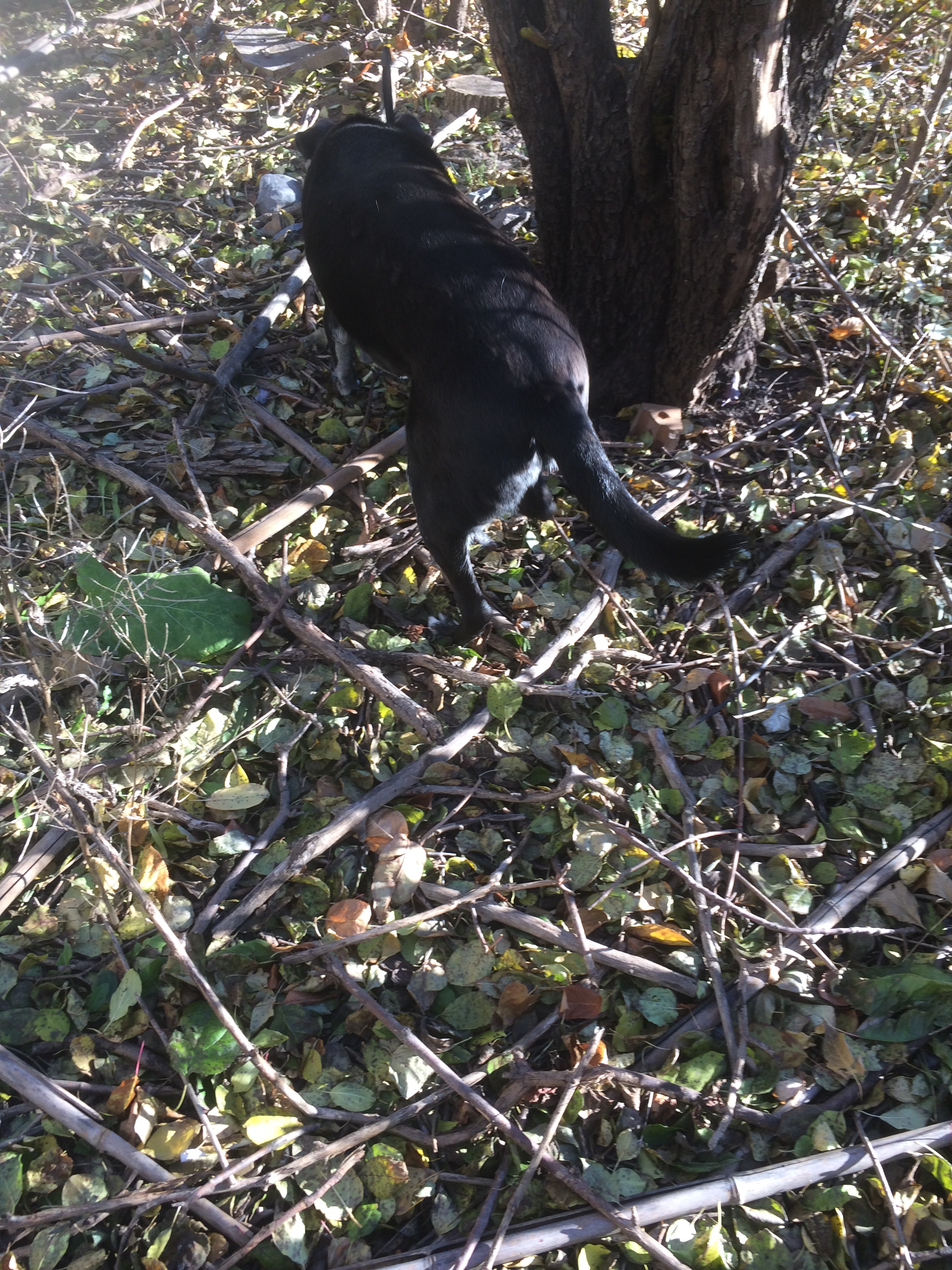
Prince walked off the path sometimes, but he was older now and stayed closer to them than he had in the past. He loved the woods. James knew because Prince’s tail wagged like he was swatting flies.

James was huffing when they got to the clearing and the lake opened wide and far. His father let go of James’ hand and scrambled down the incline to the side of the lake. He put down the tackle and folding chairs, touched the water with his shoe, and turned back to James and opened his arms.

“I can do it,” James said.

“OK,” his father said, but James knew he was watching closely as he slid down the slope. He stopped at his father’s feet and let his father pull him up so he could brush off his pants. When his father told him they were clean enough and they were old jeans anyway, James stepped to the edge of the lake and touched the surface with his shoe.
“Maybe we could get a boat,” James said.
His father looked at Prince, and James said, “Oh.”
He didn’t do too well,” his father said.
“Remember how we lost some of the worms?”
“He almost tipped us over.”
James bent down and put his nose against Prince’s muzzle. His dog was panting after the climb down the slope.
“No boat,” James said. “It’s OK, Prince. We don’t need a boat.” When Prince tried to lick him, James fell backward and wiped his face with his sleeve.
“They’ll be biting today,” his father said. His father could always tell.
“I hope I get one this big,” James said, and he spread his arms wide.
“No whales in this lake,” his father said.
James laughed and wiped away Prince’s slobber some more.
He and his father prepared their hooks and his father reminded James how to toss the line. James held the button down and released it with a perfect, arcing, toss and his father said “Whoa, James, I can’t beat that,” and James was happy.

They talked about school and Miss Delacroix and how James liked being in her class. His father understood why James was pleased with his teacher and they laughed about that because James was old enough to understand when a woman was pretty. Miss Delacroix was very pretty.

Prince walked around them for a while, keeping close, sniffing the water and the bait, but he curled up next to the tackle boxes and fell asleep before they caught their first fish.

Prince was still sleeping when James felt the first nibble. His father had not noticed, and James jerked the line. It was too quick — he should have waited for more nibbles — but he set his hook.

“Nice job, son,” his father said. “That’s the way to do it. Reel it in slowly.”

“I know, dad,” James said. “Slowly. Slowly.” He wound the spool with the handle. “I think it’s big,” he said.

Prince had finally woken up and he watched James. For a second, James thought the fish had slipped the hook, but he felt it tug again and he reeled it in very slowly. His father got a nibble, too, but he lost the fish and reeled in his line. He slipped a nightcrawler on the hook and waited for James before he tossed the line.

“Got it under control?” his father said.

James nodded. “It’s close, but I don’t think it’s that big.”

His father tossed his line and let the bobber float while he watched James.

“I can see it,” James said. He reeled faster until the fish was out of water. It was a blue gill, and it was pretty big. Prince was interested and watched intently with his tail in a fierce wag.

“Let me take it off the hook,” his father said.

“I think I can do it.”

His father looked at him askew and nodded. It was a big moment. James held the fish tightly and slipped it off the hook without getting poked by the fins or the hook.

“You’re a regular pro, now,” his father said.

“James, one; Dad, zero,” James said, and they both laughed and Prince plopped down next to the tackle boxes and fell asleep again. James let his father slap the fish against a rock and gut it with the knife that had belonged to James’ grandfather.

“Someday, this will be yours,” his father said. James hoped it would be soon.

It was an hour before twilight before they were tired of fishing and talking. James had three to his father’s two and his father had promised a sundae on the way home for James’ victory. His father had caught a large bass and tried to change the rules to win by total weight, but James would not allow it, and his father conceded that it was number and not weight and he would have to correct that next time they came unless James caught a really big fish. They took four of the fish home to eat and Prince slept the whole way home.

II

It was the kind of hot that only the heart of summer can bring. James’ mother refused to cook inside, so his father grilled hamburgers in the back yard and drank a Pabst Blue Ribbon from a bottle. James’ mother held his baby sister Jessica and shuttled patties and cheese and buns to his father, who wore a big, dirty, apron that said “Please kiss the Grillmaster.”

Prince sauntered across the yard. He was older now and he coughed a lot and his dad said he would have to go to the vet soon if he didn’t get better. James watched as Prince toppled on his left side and James yelled “Dad!”

His father dropped a hamburger and the spatula on the grass and ran over to Prince and tried to get him up. James saw Prince cough up white froth tinged with red. The old dog whimpered. He had never done that before, and James was scared.

“Mary,” his father said. He motioned with his hands and James did not understand. But his mother returned with a bowl of water and his father took it and put it in front of Prince. When he did not move, James’ father poured some of the water on his teeth and Prince lapped at it a little. James’ father tried to help Prince up, but Prince whimpered again and started coughing.

“Oh, God, Mary,” his father said. “I’ve got to take him.”

“David —“

“Look at him.”

His father knelt down and picked Prince up. Prince whimpered at first, but he stopped by the time they got to the car and James’ mother opened the back door and James’ father put Prince on the seat. Jessica sucked on her bottle and watched. James got in the back seat with Prince and closed the door.

“Not today, buddy,” his father said. “You stay home with your mom and sister.”

“I want to go,” James said.

“No,” his father said.

“You don’t want me to see him…” James said. He could not bring himself to say “die.”

His father rested his head against the steering wheel.

“I don’t want you to see me,” he said.

Prince was leaking slobber on the back seat, but the red was gone. James did not move.

“He’s my dog,” James said. “I’m old enough.” James saw his mother looking at his father, and his father nodded and kissed her.

“I guess you are,” his father said, but his voice was weak and not like his father at all.

They were silent on the ride to the vet. Prince raised his head to sniff the wind, but he got too tired to keep it up. When the car hit a bump on the road, Prince whimpered, and then he fell asleep.

James’ dad pulled up in front of the vet’s office. It was an old white home with an addition where the vet operated on dogs. It needed a paint job and on the side by the surgery, flakes of dirty white paint littered the lawn.

“James, you go get us signed in.”

James kicked open the door and ran to the office. Kathy, his favorite attendant, was there and he spewed out a rush of words that made her face go sad.

“The doctor’s with someone, sweetie, but I’ll get him,” Kathy said. “Don’t you worry.”

James’ father arrived at the door and Kathy came from behind the desk and hugged James and went to get the doctor. His father was still holding Prince when Dr. Bob opened the door of the consultation room and motioned for James father to follow him to the surgery. An old woman with a cat in a cage watched them leave.

James’ father placed Prince on the floor because he couldn’t lift him on the observation table. He leaned against the wall and the doctor said it was OK, and that he should take a minute to catch his breath.

“We’ll just take a look right here,” he said.

James’ father nodded as his breathing slowed. He wiped sweat from his forehead and the top of his head. Dr. Bob looked in Prince’s eyes and his mouth and he tapped Prince’s swollen stomach. When he was done, he stood up and looked at James and his father said, “Go ahead.”

“There’s nothing I can do but put old Prince out of his pain,”

Dr. Bob said. “He’s had an incident.” He looked at James again and James’ father nodded his head.

“I’m surprised he made it this far,” Dr. Bob said.

“How long?” James’ father said.

“He’s in a lot of pain,” Dr. Bob said. “It’s time, David. It’s been coming and it’s here.”

“Let’s do it, then,” James’ father said. His voice that did not sound like him at all.

“Do you want James with you?”

“Yes,” his father said.

That’s when James cried. It was so stupid, but he stopped when the doctor came with the big needle and his father lay down next to Prince and stroked his head and told him it was all going to be all right. He was still wearing the apron that said “Please kiss the Grillmaster.” Dr. Bob sat down on the other side of Price and held his back leg and rubbed with his thumb until he found what he wanted. He put the needle in Prince, but Prince did not whimper.

“It will be quick,” Dr. Bob said. “A minute or so. He won’t feel a thing. He’ll go to sleep.”

“It’s all right, big guy,” James’ father said. James watched as Dr. Bob pressed his thumb to the back of the needle and pushed the contents into Prince’s leg until the needle was empty. Prince’s head moved slightly, and he rolled his eyes around and James was sure Prince was looking at him when his eyes stopped moving. James looked at his father, and sweat was running down his face, but when he looked at his dad again, the water came from his left eye and rolled down his cheek.

On the way out of the office, James held his father’s hand for the last time.

III

It was the kind of cold fall day that would be warm in the spring. James followed his father through the woods and they talked about Miss Delacroix and her upcoming marriage to Mr. Courtlen, a sixth-grade teacher. He had proposed in her class and James had been there and thought it all very stupid and even sad in a way he did not understand.

He did not tell his dad; there were some things he had to figure out on his own.

His dad let him scramble down the slope to the lake without offering to help. James brushed his pants off while his father bent down and touched the water’s edge. The lake was strangely placid for this time of the year and the waves were little ripples dying on the shore.

“We could get a boat,” his father said.

James touched the surface of the water, and then he and his father looked back into the woods for what seemed a long time, but it wasn’t. They prepared their lines and watched as the bobbers made little ripples on the water’s surface.

“Maybe next time, dad,” James said.

“Yeah,” his father said. “Maybe next time.”

Sa Belle-Soeur

IMG_2907Sa Belle-Soeur

Sivan Slapak


“Est-ce que mon beau-frère est venu?” Justine asks. She’s one of the oldest at the senior’s residence. They are twenty ladies, at various levels of dementia. For today’s Christmas party, they’ve had their hair and makeup done, by the matronly Russian cosmetician who’s booked for such occasions. When she’s done primping them, the aides gently herd the ladies to the sitting room to listen to the volunteer guitarists, who stumble through electric versions of holiday classics. The room of freshly-coiffed grey heads nod, waiting in anticipation. Then drift. And then return with a pleased jolt to notice the morning’s festive atmosphere, to be told again that it’s Christmas and that there will soon be visitors.

Oh yes, people are coming, they remember. Deep and blurry affection rises up as relatives arrive, colouring the residents’ cheeks when grandchildren they don’t quite recall lean over to kiss them.

Justine never married. A slight woman who favours wool cardigans and pleated skirts, she retains the air of shy compliance cultivated by the nuns of her schooldays. She still wears a wispy pageboy, and recently took to petting a stuffed toy cat, Nitouche, that she carries in the bag of her walker.

Jean-Pierre, her brother-in-law, is her last remaining family member, and doesn’t visit often. When he does, the aides on duty point subtly, knowingly. Demure Justine became much more animated in his presence, almost coquettish.

With the Christian staff on holiday for the week, the Muslim workers jump in to organize the party. “Eid Sa’id!” They wink rakishly at each other under elf hats atop hijabs, rolling out the Christmas bûche and mistletoe for their mainly French-Canadian Catholic residents.

“Why is her dry cleaning bill so high?” Jean-Pierre approaches Fatma, head of the floor, waving Justine’s account record at her. “She always wears the same thing when I visit. The same thing every day.”

“That’s absolutely not true.” Fatma doesn’t add that he only comes a few times a year, so how could he know what she wears? “She cares very much about her appearance.” She gestures over to Justine, sitting daintily in a tan-coloured suit.

“She doesn’t know what she’s wearing. She has Alzheimer’s. She doesn’t remember a thing!”

Fatma tsks, turns away. How to explain to this man that losing one’s memory doesn’t mean losing one’s sense of pride, of self. Not yet. The habits one gathers throughout a lifetime, of brushing one’s hair to a certain side, or a preferred colour. These things that together make up a personality. Or the desire to look pretty for one’s guests. And that Justine asked for her string of pearls when she was told Jean-Pierre would be visiting.

Justine and Jean-Pierre sit, shoulders touching, on the plastic-covered couch. Christmas rock now blares on the stereo, filling up the silence of the crowded room. Jean-Pierre in his loose jeans, Justine with legs crossed at the ankle like a schoolgirl. She smiles timidly and laughs when he leans in and makes a comment about the music. They’re surrounded by the other residents, their walkers and awkward family members. Jean-Pierre looks around, squeamish.

He pats Justine’s hand and she turns her head to him, their faces matching in paleness. Paper-thin translucent skin. He can see the pink rim of her eyelids behind her square glasses—the same style she’s worn since she was a teenager, when he’d met her as Agathe’s little sister. He squeezes her palm. Ma belle-soeur.

Fatma announces, at a senior-friendly decibel: “We want to thank our guests for coming today, and for bringing delicious food for our Christmas buffet! Everyone’s invited to partake!”

The aides begin to lead the ladies to the folding tables they’ve set with green plastic and red plates, poinsettias as centerpieces.

Justine takes a seat and glances around anxiously as the other ladies are maneuvered into chairs surrounding hers.

“Where is Jean-Pierre, my brother-in-law?”

Fatma sees him in the hallway, standing stiffly and gazing at the pictures of Christmas scenes the residents made in art class, cotton balls glued carefully to construction paper. Displayed on the bulletin board as though this is preschool, and not the railway station between home and death.

“He’s waiting till you finish eating, and then will rejoin you.”

Justine smiles in relief, raises her fork to pick at her salad.

Jean-Pierre takes in the room of seniors, wordlessly doddering over their Christmas lunch, while the guests hover over them. He can’t stand being here for another minute. He grabs his coat and quickly leaves, marching out into the chilly snowless afternoon.

Fatma doesn’t notice him go. She’s made bastillah, a Moroccan chicken dish, and is doling it out for the guests, who praise the fine pastry shell she decorated with cinnamon and almonds. She’s also brought her gold-embossed tea glasses, and fresh nana from home. It’s not my holiday, but this is my party too.

“Justine, would you like some tea?” She holds a smoky pink glass out to her.

“Non, merci. Ou est mon beau frère?” Justine asked, prying herself up from the table and leaning on her walker.

“I’ll go find him.”

Fatma hands the teapot to Hind and goes down the narrow hallway, peering into every room.

“Monsieur Fiquet? Jean-Pierre?” Perhaps he’s resting on the second floor, in Justine’s room?

Upstairs she finds Adel at a table with Madeleine, who’d become agitated and was led away from the party.

“No, I don’t want lunch. My husband is home waiting for me, and I need to eat with him. I don’t want to ruin my appetite, you know.”

“But just a bite, Madame Bonhomme.”

“No, he’ll be upset if we don’t eat together.” Madeleine gets up and stomps to her room.

Adel and Fatma exchange looks. Madeleine’s husband died three years earlier, a fact she often forgets.

“Adel,” Fatma switches to Arabic. “Where’s Jean-Pierre?”

“I saw him take his coat about twenty minutes ago. He left.”

Fatma’s eyes widen in dismay. She knows what Jean-Pierre would say if she called to confront him: ‘She won’t remember anyway, that I was there, or that I left.’

She feels his leaving settles something she’d suspected. He may be over ninety, but he still wears his clothes with casual finesse. Laugh lines etch his face in a way that affirmed his good looks from long ago, a knowledge he still carries. A man who was never careful with women’s emotions, she’s sure of it.

Justine sits on the plastic-draped couch again, her cardigan lank and her feet crossed. Her small face perks to attention every time someone enters the room.

“Who doesn’t know that expression?” Fatma thinks, putting a hand on her heart. I’ve known it, the hope and dread. I hate that man, she thinks, only vaguely acknowledging who she means.
“Est-ce que mon beau frère est revenu?” Justine asked Hind, who’s circling with homemade shortbread cookies, two per resident. Justine has pulled out Nitouche and perched him on her lap, strokes his ears lightly.

“Not yet. I’m sure he’ll come soon.”

Fatma remains in the kitchen, tsking, hoping Justine will soon forget he’d been there.

Jean-Pierre strides outside. It’s frigid but not slippery, thank goodness. Little Justine, now at that place. He’d married Agathe and loved her, enough anyway. Together for almost fifty years. They never had children, but the house was full of family.

Justine, la petite. He doesn’t know why she never married. Her primness, perhaps. Maybe she should have taken the veil after all, like they all used to joke.

But that one Christmas Eve, when he’d had too much wine at dinner and come into the kitchen to see her washing dishes at the sink. He’d wrapped his arms around her from the back, kissed her neck and then dropped his empty glass into the soapy water. He left the kitchen and never mentioned it again, nor did she. Warmed by the wine it was a passing urge, seemed the right response to the sight of her delicate nape, her hair bobbed neatly in the middle. Like Agathe’s.

And now Agathe is gone and Justine is tucked away, her mind fading fast. Perhaps a blessing. His own senility is seeping in like fog, but he still has enough lucidity to see what a ruin lies ahead for him too. The shuffling seniors, the forced revelry, the ammonia-scented floors.

No, he would rather preserve that recollection as long as he can. When he’d strayed into the kitchen looking for his wife, and found her apron tied around her sister’s slender back. The sweet longing, the heated adoration of those sealed seconds.

With the fear that his own memory is crumbling quickly into rubble, he doesn’t want to impose sad new images on this fragile wistfulness, doesn’t yet want to say goodbye to that lovely young girl. His belle-soeur.

Justine lifts her hand to smooth her hair, touch her pearls. Jean-Pierre is coming to the Christmas party today. She turns her head to the side, hiding a trembling smile.

Understanding Cows

Understanding Cows

C.S. Lemprière

It was the end of October, hunting season. Grampa told everybody he was going up to the cabin with Uncle John to do some deer hunting. Nothing unusual about that because they did that every year. But then Uncle John phoned wanting to talk to Grampa and Dad said, “I thought he was up at the cabin with you?” Dad and my uncles went looking for Grampa and found him dead up at the cabin. Turns out Grampa had gone up to the cabin a week early. By himself.

The doctor was sure Grampa died of organ failure. He hadn’t taken any food or water up to the cabin, or lit a fire to keep himself warm. My Aunt Jess got suspicious and looked at the pill bottles on his bedside table ‒ turns out he had way more than he was supposed to because he wasn’t taking them.

I was so sad I couldn’t get out of bed for a week. At his funeral, my little niece Joy kept staring at Grampa’s hands like they were suddenly going to shoot up and go for her nose, like when he played that oops, I got your nose game with her. Then she wanted to climb up into the coffin beside him and would have if my sister Angela hadn’t dragged her away. That’s exactly what I felt like doing.

My mom and all my aunts blamed themselves: We should have got somebody in to look after him, we shouldn’t have left him alone in his house like that, not with his mind going, we should’ve paid more attention, made sure he was taking his pills properly…

But what could we have done, short of locking him up in his own house? Standing guard to make sure he ate his vegetables and took his pills? He didn’t want to come and live with any of us. He always said he was perfectly capable of looking after himself. And he was, basically. It’s true that his mind was playing tricks on him. I remember once when he was making Kraft dinner for us and couldn’t find the strainer for the macaroni. When he went to ask me, he forgot the word “strainer”. “You know what I mean, Rose, goddamn it! That thing like a net but made of metal, you know, for pasta!” I laughed thinking about a strainer being called a net, but Grampa didn’t think it was so funny. Now, thinking about it, I can see why. Imagine opening your mouth and the word not coming out. And sometimes he’d get mixed up too. He’d forget how to get a DVD to play, or how to set the washing machine, or where he put his slippers. We’d be having Sunday dinner and Aunt Lizzie would ask him to pass the potatoes. Grampa would turn and look at her, puzzled like. You could tell he was coming back from far away.

We all noticed that Grampa was getting quieter too. Grampa was someone who always had something to say about everything, sometimes too much, said my Granma when she was alive. Or as my Aunt Jess put it, Grampa could talk the ear off a pig. I remember going with Grampa to see Uncle Larry’s grave in the cemetery up the road. Larry was Grampa’s oldest boy but he died in a motorcycle accident when he was seventeen. I knew that Grampa was trying to illustrate what would happen to me if I got the motorcycle I wanted when I turned sixteen. When we walked along between the rows of graves, Grampa stopped to tell me the life story of every single person buried there. “Look, there’s old Mr. Maclean, he married Sally Fisher from over on the 4th. They had six kids, the oldest was Johnnie, he bought the turkey farm up the 5th. The next, now that would’ve been Eric, never seen such a good-for-nothing! Couldn’t find his way out of a paper bag. God knows what he’s doing now, probably not much. Then there was Sally, I went to school with Sally, she was a tough one, played baseball with the boys, the only girl that ever got the strap, too bad she ended marrying that Arnold, a guy more crooked than a dog’s hind leg. Then there was Jill….”

Then last Easter Grampa tripped going up the cellar stairs. He went to the hospital for X-rays, and they said his hip was all smashed and needed surgery to fix it. But when they did all the tests to see if hip surgery was even possible, they discovered he had a bad heart. So he ended up having two surgeries, the first to clear the arteries in his heart with little balloons, and the second to put a new metal joint in his hip.

Then, just when they were about to let him come home, he got a bad infection that gave him the runs. He had to wear a diaper because he couldn’t get to the bathroom on time. He kept trying to make it so he wouldn’t have to call the nurse. The doctors got worried that he was going to fall again and so they sent a social worker round to talk to him, to try and persuade him to be more reasonable. “Cooperative” was the word they used. Don’t think it worked.

So in the end Grampa was in the hospital for over a month. I went on weekends with Mom to visit but I never knew what to say. He looked so tiny lying there in the white sheets, the bright light from the window shining down on his fluffy white hair. The yellow walls, the antiseptic smell, the blinking machines, the cheerful nurses coming in and out all the time ‒ it all sucked the words right out of my mouth. So I just sat on the bed and held his hand.

One time I bought him a bouquet of flowers that I had picked in our garden. It seemed like a good idea because I saw lots of flowers on bedside tables in the other rooms. But then I regretted it because Grampa sniffed them and said how beautiful they were about fifty times. Which showed he was just trying to be nice and didn’t know what else to say. Now I know what I should have brought him: a bag of jujubes, his favourite candy. Or Smarties, his second favourite.

When Grampa came home he was so skinny it looked like a breeze would blow him over and he had to take a dozen pills. He was tired a lot of the time too. But he was so happy! He said he would never, ever go back to the hospital, not in a million years.

Every day after school I went along the road to his house. I made us each a cup of coffee and two pieces of raisin toast. Then we watched TV together until suppertime. Sometimes I’d skip supper at home and make us Kraft dinner. We watched a lot of Seinfeld reruns. He loved the one when George goes out to save a whale that got its breathing hole blocked by Kramer’s golf ball. George tells his friends the story in a big dramatic way: The sea was angry that day, my friends,like an old man trying to send back soup in a deli. Grampa loved that line. He kept saying things like, The cat was angry that day (when one of the barn cats scratched my littlest niece), or The washing machine was angry that day (when one of his socks disappeared).

Then my Dad got Grampa cable so he’d have something to do now that he couldn’t help out around the farm. So we started watching movies together. He hadn’t watched a lot of movies because he’d been so busy on the farm his whole life. We watched super long ones like Gone with the Wind and Titanic. And funny ones like Men in Black. Now I remember that he really liked one called The Woman Who Thinks Like a Cow. It was a documentary about an autistic woman named Temple Grandin. I remember thinking: of course a dairy farmer would like this!

“Wasn’t that something how she got down on the ground to see the world like cows do?” said Grampa.

“Dunno. Seems pretty obvious to me.” I said.

“How? How is that obvious, smarty pants?”

“I dunno. Like that cows don’t want to go in a dark barn. Nobody likes going in a dark barn.”

“Well, if it’s so obvious why didn’t those experts figure it out? Before they hired Temple, they were ready to tear down that barn and build a new one. Would have cost them a fortune.”

“I guess.”

“See how she figured out that the main emotion of cows is fear, just like humans? That they were panicking out of fear?”

“I guess.”

“Just like that cow that got out of the barn last summer. She was scared like that. She wasn’t crazy, just scared.”

“I guess.”

“You know I’m right, said Grampa, sighing.

I just didn’t want to talk about that cow. But now I do.

I remember that it was August and that it felt like the hottest day of the summer. The cicadas were buzzing like wood saws and the dogs were panting so hard they couldn’t sleep, even in the shade of the giant maple trees beside our house. It was so hot that my brothers Tyler and Travis had been sent home by the landscaping company at noon. I was thinking of calling my best friend Lily and seeing if she wanted to go to the air-conditioned mall.

I was in the kitchen making Dad and me a sandwich when the telephone rang. It was Uncle Dave, who was up at the barn helping Uncle Ronnie move some heifers into pens. From the sounds of it, something bad had happened to Uncle Ronnie.

When we got to the barn, Uncle Ronnie was curled up on the floor, moaning and clutching his side.

“What the hell happened here?” said Dad.

But Uncle Dave hadn’t seen what happened and Uncle Ronnie could barely talk. He whispered what sounded like “cow…hit…me”, which I thought was funny but impossible, because how could a cow hit a man?

“What cow?” said Dad.

Uncle Ronnie couldn’t elaborate because he was turning grey like he was going to pass out. We looked around and Uncle Dave saw that a cow was missing, then that the back door of the barn was wide open.

“Jesus, one of the cows must’ve charged him and taken off,” said Dad.

Dad tried to help Uncle Ronnie up but he screamed in pain and his eyes started rolling back into his head.

“Go call the ambulance, Rose.” said Dad.

So I went off to the farmhouse to phone. Grampa was sitting watching the news and heard my conversation with the 911 guy. When the two of us got to the barn, we headed out into the field with Dad to find the runaway cow.

The cow was standing in the ditch that runs across the field. We could see the top part of her above the tall phragmites growing in the ditch. It wasn’t very deep, only about five feet. When she saw us coming, she started snorting and waving her head. She tried to get up the bank but kept slipping. She was panicking so much her eyes were big like saucers. Finally, she got so tired she flopped down on her knees and stopped trying.

“What are we going to do?” I asked.

“I dunno know.” said Dad, “Maybe we’ll have to get more people, get some rope and try to pull her out.”

“I could go get Mom or Tyler, they’re home.”

“No,” said Grampa. “She doesn’t need more people around. Best to leave her alone so she can calm down. Then she’ll get herself out.”

“We don’t have all day,” said Dad. “We’ve got to get her back in the barn. I have to start milking in a few hours.”

“Just leave her with me. I can get her back in. Rose can help me.” said Grampa.

“No, you’ll never get her back in, not when she’s like this.”

“I will, she’ll calm down.”

“Not so sure about that. Rose, you stay here with your Grampa while I go and check on Ronnie.”

So Grampa and I sat down on the edge of the ditch. The angelica was blooming up and down the sides of the ditch, the bees were buzzing all over them, and the sky was a huge blue dome over our heads. We watched a shiny silver airplane crawl across the sky like a tiny bug, leaving a long white line in the blueness. I felt little like that bug, except down here on earth. At first we talked but then the sun made us sleepy and we just sat there and watched the cow and the bees and the sky. It felt like we had all the time in the world. Even the poor cow closed her eyes for a nap.

We heard the ambulance come screaming down our road. It pulled into the barnyard and two paramedics jumped out and rushed into the barn with Dad. A few minutes later they came back out, pushed the stretcher with Uncle Ronnie into the back of the ambulance and sped off.

Then Dad came back out with Uncle Dave. Dad and then Uncle Dave got down in the ditch and pushed on the cow’s hind end. We tried nice words, we tried shouting, we tried pulling on a rope tied around her neck. We tried everything. But the cow kept falling all over the place, snorting and mooing like we were trying to kill her. She looked confused, scared and exhausted.

“We’re going have to shoot the thing, can’t see any other way,” Dad said.

“Let’s leave her for a bit, let her calm down and get her energy back,” said Grampa.

“No, it’s never going to work.”

“Sure it is. Let’s just leave her for a bit.”

“And then what? Say we do leave her for a couple of hours, even all night, a week? And then say by some miracle we do manage to get her out and back in the barn. Then what? This cow’s been nothing but trouble since the day we got her. Always been unpredictable, a bit crazy. Look what she did to Ronnie ‒ gave him a concussion and probably a few broken ribs too. Could have killed him!

“And how do you know that? Nobody knows that.” said Grampa. “Let’s wait a bit. I can stay out here ‘til she calms down. I got nothing better to do. You go on back in and do the milking.”

“I can stay with Grampa,” I said.

“No, I want it settled now,” said Dad.

“What’s the hurry?” said Grampa.

Dad could see that Grampa was really wanting to save that cow. He turned to Grampa and said, kind of sad like: “There’s no hurry. It’s just something that’s got to be done. You know that, Dad. You know we can’t have a cow like that around.”

Grampa didn’t say anything. He just looked down at his feet and then out into the big blue sky.

Dad told me and Grampa to go back to the farmhouse, that he would take care of it. Grampa took my hand as we walked back to his house. In my head, I could see my Dad getting the shotgun out of the closet.

I was in Grampa’s kitchen, making us a cup of coffee, when the gun went off. I starting crying and Grampa put his arms around me.

Today was Embarrassing Enough

Today was Embarrassing Enough
Lori Ann Bloomfield

Rachel sat on the red sofa and considered the blue sofa. Then she moved to the blue sofa and considered the red sofa. She tried, but failed, to imagine either of them in her living room, in the empty space where, until two weeks ago, the white sofa had been. Andy had taken the white sofa with him when he’d moved out. This hadn’t bothered Rachel as much as it should have. She’d worried so much about keeping it clean she had never been able to relax on it. She wanted a sofa she could sink in to. One she could drink tea on, or red wine, if she became the sort of person who drank red wine.

It was Saturday afternoon and Rachel was alone at Ikea. When she and Andy had first moved in together they had come to Ikea almost every weekend. Andy had jokingly described Rachel’s decorating style as, “Zen, except without the calm or the style.”

It was true that Rachel’s apartment had been pretty empty when Andy moved in. She could never decide what to buy. One thing that had impressed her about Andy was how he could gaze out over a showroom filled with fifty armchairs, his blue eyes narrowed like a gunslinger’s, and know instantly which would look best in the corner beside the window.

Frustrated and filled with indecision, Rachel stood up and limped away. The heel of her right foot felt hot and sore. It was these new black leather boots she’d let Angela talk her into buying when they went therapy shopping after Andy left.

The usual crowd of Saturday shoppers was at Ikea: the young couples, the frazzled mothers, the reluctant men allowing themselves to be dragged along in order to keep the peace. And Andy.

Rachel spotted him as he was staring intently at a throw cushion on a black leather sofa. He had a look on his face Rachel recognized. It meant that Andy almost, but not quite, liked the object he was crushing with his gaze. This particular cushion had a fault. It would be perfect to Andy if only it were a different colour, or material, or plumpness. As Rachel watched, Andy dismissed the cushion and turned to a slim blonde man in an expensive overcoat. The look Andy gave him was as warm and gooey as a caramel left in the summer sun. Rachel did not recognize this look.

Rachel ducked down and sat on the nearest sofa. How could she have not known Andy was gay? They had lived together for almost three years. All she could think about was how many pastel-coloured shirts he owned. She’d even bought him a few.

Rachel scrunched down even further. She wanted to call Angela but was afraid Andy would hear her voice. She had to get out of here before he saw her. She’d wait for him to thread his way through the living room department then when he was safely in the kitchen section she’d backtrack and make a dash for the parking lot.

“Look at that print! It looks like something Elton John would vomit,” she heard Andy say.

Rachel wanted to close her eyes the way she’d done when she was a child playing hide and seek, but they were still open when Andy and his boyfriend came around the edge of the sofa she was sitting on and stood with their backs to her. They were laughing at a sofa with a neon pink flower print. It reminded Rachel of a pair of rubber boots she’d had as a child. She’d loved those boots.

Just as she was about to sneak away, Andy turned.

“Rachel!” His voice went high with surprise.

“Hi, Andy.” She tried to sound casual as if it were the most natural thing in the world to meet your ex-boyfriend at Ikea with his new boyfriend.

“You’re not thinking of buying that sofa, are you? It would look hideous in the apartment,” Andy said.

Rachel looked down. She was not even aware of what the sofa she was sitting on looked like. It was burgundy leather.

“No. Definitely not.” Rachel sprang to her feet. “I’m thinking of going vegan.”

She had no idea where that idea had come from. But if Andy could go gay, she could go vegan, she figured.

The man with Andy said, “Don’t tell her what she can and can’t buy. It’s her apartment. She can get whatever sofa she wants. She could even buy that one.” He turned to point at the Elton John vomit over his shoulder. “Though I wouldn’t advise it. I’m Sully, by the way,” he said, extending his hand.

Andy squirmed as they shook hands. Sully, however, seemed to be enjoying himself.

“We were just on our way to the cafeteria for a coffee. Care to join us?” Sully said.

Andy looked so aghast that Rachel said yes.

Sully positioned Rachel in the middle and together the three of them walked to the cafeteria. Rachel and Andy had never gone to the cafeteria when they were together. Andy had always made fun of the cheap breakfasts and meatball specials. They’d sounded good to Rachel, but she’d never admitted that.

But here he was, dutifully following her and Sully through the cafeteria line-up. She glanced back, wondering if he wore the same look as the men who were trailing along behind their wives. Andy met her gaze with a look somewhere between fury and fear. It reminded her of the time she’d gotten up during the night to pee and had surprised him masturbating in the bathroom.

Sully filled a paper cup with coffee and added a splash of milk. His hand wavered over the sugar then fell back to his side. “I prefer honey,” she said to Rachel.

At the cash registrar they each paid for their own coffee. Rachel wondered how gay men decided who paid. Maybe they always just paid for their own. Then she wondered why she was thinking about such stupid stuff.

They sat at a table beside the window. Sully and Andy on one side, Rachel on the other, across from Sully. There was an awkward silence after the scraping of chairs and the settling down into their seats. Rachel had a history of saying embarrassing things to fill silences like this one so she forced herself to stare quietly out the window at the parking lot below. Today was embarrassing enough without adding words to it.

The sky was grey overcast, the cars mostly black or white. But inside, Ikea was a riot of colour. Rachel knew that whatever most people bought here today they would take home and squash the vibrancy out of it. Rachel knew she did it too, but didn’t want to. She wanted to learn the trick of keeping the vibrancy in things.

“Andy told me you work in advertising,” Sully was the first to break the silence, unsurprisingly.

“Insurance, actually,” Rachel said.

Sully nodded, already bored. He was probably regretting inviting her to coffee. If this was going to be fun he was going to have to work harder than he’d anticipated. “I’m a massage therapist,” he volunteered. “I rent a small room in a yoga studio downtown. If you ever need a massage…” He smiled brightly at Rachel.

Andy shot Sully a look which made Sully laugh. He tilted his head way back so that Rachel could see the edge of his straight white teeth and the pink at the back of his throat. To appease Andy he slipped a hand under the table. The two men’s eyes met and they exchanged a secret smile.

Rachel looked at the tabletop. She knew she shouldn’t be here, but she didn’t know where she should be.

A stout woman with tight grey curls stopped at their table. She wore a sweatshirt with a kitten on the front. Her glasses hung on a necklace made of pink plastic beads that bounced softly against her considerable bustline.

“You’re twins, right?” She wagged a finger between Sully and Rachel. “My brother, Gus and I were fraternal twins. He died just last year. I miss him more than my husband. It’s funny, when you start looking for twins you see them everywhere.”

Sully tilted his head and considered Rachel. Then he turned to the woman and smiled brightly. “I think I would miss my sister more than my husband, too.”

A look of confusion clouded the woman’s face then cleared. It was like watching a gust of wind blow across a pond on an otherwise still day.

“You’re both gorgeous. Enjoy your day,” she said before tottering off.

“Thanks for stopping by,” Sully called after her.

Andy stared down stonily at his fingernails.

Sully ran a hand expertly down his back and said, “You should loosen up. Relax or else you’re going to give yourself one of your headaches and then you won’t be any fun.”

“I already have one.”

Mostly from habit, though from a bit of sympathy too, Rachel opened her purse and found some aspirin. She handed the small bottle across the table. Wordlessly Andy shook two, then three, pills into his palm. He washed them down with a gulp of coffee. “Thanks,” he said, handing the now empty bottle back. He didn’t meet Rachel’s eye.

“If we are going to be mistaken for brother and sister I think you should get a better haircut,” Sully said to Rachel.

“You don’t look alike,” Andy hissed.

Sully winked at Rachel as though they really did have a familial bond, as if they did share a secret language.

Rachel could see that she and Sully were both slightly built. They shared long, willowy limbs and fine features. They were both fair-haired and blue-eyed, though Sully’s eyes were brighter. They each had small ears that sat tight to their heads and Rachel imagined that inside his shoes Sully had long, thin white feet like her own. She did not let her imagination go any further. They looked alike, though the idea of twins was pushing it.

“How come you guys are at Ikea?” Rachel asked. She wished she hadn’t said guys. It sounded weird.

The two men exchanged a wary look.

“Because he doesn’t like my place and wants to change it,” Sully said.

“That’s not true,” Andy burst out. “It’s need cohesion, that’s all.” He turned to Rachel. “It’s hodge podge, but all it needs is the right few pieces to pull it together.”

Rachel looked at Sully. “He did the same thing when he moved into my place. Changed everything to suit him.”

“Maybe he should get his own place,” Sully said. Then he tried to soften it with a smile.

“Maybe he should be an interior decorator instead of a financial advisor, then he could do this all day long and get paid for it,” Rachel said.

“That’s too gay for Andy. Isn’t it Andy?” said Sully.

“If I wanted to be an interior decorator, I’d be one. I only like designing my own space. I don’t care about anyone else’s,” Andy said. Rachel could tell he was straining to keep his voice calm.

“We were arguing about this over by the sofas,” Sully said.

“We weren’t arguing,” Andy insisted.

“I think Andy is ashamed to be gay,” Sully said.

Andy massaged his left temple and stared down at his coffee. Rachel could tell the aspirins had been wasted on him. She should have kept them.

“Andy didn’t say he was leaving you for a man, did he?” Sully demanded. Rachel suspected that Sully was not as angry as he sounded. He just liked to fight.

“What Andy and I talk about is between Andy and me,” Rachel said.

Sully looked surprised, like a spoiled child that was finally reprimanded.

“Then I’ll leave you two alone to chat.” Sully stood up like he were on a stage, not in the Ikea cafeteria. He stormed off, his coat swaying dramatically behind him. Rachel had the feeling that was why he had bought it.

Andy watched Sully leave then took a sip of coffee.

“You’d better go after him,” Rachel said. She was surprised how calm her voice sounded. She was even more surprised by how calm she felt.

For the first time that day Andy smiled at Rachel. He reached into his pocket and pulled out his keys. Holding them up like they were a prize he said, “Sully has forgotten that I drove.”

They laughed but not from happiness or even malice. It was simply a release of tension. Then it was over and the awkwardness snuck back in. Rachel drained her coffee cup and stood up. “Still, you should go after him. Make sure he’s alright.”

“What are you going to do?” Andy asked.

“I’m going to buy a sofa. But don’t even ask which one because I’m not telling you. I’m buying the one I want and I refuse to be talked out of it.”

Andy raised one eyebrow and smiled wryly. Then he gave a small shrug and held up both hands.

Rachel waved good-bye. A lump was forming in her throat and she didn’t trust her voice. She could feel Andy watching her as she left the cafeteria but didn’t know what he was thinking. Probably she never had.

As she threaded her way through the Saturday shoppers she thought again of those long forgotten rubber boots from childhood. She remembered twirling in them on the sidewalk in front of her house and feeling pretty. She had not worried then how she looked, or whether anyone was watching, or what they were thinking if they were.

Charity Case

Charity Case

Howie Good

1

Swallowing a handful of pills solves every problem, although I didn’t necessarily want it that way. Nearby is another me that I can’t see but that sees me. It’s impossible when looking around not to imagine some prior tragedy, all the deserted cities the jungle overgrew. Whatever happened to the right to be lazy? I try to tell myself that if less is more, then nothing must be even more. A woman outside the Stop & Shop is collecting money in a can, her eyes like rusted bullet holes.

2

You look up from what you’re doing, interrupted by a chain of thunderstorms moving through the region, something that might mean something, broken people and animals, and the way they stand, and the trouble they get in. The wallpaper pattern repeats the image of a body hanging from a lamp post. It sounds horrifying, but that’s the idea. You and everyone else have begun to suffer the effects. Often eyes become red. So I press my eyes shut. This is wrong, I say and keep saying until my voice gives out.

3

A farmer and his wife, after their horse dies, want to carry machine guns so they can intimidate passing motorists. They go immediately to a lawyer. No skin off my ass. In the United States we have a curious relationship to death – a very crazy old man, unanchored by horizons, riding on a cloud beyond the beyond, where simple words look like galaxies.

4

Some years are bright and funky – and even reportedly saved a man’s life once. But she had a sad little funeral. It was rainy. It was all wrong. And I was thinking, God, she loved life so much, everything in the world, including the air. Like the Sufis say, “Life is a dream, and death is waking up.” Not that anyone will.

Source for #4: Allison Meier, “The Funeral of Artists” at <http://hyperallergic.com/179082/the-funerals-of-artists&gt;

A Day in Three Parts

A Day in Three Parts

Jill Talbot

A Night in the McDonald’sIMG_0238

Half expecting to be kicked out, I wrote this out expecting to be drained, forgiven, but all that came was more of the same, until I’m sorry for being sorry and have forgotten why. For whatever I did, I apologize, profusely, out of the flesh of seedy bars. I have become one of those people who talks to themselves in McDonald’s and goes to church in the bathroom. The taste of regret, smell of fat and Barbie Girl playing, that hugely sexist pop song of the nineties we all hated to love and loved to hate, like McDonald’s at midnight.

Sort of like being in a fishbowl—the decorations—obviously for the people looking in and not its inhabitants and incredibly unnatural; so unnatural one does not know any longer how to behave. I could try suing McDonald’s for coffee that is too hot as that woman did down south. Sue the mechanic, the zoo, sue BC ferries. Find the missing parts in McDonald’s parking lots. Except the coffee isn’t hot at all—it tastes like charcoal and lukewarm soup. Everything is greasy in the ghetto.

The McDonald’s has been closed for an hour, if I leave I won’t be able to return. For the third time my life was saved by the cost of missed ferries and cell phone chargers. I’m going back to the mechanic.

images-2

A Day at Horseshoe Bay

What do you get if you write, “I’m sorry” a million times over? Would it mean more had you written it once? Does it make a difference if it’s hand-written, typed individually or copy pasted? Am I sorry the way Bill Clinton was or am I sorry the way his Hillary was? Am I sorry the way the caught robber was or the way the maker of the Titanic was? Stuck in a long lineup the damn truck held us all back.

A man once jumped off a Horseshoe Bay bound ferry, said that he wanted to get to a basketball game on time, they kept him in the psych ward only overnight. Sometimes I am surprised this doesn’t happen more often. Might call it a death drive but—perhaps—he just wanted to swim. Perhaps he time travelled and thought he was on the Titanic. Perhaps he was a physicist who could prove it’s possible to be in two places at once.

Maybe he was tired of BC ferries announcements or the smell of White Spot. Maybe he was a polar bear in disguise. Maybe he needed an alibi. Maybe he wanted to be written about by people like me who have nothing to do but wonder why people don’t jump and why they do. Maybe he wanted to visit a psych ward. Which are, by the way, overrated. I jumped once, too.

A Morning with the Mechanic

Snooze. “The fucking fuck is fucking fucked.” I’ve heard two people quote a mechanic that way. One was a famous poet, the other, something less noble, which is really more noble, don’t you think? Both were from saw mills where being fucking fucked was a daily occurrence. I wonder if it was the same mechanic or if this is just a new language.

This is the language I use for my alarm clock—amongst other things, such as Canada Post and feral turkeys. The clock replies with something similar so we both begin our day in such a way. No wonder the truck is fucking fucked. Karma’s a bitch.

A Good Day for Nudnik Fish

A Good Day for Nudnik Fish

Larry Lefkowitz

coelacanth-blue-990x366

I prefer my Tel Aviv from the vintage days – before the upper crust skyscrapers disturbed the eyes and the hype the ears, and most of all, before the arrival of the glitzy marina. I berth my skiff wherever I find a bit of sand on the shore that hasn’t yet been taken for private development. Nobody disturbs the boat — it’s been around so long they know it’s mine — vintage, like me. I make it a point to fish with my back to the skyscrapers, facing the horizon.

Usually it takes me a while to catch the first fish. But that day as I sat in the skiff on the sea, they simply weren’t biting. Changing bait, changing fishing spots – gornisht. “Can you pull in the leviathan with a fishhook?” asks Job. I would settle for a fish far smaller than leviathan, I mused — and then the fish jumped into the boat. I pounced on him before he could jump out of the boat. “Wait long enough and they come to you,” I shouted triumphantly the old fisherman’s wisdom.

He turned out to be a disappointingly small fish, though a pretty one – a type I had never seen before — with gold scales that put those of your aquarium goldfish in the shade. I picked him up to toss him back. He was too small for frying.

“Don’t do that,” the fish pleaded. “Not before using your three wishes.”

A talking fish. Trouble. If you tell people a talking fish jumped into your boat, even bait-sellers will give you the fish eye.

Continue reading A Good Day for Nudnik Fish

ONE WAY WEST

FullSizeRender-11


Excerpt from the novel Un passage vers l’Occident, by Didier Leclair, translated by Elaine Kennedy with Sheryl Curtis

The small fishing boat taking Africans to the coast of Spain was heaving in high waves. Each time the hull pounded the water, the passengers cried out in panic. None of them was used to being on a boat. For some, it was their first time out on the open water and they vowed it would be their last. Drenched with spray, they clung to their seats and the side of the boat, determined to set foot on Spanish soil. All seven were desperate to reach Europe and escape the poverty and fratricidal wars in their homelands. Some intended to stay in Spain; others hoped to go on to Italy, Germany, France or Belgium. Their final destinations varied, but their goal was the same—to flee to a rich country. Each of them had an infallible plan for disappearing into the night when they arrived. They would join an uncle or a brother who had already settled in the West. They knew the names of cities and streets, along with a few words in several European languages to help them find their way. The bolder ones even imagined meeting another African who would provide information, assistance or shelter. Yet all these schemes were no more than dreams until they managed to cross the Strait of Gibraltar. Their new life could not begin until they had completed this first leg of the journey across fifteen kilometres of water up to three hundred and fifty metres deep. Across a treacherous arm of the sea that can be smooth when it’s supposed to be rough and that can slam the cliffs when it seems to be calm. But then, this gateway to the Mediterranean separates Africa from Europe. A natural divide filled with age-old waters, it marks the boundary between two worlds of growing disparity: Western Europe, capable of providing for its citizens, and Africa, unable to meet the basic needs of the majority. This contrast, spawning envy and hatred, is mirrored in the rough and unpredictable waters of the strait. Continue reading ONE WAY WEST

Sedalia, Missouri

Sedalia, Missouri

by
Jacob Potashnik

Winter, 1990. The walk from the hovercraft to the train station was short but left me wet and thoroughly chilled to the bone. The weather, a mix of wind and pelting rain and snow was an affront. On the quay for the train from Boulogne to Paris, Mr. Six/Four bent low and easily hoisted a limp sack of a young man out of a wheel chair and into his huge arms. A porter folded the chair and lead the way. A woman, grey-haired frail, thin, at least sixty-five, follows.

My seat was across the aisle from theirs and they were quick to smile and nod to me as they settled in. He who I had taken for a young man, was not a young man and his story was very clear. Forty, remarkably thick dark hair falling like a wave over his forehead, thin, gray, gleaming skin, Kaposi’s sarcoma, full blown AIDS.

At the first pass of the car snack service Six/Four ordered coffee.

“Teddy,” the woman stage whispered, “Will you look at that?”

It was the standard French train café filtre, a two stage plastic unit, hot water goes in the top, filtered coffee drains into the bottom. Six/Four was so pleased he was beaming but Teddy has seen it all before.

“Wait till you taste it,” he muttered, smiling gamely.

“Well, I never,” said the woman in admiration. “They make such a fuss.”

“Smells heavenly,” Six/Four agreed. “After the English stuff.”

Continue reading Sedalia, Missouri

Nothing Will Suffice

Nothing Will Suffice

by Andre Narbonne

The Facebook notice follows the funeral in short order. Joan has just lost her husband, Bryce, and now the children she grew up with in a Northern Ontario mining town in the days before computers are back and posting pictures.

Is this my Joannie Crebb? My name is Marie Benoit. If you’re the right Joannie you’ll remember me as Marie Boutin. I’ve married into a new B. LOL. The kids from Balmerville have formed a group and we’d like you to join – if this is the right Joannie. Can you be the first hit on Google? We’re all so hard to find except Geoffrey. LOL. Always in jail.

She accepts the invitation: clicks “Join Group” and scrolls through their lives.

The pictures are curiously similar. The girls she ran with the last time she ran for the sheer pleasure of it have grown into chubbier versions of themselves. In the seventies they came across as daring but the daring didn’t take. They housewife – or trailer-wife, depending on the northerness of the mining town into which they’ve gravitated. They proud parent twenty-year-old children or they adoringly grandparent toddlers. Their Facebook walls are the record of a generation enamoured of fantasy to the point of being prosaic. They have little interest in current events but post daily on the afterlife. Aphorisms substitute for self-evaluation, conspiracies for politics.

Continue reading Nothing Will Suffice

Right of Way

Right of Way

by Kate Sheckler

Two wrongs don’t make a right. Words her mother repeated so often that Holly cannot think of them without hearing her mother’s tone, the inflection of superior wisdom shaping each rounded vowel and clipping the T at the end with decision and a sure knowledge of the meaning of those two words – wrong/right. For Holly, it’s a distinction that is never obvious, one that hides behind details each of which changes the picture suggesting options and alternative views, details that remind Holly of all the reasons things have turned out the way they have – so it is with indecision that she stands at this counter covered with melamine, cool, chipped, and engrained with grime. She considers the embedded pattern of grunge as if it holds an encoded message, some decisive statement that offers an opinion on this thing she is about to do. But the grub gray lines, set permanently in the textured surface, offer nothing, and she turns her attention to the papers waiting for a signature. Her signature. Holly Baxter nee Holly Meredith. The forms sit, flat and unobtrusive, yet still Holly can feel their pressure and bites her lip, wincing as the cut opens again with an additional tearing of the delicate skin. The salt metallic of blood on the tip of her tongue, she considers the papers once more. Black and white, they offer no middle ground.

Continue reading Right of Way

LISTENING TO THE DIVINE SHOUT BEFORE DRIVING AROUND THE FROGS THAT LEAVE THE LOAM

LISTENING TO THE DIVINE SHOUT BEFORE DRIVING AROUND THE FROGS THAT LEAVE THE LOAM

by Brian Michael Barbeito


I went to the place where the urban meets the rural and walked down sandy pathways to see ponds. The dusk was going to announce itself there. I had been trying to escape the day because the day had been a lurid artifact- too bright, too angled, and in point of fact, too new. I just needed to see the tree lines where the difficult storms had grown vexatious taken the leaves and branches ragged across tornado –like skies fluttering like a bat can seem to flutter. At the bottom of summits I watched the rocks grand and small. There was a great stillness, a preternatural quietude and so I, in turn, to honor such a natural silence, remained quiet. It wasn’t difficult as I was alone. I had the queer idea that some metaphysical presence might make itself known. Not a deva or sprite, no, nothing like that. And not a guardian angel or whispered message from the large Bur Oaks, Pines, or feral shrubs. Then what? To tell the truth, I did not and do not know. I just thought something might happen there. It did and it did not. I didn’t hear or see anything, and cannot tell a lie. But there was something in the silence. Maybe it is something they speak about in the perennial philosophy, if the perennial philosophy speaks anywhere of a silence that seems to shout the divine. It was. It was. It was. It was a grace that rang out from the quiet dusk pond by the crescive and verdant meandering path walls, from the thunder miles and miles away that did lightly erupt into the air across pregnant and warning cumulus, and from the dense thicket making a perimeter around the outside of the back of the water that sat still and stoically as a rooftop for the water spiders. I was grateful. I had not seen God A Person or a burning bush, but I had received through the agency of nature some calmness. That is how I felt after hearing the sum of the sound of the forest and water. Afterwards, it started to rain. I had to use my high beams or ‘Brights’ as some people used to call them. I noticed that the rain disturbs the frogs and they begin to come out to the roads, the one-lane highways I had to traverse. I tried to maneuver around them so as not to hurt even one. Difficult. I managed well enough. I was glad, even a bit heart-swept to arrive home.

A Death at the Hands of

A Death at the Hands of

Meghan Rose Allen

“I don’t deserve this,” she might have said. “Do I?”

***

    They shot her in the head and buried her on the beach where the dunes meet the sand. Wrapped and weighted. I wasn’t there when they dug her up. Someone must have been. Someone must have found her. The Garda in Ireland or the army or a man walking a dog, a big dog as hairy as a Shetland pony, digging in the brown sand until it found something. A piece of plastic. A hand. I don’t know. I wasn’t there.

***

    Mary goes on the news.

“I don’t care,” she tells the newscaster, her accent muddled about from all those years in London and then Sydney and then Montreal. “They can retaliate all they want to. I saw who came to the door that night. Three of them had masks, but two didn’t. I saw and so did half the people on the estate. No one’s been willing to speak up for forty years. Fine then. I will. I’m only back here for one more week. Let them try.”

Mary says she will talk to the police, if they ask.

“No one in power wants to rehash all that, especially for some poor washerwoman from West Belfast,” Mary says. “Derailing all the good work that’s been done since then. I do understand. But in another way, they killed my mother. Why shouldn’t someone answer to that?”

***

    Mary calls my mobile from the cab driving her back from the studio.

“They’re going to shoot you too,” I say. “You know that.”

“It’s all a bluff,” Mary says. My phone crackles and I lose the connection. I never remember to the plug the damn thing in. I only have one because Mary insists. For emergencies.

    ***

Continue reading A Death at the Hands of