
Flawless Virtuosity of a Stumbler
Elaine Clayton
In that era of my life, I was denied beauty in the ways youth sometimes forces through fate, or through innocence or naive stupidity. I had been, as a palm reader described while examining the map of my open hand, “severely trapped.” And she was correct. My first footing out of home and into the adult world was a drastic stumble. I married young and to a man who was abusive due to multiple factors including the sudden death of his mother when he was a child and the acquisition of a scheming and domineering stepmother. Whatever the reasons, he’d rage and throw furniture at me every two weeks and such harrowing treatment was a thing nobody talked about back then and so I was trapped by shame as well as by the situation itself. I had no idea, without a car, how to escape that sacramental terror and calamity. And so it was that I went to work that day, with a burn wound on my back from a silver pot of café au lait hurled at me from behind.
I was at work as gallery guide at the museum’s junior gallery, featuring a long-term installation exhibit based on the five senses, when in walked the most graceful grand jêté leaper of all, Mikhail Baryshnikov. His partner at the time, Jessica Lange, was content to sit on the giant tongue wrapped in scarves to conceal her identity, while “Mischa” took their three year old daughter from the camera obscura eyeball into the interior exhibition spaces. Nobody else was there yet, so besides me, they had the junior gallery to themselves.
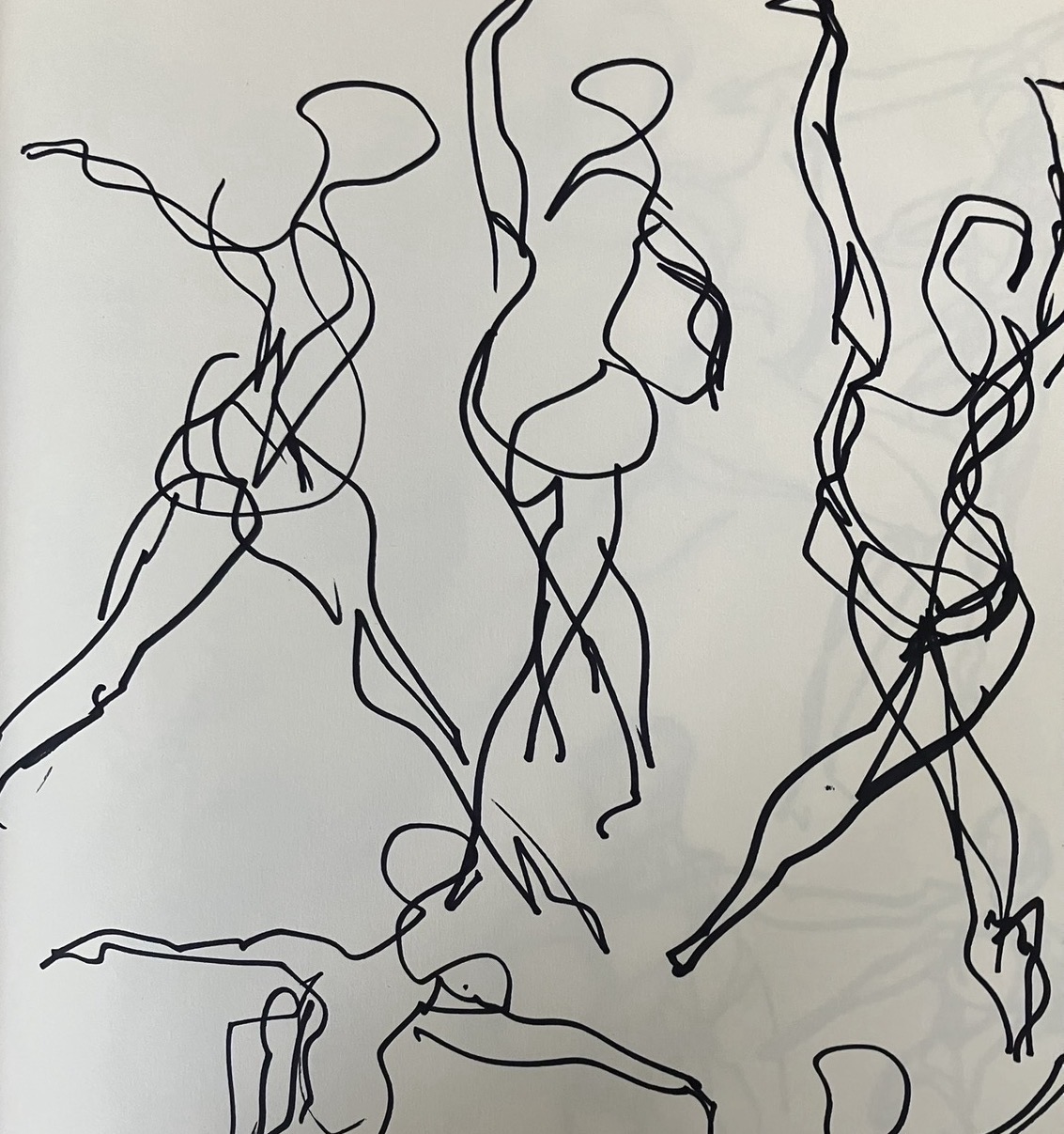
I wanted desperately to look up at the mounted video monitor knowing they’d be entering the Prismatics room where, on stepping into the darkened space, a screen projected the image of the contour of your body in swirling, colorful, dynamic fantasia. I knew if I looked up at the monitor or followed them into that room, I’d shatter at the magnificence of what he might do in there. I knew he’d cabriole, he’d caper and pirouette. I knew he’d probably leap six resplendent feet into the air and that my discouraged and weakened interior lattice could not bear the great beauty of it and I’d combust into a powdery hillet of ash on the floor. So, I gave them privacy, diverting my eyes, like a fool, denying myself the possibility of an utterly exquisite sight.
The final room of the exhibit displayed a harp that bounding kids (or their wistful parents) usually twanged with clumsy exuberance and a splendid trompe l’oeil mural depicting a still-life palace feast. A counter replicating a long table was affixed with scratch-n-sniff stickers that gave a range of scents from onion to berry to cinnamon so a child could pretend to partake in this banquet by inhaling aromas. I saw that Mischa and Jessica’s daughter progressed into that area and she stood there tiny before the elaborate feast table. It was my role to show her how to scratch and then whiff the scent of each sticker. She eyed me warily but did as I did. Just as I instructed her how to get a good impression of the smell of dill pickle, I was surprised to hear the harp two feet behind me sweetly awaken. The most angelic timbres quivered and I felt the tenderness of sound. I swivelled to see, and it was Mischa at the harp. He gazed at me as his fingers moved along the resonating strings intoning euphony through the hollow body of the instrument. And through the sorrowful density of my own. Who knew he could strum a harp? I may have denied myself seeing him dance in the Prismatics room, but he found a way to send waves of transcendent, emotive hues through me with that harp.
After a few moments, I stepped lightly away from the melodic sensory tableau, strolling light-headed into the main exterior of the exhibit. Jessica, still disguised, dismounted the giant tongue and the three of them exited the gallery. But first, Mischa walked toward me, beaming benevolently and gazing with his rounded moonglow eyes into my own as if delivering a message through eons of time. I saw that his eyes were closer together than you realize in pictures. At this moment, I felt elevated from my nucleus, as if my heart center shimmered with a sense of new courage.
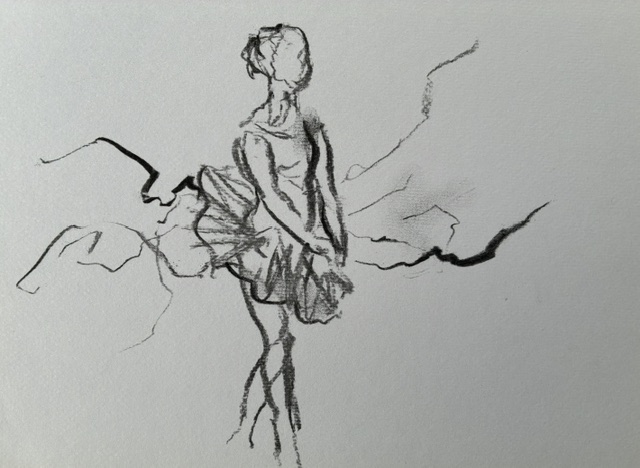
Old school phraseology for cultivating confidence like, “Keep your chin up,” is fine, but after my experience, I’d say you have to keep your ribcage up. I know because when you’re in an abusive relationship, you have to learn how to fly. It’s the only way out and it’s the feeling that the ribcage not only protects your breath of life but your heart, as well. It allows your entire body a fundamental strength and poise. Dancers are taught to be aware of the center, to engage the transverse abdominis and pelvis, which lets the ribcage lift. If you can sustain an elevated ribcage through trauma, you can walk as if long jump leaping across Swan Lake. An upward gliding step that ascends into easy flight. Eventually you lower, having made excellent progress in terms of height and distance and then you leap again. And not long after, I, myself performed a grand jêté out of the misery that had wounded my heart into heavy immobility. With one long leap, keeping my ribcage up, up, up, I flew into the promise of a new life.
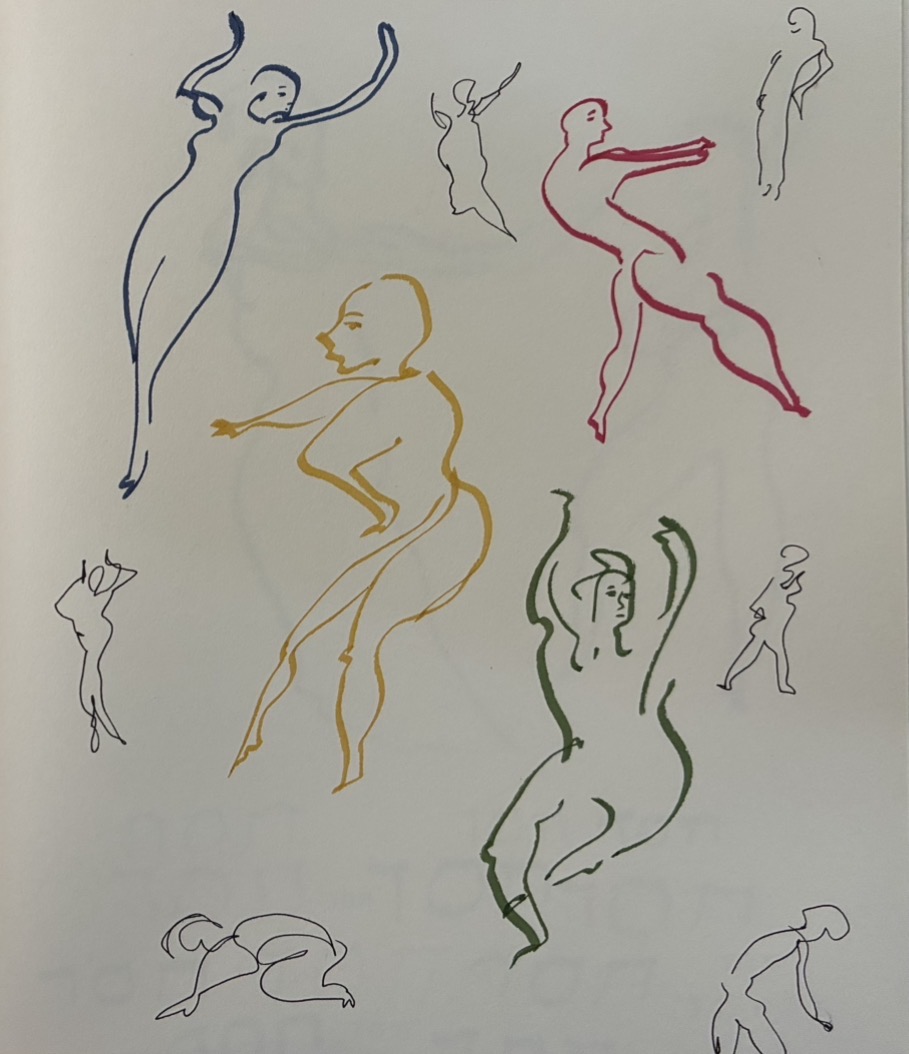
drawings: Elaine Clayton

