Tag Archives: poetry

new tourist

new tourist

milt montague


manhattan
new york city
a hot summer day

people galore
crowding the streets
museums shops restaurants

all the sidewalks
bulging with tourists
cameras always at ready
logging their future memories

on this day
I play the visitor
in a very cool coach
gliding down fifth avenue
gawking at the store windows

disdaining
muggy sidewalks
bursting with sightseers
jostling for breathing spaces
expropriating my stomping grounds
my gilded carriage an air conditioned city bus

ALEXANDRA IN ISTANBUL

ALEXANDRA IN ISTANBUL

Carl Boon

New to the city,
she spends afternoons
rehearsing the shapes of clouds.

One day, they’ll reappear
in a notebook
with names of friends

she’ll have forgotten.
She swears the city
won’t swallow her, leave her

paralyzed, strangers
unconcerned if she’s the will
to get up, go home. I was

Alexandra, and walked
through Taksim Square
in the rain in November.

They sold me poison sandwiches,
seats for movies
that never played.

I am waiting to go home.
But the tangerines this fall
on Ergenekon Street

have just begun to sweeten,
and the bonito for sale
on the Bostanci sea-road

glisten in the morning.
Alexandra will put these away
for later, images of a lost world

when the calm of Gdansk
grinds her and the Long Market
on the Baltic becomes shadow.

-photo from creative commons zero

Whale Gate

Whale Gate

Casey FitzSimons

Cowell Ranch State Beach,
south of Half Moon Bay, California

Once an entrance to Aldo Giusti’s
many-acred field of brussel sprouts. Now
the twelve-foot metal gate’s chained shut, holds
back the headland fennel, canes
clawing damp air, rising lumpy with snails
climbing in slow, mute panic.

It couldn’t open anyway, without the chain:
bumpy ox-tongue thistle
and frilly poison hemlock clog
the gate’s swing-arc. On its face, wrought
in iron, a huge blue whale painted white, not blue
—rusted iron spoiling through,
flaking. From his blowhole he spews
an iron fountain, dribbling rust, raises
his curly fluke high into stylized waves
that surge along the upper rail, his tiny
dorsal fin submerged below them.

His throat grooves are
what I like best, rendered by the welder
like a Caddy Eldorado’s grille—rods of iron
parallel, criss-crossed by plowed crop rows
you see between them. Like me,
the whale heads seaward, ocean
half a mile out the gravel track.
An information plaque, pulpit-wide, erupts
right there in hemlock, pedestal flecked
with delicate wild-radish flowers.
It tells, though, about agriculture, how Italians
brought the artichokes, how brussel sprouts
began in 1909, now the coast’s
most lucrative crop.

What I wanted, of course,
was a whale story, perhaps a story
of a particular whale who liked
to breach, whose lobtailing fluke
inspired the gate, how he filtered krill
through his comb-like baleen and didn’t
need teeth, how he was warm-blooded
and had a four-chambered heart.

-photo http://www.everythingcoastal.com/2010/12/december-exploring-on-california-coast.html

To Orayvi

To Orayvi

Michael Anthony

Like most Hopi, my great-grandfather, Wilson Pentiwa, expected to spend his entire life on Third Mesa near Orayvi, but a doctor from Jersey City who would visit the reservation each summer, offered to repair the failing heart of his infant son, the man I now call grandfather. That was how Wilson, his wife Elizabeth, and their boy, Alban, came to live on Dudley Street where the old Morris Canal met the Hudson River.

Although thousands of miles lie between our family home in the shadow of Manhattan and the land of his birth, great-grandfather made sure each generation learned, and more importantly never forgot, our Hopi heritage. As I sat with him beneath the grape arbor he had built in the small yard behind the three-story brick tenement, he turned to me and whispered, “It is my time to return to Orayvi.” When I told my father, his face lost all color.

My father and grandfather gathered the family around the kitchen table and prepared us for the old ones’ departure. Grandfather asked which of the young ones would travel with him to Orayvi. My brother and cousins were more interested in baseball and the girls of St. Aloysius School, so he turned to me and said, “Would you honor my father?”
I agreed and it was set.

Grandfather steered the old Ford van out onto the New Jersey Turnpike, but long before we reached the Delaware River, he exited and followed what he called a blue highway.

When I asked why he left the faster road, he smiled. “This journey is not about speed, but passage.”

I sat in the front, holding frayed maps and watching gas stations, diners and billboards slip past my window. In the back, great-grandfather sat silently next to his wife of seventy-four years. With the river that separates New Jersey and Pennsylvania just beyond trees that lined the steep bank, great-grandfather asked his son to stop. Once we were parked on the gravel shoulder, great-grandfather stepped slowly from the van and stood with his arms outstretched and palms upturned.

“What is he doing, grandfather?”
“He is thanking the spirits who inhabit the land through which we travel for their generosity.”

Never having been west of Philadelphia, I was taken by the breadth of America and the varied landscapes that filled the windshield: forested mountains, grassy mounds followed by endless wheat fields, then wide prairies, and finally red rock spires. Somehow, great-grandfather knew just when to pay homage to the spirits of each; the Lenape in New Jersey, the Monongahela in Pennsylvania, the Miami in Ohio, the Osage in Oklahoma, the Cheyenne in Texas, and then, the Comanche in New Mexico. But, with each stop he seemed to weaken until we neared Shungopavi, where he could barely leave the van.
Nothing prepared me for the sight of those flat top mesas rising from the desert floor like great tables on which massive white clouds perched. Though unable to describe it, I felt a primal connection that at once was completely new, yet strangely familiar.

We arrived at Orayvi late in the afternoon as the sun sat low in a western sky that stretched from horizon to horizon. Great-grandfather led the way to a small adobe just beyond the others. “That is the place of my birth,” he said in a weary voice.
Though it looked abandoned, the old building had been swept free of cobwebs and dust. Shelves had been stocked with fresh cornmeal and lard and eggs. Neatly folded blankets and laundered sheets lay atop the wood frame beds.

“Grandfather, did you tell them we were coming?” I asked.
“They knew.”

Great-grandmother prepared a meal of mutton and black beans. Afterwards we sat on a wooden bench along the outer wall of the adobe and, while bathed in gold, watched the sun slowly fall behind Howell Mesa. We said nothing, but became a single unit in that aurulent glow.

A final glimmer of sunlight reflected in the tired eyes of great-grandfather who, to save the life of his son, walked away from everything he held sacred, including his standing as a leader of his clan. Not once did I hear him utter a word of regret.
Indigo shadows climbed the mesa and shrouded us in their dark grip. Great-grandfather reached out and took hold of great-grandmother’s hand. Then, he turned to me and said,

“We are again part of this place. You, grandson of my son, will come here and take my place.”

Knowing nothing but the streets of Paulus Hook, I dismissed his words as the addled ramblings of an old one. But, I did not sleep well that night. My eyes would blink open when there was only silence. Then, the rhythm of great-grandfather’s shallow breathing from across the darkened room soothed me. In the soft gray of early morning, I heard stirring about the small adobe; then, “Edward, get up.”

I leapt from the bed, afraid of what had happened during the night. There was great-grandmother standing by an old black cast iron woodstove, making a breakfast of speckled eggs, blue corn pancakes and fry bread. Great-grandfather sat at the table smiling and motioning for me to join him. We ate in silence. The melancholy of the previous night was gone; replaced by a new serenity.

With the meal finished and the dishes cleaned, we walked outside and made our way to the eastern edge of the mesa where we sat on mother earth. The evening before, we bid farewell to the setting sun; but this day we welcomed the warmth of another as it lit the wide plateau beneath First Mesa. Long morning shadows shrank as the sun climbed high into a cloudless turquoise sky.

Great-grandfather spoke softly, “Son, today take Edward to Kykotsmovi. Tell the council he will assume my place. They will know what to do. Go now, before the rain.”

Though I spun in every direction, I saw no clouds overhead, only two distant puffs sitting like dandelion blossoms on the southern horizon.

Grandfather rose, signaling for me to accompany him. I wanted to stay; to have more time with the old ones. Great-grandfather asked me to kneel beside him. “Edward, you make me proud. You will be wise like few men. Embrace your great-grandmother; then, go with your grandfather. Remember, let the eagle guide you.”

Great-grandfather coiled his arm around my shoulder and pulled me close. I felt his hot breath on my neck, his leathered skin against my own and recognized the scent of sage in his shirt. I held him tightly until grandfather called again.

Great-grandmother looked at me, smiled; and whispered, “Your time is nearly here.”

Then, she pressed into my hand a small silver disk bejeweled with cabochons of turquoise, obsidian and jasper. It was the medallion great-grandfather had made and given her the day they married. I stroked her downy hair one more time. On my way to the van, I stopped. “Wait, grandfather, please.”

“Edward, don’t make this harder than it is,” he cautioned.

I ran back to the small rock ledge on which they sat. Crouching between them, I gathered both in my arms and forced out what had burned in my throat since the day we left Dudley Street, “I love you, my teachers.”

Our barter was now complete: they had given me wisdom for my journey, and I, my love for theirs.

Grandfather and I rode to Kykotsmovi and met with the tribal elders. They shared stories of my great-grandparent’s marriage ceremony in Orayvi; the birth of their first child, my grandfather; and, what they had done to help the Eagle Clan. Even though two thousand miles separated my great-grandparents from the people of the village, they somehow knew all that had transpired in their lives back east. We remained with the elders until midafternoon and my head swam with the tales they told. Then, in a sacred ceremony, I was welcomed as Wilson Pentiwa’s heir to his position in the clan. We returned to the adobe, but finding it empty we walked around back.

Great-grandfather and great-grandmother still sat where we had left them that morning; but now they leaned against one another, like a young couple planning their future. Grandfather circled around them; knelt; and, gently placed his hand first on great-grandfather’s eyes, then on great-grandmother’s. He called, “Edward, please help me. Hold great-grandfather.”

I cradled his cool body in my arms as grandfather eased his mother down next to sagebrush nearly as tall as I. Great-grandfather fell back into my arms and I rested him alongside his wife. Grandfather prayed aloud for them in the language they had taught him.

I peered across the plateau below us to see an eagle and its mate soaring on an updraft along the mesa cliff. No more than thirty feet from us, they arced to the right and climbed high in the sky, disappearing into the glare of the white-hot sun.

Two menacing dark clouds approached from the south. Large raindrops began hurtling to earth and exploded in bursts of dust at our feet. In minutes, the rain fell steady and hard.

Grandfather said the old ones’ earthly bodies were being cleansed while their spirits were being lifted on the wings of those eagles.

Seven years later I left Jersey City for good and made my way back to the village. A pair of eagles circled high overhead as I drove the final mile up the gravel road to Orayvi.

-photo Creative Commons Zero

Graying in My Life

IMG_2393 - Version 2Graying in My Life

Michael Lee Johnson

Graying in
my life
growing old
like a stagnant
bucket of
rain water with moss
floating on top-
Oh, it’s not such
a bad deal,
except when
loneliness
catches you
chilled in the
middle of a sentence
by yourself-
ticking away
like an old grandfather clock,
hands stretched straight in the air
striking midnight
like a final
prayer.

-photo Harry Rajchgot

When a night is named

When a night is named

Arlyn LaBelle

This is how I will keep you,
wrapped in Christmas lights.
Above me, you shiver like kite skin.
My young body is vanity
I thought I could be a home for anyone

But you, like light, are swelling
in a place I can’t touch,
you are rolling like the shadow
of a cloud.

We are both, so completely
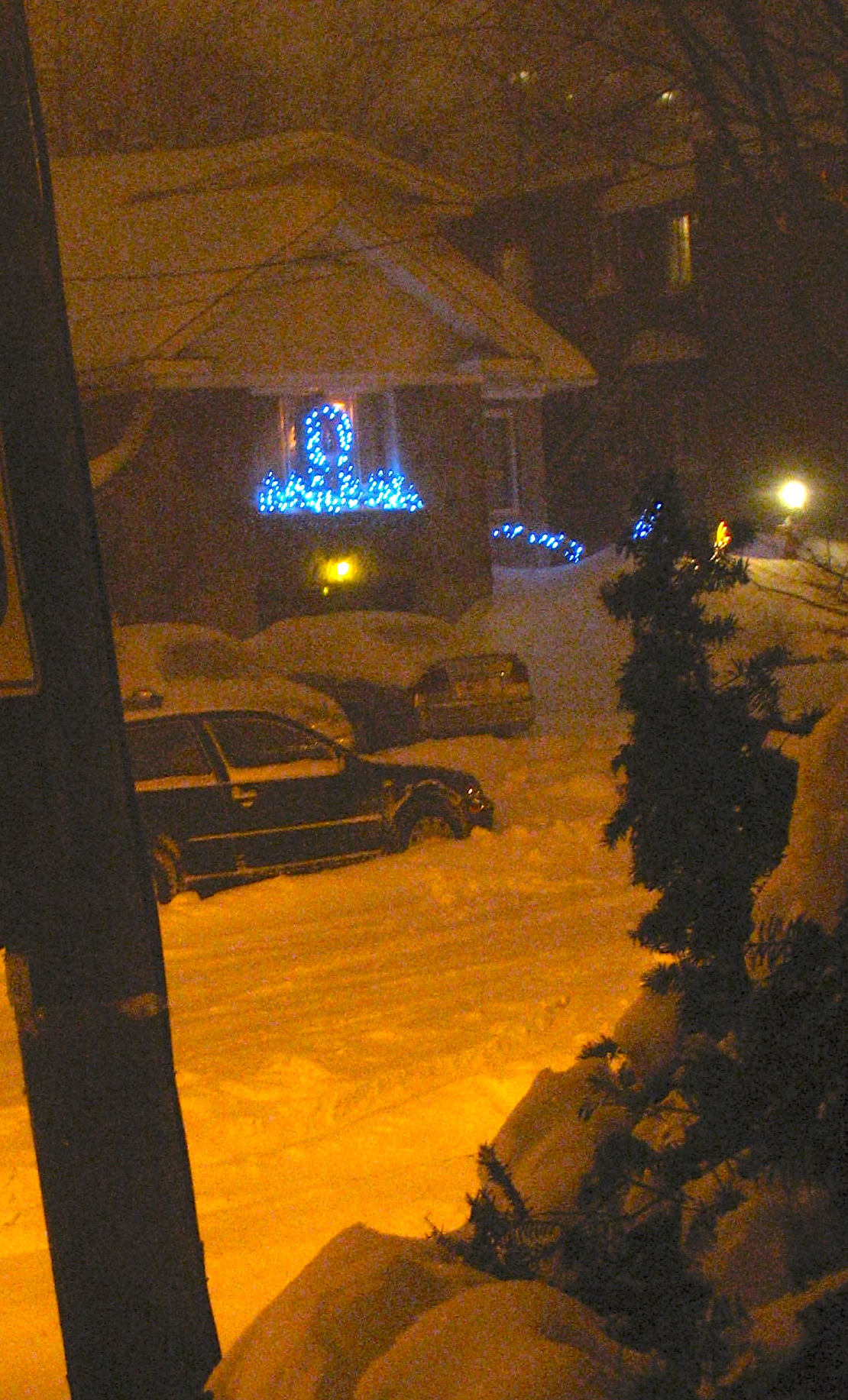
lost to me.Winter window view

-photo Harry Rajchgot

Speartooth

Speartooth

Arlyn LaBelle

I know your skin,
the bitten place behind
your knee. I know
from being peeled,
from being cleaned
in your small room,
moulding like pleated skirts,
a place I can fall to
when I need to be anyone.

Leaving Your Bed

Leaving Your Bed

Miguel Eichelberger

IMG_0102_2

When the quiet is silenced by sunlight
Stretching itself languidly over your skin
I see morning, unmasked.
A murderer! A criminal who sneak
On pointed toe into this bedroom to take last night.

Last night,
When I fell to sleep upon your lips.
Morning was loud of envy. Morning, the inevitable nuisance
Policing laze and comfort. Calls me aside
And pats me down. Morning bathes us in false heat, false
Light and heralds the interruption of day. The fiend is unrelenting.
He comes with the sun and swears to be a soldier of
Good. Know, lover, that the badge he presents is
Fake.

Morning is a jealous thief. Me from You, You from Me.
You are taken from me upon the contract of day.
Taken away, your blush, your smile draped like silk upon your lips.
Taken away, the arm resting above your
Hair. Fingers telling me to move forward. Too hot for covers,
Your body is embraced by lecherous Morning.
The bastard winking at me as he touches you.

What is Morning
But a thief in the day, masquerading as a new beginning
When it is but an end.
For I must leave your bed.

The fifty-year-old house

2013-07-15 13.14.15

The fifty-year-old house

Louise Carson


How happy she was she didn’t buy it:
a rooming house, abortion clinic.
Finally, burnt out.

The unhappy house.
No one ever loved it.

-photo Harry Rajchgot

Babi Yar

Babi Yar

Ilona Martonfi


I have been to Babi Yar
a silent, sad earth
leafless chestnut trees, poplars, roses
inscribed in the sand of skulls
Symphony No 13 adagio
I couldn’t even ask:
Who is the bass soloist?
Baritone of speech song.
Fenced in with barbed wire
on the outskirts of Kiev
between Melnikova
and Dokhturova Street
beyond the Jewish cemetery.
A male chorus.
Cellist on this recording
cordoned off by SS soldiers
Nazi-occupied Ukraine

you couldn’t hear the shooting
September 29 1941
in a ravine at Babi Yar and there, I don’t know
a child. I touched her face.

Changes

Changes

Sophia Wolkowicz


Reservations are suggested with changes
except most of us are unaware
that we have travelled on a
one way journey until
we have reached its destination.
And whether suddenly or,
through insipid pace,
no desired accommodation
awaits our arrival.

It would be best to book in advance
a fortress to steel oneself against
any damages, loss or theft
and then affix a DO NOT DISTURB sign on
its entrance.

Seeds encased in jack pine cones
require fire to release their kernels
and spur new growth to an aging forest.
But restoration has no confirmed date.
Hovering branches
tangle against each other
and in successive days,
block out more light.

Changes can betray you.
They have a life of their own,
that intersect our itinerary
and shove us against time.
We grasp past moments
to regain balance,
but remain all the while,
the startled tourist.

The Monopoly of Marriage

The Monopoly of MarriageDSCN1012 2

Marlena “Zen” Johns

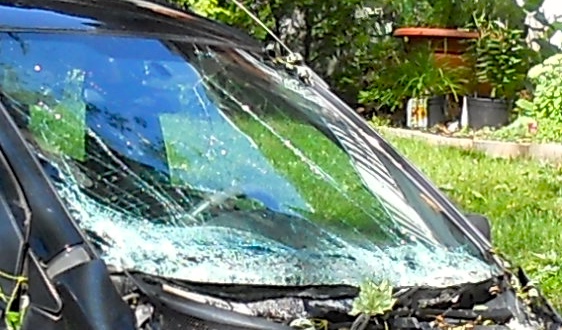
Glass shards fall.
Like the leaves of an autumn tree,
Baubles cover the ground.
Hands deflect a shower of
Splintering, slicing slivers,
Like threads of insulation.
My tiny paper cut scars
Seep blood,
Staining maroon seat covers.
My husband continues,
Smashing car windows with fist and club.
Bloody marriage knows no laws.
Vows protect heinous crimes.
Degradation follows destruction,
And police watch, bystanding pedestrians
As a stream of broken lives pass Go,
And no one sits in Jail,
The community chest’s gift-
Get out of jail, scot-free.

Still point

Still point

Michelle McLean


“The only journey is the one within.”
~Rainer Maria Rilke

To know what it is

to be cracked open
wide as the world –
Heart open as the sky,

and part the path for
that kind of space.

To uncover the buried blessings
of your pain;
To know that you will never again
be the same –
Your borders, boundless.

To feel the earth collapse
under your feet
and discover
your ability to fall,
to float.

To no longer run
from the wounds
of your past.

To descend
into the darkness
and mine the gems.

To arrive, again
and again
to further journeying,
returning.

To face unafraid
the plans that you’ve made
and to know
your plans are traced
in sand.

To make peace with this.

To slide back
into your story,
become its hero.

To celebrate the pulse of Life
here, now, this –
Arriving home gently
to yourself

with loving welcome.

WE STRANGERS

IMG_2073WE STRANGERS

Carl Boon

We know, we strangers, we
who stand on the platform
whispering stories
to each other.

Her mother’s breast aches—
in the morning, especially.
Perhaps it’s how she sleeps,
or the fall breeze,

the crack where the window
won’t close. But we’ve foreseen
the issue already, the tender
flesh spidery and weak.

Or the man whose wife
disappears most Wednesdays,
the breakfast plates
in the sink, her best pants

specially creased. She’s not
going for the sale on sheets
at the English Home Boutique.
She’s desiring another latte

with the man with nice hair.
These people speak to us
with glances, as we listen
for our trains and wait.

-photo Harry Rajchgot

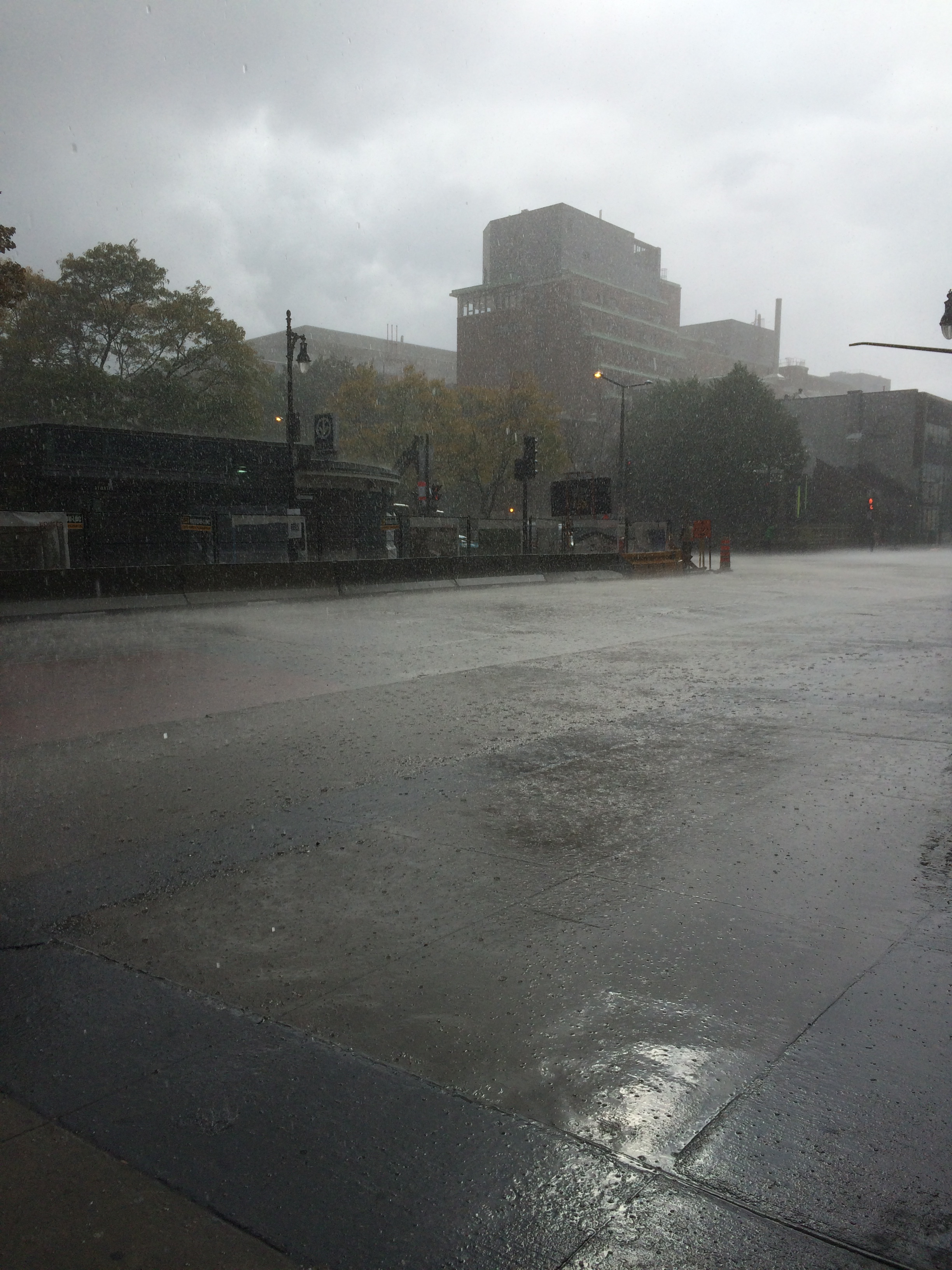
The Rain

IMG_0160The Rain
Shaharyaar Kamaal Siddiqui

The firmament splits asunder,
Limpid azure expanse engulfed by marching pellets of black.
As tortuous streaks of lightning rumble and thump,
Behold, as the heavenly chaos unfolds.
Under a divine decree, I descend and alight,
From the empyrean to the ground beneath!
I see,
Urchins swarming the streets like unfettered souls,
Gazing heavenwards with beseeching eyes,
Bashful bride frolicking in the courtyard,
Fresh from a morning connubial bliss.
Tenuous smile flickering across a coy vermillion face,
What unbridled joy I bring to thee…!

I see,
A hapless doting mother, a picture of misery,
Huddled in a corner, cursing her penury!
She scuttles and scurries, clasping the baby to her chest,
Drenched and distressed, collecting littered fragments of her nest.
Ravaged and wrecked, she laments amidst the debris of loss.
What unfathomable sorrow I bring to thee.

I am, but
A drop of tear from the lachrymose Observer,
One who said “Be”,and it was!
To see his creation riddled in strife,
Love lost in mankind’s giant strides!
Within flesh and blood a serpent resides.
Standing tall on the edifice of might,
Hallucinated by evil whisperers in the shadows of night!
Man beckons his doom, in an air of gloom.
Cometh His wrath, behold the creation charred into fumes.

Birthday

Birthday

Virginia Boudreau

OLYMPUS DIGITAL CAMERA

Once, clover overflowed my pockets.
lambs cavorted upon shoulders draped in timothy,
and my breath was sweet with pollen.

When leaves blushed under the sun’s knowing,
orchards ripe with promise bore fruit
rich and crimson. I felt the weight of their bounty
pressed upon me and yearned for more.

Later, geese and the last delicate song
birds were blown southward, over deep
furrows and shallow stream beds.


The wind quilted my fields, clumsy fingers tied
squares of sepia, umber, burnt gold with brittle reeds
bowing to November rain and the glossy weight of crows.

Now, I am pristine, snugly tucked on all sides,
Briars at my head cushion blossoms of snow
I am deceptively soft, an invitation:
Come lie with me here. Let me remember.

And, promise when you leave, the footprints
on my cheeks will dry quick and silver as tears
beneath a benevolent moon with it’s face turned aside.

Hope Chest

IMG_2895Hope Chest

Virginia Boudreau

A few gold apples cling to black branches
on a twisted tree I pass every day.
I walk and watch, filled with wonder:
how can you be dying?

My driveway seems steep, the house further away.
The weeping mulberry is a chandelier
balancing crystal tears, trembling and precarious.
I think of your eyes that rainy afternoon last summer.

It was the day we unpacked your hope chest
to make it lighter for the move to your new house.
“It’s heavy.” you’d said, “It needs to be
easier to carry.”

Your voice was soft as fingers stroking
the worn scrapbook, I remember
loose pages falling like leaves
when you picked it up.

It took us a long time: memories
lingered and snagged on fences
that seemed too hard to climb.
So many photographs,
a lifetime of greeting cards full
of words we’d never spoken…
you’d held on to them all.

Dried rose petals and newspaper clippings,
ticket stubs and school projects,
scraps of ribbon, your button jar.
We took everything out, loaded boxes
for moving day. It seemed easier to laugh then.

Your trunk is at the new house now.
You were wheezing yesterday when
you told me you hadn’t gotten around
to unpacking cartons yet; some things,
you said, you can only do yourself.

I understand, but help me not to cringe
when I picture your hope chest sitting empty
as each dusk steals the fading light from your room.

MISSING BLUEBERRIES

DSCN1397MISSING BLUEBERRIES

Ruth Z. Deming

You wouldn’t happen to know
a Miss Regina Ziegler would you?
I’ve been studying her handwriting
to figure out her first name,
I’m no cryptographer so
can’t rightly tell if it’s Regina
or Rina, but it’s a mighty regal
“R” she writes, with the sureness
of a woman who loves poetry and
may indeed write some herself.

It was Miss Regina, as I’ll call her
who once owned my sole
book of poetry by Robert Frost,
the cover of which states
“The Pocket Book of
Robert Frost’s Poems.”

Leave it to me to check where
apostrophes go. They ought to
get it right, don’t you think,
the editors, all dead now, I’d imagine,
as is the poet himself.

Regina herself met a terrible end
and not meaning to keep you in
suspense, bear with me a little, while
I prattle on.

With a number two pencil
Miss Regina has lightly
underlined some phrases,
not many; like me, she probably
doesn’t believe in marring a book.

“Plain language and lack of
rhetoric” is where her pencil
first touched the book. Then a
lapse of fifty pages until
pencil, resting in her mouth,
dared come down again
“For to be social, is to be
forgiving.”

And there we have it. But
half a dozen phrases underlined,
Miss Regina, a spinster school marm who
taught in the one-room school house,
a converted barn with only eleven
children, from blue-eyed Mary nearing
pubescence, to tough Frankie who
begged his daddy let him come and
learn instead of mowing hay and
minding the cows.

These were the children she never had.
Did she read them Frost? You bet she
did. They loved the one about the blueberries
“as big as the end of your thumb, real sky-blue and
ready to drum in the cavernous pail of the first
one to come!”

And that goodly Miss Regina had brought silver buckets
of blueberries and passed them around after class with
another bucket of cold milk she brought from a neighboring
farm. There were farms in those days. More than
you can count. Just like there are shops today
teetering on what used to be farm fields.

She also read them a few poems about the stars up above
in Heaven. Where we would all go when life has had
enough of us. The eleven children made sure they
wished upon a star every night, their little heads
pointed upward, hands clasped together in prayer
as their eyes skipped merrily across the sky.

Were those owls they heard hooting in the distance?
And the so-dark sky, a different flavor indeed
from the gay one they saw in the morning.
She introduced them to the wonders
of the world. Would it ever leave them? On their
death beds would they think, “It’s been a wonderful
life?”

One winter it was too cold to walk the deep snow
to get to school. Miss Regina turned on her coal stove,
glanced at the glowing coals, black as the night sky,
warmed her shivering hands and went back to
bed to keep herself warm. She heard the explosion
first, a sound like a million church bells going off
at once.

Was that her last thought as she catapulted, quilts
nightgown and all, from her straw mattress, floating up
up up in the air
like a bread rising in the oven?
Oh, they would miss her all right.
And I will miss her most of all for it’s
time to mourn her once again,
to think of Miss Regina and
the spell she bound. In her memory,
I’ll eat some blueberry yogurt
the kind where the cream
rises to the top.

LOVE AND THE FINER THINGS

Rodin's lovers - Orangerie

LOVE AND THE FINER THINGS

John Grey

Love.
not a German bellarmine jug
but a real wheelchair
with his left hand
flopped over the side.

It could never afford delftware,
though there were tunes
the fields, the fence, the firs,
were as dainty and detailed
as punchbowl decoration

It was willing to sacrifice
a Ming fish jar,
Spode earthenware hot-water plate
for slippers
and a kind of dance
when you lift him into bed.

Love
had in mind the Royal Doulton
and the green glazed tripod vessel
but settled on the weathered palm,
your fingers wrapped inside it,
like the roots of an ancient flower.

Love,
just an ordinary paperweight;
not St Louis crown.
A bare bulb,
no silver gilt figured candlestick.

Besides,
despite their worth,
the artisans are long dead.
And you are poor but breathing still.
Love takes that it into account.

Anniversary of My Death

Anniversary of My Death
Revere Beach, Massachusetts

Kristen Hoggatt-Abader

Firm to foam to the water lapping Thank you on this beach,
to the storm that won’t die,
to the rain that grieves,
to the drops that cool my skin and age my scars,
to the drops that come now in summer’s reprieve.

Last night, Anubis rose from the dark East.
Last night, he treated my corpse and put my excised heart
on a plate as Amir Timur’s crude feast.
Last night, fear, cold-boned: the banshee’s late-night shriek,

when that bitter poison reminded me of my precious health,
when the doctor’s cage saved me from myself,
when I fell out the back, when I fell on the black,
when my friends like Icarus flying,
when I launched into stillness undisturbed by busy hands.

To Arizona, to the ICU,
to that tube coiling fury into my voice,
to the wreck that marred the open road,
to the interstate, to the milepost,
to the warlike whir of airlift propellers,
to the dimming of sirens,
to the dimming of light—hours that tick away the sun,
to the drip as the IV’s begun,
to my black pen,
I await its coming, and it will come again.

From the Picnic Bench at Midnight

From the Picnic Bench at Midnight

Gabriella DeBono

We lay under a sheet of black paper
where tiny holes have been poked
giving us light
but only enough
to stay content
with the darkness that veils us

Strolling the Hudson’s East Bank

DSCN0837Strolling the Hudson’s East Bank

Christopher Suda


Today, each moment
turned to kindling; gaps
alongside our knees diverged
while the Hudson scratched into
each window. Your hair continues
to muse through my sideburn,
then collarbone, both nostrils.
Beneath us, the rails charmed

Tarrytown’s soil with delicate
sparks while your face endured
its collapse against a shoulder.
When awake, look at those eyes.
you’ll find two monuments
long asleep, dream watching,
as still as spoke wheels.

Greenish Irony

DSCN0197Greenish Irony

Changming Yuan


You wish to be a Douglas fir
Tall, straight, almost immortal
But you stand like a Peking willow
Prone to cankers, full of twisted twigs

Worse still, you are not so resistant
As the authentic willow that can bend gracefully
Shake off all its unwanted leaves in autumn
When there is a wind blowing even from nowhere

No matter how much sunshine you receive
During the summer, you have nothing but scars
To show off against winter storms
The scars that you can never shake off

Todd, the God

2014-08-22 14.13.21

Todd, the God

Michael C. Gebelein

like the homeless guy with the shopping cart
full of broken speakers and plastic grocery bags
who, rumor has it, is actually loaded,
lives in a big house and
drags that cart with three busted wheels into downtown each day.
he’s got something to hide like the rest of us.
his secrets won’t tear down any walls
but I remember it was a cigarette of his
that the chief said set the DSS building on fire.
he’s just like the rest of us. I call bullshit on the
hobo with a huge bank account story.
that’d be too nice, too convenient.
I’ve seen him in the alleys,
squatted down and taking a shit.
people don’t choose to do things like that.

Without an Address

IMG_0811 - Version 2Without an Address

Simon Perchik


Without an address your hands
lean across –another crease
making the final correction

though this note still opens out
windblown, fingerprints
everywhere on her lips

on her breasts, on the bed sheet
folded and over, warmed
for its nakedness and side by side

–every word is already lost
and there at the bottom
where little blossoms should grow

there’s nothing but silence
and the long line for a stamp
to cling when it leaves your hands

as if even without the flowers
the corners will arrive as evenings
covered with dirt and her forehead.

*

What you open leans against wood
that is not a door you can muffle
put your arm around the only sound

when you knock on this kitchen table
whose corners were broken off
straight down, still lit, letting you in

circle her mouth not yet the room
left over and listen for the smoke
around the hush from small fires.

*

Just died and its rain
is already snow, comforts
the obituary page

with moonlight pieces
slowly circling down
as that star-shaped lullaby

small stones still look for
–it’s this morning’s
though over your head the deaths

are hidden in silence
begging for water
that doesn’t break apart

the way each sky
is hollowed out for another
–you make a sea

for these dead, each name
a boat, sails, the spray
midair and out loud.

*

This tree abandoned at last
flows past as ravines and riverbeds
and can’t fall any more

–it’s used to dirt and those initials
you carried along inch by inch
not in some stone letting you stop

for water –you were buried
in the afternoon, late so the light
could close the lid with leftover kisses

become an ocean, still burning
and between each wave the glint
from a clear silence you took for yes.

*

To survive you disguise each log
as the aromatic sun the mornings
can’t resist –even when naked

you hide some kindling close by
let it give birth in the smoke
that leaves with nothing, becomes

the emptiness though your eyes
never look up or warm –a fire
is feeling its way to your mouth

with lullabies and the small stone
falling asleep on the stove
–you feed it wood as if your lips

still smell from milk and salt
–an ancient, gentle art now lost
somewhere in those nightmares

set off by an empty dress
and along your forehead the light
begins to melt, wants to stay, keep going.

The Bravery Of A Stolen Heart

DSCN0409_2The Bravery Of A Stolen Heart

Ndaba Sibanda


Bonani traversed beyond the small and big hills
Beyond the singing mountains and valleys

The bushes were full of thorns and roots
And were a well-known refuge for snakes

He braved windy or chilly nights
And the frightening sounds of owls

Whoo whooo whooo whooo
Hoo hoo hoo hoo

Maybe the owls were hooting:
Who cooks for you?

Who cooks for you-all?
Who cooks for you?

Were the witches and wizards
Not stalking him too?

What about the infamous ghost
Over Nkanyezi bridge?
Was it not said to be stubborn?
Was it not said to be talkative and slippery?

Sometimes he heard dogs bark
Sometimes there was some grunting

Jackals howled and snakes hissed
Lions roared but he was undeterred

At times the night`s darkness
Was blinding and confusing

But Bonani groped for the path
And rummaged through the bushes

Sometimes the rivers were flooded
Sometimes the rain pounded

For Bonani it was just a delay
He usually reached his destination

His destination kept his heart
Beyond the hills and valleys

Beyond the streams and rivers
Someone had stolen his heart

Ember

IMG_0440Ember

Aileen Santos


The ring that’s not yours
that belongs on his finger
no longer looks shiny
just dull and encumbered.

Melted snow in early spring
sudden and surprising
you’re black ice
slippery slopes
red light flashing.

Addictive, obsessive
Flushed smears of lipstick
tangled sheets stained
in a knot of deceit.

Your cologne plays on my skin
like a fedora on a phat cat
Buddhist prayer beads on a mantra
or a song I like to scream.

The Bombardier

OLYMPUS DIGITAL CAMERA

The Bombardier

John Repp

Twelve O’Clock High, 1965

Late to the briefing as usual, Peter Fonda fumbles
the last folding chair into place, General Savage
staring darts from the podium, a map of France
huge behind him. Fonda plays Lathrup, a born
bombardier who no doubt pondered snail darters
from the creek bank behind the cabin he eulogizes
in Act Two as he falls in love with Mary, the pub girl

who’ll say with dewy eyes & shy smile in Act Three
yes, yes she’ll marry him & live after the war
in Tennessee where it’s spring the year round.
Fonda frets, broods, fails to drop a load,
goes AWOL, careens a Jeep down Mary’s street
as the Luftwaffe turns London into rubble

where the girl lies crushed in a cellar now open
to the sky. Lathrup finds her, kneels, strokes her hair
& as Savage scrabbles up beside him, sublimely condemns
the price of a duty no longer his. How many dead
beneath clouds he’d thought beautiful? Savage knows

the boy’s pain—“Lieutenant” his dead love called him,
the British “f” in “Lieu” heartbreaking now—
but those bombs they drop on the Ruhr Valley
each night mean the quicker end of pain.

They hold one another’s gaze through the fade.
As the epilogue opens, Lathrup lopes in late & rattles
a chair into place as Savage bestows a fatherly smile

from the podium, the air group’s best bombardier
having chosen necessity & recovered his Tennessee

charm so we could take a last sip of milk & sleep.

Grandmother

Burach and wife - Version 2Grandmother

Aileen Santos


I remember talcum powder and tiger balm
the raised mole on her left hand.

I remember wrinkles
and long withered fingers
a soothsayer
secret keeper
comforting dissonance.

I remember my face
in her soap scented hair
pinched purple skin
when she was not there

dystopian fragments
of hard silver buckles

the balm on my bruises
the kiss on my temple.